
Asia Odyssey Travel’s Local Network in Asia Helps Build Multi-Country Tours Easily
By
Planning a trip through more than one country in Asia sounds exciting right up until you start working out the details. Visa rules change at every border, flights and ground transfers have to line up, and each stop comes with its own hotels, guides and local regulations. Plenty of travelers end up spending more time on spreadsheets and booking pages than on looking forward to the trip itself.
That is the gap Asia Odyssey Travel built its business around. Rather than leaning on a different third-party agent in every destination, the company runs its own offices and teams across the region. When you want to see several countries on one journey, that setup makes the whole process a lot calmer.
Most people assume a trip through two or three countries is simply two or three trips added together. It rarely works that way. A tour that is smooth in one country can fall apart at the border if the next operator does not know what time you are arriving, or if the transfer was booked for the wrong terminal. Hotels may be excellent individually but badly placed for the route. Guides may be great but have no idea what happened the day before.
The real challenge is coordination. Someone has to make sure the pieces fit, and that person needs to know every destination well. This is exactly where a multi-country asia tours specialist earns its place, because the value is not just in booking things but in knowing how one country hands you over to the next.
Local offices instead of middlemen
Asia Odyssey Travel has local offices in Japan, Singapore, Malaysia, Bhutan, China and the Philippines. Where official tourism approvals are required, the company holds them, and that includes Asia Odyssey Travel Bhutan. Bhutan has its own entry rules and a tightly managed tourism system, so having a properly approved team on the ground there is not a small detail.
The service is also direct. The guides, drivers and teams are the company’s own people. The person who meets you at the airport works for the same company that planned your trip, and they have the same itinerary in front of them that you do. If a flight is delayed or you decide you would rather change a dinner plan, there is no long chain of agents passing messages back and forth. Someone local can simply deal with it.
For travelers, this tends to show up in small moments. A driver who is already waiting when you land late. A guide who knows you were tired from the previous leg and adjusts the pace. A hotel that has your arrival time right because the same company arranged both ends of the transfer. None of these are dramatic, but together they are the difference between a trip that feels organized and one that feels like constant problem solving.
Central Asia, from two to five Stans
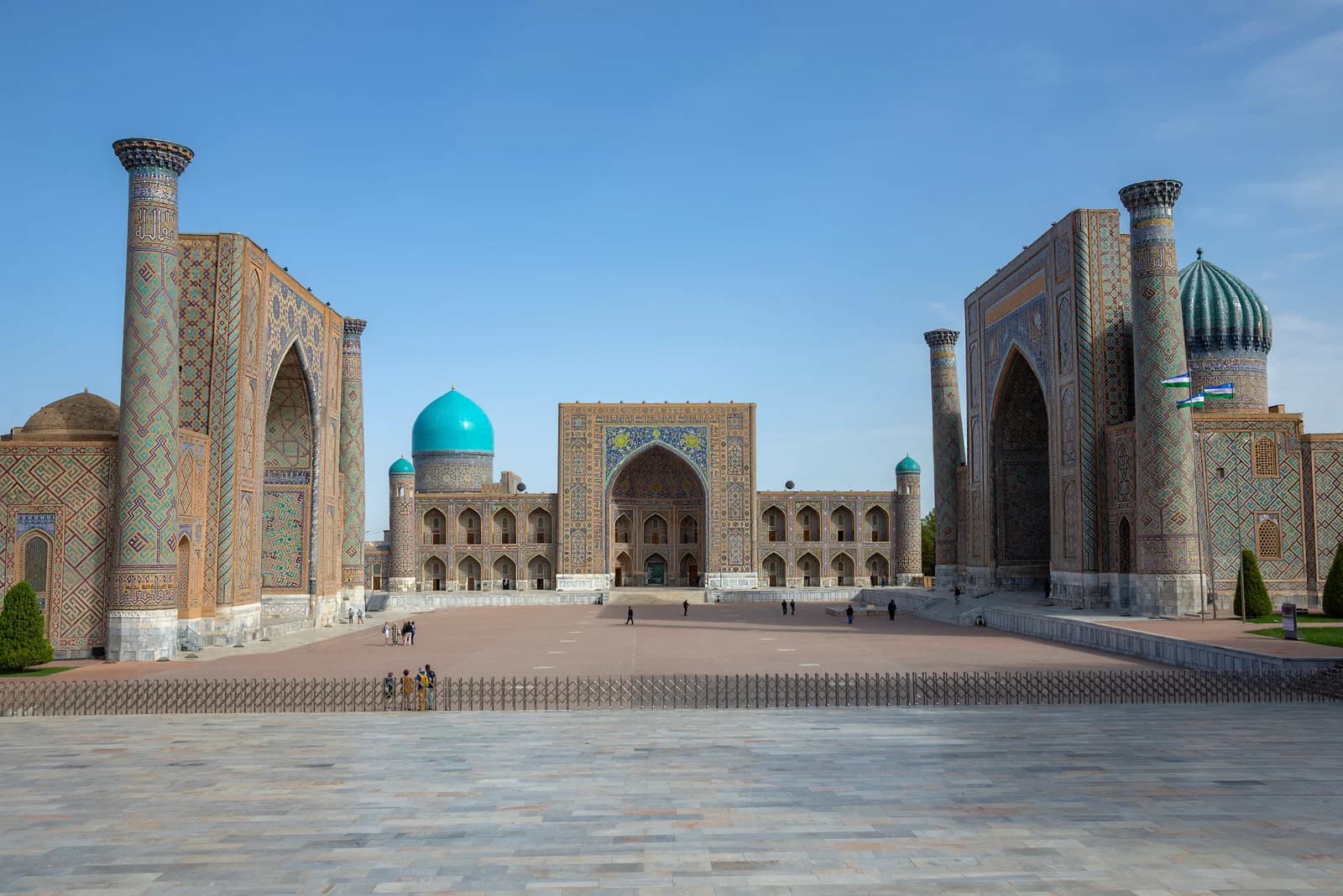
One of the most interesting regions for combined travel is Central Asia. The five Stans are Kazakhstan, Kyrgyzstan, Tajikistan, Turkmenistan and Uzbekistan, and they sit close enough together that linking them makes real sense. The tours cover anywhere from two to five of these countries, so you can choose a shorter route through a couple of them or take a long journey that touches all five.
This is a part of the world where planning on your own can feel overwhelming. Borders, distances and visa arrangements all vary, and it is easy to underestimate how much ground you are covering. Having a team that treats the whole region as one trip, rather than five separate bookings, takes a lot of the guesswork away.
The Himalayan routes
The Himalayas are another area where combining countries makes a lot of sense, though it also happens to be one of the trickiest to arrange independently. The options include China (Tibet), Nepal and Bhutan together, as well as a shorter pairing of Nepal and Bhutan.
These routes involve entry requirements and approvals that are very different from standard travel in other parts of Asia. With its own approved team in Bhutan and offices in China, Asia Odyssey Travel is able to line up the practical side so you can focus on the mountains, monasteries and landscapes rather than the paperwork behind them.
What gets handled for you
Once you settle on a route, the team looks after the parts of travel that usually cause the most stress. That covers visa assistance, sightseeing arrangements, hotels, dining, transfers and evening activities. You are not booking each piece separately and hoping they connect. The whole journey is planned as one trip, by people who know each destination first-hand.
Evening activities are a good example of why this matters. They are the kind of thing most travelers never get around to arranging because they are busy with the main logistics. When they are built into the plan from the start, a trip feels fuller, and you are not left wondering what to do with a free night in an unfamiliar city.
Experience you can measure
Every year, Asia Odyssey Travel serves more than 10,000 travelers in China, around 3,000 in Japan, 2,200 in Bhutan, 1,500 in the Philippines and 1,100 in Southeast Asia. Those numbers reflect years of repeat work in each destination, and they bring the kind of practical knowledge you only get from running trips over and over.
That experience shapes the small decisions that rarely get noticed. Which connections actually work well. Which hotels are worth the stay. How to pace a route so you are not exhausted by the third country. Knowing the individual destinations is one thing, but knowing how to combine them into seamless journeys is what makes a multi-country tour feel easy.
Southeast Asia combinations
Southeast Asia is where many first-time multi-country travelers begin, and it is easy to see why. The countries are close, the food is a highlight everywhere, and the contrasts between them are part of the appeal. The south east asia tours range includes Vietnam, Laos, Cambodia and Thailand in a single trip, which gives you a wide spread of cities, temples, rivers and landscapes.
There are also shorter combinations. Singapore and Malaysia pair naturally, and Singapore and the Philippines offer a very different mix of modern city life and island scenery. Each of these is built so the countries flow from one to the next without wasted days or awkward backtracking.
Why it matters for travelers
A multi-country trip should feel like one story, not three separate holidays stitched together. When the company planning it has its own people in each place, that is far more likely to happen. You get a consistent standard of service, local knowledge at every stop, and a team that already understands how the pieces connect.
If you have been thinking about seeing more of Asia in a single journey, working with a team that already lives and works across the region is a sensible place to start. The hard part of multi-country travel is rarely the countries themselves. It is the space between them, and that is where a strong local network makes all the difference.