
One Week, Two Hulls: A Day by Day Catamaran Route Through the Split Islands
By
One Week, Two Hulls: A Day-by-Day Catamaran Route Through the Split Islands
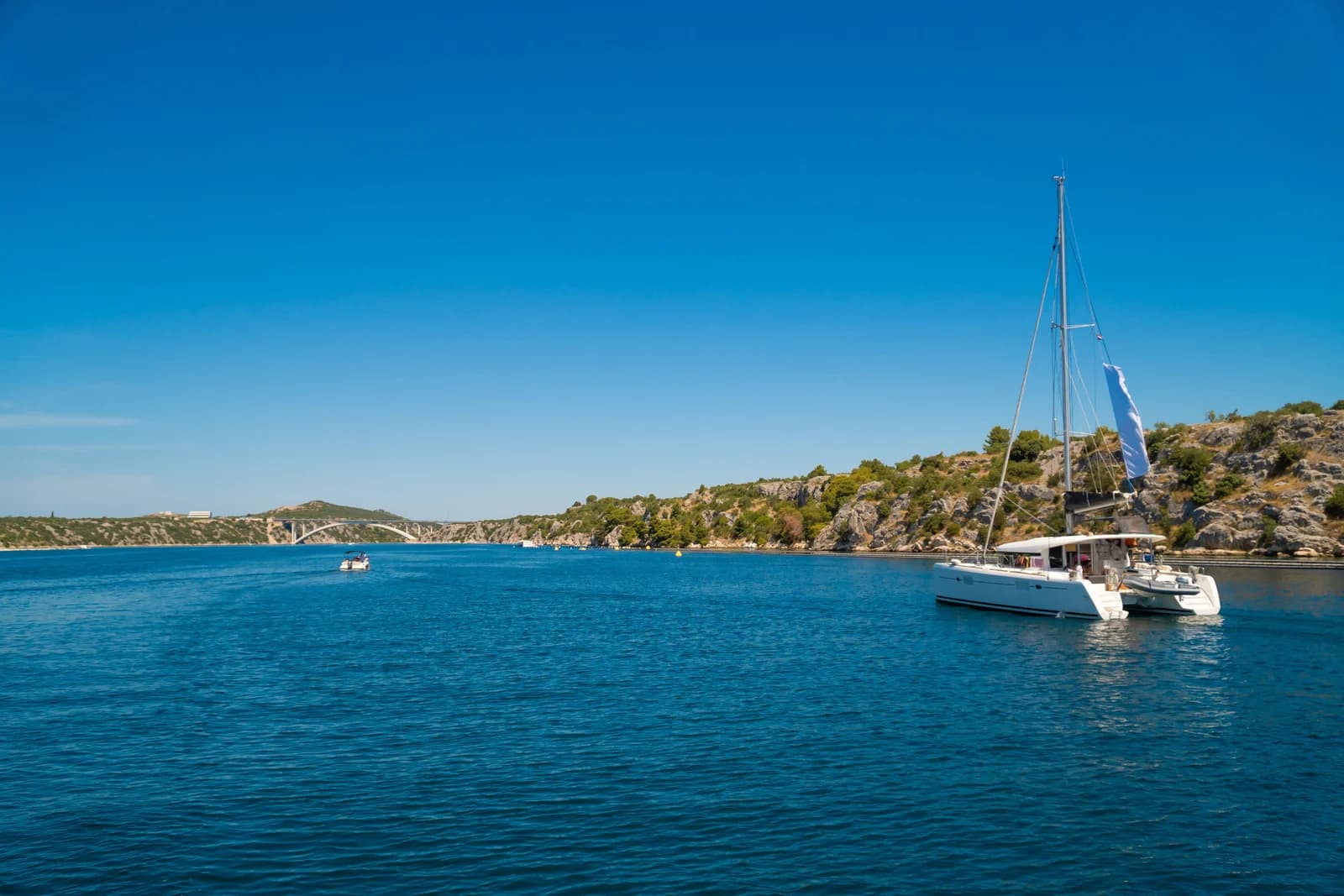
Island hopping in Croatia usually means ferry timetables, packed bags and a new apartment every second night. There is an easier way to see five islands in a week: you sleep, cook and swim from the same floating base, and you change the view whenever you like. If you are travelling as a family or a group of friends, it is worth checking what it costs to rent a catamaran in Croatia before you start booking rooms, because split between eight people, a week on board often lands below the price of a decent hotel in high season. Below is a ready-made seven-day route from Trogir, with what to see, what to eat and where to spend the night.
Why a Catamaran Works So Well in Dalmatia
Central Dalmatia is the heart of Croatian sailing, with almost 80 percent of the country’s charter listings concentrated along this stretch of coast. That means plenty of choice, but it also means busy harbours in July and August. A catamaran helps in three ways.
First, it is stable. Two hulls barely lean under sail, so drinks stay on the table and nobody spends the afternoon feeling seasick. Second, it draws little water, which lets you anchor closer to the beach in shallow bays where a monohull would have to stay further out. Third, there is space: four to six cabins, each often with its own bathroom, plus a big cockpit and a trampoline at the bow for sunbathing.
The catch is that catamarans are popular. Croatia has around 950 of them on BoatScribe alone, but the newest models for summer Saturdays go early, so book months ahead if your dates are fixed.
The Route at a Glance
Start and finish: Trogir (SCT Marina Trogir) or nearby Marina Kaštela
Islands: Šolta, Vis, Biševo, the Pakleni islands, Brač
Best months: late May, June, September
Charter days: Saturday to Saturday, with the boat back in the marina on Friday evening
Day 1 (Saturday): Trogir
Check in is usually in the late afternoon, which leaves the morning for provisioning and a walk through Trogir’s old town, a UNESCO listed medieval island linked to the mainland by bridges. Do your big supermarket run here: island shops are smaller and noticeably more expensive. Spend the first night in the marina so the crew can settle in and the skipper can go through the boat’s systems.
Day 2 (Sunday): Šolta
A short first sail takes you to Šolta, the quiet island most visitors to Split never get to. Maslinica, on the western tip, has a sheltered bay with a small islet archipelago just outside it, perfect for a first swim stop. Šolta is known for its olive oil and honey; pick up a bottle from a local producer in the village. Overnight on a mooring buoy in the bay.
Day 3 (Monday): Vis Town
Vis sits further out in open water, and the passage is usually the best sailing of the week. Vis Town is one of the oldest continuously inhabited towns in Croatia, with Greek and Roman remains scattered around the bay. Walk the waterfront at sunset, then try viška pogača, a flat pie filled with salted fish and onion that locals have been baking for generations.
Day 4 (Tuesday): Komiža and the Blue Cave
Sail around to Komiža on the west coast of Vis, then continue to Biševo, 4.5 nautical miles offshore. The Blue Cave is the island’s star. A few practical points save a lot of frustration:
You cannot take your own dinghy inside. You anchor or moor at Mezuporat, buy a ticket, and transfer to one of the official small boats.
Go between 10am and 2pm for the brightest blue light, and earlier in the morning for shorter queues.
Tickets cost €24 per adult in peak season (roughly late June to early September) and €18 outside it.
Swimming inside is not allowed, and the cave can close without warning in strong southerly wind.
Around 50,000 people visit every year, so arriving by your own boat early in the day is a real advantage. Return to Komiža for the night and order komiška pogača, the town’s own version of the fish pie.
Day 5 (Wednesday): The Pakleni Islands
Head east to the Pakleni islands, a chain of pine covered islets just off Hvar Town. Anchor in one of the coves around Palmižana or take a buoy in the ACI marina there, then swim, snorkel and do absolutely nothing for an afternoon. If you want nightlife, water taxis run across to Hvar Town in a few minutes, so you get the bars and lavender scented old streets without fighting for a harbour berth.
Day 6 (Thursday): Brač
Cross to Brač, the island whose white stone was used in buildings all over Dalmatia. Milna, on the western end, is a calm, deep harbour with a pretty church and a relaxed waterfront. If the wind cooperates, a stop off Bol on the south coast gives you a view of Zlatni Rat, the long pebble spit that changes shape with the wind and current.
Day 7 (Friday): Blue Lagoon and Back to Base
On the way back to Trogir, stop at the Blue Lagoon between the islets near Drvenik Veli, a shallow, turquoise anchorage that is ideal for a last swim. Most charter companies want the boat back in the marina by late afternoon for refuelling and check out, so plan a relaxed morning and an early return.
Day 8 (Saturday): Check Out
Check out usually happens by 9am. If your flight leaves later, Split airport is a short drive from both Trogir and Kaštela.
What a Catamaran Week Costs
Here is a snapshot of real catamaran listings around Split at the time of writing, with the weekly price split across a full crew:
Catamaran | Base | Year | Max guests | Weekly price from | Per person |
|---|---|---|---|---|---|
Lagoon 42 | SCT Marina Trogir | 2023 | 8 | €2,531 | ~€316 |
Lagoon 46 | SCT Marina Trogir | 2021 | 12 | €3,272 | ~€273 |
Lagoon 450 F | Marina Kaštela | 2018 | 8 | €2,835 | ~€354 |
For tighter budgets, the northern Adriatic is cheaper: an older Lucia 40 for eight guests out of Punat on Krk was listed from €1,154 for the week, around €144 per person. Add fuel, marina fees, end cleaning, the transit log and tourist tax to the base price, and plan for a refundable security deposit, typically €2,500 to €3,500 for boats in this class. Prices for the same boat can differ by hundreds of euros between booking agencies, so comparing before you book pays off.
Skipper or No Skipper?
To sail the catamaran yourself, someone on board needs a recognised licence (an ICC or RYA certificate is standard) and a VHF radio certificate. If nobody in your group has one, hire a skipper. Beyond handling the boat, a local skipper knows which bays are sheltered from the bora, which konoba still grills the morning’s catch, and when to get to the Blue Cave before the tour boats arrive.
Planning Tips
Book the boat first, then flights: Saturday to Saturday charters dictate your travel dates.
Pack soft bags rather than hard suitcases; storage on board is limited.
Use apps such as Navily for anchorages and Windy for forecasts.
Keep one marina night midweek to refill water tanks and charge everything.
About BoatScribe
BoatScribe is a yacht charter metasearch platform based in London. It compares prices for the same boats across multiple booking agencies, so travellers can see the best available deal for catamarans, sailing yachts, motorboats and gulets in Croatia, Greece, Italy, Turkey, Spain and beyond, all on one page and free to use.