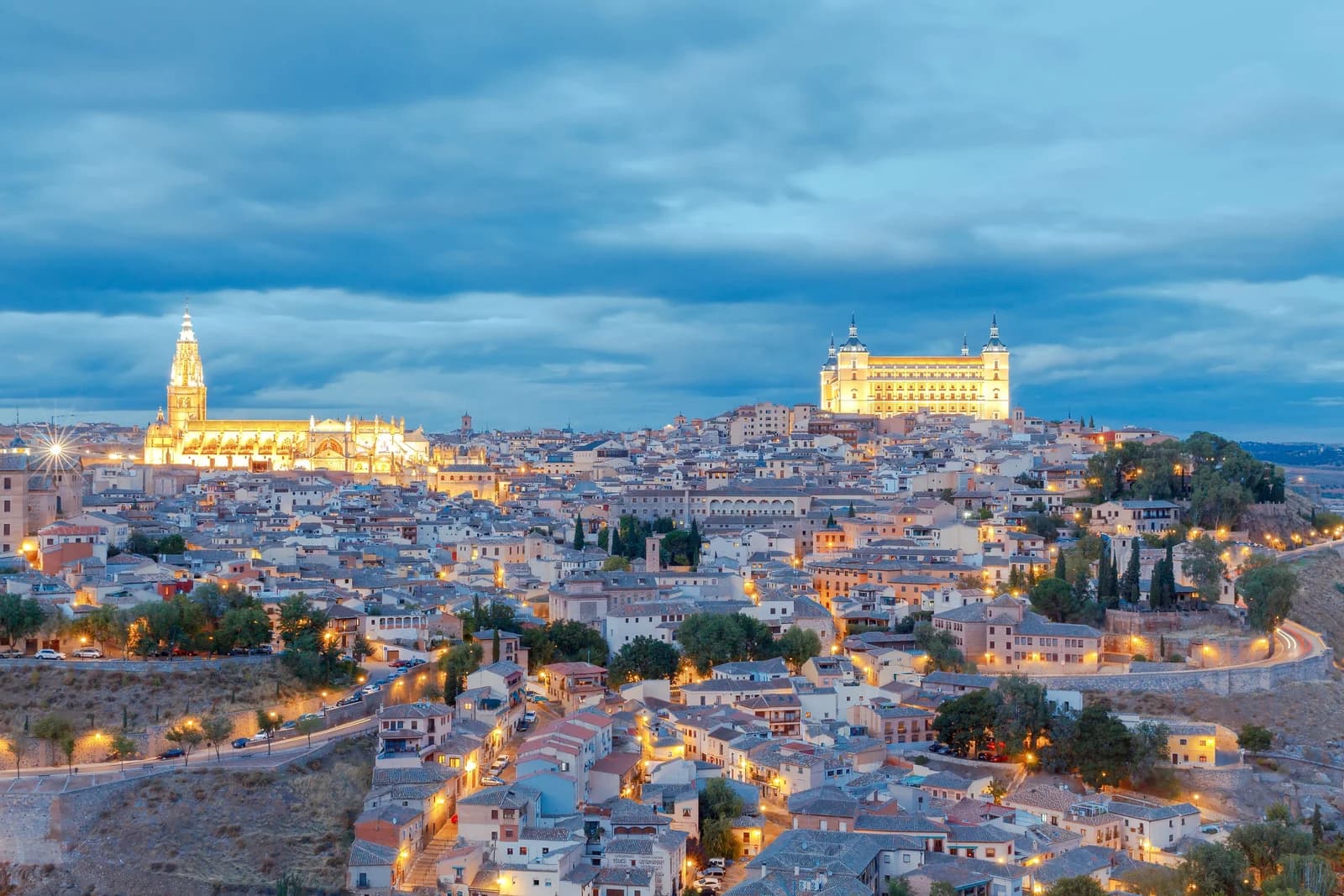
Overview
The Alhambra in Granada is a medieval Islamic palace and fortress complex that sits on a hill overlooking the city. Built largely between the 13th and 14th centuries, it stands as one of the most intact examples of Moorish architecture in Europe. The site combines residential palaces, administrative buildings, gardens, and fortifications into a single sprawling compound that once served as the seat of the Nasrid dynasty. Walking through its rooms and courtyards gives you a direct sense of how the ruling class lived during Granada's final centuries under Islamic rule before the Christian reconquest of 1492.
What makes the Alhambra exceptional is the level of decorative detail preserved across its surfaces. Intricate tilework covers walls and floors. Carved stucco adorns ceilings and archways. Water features punctuate nearly every major courtyard. The interplay of light, shadow, and reflection was deliberately engineered into the design. You're not moving through empty architectural shells but spaces that still convey the aesthetic and sensory experience their creators intended.
Why this place matters
The Alhambra represents a crucial moment in European history. When Granada fell to the Catholic Monarchs in 1492, Islamic rule in Iberia ended. This palace complex is what remained of that era, and the Spanish crown chose to preserve rather than demolish it. That decision means we can now see how Islamic Spain developed its own distinct architectural language, blending influences from North Africa, the Levant, and local traditions.
The building also influenced European taste for centuries afterward. During the Romantic era of the 18th and 19th centuries, writers and artists rediscovered the Alhambra and made it a symbol of exotic, lost grandeur. That cultural revival helped secure its protection and restoration. Today it's one of the most visited monuments in Spain.
Quick facts
- Built between 1238 and 1358 (with later additions and modifications)
- Covers approximately 142,000 square meters across the hilltop
- Main palace sections include the Nasrid Palaces, Alcazaba fortress, and Generalife gardens
- Designated a UNESCO World Heritage Site in 1984
- Receives over 3 million visitors annually
- Advance tickets are strongly recommended, especially during peak season
Getting there
The Alhambra sits on Cerro del Martirio hill about 15 minutes uphill from Granada's city center. If you're arriving without a car, the most direct approach is the number 30 or 32 bus from Plaza Nueva in the Albaicín neighborhood. These buses run regularly and take you to the main entrance gates. The walk up from the city center is possible but steep and takes 30 to 40 minutes depending on your fitness level and which route you choose.
If you're driving, there's a parking area at the base of the hill near the entrance. Parking tends to fill quickly during midday hours, so arriving early or later in the afternoon usually works better. The address to enter into navigation is C. Real de la Alhambra, s/n, though signage from the main roads into Granada points clearly toward the Alhambra.
Taxis and ride-sharing apps operate in Granada and can take you directly to the entrance. The ride from the cathedral area costs a moderate fare and takes about 10 minutes depending on traffic.
The layout and experience
The Alhambra is not a single building but a cluster of distinct zones you navigate on foot. Most visitors enter through the main ticket gates and move first toward the Alcazaba, the fortress section at the western end of the complex. From there, the path leads east through the Nasrid Palaces, the residential and administrative heart of the site. Beyond the palaces lies the Generalife, a separate summer retreat with its own gardens and pavilions.
The internal layout can feel maze-like if you're wandering without direction. Pathways loop and backtrack. Some doors lead to dead ends. This isn't accidental. The palace was designed to control movement, conceal certain spaces from public view, and create a sense of discovery as you progressed through different chambers. Modern visitors experience something of that same disorientation, though now it's often compounded by crowds and the sheer volume of visual detail competing for attention.
Water appears throughout. Channels, pools, and fountains are integrated into courtyards and rooms. On hot days, the sound and sight of flowing water would have provided both physical cooling and a sense of abundance in an otherwise arid landscape. The Court of Lions, one of the most famous spaces, features a central fountain supported by carved stone lions. The Court of Myrtles, another key chamber, has a long reflecting pool that doubles the visual impact of the surrounding arcades.
Main highlights
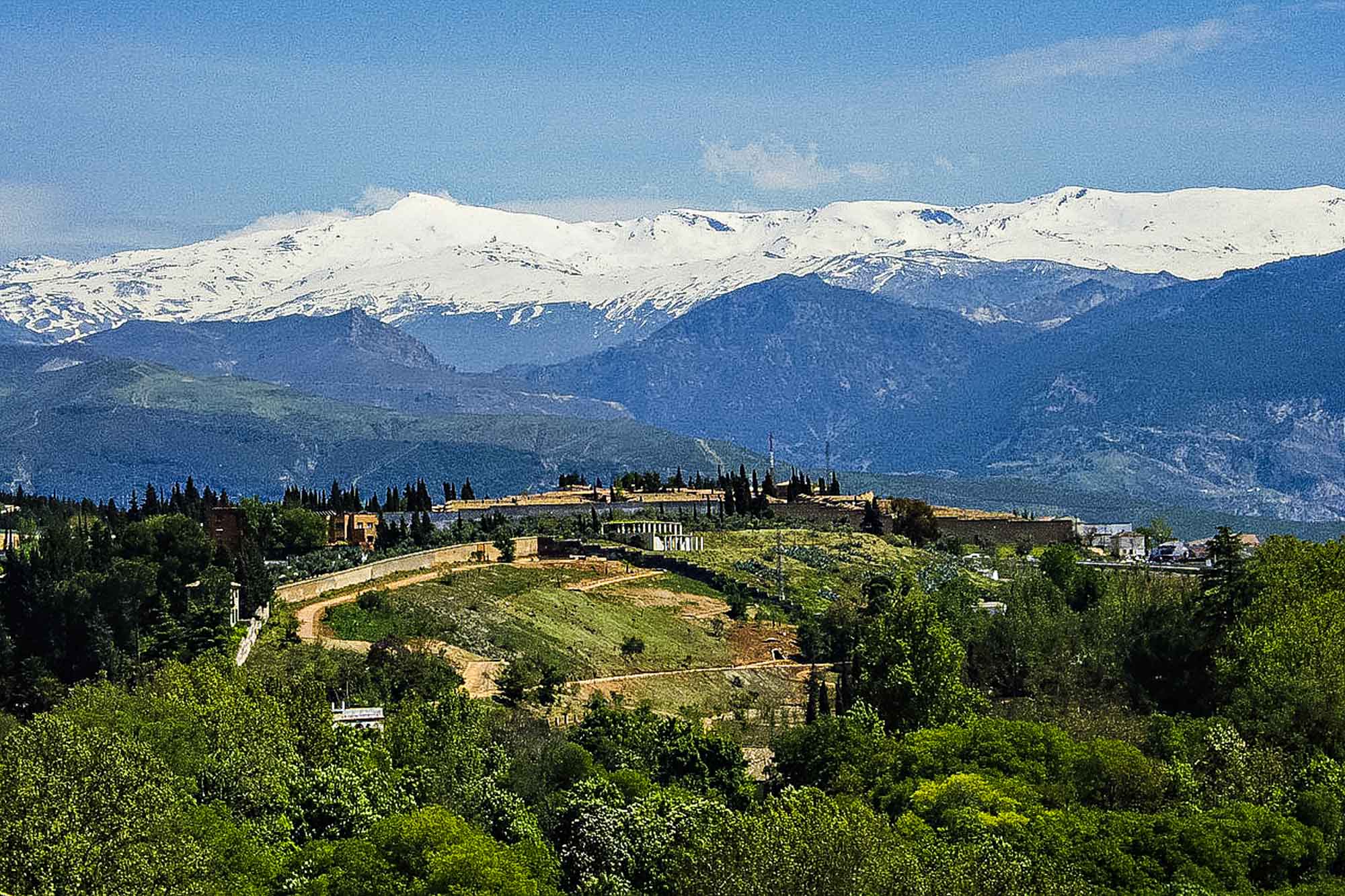
The Alcazaba is the oldest section, built in the 13th century. Its towers offer some of the best views of Granada below and the Sierra Nevada mountains beyond. The walls are thick and functional, designed for defense. Climbing to the tower tops reveals how the fortress commanded the approach routes to the city.
The Nasrid Palaces contain the most elaborate decoration. The Hall of Ambassadors features a coffered cedarwood ceiling and tall windows looking out over the city. The walls here are covered with calligraphy and geometric patterns. The Hall of the Abencerrajes displays a star-patterned stucco ceiling and a central pool, and local legend claims this is where a noble family was executed, with blood supposedly staining the basin (the stains are actually mineral deposits). The Hall of the Kings contains ceiling paintings, unusual in Islamic art of this period, depicting court scenes and hunting expeditions.
The Generalife gardens occupy a separate hillside to the east. They feature planted terraces, water channels, and smaller pavilions designed for leisure and contemplation. The Patio of the Irrigation Pond and the Patio of the Cypresses are the primary garden spaces. The vegetation here is less lush than it would have been historically, as the water systems that once fed the gardens have been modified and reduced over centuries.
The Court of Lions sits at the geographic center of the Nasrid Palaces. The arcade surrounding it is supported by 124 slim columns. The central fountain with its four lion sculptures is one of the most photographed features of the entire complex, though its original function remains debated by scholars. Some argue it was a drinking fountain or ablution basin. Others suggest it was purely decorative.
History and background
Granada's Nasrid dynasty ruled this corner of southern Spain from 1238 onward, maintaining independence long after other Islamic kingdoms in Iberia had fallen. The Alhambra grew incrementally as successive sultans added chambers, modified courtyards, and expanded fortifications. Muhammad V, who ruled in the mid-14th century, was responsible for many of the palace's most celebrated spaces, including the Court of Lions and the Hall of the Abencerrajes.
The name "Alhambra" comes from the Arabic al-hamra, meaning "the red," likely referring to the reddish color of the clay and stone used in its construction. The complex served multiple functions simultaneously. The Alcazaba was a military garrison. The Nasrid Palaces housed the royal family and government administration. The Generalife provided a retreat and agricultural space. Hammams, or bathhouses, served practical needs. Mosques facilitated religious practice. Workshops and storage areas supported the daily functioning of a royal court.
When the Catholic Monarchs conquered Granada in 1492, they initially preserved the palace, recognizing its value and beauty. Over subsequent centuries, parts were modified to suit Christian purposes. A Renaissance palace was built within the Alhambra's walls by Emperor Charles V in the 16th century. Sections fell into disrepair as political priorities shifted. By the 18th century, the Alhambra had become partially ruined, occupied by squatters, and mined for building materials.
The Romantic movement of the 19th century changed its fate. Writers like Washington Irving and artists traveling through Spain published accounts and illustrations that sparked European fascination with Islamic Spain. Irving famously lived in the Alhambra for a time and wrote "Tales of the Alhambra," which popularized the site internationally. This cultural revival led to systematic restoration efforts beginning in the 19th century and continuing to the present day. Modern conservation work balances historical accuracy with practical necessity, using techniques that respect the original materials and methods where possible.
Tickets and entry
Entry to the Alhambra requires a purchased ticket. General admission includes access to the Nasrid Palaces, the Alcazaba, and the Generalife. Timed entry tickets are the norm, meaning you're assigned a specific 30-minute window to enter the Nasrid Palaces. This system reduces crowding in the most popular sections, though other areas remain accessible throughout the day.
Tickets are sold at the main gate and online through the official website. Purchasing in advance is nearly essential during spring and summer. If you arrive without a pre-booked ticket during peak season, you may find all same-day tickets sold out. Online booking also allows you to choose your preferred entry time, which gives you some control over when you navigate the most crowded spaces.
Guided tours are available and offer context you won't get from a standard admission ticket. A guide can explain architectural details, historical events, and the meanings embedded in decorative schemes. Tours tend to move faster than independent exploration, which some visitors prefer and others find rushed.
Audio guides in multiple languages are available for rent. They provide recorded commentary tied to specific locations and artworks throughout the complex. Coverage is comprehensive, though the experience of moving through spaces while listening to a recorded voice differs from the immersion of silent observation or a live guide's explanations.
Best time to visit
The Alhambra attracts visitors year-round, but the experience varies significantly by season. Spring and early summer bring warm weather and blooming gardens, but also peak tourist crowds. Midday temperatures and the crush of visitors in narrow corridors can make the experience feel hurried and uncomfortable. If you visit during these months, arriving at opening time or after 5 p.m. reduces congestion substantially.
Autumn, roughly September through November, offers milder temperatures and fewer visitors than summer. The gardens are less lush than in spring, but the light is excellent for photography and the pace of exploration feels more leisurely.
Winter is the quietest season. Temperatures are cool but rarely freezing. Some sections of the Generalife gardens may be closed for maintenance. Shorter daylight hours mean you have less time to explore if you arrive in the afternoon. However, if you want to move through the palaces without feeling rushed or overwhelmed by crowds, winter provides that opportunity.
Weekdays are consistently less crowded than weekends. If your schedule allows, visiting Tuesday through Thursday rather than Saturday or Sunday will noticeably reduce the number of people you encounter in the major halls.
Photography tips
The Alhambra rewards photography, but the interiors present specific challenges. Carved stucco ceilings and tilework contain intricate detail, but artificial and natural light in the chambers can be uneven. Shaded alcoves sit next to bright windows. Your camera's exposure meter can struggle with this contrast.
The courtyards, especially the Court of Lions and the Court of Myrtles, work best photographed early in the morning when light is soft and the reflecting pools are still and clear. Midday sun creates harsh shadows between the arcades. Late afternoon light from the west can illuminate the decorated walls beautifully.
The exterior views from the Alcazaba towers and from the upper terraces of the Generalife are among the best in Granada. These vantage points show the Alhambra's scale and its relationship to the surrounding city and mountains. Cloudy days flatten these views, so clear weather helps.
Interior photography is permitted in most areas, though some chapels and specific rooms may restrict it. Flash photography is generally prohibited. The darkness of many chambers means you'll need a camera or phone capable of performing well at higher ISO settings, or you'll accept softer, slower-speed images.
Facilities and preparation
The Alhambra is a sprawling site with limited facilities. There is a cafe near the main entrance and another in the Generalife area, but options for food and drink are sparse. Bringing a water bottle is practical, especially in warm months. The walk between sections is substantial, and the terrain includes stairs and uneven surfaces.
Comfortable walking shoes are essential. The paths are paved, but steep inclines and hundreds of steps mean that poor footwear will make the experience exhausting. Plan for at least three to four hours to explore the main sections. If you move slowly, read plaques, or linger in courtyards, five to six hours is reasonable.
Restrooms are available at the entrance and near the Generalife. They tend to be crowded during peak hours. The site is not particularly accessible for visitors with limited mobility. Many passages are narrow, stairs are frequent, and some areas require climbing. Certain sections can be skipped if you're unable to navigate steep terrain, but the experience will be reduced.
Bring sunscreen and a hat if visiting in warm months. The hilltop location offers little shade in many areas. The white stone and tilework reflect sunlight intensely, increasing the risk of sunburn.
Combining with nearby attractions
Granada's Albaicín neighborhood is a 15 to 20 minute walk downhill from the Alhambra. This medieval quarter of narrow streets, whitewashed buildings, and small plazas offers a different flavor of Granada's history. The viewpoint at Mirador de San Nicolás provides one of the most celebrated views of the Alhambra from across the city. Visiting the Albaicín before or after the Alhambra creates a fuller picture of how the city and palace functioned together.
Granada's Cathedral and Royal Chapel are in the city center, about 20 to 30 minutes walk from the Alhambra or a short bus ride. These Christian monuments were built in the decades following the conquest and reflect a different architectural and religious sensibility than the Alhambra.
The Monastery of San Jerónimo is also in central Granada and is worth a visit if you're interested in how Christian Granada developed after 1492. The contrast between the Islamic and Christian monuments clarifies how Granada's identity transformed.
Sample visit plan
If you have a full day, start early, ideally with a timed entry ticket for the Nasrid Palaces between 8 a.m. and 9 a.m. Spend your first hour in the Alcazaba, climbing to the towers and understanding the fortress's defensive layout. Return to the main palace area and enter the Nasrid Palaces during your assigned window. Plan to spend two to two and a half hours here, moving slowly through the major halls.
Take a break around midday. Eat lunch at the cafe or bring a packed meal and find a quiet corner. In the afternoon, explore the Generalife gardens. Spend an hour here without rushing. If energy remains, walk the perimeter paths and take in views of the city and mountains.
If you have half a day, prioritize the Nasrid Palaces and the Court of Lions. The Alcazaba can be skipped if time is tight. The Generalife is less critical than the palace, though the gardens offer valuable contrast.
Practical tips
- Book tickets online weeks in advance if visiting in spring or summer
- Arrive at your assigned entry time for the Nasrid Palaces, not early, to avoid crowding at the gates
- Download a map or guide app before arriving, as WiFi is limited on-site
- Visit the Court of Lions first during your timed entry window when fewer people have yet entered
- Wear layers. Interiors are cool even in warm weather, and the hilltop can be breezy
- Consider a guide or audio guide if you want historical and architectural context
- Photograph the Alcazaba towers at sunset for dramatic light on the surrounding landscape
- The Generalife is less crowded in the late afternoon when many visitors have left
FAQ
How long does it take to see the Alhambra? Most visitors spend three to four hours exploring the main sections. If you move slowly, read detailed information, or take a guided tour, five to six hours is reasonable. You can see the highlights in two hours if you move quickly.
Is the Alhambra accessible for people with mobility challenges? Partially. The Alcazaba has steep stairs and narrow passages. The Nasrid Palaces are somewhat more navigable, though they include stairs and uneven flooring. The Generalife has sloped terrain and steps. Visitors with significant mobility limitations should ask staff about which sections are most feasible before purchasing a ticket.
Do I need a guide to understand what I'm seeing? No, but context enhances the experience. Plaques and signage explain major spaces and historical events. A guide or audio guide adds layers of meaning, architectural detail, and historical narrative. Decide based on whether you prefer independent exploration or more structured information.
Can I visit the Alhambra at night? Limited evening visits are sometimes offered during summer months, featuring the Nasrid Palaces and gardens illuminated by lighting. These tours require separate tickets and must be booked in advance. Standard daytime admission is the primary option year-round.
What's the best view of the Alhambra from outside the complex? The Mirador de San Nicolás in the Albaicín neighborhood provides the most celebrated view. The Alhambra is lit at night and photographed extensively from this vantage point. It's about a 20-minute walk from the main gate.
Opening hours
Reviews
Sign in and mark this place visited to leave a review.
No reviews yet.
Free Trip Planner
Plan your Granada trip with our free planner
Build a day-by-day itinerary with AI suggestions, hand-picked places, and friends. Free forever — no credit card.