Bruges Canal Tour
Nieuwstraat 11, 8000 Brugge, West Flanders, Belgium Posted by Brandon B.Admin
Seeing Bruges from the Water
The Bruges Canal Tour is one of those experiences that earns its reputation. You step into a low wooden boat, the city closes in around you, and within minutes you're gliding under stone bridges that have stood for centuries, past the crooked gabled facades that make Bruges one of the best-preserved medieval cities in northern Europe. It's a completely different angle on a place most visitors only ever see from the cobblestones.
Bruges itself sits on a network of canals that once made it one of the wealthiest trading ports in medieval Europe. The boats follow these same waterways, threading through the historic center in routes that pass landmarks you'd struggle to reach on foot, or simply wouldn't see the same way from street level.
If you visit Bruges and skip the canal tour, you've left something important on the table.
Why the Canal Tour Matters
Bruges earned its UNESCO World Heritage status in 2000, and the canal network is central to why the city looks the way it does. The waterways shaped the layout of streets, the placement of merchant houses, and the position of bridges going back to the medieval period. A boat trip doesn't just offer pretty views. It gives you a working map of how the city was built and why.
From water level, the backs of buildings reveal details that street-facing facades hide. Mossy stone foundations, private garden walls draped over the water, swans drifting alongside the boat. The swans of Bruges are famous enough to have their own legend, tied to a 15th-century execution that the city has been atoning for ever since, depending on which local you ask.
Quick Facts
- Location: Multiple boarding points around the historic center, including near the Rozenhoedkaai and the Dijver
- Typical trip duration: around 30 minutes per boat ride
- Boats run most days from roughly mid-March through November, weather permitting
- Boats carry approximately 8 passengers per trip
- Commentary is provided by the boatman, usually in several languages
- Children under a certain age typically ride at a reduced rate or free, depending on the operator
- No advance booking required at most departure points; you simply queue
Getting There
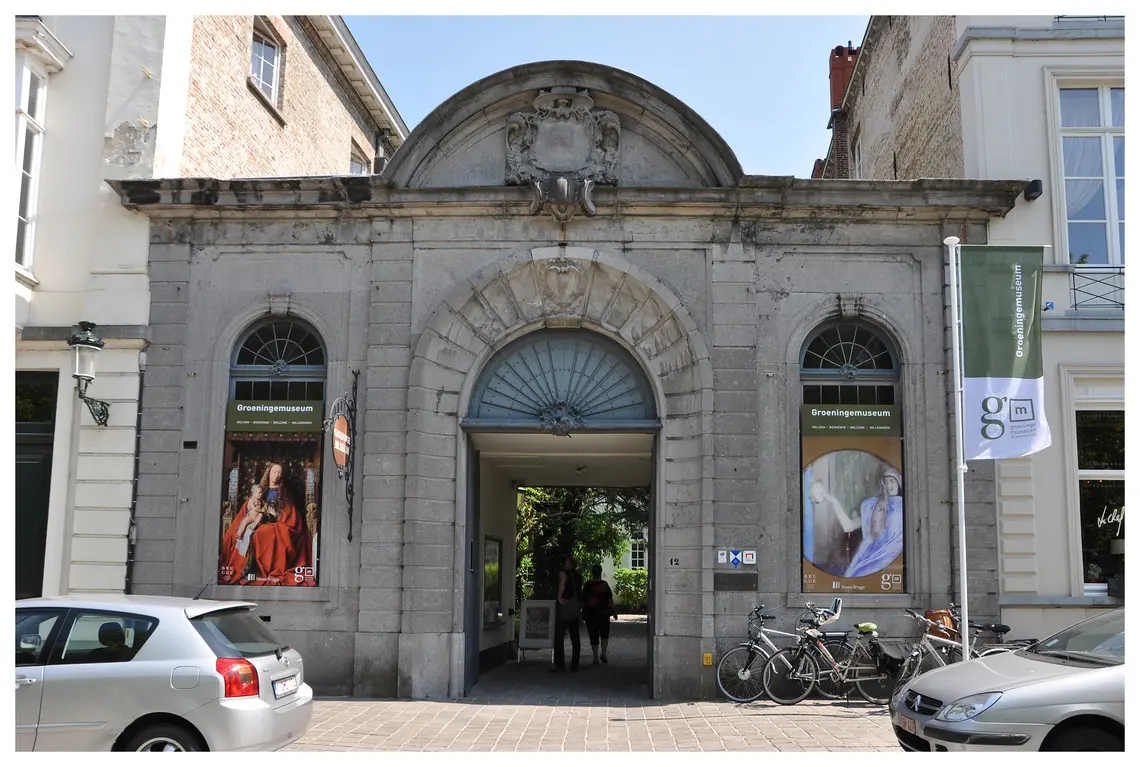
Bruges' historic center is compact enough that every canal departure point is walkable from the main market square, the Markt. The Rozenhoedkaai, one of the most photographed canal corners in the city, is about a 5-minute walk south from the Markt. The Dijver landing is close by, running along the canal that borders the Groeninge Museum.
If you're arriving by train, Bruges station sits about 15 minutes on foot from the canal zone, or a short bus or taxi ride. Cycling is popular in Bruges, and there are bike parking spots near the main departure areas. Driving into the historic center is not recommended since parking is limited and the streets are narrow.
The Experience on the Water
Boats seat a small group, which keeps things intimate. You're not on a large tourist ferry with a PA system blasting at full volume. The boatman typically narrates as you go, pointing out specific bridges, buildings, and stories along the route. The quality of that commentary varies by operator and by the individual guide, but most days you'll come away having learned something concrete about the city rather than just having taken a pleasant float.
The route passes under several low bridges, and taller passengers sometimes need to duck. That's not a complaint. It's part of what makes the city feel genuinely old rather than preserved for show. You pass the back of the Church of Our Lady, whose brick tower rises 122 meters and remains one of the tallest brick structures in the world. You'll likely drift past the Boniface Bridge, a small arched crossing that dates to 1910 but looks considerably older, and is one of the most photographed spots in the city.
The whole loop takes around half an hour. It's over before it feels like it should be.
Main Highlights Along the Route
- Rozenhoedkaai: the "Quay of the Rosary," considered the most scenic canal intersection in Bruges
- The Groeninge Museum embankment, where the Dijver canal runs alongside one of Belgium's finest collections of Flemish Primitive paintings
- The Church of Our Lady tower, visible from the water and one of the city's dominant landmarks
- The Begijnhof bridge area, near the 13th-century beguinage that still houses Benedictine nuns
- Numerous private gardens backing directly onto the canal, rarely visible from the street
- The city's resident mute swans, which you'll almost certainly encounter mid-route
Best Time to Visit
Spring and early autumn tend to offer the best combination of manageable crowds and decent light. Summer brings the longest queues, particularly in July and August when Bruges is busy with European tourists. On a warm Saturday afternoon in peak season, the wait at popular departure points like the Rozenhoedkaai can stretch to 45 minutes or more.
Morning departures are generally quieter. If you get on the water by 10am, you'll often find the canals relatively still, the light low and warm, and the queues short. Late afternoon has its appeal too, especially in shoulder season when the golden hour hits the water around 5pm and the tour groups have thinned out.
The boats don't typically run in heavy rain or when water levels are too high after prolonged rainfall. Winter operation is limited and sometimes suspended entirely. Check locally on the day if you're visiting between December and February.
Photography Tips
A wide-angle lens or the standard camera app on a modern phone handles most of what you'll want to shoot. The challenge on the boat is motion. Even at low speed, the gentle rocking can blur a shot if you're not quick. Tap to focus on your subject before the boat drifts past it, and shoot in bursts if you're after something precise.
The Rozenhoedkaai is the single most photogenic spot, and you'll pass it during the tour. But consider walking there before or after your boat ride and shooting from the bridge on foot. That's the angle you've probably seen in every photograph of Bruges ever published, and it's worth taking your time with it rather than capturing it from a moving boat.
Overcast days, which Bruges gets regularly, often produce better canal photographs than direct sunshine. The flat light reduces harsh shadows on the canal surface and brings out the texture of the stone facades.
Combining with Nearby Attractions
The canal tour works well as a first activity on arrival, giving you a mental map of the city before you start walking it. From the Dijver departure point, the Groeninge Museum is literally a two-minute walk. The Gruuthuse Museum, housed in a 15th-century nobleman's palace directly on the canal, is another option within the same block.
The Begijnhof, one of the most serene spots in Bruges, sits about 10 minutes on foot south from the main canal zone. Pairing the boat tour with a walk through the Begijnhof and then north through the Minnewater park makes for a half-day that covers a lot of the city's character without feeling rushed.
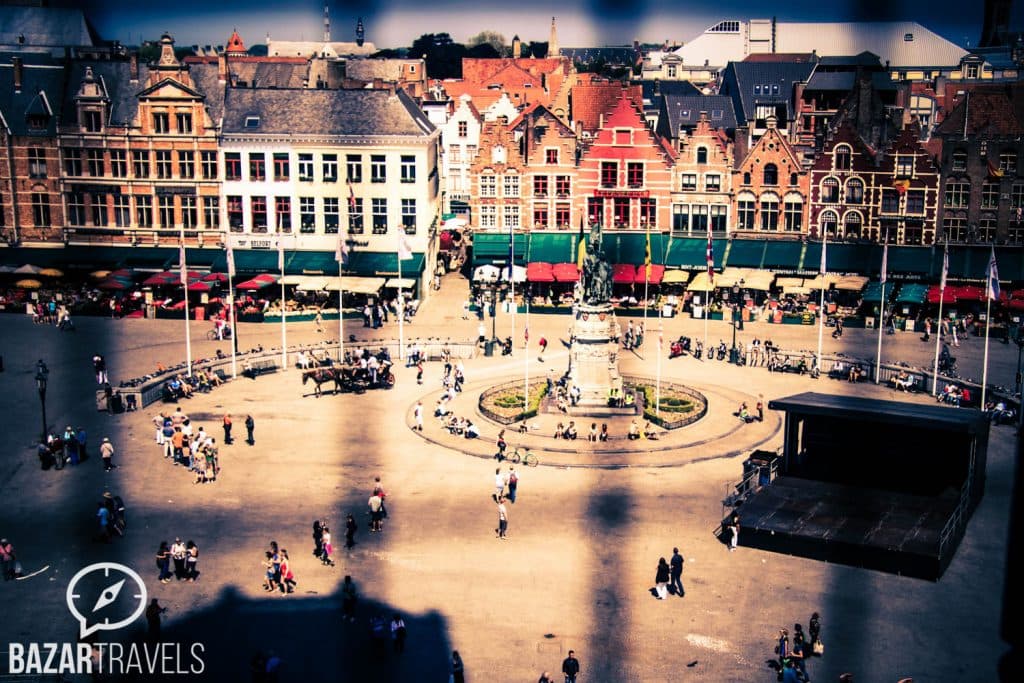
The Markt square and the Burg, Bruges' two central squares, are both within easy walking distance of any departure point and are natural stops before or after the water.
Practical Tips
- Arrive at the departure point early, especially in summer. Queues build quickly after 11am.
- Bring a light layer even in summer. The canal level sits below street level and can feel noticeably cooler on the water.
- Most operators accept both cash and card, but having small cash on hand avoids any friction at the ticket point.
- If one departure point has a long queue, try another. There are several around the historic center and they often have different wait times.
- The boats are open-top. If rain is threatening, a small umbrella is worth carrying.
- Mobility considerations: the boarding steps down into the boat can be steep. If you have limited mobility, ask the boatman before committing, as conditions vary by landing point.
- Swans occasionally approach the boat. Don't feed them or lean out to touch them.
FAQ
Do I need to book in advance?
Most departure points operate on a walk-up basis. You pay at the boat and board when there's space. In peak summer, this means waiting in a queue rather than booking a slot, so factor that into your timing.
How long does the tour last?
Most routes run for approximately 30 minutes. There's no extended option at most operators, so if you want a second look, you simply queue again.
Is the commentary in English?
Most boatmen speak several languages and will gauge the group. English is almost always covered. Some operators also provide multilingual printed materials on board.
Are children welcome on the boat?
Yes, and the experience tends to go down well with kids. The boats are small enough that children stay engaged. Young children should sit with an adult and be kept away from the sides while the boat is moving.
Does the tour run year-round?
Most operators run from around mid-March through to the end of October or November. Winter operation is limited and weather-dependent. If you're visiting in the colder months, check with the local tourist office or at the departure point on the day.
Reviews
Sign in and mark this place visited to leave a review.
No reviews yet.
Free Trip Planner
Plan your Belgium trip with our free planner
Build a day-by-day itinerary with AI suggestions, hand-picked places, and friends. Free forever — no credit card.