Groeninge Museum
Dijver 12, 8000 Brugge, West Flanders, Belgium Posted by Brandon B.Admin
The Groeninge Museum in Bruges: Flanders' Finest Collection of Flemish Primitives
The Groeninge Museum sits on the Dijver canal in the center of Bruges, and if you have even a passing interest in medieval painting, this is the one museum in Belgium you should not skip. The collection runs from the 15th century to the 20th, but it is the Flemish Primitives that give the place its reputation. Jan van Eyck, Hans Memling, Gerard David, Rogier van der Weyden: their work fills the first rooms, and after ten minutes in there you start to understand why art historians still make pilgrimages to this city.
The building itself is modest from the outside, tucked behind a garden wall just off the Dijver. That understatement is very Bruges. What waits inside is anything but modest.
Why the Groeninge Museum Matters
The 15th century was a remarkable moment for painting in what is now Belgium and the Netherlands. Bruges was one of the wealthiest trading cities in northern Europe, and wealthy merchants commissioned work from the best painters alive. Many of those paintings ended up staying in the city. The Groeninge holds the result: a concentration of early Flemish panel painting that is difficult to match anywhere else in the world.
Jan van Eyck's Madonna with Canon van der Paele, completed in 1436, is probably the most discussed single object in the building. The surface detail is extraordinary even by the standards of later centuries. A few rooms further along, Gerard David's Judgment of Cambyses from 1498 is the kind of painting that stops people mid-step. It is not comfortable viewing, but it was never meant to be.
Beyond the Primitives, the museum keeps a strong collection of Flemish Renaissance and Baroque work, 19th-century Belgian painting including the Symbolists, and a selection of 20th-century art that brings the story right up to figures like Constant Permeke and Gustave De Smet. The range means you can spend two hours here and never feel like the walls are repeating themselves.
Quick Facts
- Address: Dijver 12, 8000 Bruges
- Walk time from the Markt: about 10 minutes on foot
- Collection spans roughly 600 years, from the 1400s to the late 20th century
- General admission ticket covers the permanent collection
- Temporary exhibitions sometimes require a separate or upgraded ticket
- Closed on Mondays in most seasons
- Audio guides available at the entrance desk
- The museum is part of the Bruges Musea network, which offers combined ticketing with other city museums
Getting There
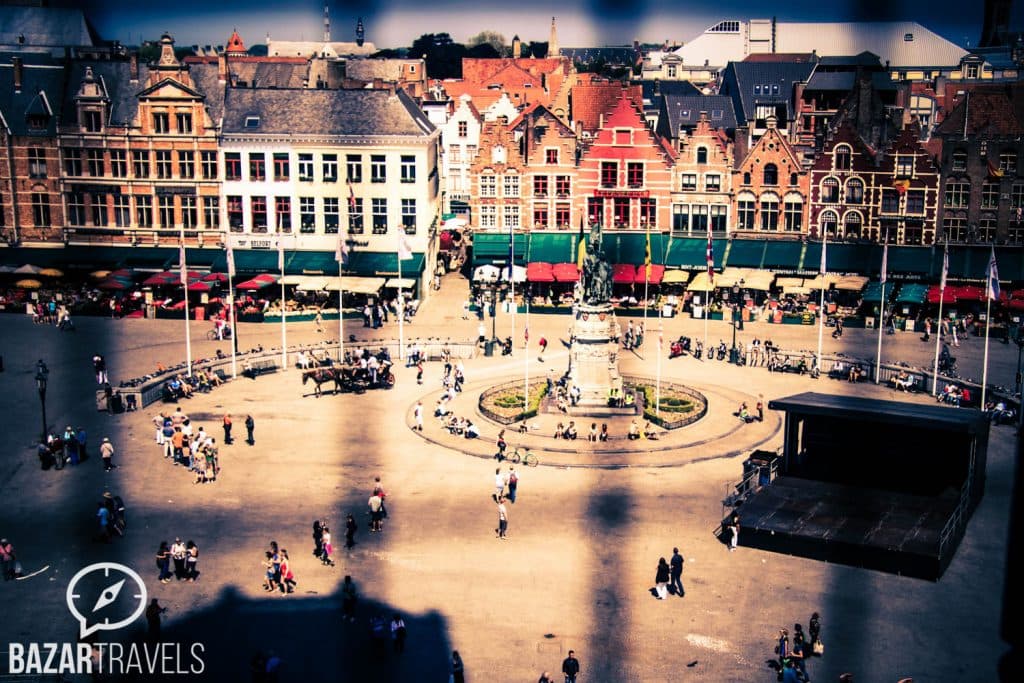
From the Markt, the main square at the center of Bruges, walk south along the Wollestraat and then follow the Dijver canal path. The museum entrance is on your left behind a low garden. It takes around 10 minutes at a relaxed pace, and the walk itself passes the Belfry and the Rozenhoedkaai, one of the most photographed canal corners in Belgium.
If you are arriving by train, Bruges station is about 20 minutes on foot from the museum, or a short bus ride. Cycling is practical since Bruges has good bike infrastructure, and rental shops are plentiful near the station. There is no dedicated car park at the museum, and driving into the old town center is restricted, so most visitors arrive on foot or by bike.
The Layout and Experience
The museum is not enormous. Most visitors move through it in roughly 90 minutes to two hours, though you can easily stretch that if you linger over individual works. The rooms are arranged broadly chronologically, so you enter into the Flemish Primitives and move forward through time as you go deeper into the building.
Lighting tends to be thoughtful rather than dramatic. The older panel paintings sit under controlled light that lets you read the surface without glare. Labels are in Dutch and English throughout, which makes independent visiting straightforward even if you have no French or Dutch. The audio guide adds more depth on the major works and is worth picking up if the Flemish Primitives are the reason you came.
The garden between the entrance and the canal is a good place to decompress between the older and newer galleries. On warmer days people sit there for a few minutes before going back in. It is also a useful landmark if you are meeting someone.
Main Highlights
The Flemish Primitives Rooms
This is the core of the Groeninge's identity. Jan van Eyck's Madonna with Canon van der Paele and the Portrait of Margareta van Eyck from 1439 are both here. The Margareta portrait is one of the earliest known independent portraits of a named woman in Western painting. These are not large works, but they reward slow looking. Get close and you will see details that seem impossible for the period.
Gerard David and Hans Memling
The Groeninge holds David's Baptism of Christ triptych alongside the Judgment of Cambyses diptych. Memling's work appears here too, though his larger pieces live at the dedicated Memling Museum in the Sint-Janshospitaal about five minutes' walk away. The two museums complement each other well if you have a full day.
Later Flemish and Belgian Work
The 19th and early 20th century galleries contain work by the Belgian Symbolists and Expressionists that most international visitors walk past too quickly. Fernand Khnopff and Jan Toorop are represented, and their work holds up well alongside the older material. Permeke's heavy, earthy figures in the final rooms make a striking counterpoint to the jewel-like surfaces of the Primitives at the start.
Tickets and Entry
The Groeninge operates on general admission pricing with reduced rates for children, students, and seniors. Bruges residents often pay a different rate. The museum participates in the Museumpass system, which covers multiple Bruges museums under a single ticket and represents good value if you plan to visit more than two or three sites during your stay. Timed entry is not typically required for the permanent collection, but during peak summer months or major temporary exhibitions the entrance can get busy in the mid-morning. Arriving before 10am or after 3pm tends to mean quieter galleries.
Best Time to Visit
Bruges is busy year-round, but the summer months from June through August bring the heaviest crowds to the whole city. The Groeninge is less affected than outdoor sites, since it draws visitors who specifically want the art collection rather than canal boat tours. That said, school group visits concentrate in the morning, and if you arrive between 9am and 11am on a weekday in spring you may find yourself sharing the Primitives rooms with a class of twelve-year-olds.
Winter visits have their own appeal. The city is quieter, and the museum's interior warmth is genuinely welcome on a grey November afternoon. The Flemish Primitives were painted in northern light, and there is something fitting about seeing them in the kind of low, diffuse daylight that settles over Bruges in the colder months.
Photography Tips
Photography policies can change, so check at the desk on arrival. When permitted, the older panel paintings are often behind glass, which can create reflections depending on your angle. Moving slightly to one side rather than shooting straight on usually helps. The garden outside offers a clean exterior shot of the museum facade with the canal visible in the background if you walk back toward the Dijver path. Early morning light hits the facade well before the tour groups arrive.
Combining with Nearby Attractions
The Groeninge sits in a cluster of cultural sites that make it easy to build a full day. The Memling Museum in the Sint-Janshospitaal is a five-minute walk and makes a natural companion visit, since Memling's altarpieces and the Shrine of Saint Ursula there add context to the work you see at the Groeninge. The Gruuthuse Museum is almost directly across the garden and covers decorative arts and the domestic history of Bruges. The Onze-Lieve-Vrouwekerk, the Church of Our Lady, is another two minutes further and contains Michelangelo's Madonna and Child, one of the few works by Michelangelo that left Italy during his lifetime.
If you are spending a full day in this part of the city, the Dijver antique market runs along the canal on weekends during spring and summer. It is worth walking through even if you are not buying.
Practical Tips
- The museum is closed on Mondays. Plan around this if your trip is short.
- The Bruges Museumpass covers the Groeninge along with several other city museums and is worth calculating against individual ticket costs.
- Audio guides add meaningful depth to the Flemish Primitives rooms specifically. Worth the extra cost if this period is the reason you came.
- The cloakroom is available for larger bags. The galleries are compact and a large backpack can be awkward.
- There is a small museum shop near the exit with quality art books and reproductions.
- If you have mobility concerns, confirm current accessibility arrangements directly with the museum, as the building has some older floor levels.
- Combine the visit with the Memling Museum the same day to get the fullest picture of the Bruges painting tradition.
FAQ
Do I need to book tickets in advance?
For the permanent collection, walk-in entry is usually possible. During major temporary exhibitions or in peak summer season, checking the museum's website in advance is sensible. Timed-entry booking is not always required but can save you a queue.
How long should I allow for a visit?
Most visitors spend between 90 minutes and two hours. If the Flemish Primitives are your main interest, you could spend that time in the first few rooms alone. Allow at least two hours if you want to see the full permanent collection without rushing.
Is the Groeninge Museum suitable for children?
Older children who have some interest in art or history tend to find the museum engaging, particularly the Primitives with their unusual surface detail. The Judgment of Cambyses is graphic and worth previewing if you are visiting with younger children. The museum is not primarily designed as an interactive children's experience.
Can I visit the Groeninge and the Memling Museum on the same day?
Yes, and it is one of the better ways to spend a day in Bruges if art is the focus. The two collections cover overlapping periods and the walk between them takes about five minutes. Many visitors do both in a single morning.
Reviews
Sign in and mark this place visited to leave a review.
No reviews yet.
Free Trip Planner
Plan your Belgium trip with our free planner
Build a day-by-day itinerary with AI suggestions, hand-picked places, and friends. Free forever — no credit card.