
Centro Historico de Sevilla
Seville Spain Posted by Brandon B.Admin
What Makes the Centro Histórico de Sevilla Worth Your Time
The Centro Histórico de Sevilla is one of the largest and best-preserved historic city centers in all of Europe. Walking into it feels less like sightseeing and more like stepping into a city that simply never stopped living. The streets are narrow enough that neighbors can pass a plate of food between windows, the tiles underfoot are often centuries old, and the cathedral at its core is the third-largest church in the world by floor area.
That cathedral alone would justify a trip. But the centro histórico stacks its cards well beyond one monument. The Alcázar palace, the old Jewish quarter of Santa Cruz, the Torre del Oro on the riverbank, the flamenco bars tucked into basement rooms on Calle Betis across the river, the tapas counters in the Triana neighborhood nearby. The whole thing is walkable, which is either a gift or a trap depending on your shoes.
Seville's historic center sits along the eastern bank of the Guadalquivir River. Most of what matters is contained within about a 20-minute walk from any edge of the district to any other, though that estimate assumes you don't stop, which you will.
Quick Facts
- Location: Central Seville, along the east bank of the Guadalquivir River
- Key landmarks: Catedral de Sevilla, Real Alcázar, Barrio Santa Cruz, Torre del Oro, Plaza de España
- UNESCO status: The cathedral, Alcázar, and Archivo de Indias together were designated a UNESCO World Heritage Site in 1987
- Walkability: Most major sights are within 15 to 20 minutes of each other on foot
- Language: Spanish, with Andalusian dialect; English is widely spoken in tourist areas
- Best entry point: Many visitors arrive via Santa Justa station and take the metro or a taxi into the center
Getting There
Seville's main train station, Santa Justa, sits northeast of the historic center. From there, a taxi into the old town takes roughly 10 minutes depending on traffic. The metro also connects Santa Justa to Puerta Jerez, which drops you at the southern edge of the center near the Alcázar gardens.
If you're arriving by bus, the Plaza de Armas and Prado de San Sebastián stations both border the historic district. Flying in? Seville Airport is about 30 minutes from the center by taxi or the EA airport bus, which stops near the cathedral.
Once you're in, walking is the only real option. The narrow streets of Barrio Santa Cruz and the older quarters are largely off-limits to cars, which makes the area quieter and more navigable on foot than you'd expect for a city of this size.
The Layout and Experience
The centro histórico doesn't have a single focal point so much as a cluster of them. The cathedral and the Alcázar share the same block, which is a good place to anchor your mental map. North of them runs the commercial artery of Calle Sierpes, a pedestrian street lined with shops, cafes, and locals going about ordinary errands. East of the cathedral is Barrio Santa Cruz, the old Jewish quarter, a maze of white-walled lanes and small plazas that gets busy in the morning but calms down considerably after siesta.
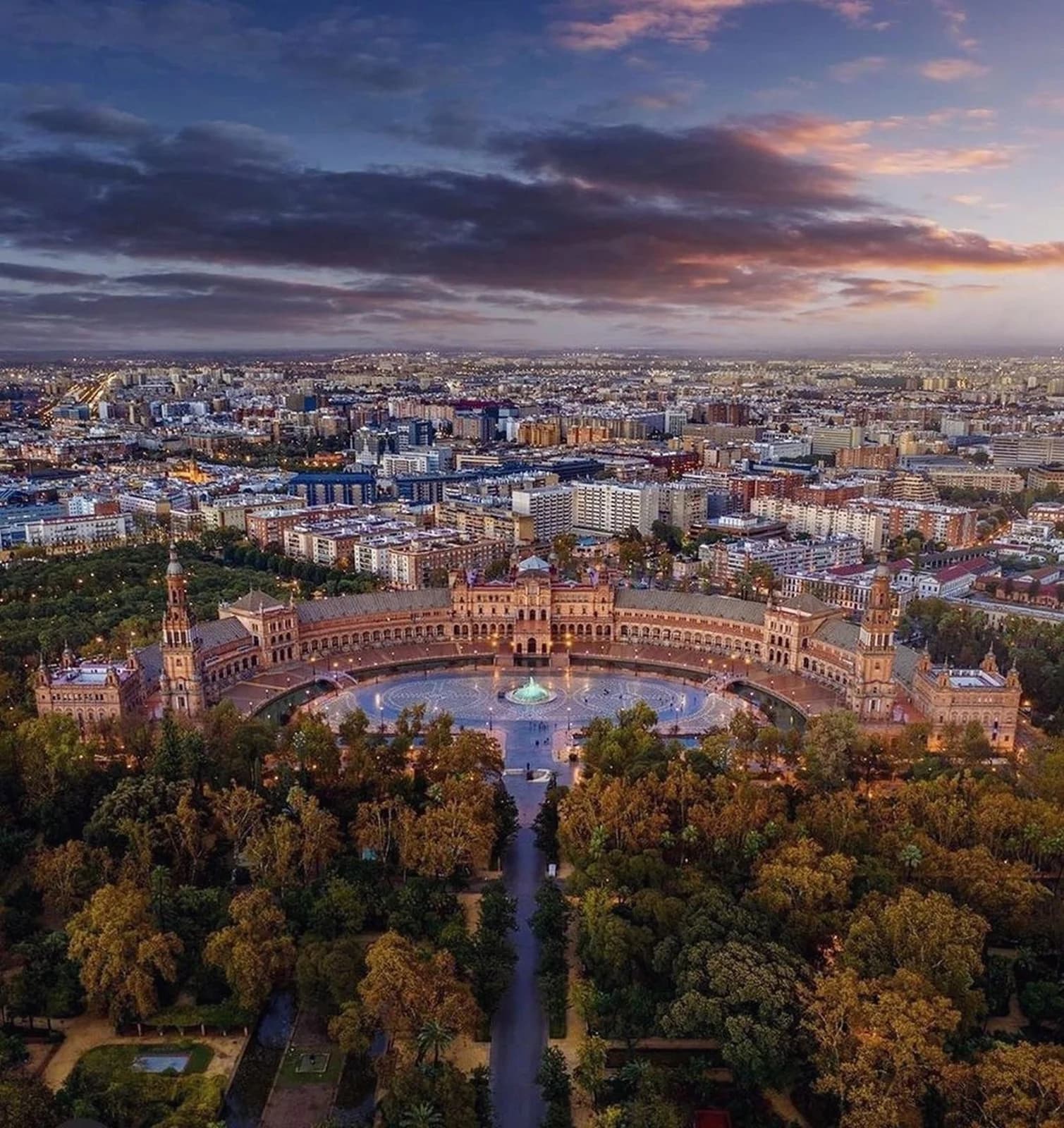
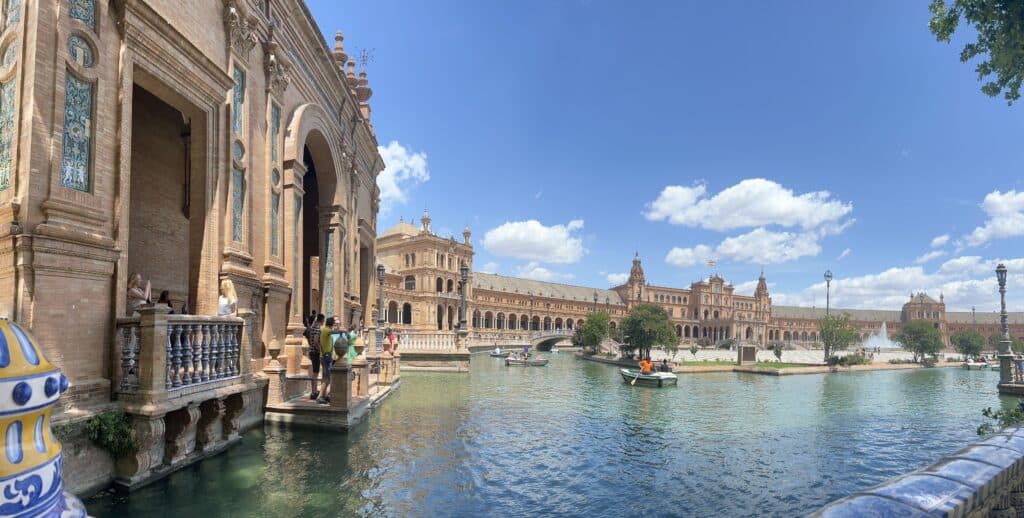
South of the cathedral, the Avenida de la Constitución leads toward the river and the Torre del Oro, a 13th-century watchtower that once guarded the port. Walk north along the river and you'll eventually reach the Plaza de España, built for the 1929 Ibero-American Exposition. It's a semicircular structure with a canal running around it, tiled alcoves representing every Spanish province, and a scale that genuinely surprises people who only know it from photographs.
The whole area shifts in character depending on the time of day. Mornings belong to locals running errands and early tourists beating the queues. By early afternoon in summer, the streets quiet noticeably. After 6pm, the city revives and stays lively well into the night.
Main Highlights
Catedral de Sevilla and La Giralda
Construction on the cathedral began in 1401, built on the site of a former mosque. The Giralda tower, which started as the mosque's minaret, now serves as the cathedral's bell tower and is one of the most recognizable silhouettes in Seville. You climb it via a series of ramps rather than stairs, originally designed so horses could ascend. The views from the top are worth the effort. The cathedral also holds the tomb of Christopher Columbus, though the question of whether his remains are actually inside has been debated by historians for decades.
Real Alcázar
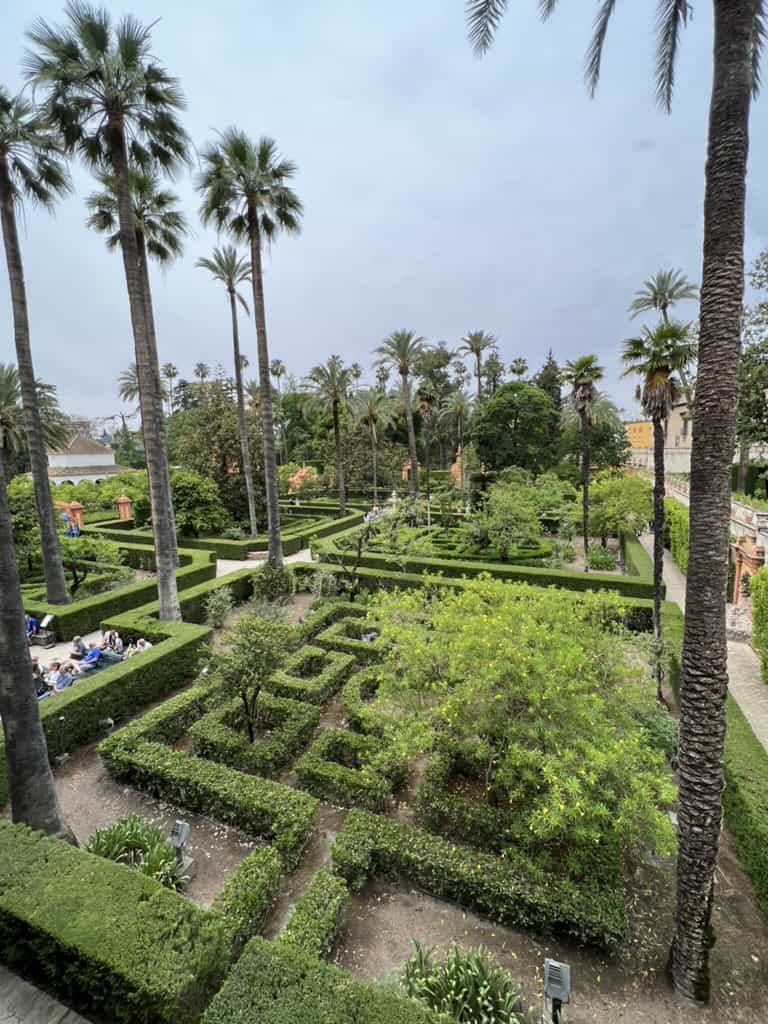
The Alcázar is a working royal palace, which means the Spanish royal family still uses parts of it as an official residence. The sections open to visitors include some of the finest examples of Mudéjar architecture anywhere, a style that blends Islamic and Christian building traditions in ways that don't feel like a compromise so much as a new language. The gardens alone could fill an afternoon. Timed-entry tickets are required and sell out well in advance, especially between March and June.
Barrio Santa Cruz
The former Jewish quarter is best explored without a map if you can manage it. The streets were deliberately designed to confuse outsiders, and getting slightly lost is the point. There are small plazas with orange trees, iron-railed balconies, and tile-fronted doorways that lead into interior courtyards you can sometimes glimpse through open gates. The neighborhood is touristy, no question, but the architecture is genuine and the atmosphere in the early morning is something else entirely.
Plaza de España
Built in 1929 and used as a filming location for several major films over the decades, the Plaza de España sits at the edge of the Parque de María Luisa. You can rent rowboats on the canal, find the tiled alcove for your home province, or simply sit on one of the ceramic benches and watch people. It's free to enter and open most days from early morning.
History and Background
Seville has been continuously inhabited for thousands of years. Romans built a city here called Hispalis. The Visigoths followed. Then the Moors arrived in 711 and held the city for over five centuries, leaving behind the Giralda tower, the Alcázar foundations, and a street pattern that still disorients GPS systems. The Reconquista brought it back under Castilian control in 1248, and the city's golden age came in the 16th and 17th centuries when it held a monopoly on trade with the Americas. Nearly all the wealth of the New World passed through Seville's port, which is why so much of the architecture here is extravagant in a way that feels almost accidental.
The Archivo de Indias, housed in a 16th-century building between the cathedral and the Alcázar, holds the original documents from that colonial period. Letters signed by Columbus, Magellan's expedition logs, the maps that shaped the European understanding of the Americas. It's a UNESCO site in its own right and often overlooked by visitors rushing between the bigger two.
Best Time to Visit
Spring, specifically late March through May, is when Seville tends to be at its most intense. Semana Santa (Holy Week) fills the streets with processions that have been running in essentially the same form since the 16th century. The Feria de Abril, held two weeks after Easter, is a week-long celebration of casetas, flamenco, and horses in a fairground south of the center. Both events are extraordinary, and both mean the city is extremely crowded and accommodation prices spike significantly.
October and November offer a quieter alternative. The heat has dropped from its summer peak, the queues are shorter, and the light on the cathedral's stone in the late afternoon is particularly good for photography. Summer, especially July and August, is genuinely very hot. Temperatures regularly exceed 40°C. If you visit then, plan your outdoor time for early morning and evening, and treat the afternoon as time for museums and air-conditioned interiors.
Photography Tips
The Giralda photographs best from the far end of Avenida de la Constitución in the morning, when the light hits the eastern face directly. For the Alcázar's interior courtyard, arrive at opening time before the tour groups arrive and the light is still soft. The Plaza de España is most photogenic in the late afternoon when the ceramic tiles catch the warm light, and the crowds thin out after 6pm in the off-season.
Inside Barrio Santa Cruz, look for the Calleja del Agua, a narrow lane running behind the Alcázar walls with bougainvillea cascading over the whitewashed walls. It's one of the most photographed streets in the city for good reason.
Practical Tips
- Book Alcázar tickets online well in advance, especially if visiting between February and June
- Cathedral tickets also offer timed entry and can sell out on peak days
- Most churches in the old city are free to enter outside of mass hours; check individually
- Wear comfortable shoes with grip; the old cobblestones are uneven and slippery when wet
- Avoid arriving at tapas bars before 8pm if you want to eat with locals rather than other tourists
- Sunscreen is not optional in summer; the streets offer little shade between 11am and 5pm
- The Archivo de Indias is free to enter and rarely crowded; it's worth an hour of your time
- If you're visiting during Semana Santa or Feria, book accommodation months in advance
FAQ
How much time do you need in the Centro Histórico?
Two full days gives you enough time to visit the cathedral, the Alcázar, and the Plaza de España without rushing, with room to wander Barrio Santa Cruz and eat properly. Three days is more comfortable if you want to include the Archivo de Indias, the riverside walk, and some time in Triana across the bridge.
Is the historic center walkable?
Almost entirely, yes. The main sights cluster within a compact area and the streets are pedestrian-friendly. The one exception is the Plaza de España, which is about a 15-minute walk south of the cathedral through the Parque de María Luisa.
Is Seville's historic center suitable for families with children?
Generally yes. The Alcázar gardens give children room to move, the Plaza de España canal boats are a reliable hit, and the streets are relatively safe for walking. The summer heat is the main challenge with young children.
Do I need to speak Spanish?
It helps, especially in smaller tapas bars and local shops away from the main tourist circuit. In the major monuments and most restaurants near the cathedral, English is widely spoken. Learning a few phrases goes a long way with locals.
Can you visit the Centro Histórico on a day trip from another city?
From Madrid, yes. The high-speed AVE train covers the roughly 470 kilometers in about two and a half hours, making a long day trip feasible. From the Costa del Sol, the drive is around two hours. That said, Seville rewards staying overnight, if only to experience the city after 9pm when it genuinely comes alive.
Reviews
Sign in and mark this place visited to leave a review.
No reviews yet.
Free Trip Planner
Plan your Spain trip with our free planner
Build a day-by-day itinerary with AI suggestions, hand-picked places, and friends. Free forever — no credit card.
Related reading
Things to see near Centro Historico de Sevilla


Places to eat or drink near Centro Historico de Sevilla

Bodeguita Antonio Romero Arfe

Mercado de Triana

Las Teresas
