Parque de Maria Luisa
Paseo de las Delicias, s/n, 41013 Seville Spain Posted by Brandon B.Admin
Seville's Most Beloved Green Space
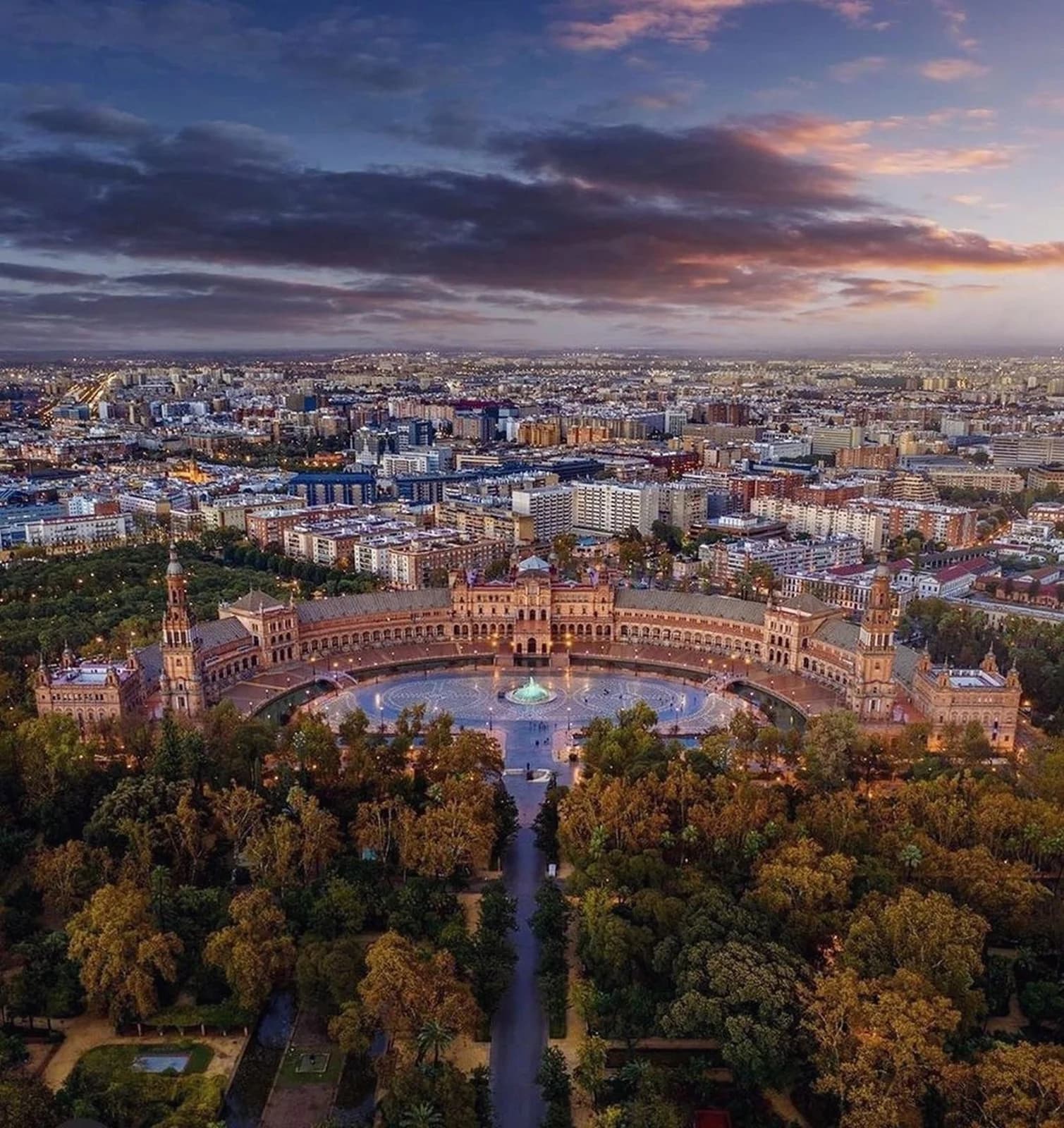
Parque de Maria Luisa sits at the southern end of central Seville, spreading across roughly 34 hectares along the Guadalquivir River. It is the city's largest and most ornate park, and on almost any given day you will find everyone from joggers and cyclists to families with strollers and tourists lingering beside its fountains. If you have been to the Plaza de España and wondered about the park surrounding it, this is the place.
The park feels genuinely different from most urban green spaces in Spain. Andalusian ceramics tile the benches and pathways. Peacocks wander freely. The canopy of ancient trees creates pockets of shade that feel like a gift in July. It rewards slow walking more than any itinerary can capture.
Why Parque de Maria Luisa Matters
Most visitors come here for the Plaza de España, which anchors the northeastern edge of the park and is arguably the most photographed structure in all of Seville. But the park itself is worth as much of your time as the plaza. It was designed for the Ibero-American Exposition of 1929, one of the most ambitious world fairs Spain ever staged. The infrastructure built for that event, including pavilions, fountains, and the grand semicircular plaza, gave Seville a lasting civic legacy that shaped the southern neighborhoods for decades afterward.
The park also holds two museums inside its boundaries, which means a single visit can combine nature, architecture, and culture without leaving the grounds.
Quick Facts
- Location: Paseo de las Delicias, s/n, 41013 Seville, in the Parque de María Luisa neighborhood near the Heliopolis district
- Size: approximately 34 hectares
- Entry: free and open to the public year-round
- Getting around inside: on foot, by bicycle, or by rented carriage (available near the main entrances)
- Dogs: allowed on leash in most areas
- Nearest major landmark: Plaza de España, directly inside the park
- Closest river: the Guadalquivir runs along the western boundary
Getting There
From the historic center, the park is about a 20-minute walk south along the Paseo de las Delicias, which runs parallel to the river. The walk itself is pleasant and flat. If you are coming from the Santa Justa train station, a taxi or rideshare takes roughly 10 minutes depending on traffic.
Several city bus lines stop along Avenida Isabel la Católica, which borders the park to the east. The Prado de San Sebastián bus terminal is also nearby, making the park easy to reach if you are arriving from outside the city. There is no metro stop directly at the park, but Seville's bike-share network, Sevici, has docking stations close to the main entrances.
The Layout and Experience
The park is large enough that first-time visitors sometimes feel disoriented inside it. The main entrance from Paseo de las Delicias deposits you near the western edge. From there, wide allées of plane trees lead you deeper toward the central areas, where you will find the most visited monuments and fountains.
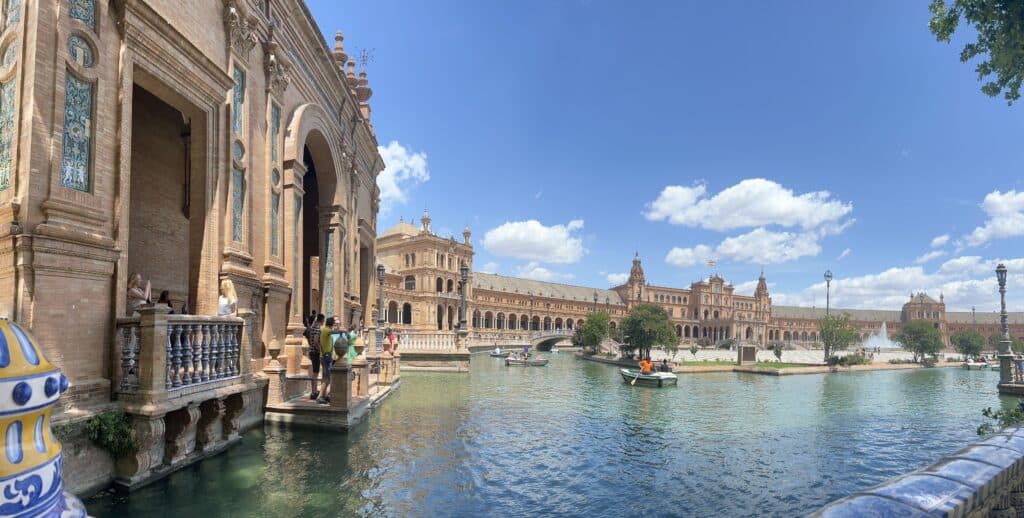
The Plaza de España dominates the northeastern section. Built in 1928 for the 1929 exposition, the semicircular complex features a canal you can row a small boat across, a series of tiled alcoves representing each Spanish province, and a sweeping brick-and-tile facade that blends Renaissance Revival with Moorish detail. It takes at least 30 minutes just to walk the full arc of the building and look at each provincial alcove properly.
Deeper into the park, the paths become quieter. You will find the Glorieta de Bécquer, a tribute to the Romantic poet Gustavo Adolfo Bécquer born in Seville in 1836, as well as duck ponds, rose gardens, and shaded clearings that most tourists never reach. The further south you walk, the more the park feels like it belongs to locals.
Main Highlights
Plaza de España
The most iconic structure in the park. The canal that wraps around its base is crossed by four bridges, each representing one of the old kingdoms of Spain. The tiled alcoves lining the curved wall are a favorite subject for photographers and a surprisingly educational detail if you take the time to read each one. Rowing boats can be hired at the canal on most days.
Museo Arqueológico de Sevilla
Located inside the former Fine Arts Pavilion built for the 1929 exposition, this museum holds one of the most significant archaeological collections in Andalusia. The Roman finds from the ruins of Italica, a city founded around 206 BCE just north of Seville, are particularly strong. General admission applies; timed entry is not usually required except during peak seasons.
Museo de Artes y Costumbres Populares
Directly across the Plaza de América from the archaeological museum, this collection covers traditional Andalusian crafts, dress, and daily life. The building itself, a Mudéjar-style pavilion from 1929, is worth seeing even if museums are not your priority.
The Glorietas
Scattered throughout the park are small circular clearings called glorietas, each dedicated to a different artist, poet, or historical figure from Seville and Andalusia. The Glorieta de Bécquer is the most visited, featuring a large sculptural group beneath a towering rubber tree. Others honor figures like Cervantes and Lope de Vega. They are easy to stumble upon and make good resting spots.
History and Background
The land was originally the private gardens of the Palacio de San Telmo, the baroque palace that still stands just north of the park along the Paseo de las Delicias. In 1893, the Duchess of Montpensier donated the gardens to the city of Seville, and the space was redesigned as a public park by French landscape architect Jean-Claude Nicolas Forestier. Forestier's design drew heavily on Moorish garden traditions, emphasizing water, shade, and tile work rather than the formal symmetry typical of French parks of the era.
The 1929 Ibero-American Exposition transformed the surrounding area dramatically, adding the Plaza de España, the Plaza de América, and the two museum pavilions. The exposition was meant to celebrate cultural and commercial ties between Spain, Portugal, and Latin America, and the architectural ambition of the event still shapes how the southern part of Seville looks today.
Best Time to Visit
Spring, roughly March through May, is the most comfortable season. Temperatures are mild, the rose gardens are in bloom, and the park is lively without being overwhelmed. The Feria de Abril, Seville's famous spring fair, takes place nearby each year and brings large crowds to the whole southern district, so if you want a quieter visit, check the festival calendar before you plan.
Summer in Seville is genuinely hot, often exceeding 40 degrees Celsius in July and August. The park's tree cover helps, and locals tend to use it early in the morning or after 7pm when the heat eases. Midday visits in summer are uncomfortable and often quiet for exactly that reason.
Winter is mild and uncrowded. The park stays green, the museums are open, and you will often have the quieter paths almost to yourself on weekday mornings.
Photography Tips
The Plaza de España is best photographed in the early morning, ideally just after the park opens, before tour groups arrive and fill the canal bridges. The light hits the tiled facade from the east in the morning, which is generally more flattering than the harsh midday sun.
The interior of the park, particularly the avenue of plane trees near the main entrance, photographs well in the late afternoon when the light filters through the canopy. The Glorieta de Bécquer has an interesting sculptural composition but tends to be in dappled shade most of the day, so a slightly longer exposure or good low-light capability helps.
Combining with Nearby Attractions
The park sits within easy walking distance of several major Seville landmarks. The Real Alcázar and the Seville Cathedral are about 15 minutes north on foot along the river. The Torre del Oro, a 13th-century watchtower on the Guadalquivir, is a 10-minute walk from the park's northern entrance and makes a natural first stop before heading into the park.
The Palacio de San Telmo, now the seat of the Andalusian regional government, is directly adjacent to the park's northern boundary. Its baroque facade, completed in 1734, is one of the most detailed in the city and worth a slow look even if you do not go inside.
Practical Tips
- Wear comfortable shoes. The park covers a lot of ground and the paths vary between paved tiles and packed earth.
- Bring water in summer. Fountains exist but are not always reliable for drinking.
- The rowing boats at the Plaza de España canal are popular on weekends. Arrive early if you want one without a wait.
- Both museums inside the park close on Mondays. Plan accordingly if cultural visits are part of your day.
- Cyclists share most paths with pedestrians. Stay aware, especially on the wider allées near the main entrances.
- The park has no large food vendors inside. The nearest cafes and tapas bars are along Avenida de la Palmera and near the Prado de San Sebastián bus terminal.
- Carriage rides are offered near the park entrances and are a popular option for families, though they can be noisy on the main paths.
FAQ
Is Parque de Maria Luisa free to enter?
Yes, the park itself is free and open to the public every day. The two museums inside charge a separate general admission fee, though EU citizens and residents sometimes qualify for reduced or free entry depending on the day.
How long should I plan to spend here?
A quick visit focused on the Plaza de España takes about an hour. If you want to walk the full park, visit both museums, and stop at a few glorietas, plan for at least three to four hours.
Are the peacocks actually wild?
They roam freely through the park but are not wild in the strict sense. They have lived in the park for generations and are well accustomed to people, though they tend to be indifferent rather than friendly.
Can I rent a bicycle inside the park?
Bicycle rentals are available near the park entrances on most days, and the Sevici city bike-share system has docking stations close by. Cycling is a reasonable way to cover the full 34 hectares without exhausting yourself.
Is the park stroller and wheelchair friendly?
The main paths and the Plaza de España are paved and accessible. Some of the more remote interior paths are unpaved and can be uneven, but the major attractions are reachable without difficulty.
Reviews
Sign in and mark this place visited to leave a review.
No reviews yet.
Free Trip Planner
Plan your Seville trip with our free planner
Build a day-by-day itinerary with AI suggestions, hand-picked places, and friends. Free forever — no credit card.
Related reading
Things to see near Parque de Maria Luisa

Places to eat or drink near Parque de Maria Luisa

Bodeguita Antonio Romero Arfe

Mercado de Triana

Las Teresas

Taberna Álvaro Peregil
More places in Seville

Setas de Sevilla (Metropol Parasol)

Iglesia de Santa Maria la Blanca
Palacio de los marqueses de la Algaba