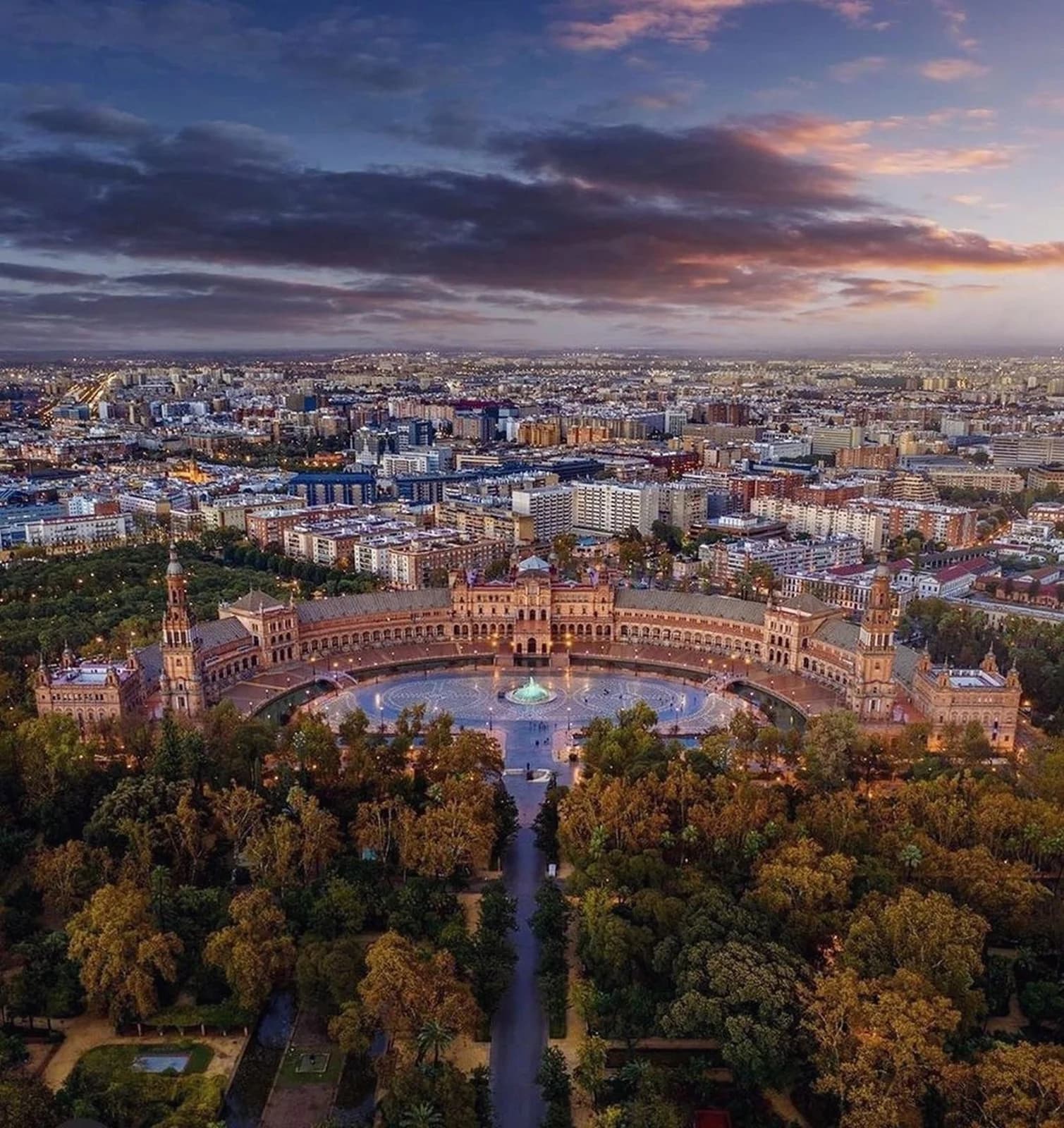
Plaza de America
Plaza America, 41013 Seville Spain Posted by Brandon B.Admin
Plaza de América in Seville: A Garden Square Worth Slowing Down For
Plaza de América sits at the southern end of Parque de María Luisa, and it's one of those places in Seville that rewards the visitors who make it past the more obvious landmarks. While most tourists pour into the Plaza de España a short walk to the north, this quieter square holds three remarkable pavilion buildings, a resident population of peacocks, and some of the best examples of early 20th-century regionalist architecture you'll find anywhere in the city.
The square was designed as part of Seville's 1929 Ibero-American Exposition, a world's fair that transformed this part of the city. What you're walking through today is essentially a curated outdoor room, with manicured gardens, tiled benches, and a central fountain framed by the three pavilions on three sides.
Why Plaza de América Matters
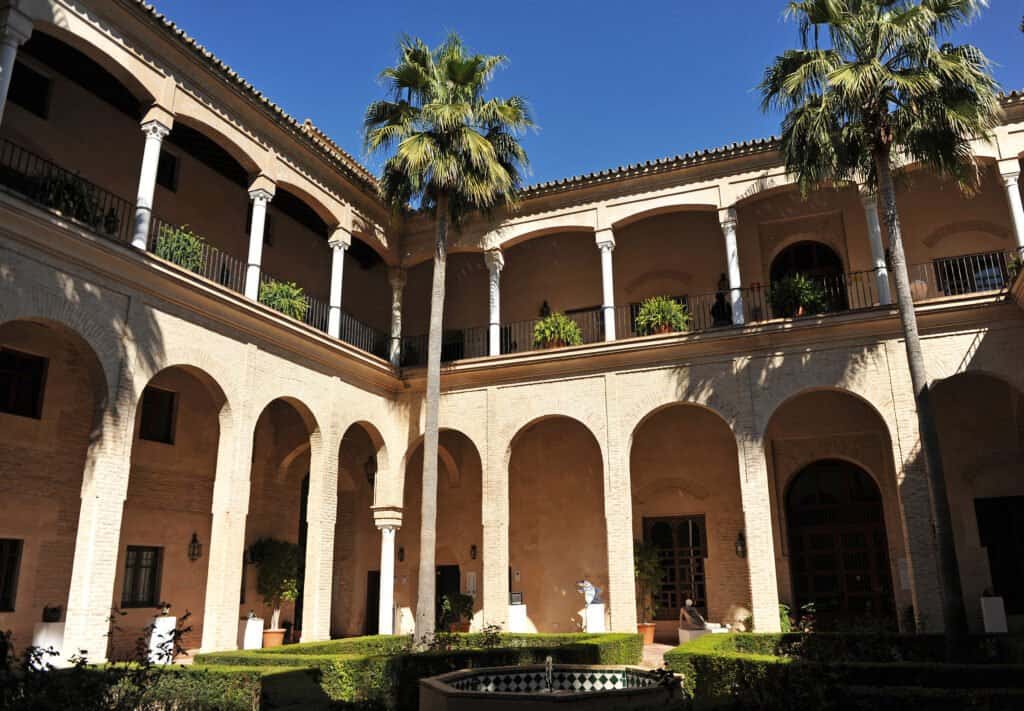
Aníbal González, the architect who shaped much of the 1929 Exposition's aesthetic, designed all three pavilions here. His style blended neo-Mudéjar brickwork with Renaissance and Baroque ornament in a way that feels distinctly Sevillano rather than derivative. The buildings aren't copies of older styles. They're something genuinely new made from old materials.
Two of the three pavilions now function as museums. The Museo Arqueológico de Sevilla occupies the Renaissance-style central pavilion and holds one of the most important archaeological collections in Andalusia, including artifacts from the Roman city of Italica. The Museo de Artes y Costumbres Populares de Sevilla takes up the Mudéjar pavilion on the opposite side, with exhibits covering regional crafts, traditional dress, and folk traditions. The third pavilion, the Pabellón Real, is not typically open to the public.
Even if you skip both museums, the square itself is worth the walk.
Quick Facts
- Located at the southern end of Parque de María Luisa, roughly a 10-minute walk from Plaza de España
- Three pavilions designed by Aníbal González for the 1929 Ibero-American Exposition
- Two of the three pavilions operate as public museums (Museo Arqueológico and Museo de Artes y Costumbres Populares)
- Free to enter the square itself at any hour the park is open
- Peacocks roam the gardens freely and are a consistent presence most days
- The square is part of Parque de María Luisa, which was originally the private gardens of the Palacio de San Telmo
Getting There
From the city center, the most straightforward approach is on foot or by bike. If you're coming from the Cathedral or the Barrio Santa Cruz, plan for about 25 to 30 minutes on foot heading south along the river, then cutting into the park. From Plaza de España, the square is a direct 10-minute walk south through the park's main avenue.
City buses stop along Avenida de Isabel la Católica, which borders the park to the east. The C2 circular route is a reliable option from the city center. Taxis and rideshare apps can drop you at the park perimeter, and the walk in from any entrance is short.
Cycling is genuinely pleasant here. Seville's bike-share network has stations near the park, and the paths through Parque de María Luisa are wide and mostly flat.
The Layout and Experience
The square is roughly triangular in feel, with the three pavilions anchoring its sides and garden paths connecting them. The central fountain draws most people first, and the tiled benches along the pathways are a good place to sit once the midday heat settles in. Shade is available but not everywhere, so the time of day matters.
Peacocks move through the gardens on their own schedule. You'll likely see them near the fountain or along the garden edges, and in warmer months the males tend to display more actively. Photographs happen constantly, and the birds are accustomed to people, though they're still wild enough to be unpredictable around small children.
The Museo Arqueológico occupies the grandest of the three buildings, the central Renaissance pavilion. Its collection spans prehistoric, Phoenician, Greek, and Roman periods, with the Roman rooms being particularly strong. The Italica treasures here include mosaics and sculptures that would be headline exhibits in many other European cities. The Museo de Artes y Costumbres Populares across the square is smaller and less visited, which makes it a calmer experience if you want to spend time with the exhibits without crowds.
History and Background
Parque de María Luisa was donated to the city of Seville in 1893 by the Infanta María Luisa, sister of Queen Isabella II, who gave up the gardens attached to the Palacio de San Telmo. The park was redesigned in its current form by the French landscape architect Jean-Claude Nicolas Forestier in 1911, in preparation for what would eventually become the 1929 Exposition.
The Ibero-American Exposition of 1929 was a defining moment for Seville's urban identity. The city built or renovated dozens of major structures for the event, including Plaza de España, Hotel Alfonso XIII, and the buildings of Plaza de América. Aníbal González began work on the Exposition's infrastructure years before the event itself, and the three pavilions at Plaza de América were among his most considered designs.
After the Exposition closed, the pavilions found new institutional purposes rather than being demolished, which was not a guaranteed outcome for world's fair buildings. The Museo Arqueológico moved into the central pavilion, and the folk arts museum followed. Their presence has kept the buildings in active use and in relatively good repair for nearly a century.
Tickets and Entry
The square and gardens are free to enter during park opening hours. The two museums charge separate admission fees. Both offer reduced or free entry for EU citizens and residents on certain days, and there are typically discounted rates for students, seniors, and children. Timed entry is not generally required, and you can usually walk in without advance booking. It's worth checking current hours before you go, as both museums observe seasonal schedules and are typically closed on Mondays.
Best Time to Visit
Early morning, particularly between opening time and around 10am, gives you the square with very few other visitors. The light at that hour is also softer and more useful for photographs of the pavilion facades. Midday in summer can be genuinely brutal in Seville, and while the gardens offer some shade, the open areas around the fountain are exposed.
Spring, roughly March through May, is widely considered the best season for Parque de María Luisa as a whole. The gardens are in bloom, temperatures are manageable, and the Feria de Abril period brings extra energy to the city if you time it right. Autumn is similarly pleasant and less crowded than spring.
Photography Tips
The central pavilion's facade photographs well in the morning when the light hits from the east. The tiled benches and garden paths offer strong foreground detail if you want to frame the buildings with something closer. The peacocks are obviously photogenic, but they move unpredictably, so patience matters more than technique.
For the museums, natural light inside the Museo Arqueológico is limited in some rooms, so a camera or phone that handles low light reasonably well is useful. Flash photography is typically restricted around older artifacts and mosaics.
Combining with Nearby Attractions
Plaza de América fits naturally into a half-day or full-day itinerary that includes Plaza de España, which is about a 10-minute walk north through the park. The two squares together give you a full picture of what the 1929 Exposition looked like at its peak ambition.
The Palacio de San Telmo, which now serves as the seat of the Junta de Andalucía, is just outside the park's northern edge and worth a look from the street even if the interior is not always accessible. Across Avenida de la Palmera, the Lope de Vega Theatre is another 1929-era building worth noting as you pass.
If you want to extend the day into the evening, the Barrio Santa Cruz and the area around the Cathedral are a 25-minute walk or a short taxi ride from the park, and both neighborhoods have good restaurant options at a range of price points.
Practical Tips
- Wear comfortable shoes. The park paths are paved but uneven in places, and the distance between the square and the city center adds up quickly in heat.
- Bring water if you're visiting in summer. There are no obvious refreshment kiosks inside the square itself.
- Both museums are closed on Mondays. Plan accordingly if that's your only free day.
- The peacocks are a genuine highlight for children, but keep young kids close. The birds can become defensive if approached too directly.
- If you're combining this with the Museo Arqueológico and the Museo de Artes y Costumbres Populares in the same visit, allow at least two hours total for a relaxed pace through both.
- Sunscreen and a hat matter more here than at most urban sights in Seville. The gardens offer less shade than you might expect.
FAQ
Is Plaza de América the same as Plaza de España?
No. They're both in Parque de María Luisa and both built for the 1929 Exposition, but they're separate squares about 10 minutes apart on foot. Plaza de España is larger and more visited. Plaza de América is quieter and holds the two museums.
Do you need to pay to see the peacocks?
No. The peacocks roam freely in the gardens, which are open to the public without charge. You only pay if you enter one of the two museums.
Are the museums worth visiting if you're short on time?
The Museo Arqueológico is genuinely strong, particularly the Roman rooms with artifacts from Italica. If you have an hour to spare, it's worth it. The folk arts museum is best for visitors with a specific interest in Andalusian regional culture.
Can you get to Plaza de América without walking through the whole park?
There are entrances to Parque de María Luisa from multiple points along its perimeter. If you enter from Avenida de María Luisa on the southern side, you can reach Plaza de América without crossing the full length of the park.
Opening hours
Reviews
Sign in and mark this place visited to leave a review.
No reviews yet.
Free Trip Planner
Plan your Seville trip with our free planner
Build a day-by-day itinerary with AI suggestions, hand-picked places, and friends. Free forever — no credit card.
Related reading
Things to see near Plaza de America

Places to eat or drink near Plaza de America

Bodeguita Antonio Romero Arfe

Mercado de Triana

Las Teresas

Taberna Álvaro Peregil
More places in Seville

Setas de Sevilla (Metropol Parasol)

Iglesia de Santa Maria la Blanca
Palacio de los marqueses de la Algaba