Plaza de Espana
Avenida de Isabel la Catolica, 41004 Seville Spain Posted by Brandon B.Admin
What Makes Plaza de España Worth the Trip
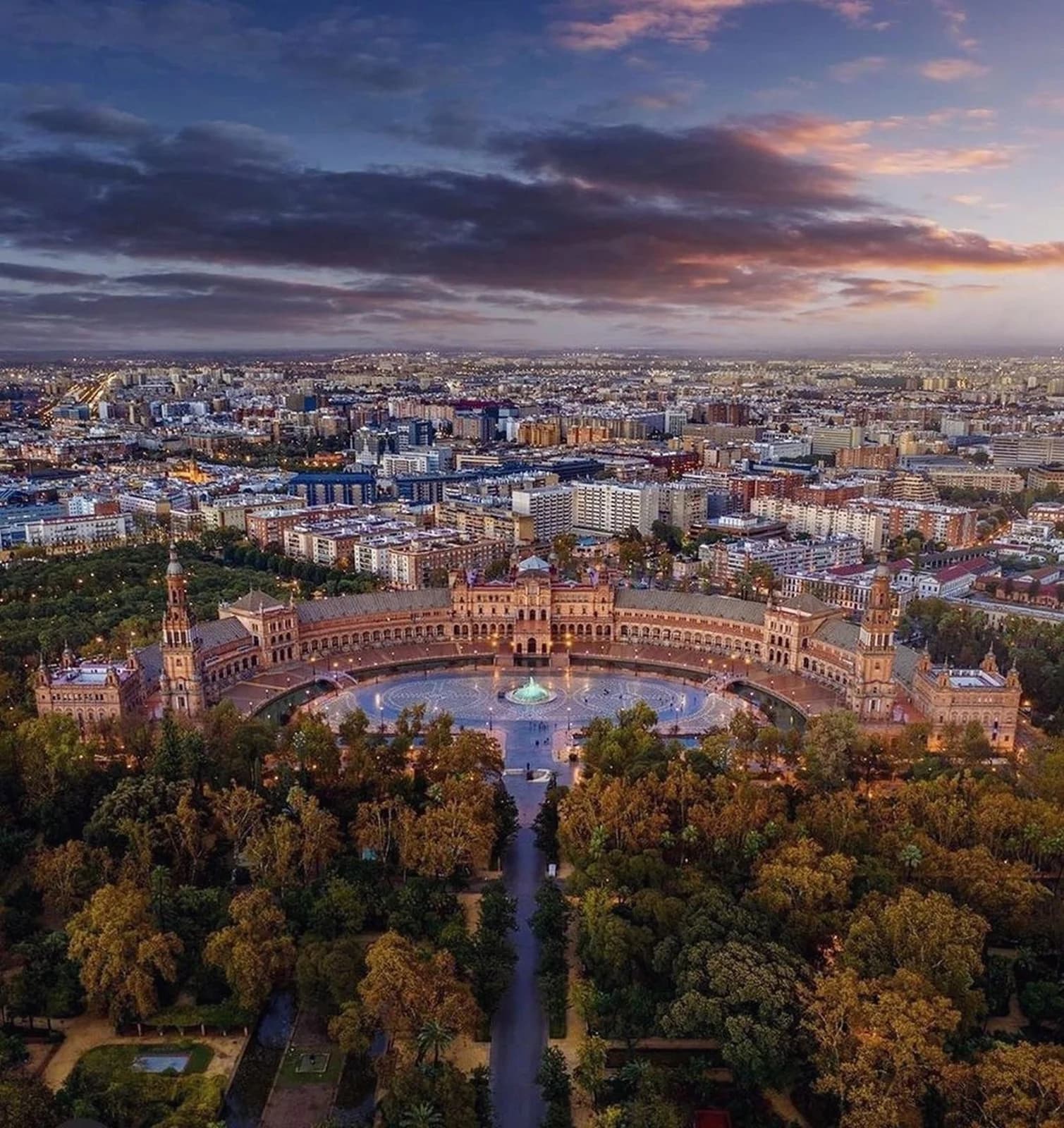
Plaza de España sits at the southern edge of Seville's Parque de María Luisa, and if you've seen photos of Andalusia that made you book a flight, there's a good chance this was the building in them. It's a sweeping semicircular complex of brick, tile, and carved stone that manages to feel both enormous and intimate at the same time. Arriving here for the first time tends to stop people mid-step.
Built for the Ibero-American Exposition of 1929, the plaza is one of the most ambitious architectural statements in southern Spain. It combines Baroque, Renaissance, and Moorish Revival styles in a way that shouldn't work on paper but absolutely does in person. The tiled benches, the canal, the ornate bridges, the towers rising above the treetops of the park. It's a lot to take in.
History and Background
The plaza was designed by Aníbal González, a Sevillian architect who spent years overseeing the project. Construction wrapped in 1928, just in time for the 1929 exposition, which was intended to celebrate Spain's cultural and commercial ties with Latin America. Dozens of countries were represented at the event, and the Plaza de España served as the centerpiece of the Spanish pavilion.
After the exposition ended, the building took on a range of civic functions. For much of the 20th century it housed government offices, and parts of it still do today. Film crews have used it as a backdrop repeatedly over the decades. If you recognize it from Lawrence of Arabia (1962) or more recently from Star Wars: Episode II, you're not imagining things.
The tiled alcoves lining the curved wall are one of the most photographed features. There are 58 of them in total, one for each province of Spain at the time of construction. Each alcove features a hand-painted tile map of its province and a historical scene. Running your eye along the full arc of them takes a while.
Quick Facts
- Address: Avenida de Isabel la Católica, Parque de María Luisa, Seville
- The main structure was completed in 1928
- Designed by Aníbal González in a blend of Baroque Revival and Mudéjar styles
- 58 tiled provincial alcoves line the curved wall
- The central canal runs approximately 500 metres around the semicircle
- Entry to the plaza itself is free
- Rowboats are available to rent on the canal (small fee applies)
- The building currently houses offices of the regional government of Andalusia
Getting There
The plaza is easy to reach from Seville's historic centre on foot. From the Puerta de Jerez, a steady 10-minute walk south along Avenida de Isabel la Católica brings you directly to the main entrance. If you're coming from the cathedral or the Alcázar, add another five minutes.
Bus lines stop along Paseo de las Delicias, just outside the park boundary. Taxis and rideshares drop off conveniently along the avenue. There's no dedicated parking directly at the plaza, though parking exists further along the Delicias waterfront if you're driving.
The Layout and Experience
The building forms a half-circle roughly 200 metres in diameter. Two tall towers anchor the ends of the arc, and a central pavilion with a large fountain marks the midpoint. The canal between the building's base and the outer esplanade is crossed by four ornate bridges, each representing one of the old kingdoms of Spain: Castile, León, Aragón, and Navarre.
Most visitors enter from the north, walking straight down the central axis toward the fountain. That first view, with the full sweep of the colonnade opening up on either side, is genuinely hard to prepare for. Give yourself time to walk the full arc rather than just shooting photos near the entrance and leaving. The far ends of the building get quieter, and the tilework is just as beautiful.
The rowboats on the canal are a small pleasure and worth doing if you're not in a rush. You rent by the half hour, and it gets busy on weekends and during peak tourist months, so earlier in the morning tends to mean shorter waits.
Main Highlights
The Provincial Alcoves
Each of the 58 alcoves contains a ceramic tile bench decorated with a map and a historical scene from that province. The craftsmanship is remarkable up close. Locals sometimes sit in the alcove for their home province, and if you ask, most are happy to tell you about the scene depicted. Finding the alcove for Seville itself is a natural starting point.
The Bridges and Canal
The four bridges over the canal are heavily decorated with ceramic balustrades and ironwork lanterns. They're small enough to cross in seconds but detailed enough to deserve a slow look. The canal is shallow and calm, and the reflections of the towers on the water on a clear morning are worth arriving early for.
The Central Pavilion
The central section of the building, directly behind the main fountain, features the grandest archways and the most elaborate tilework. The interior gallery here is often open during daytime hours, giving you a glimpse into the building's corridors. Photography is generally permitted in the public areas.
Best Time to Visit
Early morning is the honest answer. The plaza opens to the public from around 8am, and if you arrive within the first hour, you'll often have long stretches of the colonnade nearly to yourself. By mid-morning on any day from April through October, tour groups arrive in numbers.
Seville summers are intense. Temperatures regularly exceed 40°C in July and August, and the plaza offers limited shade. If you're visiting in summer, morning visits before 10am are the practical choice, not just a preference. Spring (March through May) and autumn (September through November) offer the most comfortable conditions and the best light for photos.
The plaza is also popular in the evening, when the towers are lit and the temperature drops. The atmosphere shifts noticeably after sunset, and it's a different kind of visit entirely.
Photography Tips
The best wide shots of the full semicircle come from the outer esplanade, roughly in line with the central fountain. A standard wide-angle lens captures most of the arc from there. For detail shots, the tilework in the provincial alcoves rewards a closer approach, and the light in the mid-morning hours tends to bring out the blues and yellows in the ceramics.
The towers are difficult to frame without distortion at ground level. If you want to include both towers in a single shot, stepping back to the far end of the esplanade and shooting with a wide lens is your best option. Drone photography is subject to local regulations and is generally restricted in central Seville.
Reflections in the canal work best on still mornings before the boats go out. The light falls well on the building's facade in the morning from the east side and in the late afternoon from the western end.
Combining with Nearby Attractions
The plaza sits directly adjacent to Parque de María Luisa, one of the most pleasant urban parks in Seville. The park itself takes a good hour to explore properly, and it contains several smaller museums and monuments worth pausing at. The Museo Arqueológico de Sevilla and the Museo de Artes y Costumbres Populares are both a short walk away inside the park.
From the plaza, the Real Alcázar is about 15 minutes north on foot, passing through the old city. The Cathedral of Seville is another five minutes beyond that. Combining all three in a single day is doable if you start early, though the Alcázar alone can absorb several hours.
Practical Tips
- Entry to the plaza is free. The rowboats on the canal charge a small fee per half hour.
- Arrive before 9am in high season if you want manageable crowds.
- Wear comfortable shoes. The esplanade is paved but extensive.
- Bring water in summer. There are no cafes directly inside the plaza, though vendors and cafes operate at the park's edges.
- The building houses active government offices. Some interior sections may be closed or restricted depending on the day.
- Flamenco dancers sometimes perform informally near the central fountain, particularly on weekends. It's unscheduled and not guaranteed.
- Accessible routes exist around the esplanade, though some cobbled sections near the canal edges are uneven.
FAQ
Is there an entrance fee for Plaza de España?
The plaza itself is free to enter and open to the public. The only paid activity on site is renting a rowboat on the canal.
Can you go inside the building?
The outer galleries and porticos are generally accessible during the day. The interior of the building houses government offices and is not open for general tourism, though the arcade-level corridors are often walkable.
How long should I plan to spend here?
Most visitors spend between one and two hours. If you're doing the canal boat, photographing the alcoves in detail, and walking the full arc, lean toward the longer end. Combining it with a walk through Parque de María Luisa adds another hour easily.
Is it worth visiting in the evening?
Yes, especially if you've already seen it in daylight. The illuminated towers and quieter atmosphere make for a genuinely different experience. The plaza stays accessible in the evenings, and the heat of the day has usually passed by then.
Are the tile alcoves labeled in English?
The alcoves are labeled in Spanish. Most show a province name and a historical scene, and the context is often clear from the imagery even without reading the text. A translation app on your phone handles the rest easily enough.
Reviews
Sign in and mark this place visited to leave a review.
No reviews yet.
Free Trip Planner
Plan your Seville trip with our free planner
Build a day-by-day itinerary with AI suggestions, hand-picked places, and friends. Free forever — no credit card.
Related reading
Things to see near Plaza de Espana


Places to eat or drink near Plaza de Espana

Bodeguita Antonio Romero Arfe

Mercado de Triana

Las Teresas

Taberna Álvaro Peregil
More places in Seville

Setas de Sevilla (Metropol Parasol)

Iglesia de Santa Maria la Blanca
Palacio de los marqueses de la Algaba