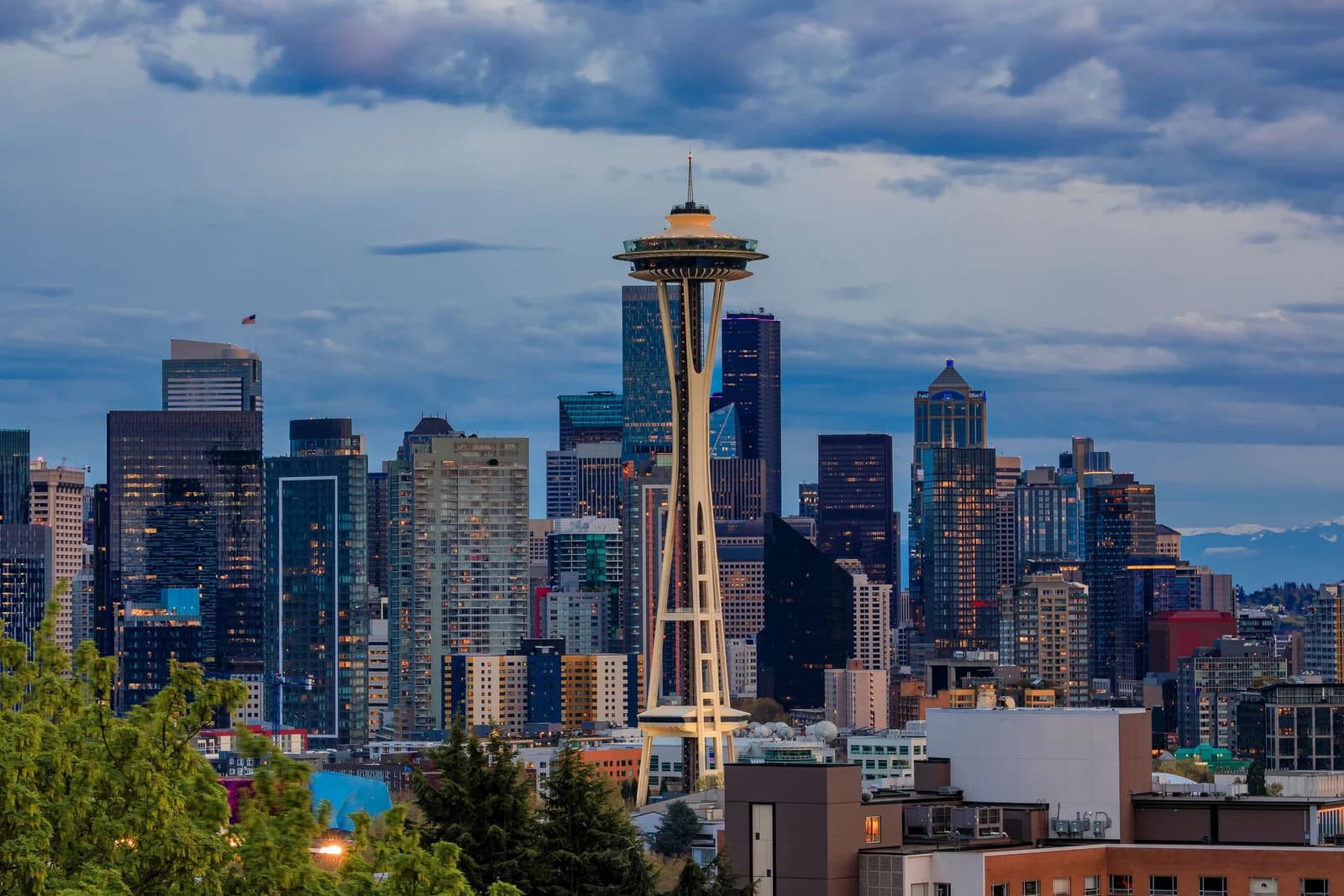
Discovery Park sits on a bluff above Puget Sound in Seattle's Magnolia neighborhood, and at 534 acres it is the largest park in the city by a wide margin. The land was Fort Lawton, an Army post, before the city began converting it to parkland in the 1970s, and that military past still shows up in odd ways: old roadways that go nowhere, a scatter of former barracks buildings, a water tower you can see from several points on the trail. What you actually experience now is meadow, second-growth forest, a 200-foot sea cliff, and close to two miles of tidal beach, with a working lighthouse marking the point where the land runs out.
It's not a manicured city park with flower beds and a bandstand. It reads more like a piece of coastal wilderness that happens to be a twenty-minute drive from downtown Seattle.
Why Discovery Park matters
Seattle has plenty of waterfront, but very little of it feels this undeveloped. Discovery Park preserves a stretch of bluff and beach that gives you unobstructed views across Puget Sound to the Olympic Mountains, without a condo tower or a marina in the frame. It's also one of the few places in the city where you can walk through prairie-like grassland, Douglas fir forest, and a working tidal beach in the same afternoon, all inside the Seattle city limits. Add the Daybreak Star Indian Cultural Center, built on land reclaimed through a 1970 occupation, and the park carries a piece of Pacific Northwest Native history that most visitors don't expect to find alongside a nature walk.
Quick facts
- Size: 534 acres, the largest park in Seattle
- Former use: Fort Lawton, a U.S. Army post, before transferring to parkland starting in the 1970s
- Shoreline: roughly two miles of tidal beach along Puget Sound
- Main trail: the Loop Trail, a flat 2.8-mile circuit
- Landmark: West Point Lighthouse at the park's northwestern tip
- Also inside the park: Daybreak Star Indian Cultural Center
- Admission: free, as with all Seattle city parks
Getting there
Discovery Park is in Magnolia, a residential neighborhood on a peninsula west of downtown Seattle, bounded by Puget Sound on two sides. By car it's roughly 20 to 25 minutes from downtown depending on traffic, and there are several parking lots, with the one near the Environmental Learning Center on Washington Avenue being the most common starting point for the Loop Trail. Metro buses run into Magnolia from downtown, though the park's size means you'll likely still have a walk from the nearest stop to the trailhead. There's no transit stop right at the park entrance, so budget extra time if you're not driving.
The layout and experience
The park is built around the Loop Trail, a flat, well-graded 2.8-mile path that threads through meadow and forest and gives you a sense of the whole property without much elevation change. It's the trail most people do if they only have an hour or two.
The more memorable walk, though, is the spur down to West Point and its lighthouse. This isn't flat. You drop a few hundred feet from the bluff to the shoreline, and the reward is a wide-open view across the water to the Olympic Mountains, plus a close look at the lighthouse itself. The climb back up is the part people warn you about, and it's a legitimate workout rather than a stroll, especially if you've lingered on the beach and are doing it on tired legs.
Beyond the main loop and the lighthouse spur, smaller paths cut through the bluff forest and along the sea cliff edge, with posted warnings about erosion in places where the cliff face is actively crumbling. There are also open meadow areas near the park's center that were part of the old fort's parade grounds, and these tend to be where people picnic or fly kites on clear days.
Main highlights
- West Point Lighthouse: an active lighthouse at the park's northwestern point, reached by a steep descent from the bluff
- The Loop Trail: a flat 2.8-mile circuit through meadow and forest, suitable for most fitness levels
- The tidal beach: close to two miles of shoreline, good for beachcombing and low-tide exploring, with driftwood logs scattered along the upper beach
- The sea cliff: exposed bluff faces along the bluff trail, with views across Puget Sound to the Olympics
- Daybreak Star Indian Cultural Center: a Native-run cultural center inside the park, built on land reclaimed in 1970
History and background
Before it was a park, this land was Fort Lawton, an Army post established on Magnolia Bluff, used for troop training and later as a processing point during wartime years. As the military's need for the base declined through the mid-20th century, large portions of the land were declared surplus, and the city of Seattle began acquiring it for parkland through the 1970s, eventually assembling the 534 acres that make up the park today.
The most consequential chapter in that transition didn't come from City Hall. In March 1970, a group of Native activists, inspired by the occupation of Alcatraz the year before, moved onto the surplus Fort Lawton land and asserted a claim to it under the argument that decommissioned federal land should be returned to Indigenous use. The effort was led by Bernie Whitebear, a member of the Confederated Tribes of the Colville Reservation, and it drew national attention, including support from activists and public figures well beyond Seattle. The occupation led to negotiations with the city, and a portion of the former fort was eventually set aside for Native use.
That land is now home to the Daybreak Star Indian Cultural Center, which sits inside Discovery Park's boundaries and operates as a Native-run cultural and community space, with art, events, and programming connected to the urban Indian community in Seattle. It's easy to drive past it on your way to the lighthouse trailhead without registering what you're looking at, but the center is arguably the single most significant piece of history inside the park, more so than the Army buildings scattered around it.
Best time to visit
Discovery Park works in any season, but the lighthouse walk and the bluff views are best on a clear day, when you can actually see the Olympic Mountains across the Sound rather than a bank of gray cloud. Pacific Northwest weather being what it is, that often means late spring through early fall, though clear winter days do happen and the park is far less crowded then. Low tide is worth checking if you want to walk the beach itself rather than just look at it from above, since the tideline shifts the usable beach width considerably. Weekday mornings tend to be quieter than weekend afternoons, when the main parking lots can fill.
Practical tips
- Wear real shoes, not sandals, for the lighthouse trail. The path down is steep, often loose underfoot, and the climb back up is longer than it looks on the map
- Check a tide table before heading to the beach if you want dry sand to walk on rather than a narrow strip at the base of the cliff
- Bring water. There's little shade on parts of the meadow trail and no concessions once you're away from the parking areas
- Stick to marked trails near the sea cliff. The bluff edges erode and are not stable enough to approach closely in places
- If you're short on time, the Loop Trail alone gives a good sense of the park without committing to the lighthouse descent
- Pack out what you bring in. There's no reliable trash service deep in the park's interior
FAQ
Is Discovery Park free to visit?
Yes. Like other Seattle city parks, there's no admission fee.
How long does it take to walk the whole park?
The Loop Trail alone takes most people about an hour and a half at a relaxed pace. Add the lighthouse spur and the climb back up, and you're looking at closer to three hours if you want to see the beach and the bluff as well.
Can you visit the West Point Lighthouse up close?
You can walk right up to it along the shoreline path, though it remains an active lighthouse and is not open for interior tours.
Is Daybreak Star Indian Cultural Center open to visitors?
It operates as a cultural center with gallery space and programming, separate from the main park trail system, so it's worth checking current hours before planning a stop there specifically.
Is the park dog-friendly?
Dogs are allowed on leash on most trails, consistent with Seattle's general park rules, though it's worth checking posted signage near the beach and sensitive bluff areas.
Discovery Park rewards people willing to do a little work for the view. The flat loop is pleasant enough on its own, but the real character of the place is in that drop to West Point, the tide line below the lighthouse, and the quieter fact that this stretch of bluff carries both a military history and a Native reclamation history most visitors never read about before they arrive.
Reviews
Sign in and mark this place visited to leave a review.
No reviews yet.
Free Trip Planner
Plan your United States trip with our free planner
Build a day-by-day itinerary with AI suggestions, hand-picked places, and friends. Free forever — no credit card.