Elephantine Island
Across the Nile from Aswan Two parts to this Island, Aswan Egypt Posted by bazartravelsAdmin
Elephantine Island Overview
Elephantine Island sits in the middle of the Nile River directly across from Aswan, Egypt's southern gateway. The island holds one of Egypt's oldest continuously inhabited settlements, with archaeological layers stretching back to the First Dynasty around 3100 BCE. You'll find two distinct sections here: the northern part contains the modern Nubian village, while the southern section houses the main archaeological zone with temple ruins and a museum. Most visitors spend two to four hours exploring the island's monuments, temples, and the perspectives of Nile life that only a river crossing can offer.
Why This Place Matters
Elephantine Island served as a military and trade outpost for ancient Egypt, controlling commerce along the Nile's First Cataract. The island's strategic position made it crucial during the Old Kingdom and later periods. You'll see evidence of temples dedicated to Khnum, the ram-headed god associated with the Nile's annual flooding, and to Satet, the goddess of the Nile cataracts. The site also reveals how ordinary Egyptians lived, since residential areas have been excavated alongside monumental architecture.
The island's name comes from the ancient Greek word for ivory, which was traded here during antiquity.
Quick Facts
- Location: Nile River, directly across from central Aswan
- Main period of occupation: First Dynasty onward (circa 3100 BCE to present)
- Ferry crossing time: 5 to 10 minutes by motorboat from Aswan's corniche
- Entry type: General admission ticket required for the archaeological zone
- Best visited: October through March
- Typical visit duration: 2 to 4 hours
Getting There
Ferries depart regularly from the waterfront promenade in central Aswan. Look for the boat dock near the Corniche, where small motorboats carry visitors across to Elephantine. The journey takes between 5 and 10 minutes depending on river conditions and boat type. You can hire a private motorboat if you prefer flexibility, though shared ferries are the standard and most economical option.
Most hotels in Aswan can arrange transport if you ask at reception. The walk to the dock from central Aswan is roughly 10 to 15 minutes on foot.
The Layout and Experience
When you arrive on Elephantine's west bank, you'll land in the modern Nubian quarter. This living village occupies the northern end of the island and offers a genuine glimpse of contemporary river life. Houses painted in warm ochres and blues cluster along narrow lanes. You'll see daily activities: women preparing food, children playing, boats being repaired. This part feels authentic precisely because tourism hasn't colonized it.
Moving south, the landscape shifts to archaeological sites. The main temple complex comes into view, with reconstructed walls and columns standing against the sky. The Aswan Museum occupies a restored colonial-era building and houses small sculpture fragments, pottery, and objects recovered from the island's layers. Beyond the museum, the southern tip of the island opens to expansive views of the Nile's cataracts and the desert beyond.
Pathways connecting the sites are mostly paved but uneven in places. Shade is sparse across the archaeological zone.
Main Highlights
The Temple of Khnum dominates the southern section. Built during the Ptolemaic period but incorporating earlier foundations, the temple once stood three stories tall. Today you see the lower register of columns and wall fragments, but enough remains to imagine its original presence. Reliefs carved into surviving blocks show Khnum at his potter's wheel, fashioning humans from clay.
The Temple of Satet sits nearby, smaller but better preserved in places. This structure dates to the reign of Hatshepsut and honors the goddess of the cataracts. The temple's gateway and some internal walls give you a sense of how these sacred spaces were organized.
The Nilometer stands as one of the island's most intact structures. This ancient apparatus measured the Nile's water level and helped predict harvest outcomes. The stone steps descend to the river, marked with measurement notches. You can walk down into the chamber and see where priests once recorded crucial data about the annual flood.
The Aswan Museum holds a focused collection without overwhelming you. Granite statues, limestone reliefs, and daily objects from various periods provide context for what you've seen on the island. Labels are in English and Arabic.
The Nubian village itself is a highlight that many guidebooks understate. Walking through the residential quarters, you encounter real households, small shops, and the rhythm of a community that has lived here for generations. Photography should be respectful: ask before photographing people or their homes.
History and Background
Elephantine's occupation began in the First Dynasty, making it one of Egypt's oldest cities. The island's position at the First Cataract made it a natural fortress and trading hub. Goods from Nubia and the south arrived here before being transported downriver to the Egyptian heartland.
During the Old Kingdom, the island hosted a significant garrison and administrative center. The Middle Kingdom saw the construction of temples and an expansion of religious activity. The New Kingdom brought further development, with rulers like Hatshepsut adding structures.
Under Ptolemaic rule, the temples received their current form, though they built on foundations laid centuries earlier. The Romans and later Islamic periods saw the island continue as a settlement, though monumental construction ceased.
In the 19th and 20th centuries, European archaeologists excavated the site, revealing layers of habitation and removing many objects to museums in Cairo and Europe. The Aswan Museum was established to house finds that remained locally.
Tickets and Entry
A general admission ticket grants you access to the archaeological zone and the museum. The fee falls into the mid-range category. Children often receive discounted entry. Your ticket is typically valid for the full day, so you can explore at a leisurely pace without feeling rushed.
Guided tours are available through hotels and tour operators in Aswan. A guide adds significant value if you want detailed historical context and help identifying specific structures. English-speaking guides are standard.
Best Time to Visit
October through March offers the most comfortable conditions. Daytime temperatures hover in the pleasant range, and you won't face the intense heat of summer. The Nile's water level is lower during this period, sometimes revealing archaeological features not visible at other times.
April through September brings extreme heat and sun exposure. If you visit during these months, arrive early in the morning and bring substantial water and sun protection.
The island is open daily, though hours can shift seasonally. Check locally before planning your visit.
Photography Tips
The light in mid-morning and late afternoon is strongest for capturing temple columns and architectural details. The Nile cataracts create dramatic backgrounds from the island's southern edge, especially in afternoon light when the water's movement catches the sun.
The Nubian village offers rich color and texture. Earth-toned houses, painted doors, and daily activities make compelling subjects. Always ask permission before photographing people or private spaces. A respectful approach opens doors and invites genuine interactions.
Wide-angle shots work well for temple complexes and expansive Nile views. Macro settings capture relief carvings and inscriptions on stone blocks. Bring a polarizing filter if you photograph the river, which can be extremely reflective.
Facilities and Preparation
The island has a small cafe near the museum that serves cold drinks and light snacks. Facilities are basic. Bring plenty of water, hat, and sunscreen. Wear comfortable walking shoes with good grip, as paths can be uneven and occasionally steep.
There are public restrooms near the museum and in the village, though conditions are simple. Carry toilet paper or tissues.
The island has limited shade. Plan your route to take advantage of any shadowed areas, particularly around temple walls during midday heat.
How It Compares to Similar Places
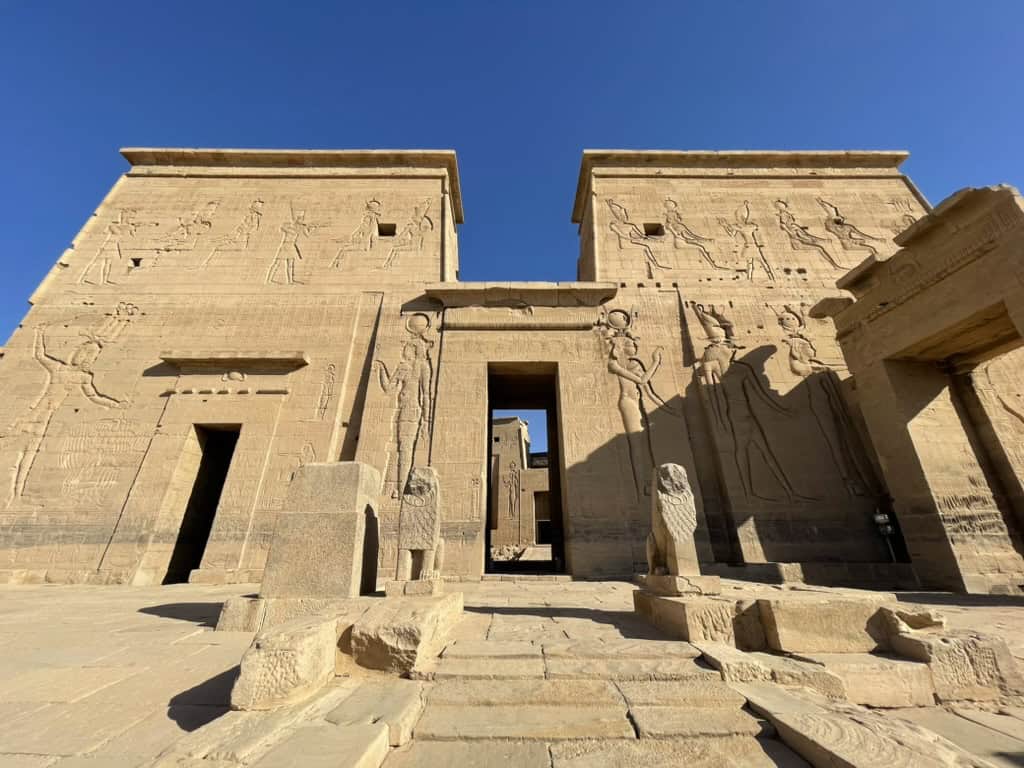
Elephantine Island differs from Aswan's other major site, the Temple of Philae, in several ways. Philae is a single grand temple complex on an island that was relocated to save it from flooding. It's more monumental and orchestrated. Elephantine, by contrast, is layered and lived-in. You're exploring a palimpsest of occupation spanning five millennia, not a single snapshot in time.
The Nubian Museum in Aswan proper is larger and more comprehensive. Elephantine's smaller museum complements rather than replaces it, focusing on local finds and offering context within walking distance of the original sites.
Combining With Nearby Attractions
Most visitors pair Elephantine Island with the Temple of Philae, located a short motorboat ride away. You can visit both in a single day by arranging a boat that stops at multiple sites. The Temple of Kalabsha, also accessible by river, works well as a third stop if you have time.
The Aswan Botanical Garden occupies Kitchener's Island, another Nile island nearby. It's a complete contrast to archaeological sites: peaceful, green, and focused on living plants. Some tours combine the botanical garden with Elephantine for variety.
The Nubian Museum in central Aswan is a 15-minute walk from the dock and provides deeper context for what you've seen on the island. Many visitors explore the museum after returning from Elephantine.
Sample Visit Plan
Arrive at the ferry dock in early morning, around 7 or 8 AM. Take the motorboat across and begin in the archaeological zone while light is cool and shadows help define architectural features. Spend 45 minutes exploring the temples, the Nilometer, and adjacent structures. Walk the perimeter for Nile views.
Visit the Aswan Museum for 30 to 45 minutes. The collection is manageable and the building provides shade and air conditioning.
Walk north into the Nubian village for the remainder of your visit. Move slowly, observe daily life, and interact respectfully with residents. Have lunch or a drink at the cafe if timing works.
Return to Aswan on an afternoon ferry, leaving you time to visit the Nubian Museum in central Aswan if you choose.
Practical Tips
- Bring cash in Egyptian pounds for ferry fares and purchases. Not all vendors accept cards.
- Hire a guide if you want detailed explanations of temple features and hieroglyphic inscriptions. Self-guided exploration works fine if you prefer a slower pace.
- Respect the Nubian village as a living community, not a museum exhibit. Dress modestly and ask before photographing people.
- The ferry ride itself is worth experiencing. Sit outside and observe the Nile, feluccas, and Aswan's waterfront.
- Plan for uneven ground and scattered rocks. Wear sturdy shoes and watch your step, especially on temple platforms.
- Water from vendors on the island is safe, but bringing your own ensures you have enough throughout your visit.
FAQ
How long should I spend on Elephantine Island? Most visitors spend 2 to 4 hours. You can see the main sites in 2 hours if you move quickly, but 3 to 4 hours allows time to explore the Nubian village and absorb the atmosphere.
Is it safe to visit the Nubian village? Yes. The village is a normal residential area where families live and work. Visitors are welcome as long as you're respectful. Avoid visiting very early or very late when fewer people are around.
Can I hire a private boat instead of the ferry? Yes. Private motorboats are available for hire from Aswan's waterfront. They cost more than shared ferries but offer flexibility and can combine multiple island sites in one trip.
What's the best way to get from Elephantine to Philae Temple? Arrange a boat that visits both sites. Your hotel or a tour operator can coordinate this. The journey between islands is roughly 20 to 30 minutes by water.
Are there restaurants on the island? A small cafe serves drinks and light snacks near the museum. For a full meal, return to Aswan's corniche where numerous restaurants overlook the Nile.
Reviews
Sign in and mark this place visited to leave a review.
No reviews yet.
Free Trip Planner
Plan your Aswan trip with our free planner
Build a day-by-day itinerary with AI suggestions, hand-picked places, and friends. Free forever — no credit card.