Posted by Brandon B.Admin
What Is Nubian Village and Why Should You Go
The Nubian Village just outside Aswan is one of those places that rewards you for stepping off the standard tourist circuit. Sitting along the west bank of the Nile, roughly 10 to 15 minutes by felucca from the Aswan corniche, the village gives you a direct look at a way of life that has survived displacement, flooding, and a century of upheaval with its color and warmth largely intact. Most visitors come for a morning or afternoon and find themselves wishing they had blocked out a full day.
The houses alone are worth the trip. Painted in vivid blues, yellows, and pinks, they line the sandy lanes in a style that feels nothing like the rest of Egypt. Inside many of them, crocodiles are kept as pets, a tradition that goes back generations and tends to surprise first-time visitors considerably.
A Brief History of the Nubian People Here
The Nubians are one of the oldest surviving cultures in the Nile Valley, with roots stretching back more than 5,000 years. The community around Aswan was profoundly affected by the construction of the Aswan High Dam, which was completed in 1970. The dam's reservoir, Lake Nasser, submerged much of historic Nubia, including dozens of villages and ancient sites. Entire communities were relocated to purpose-built settlements on the east bank of the Nile, north of Aswan.
What you visit today is one of those resettled communities. The Nubians rebuilt their lives here, and over the decades the village developed its own character: the brightly painted exteriors became a kind of cultural statement, a way of maintaining identity in a new place. Many families still display photographs and objects from the original villages that now lie beneath the water. That history is quietly present in almost every conversation you have here.
Quick Facts
- Location: West bank of the Nile, accessible from Aswan by felucca or motorboat
- Travel time from Aswan corniche: approximately 10 to 15 minutes by felucca
- Entry: No formal admission fee to enter the village
- Best visited: October through March, when temperatures are manageable
- Language: Nubian (Ta-Bedawi or Nobiin) is spoken locally alongside Arabic
- Photography: Generally welcomed, but always ask before photographing people inside their homes
- Guides: Not required, but a local guide significantly deepens the experience
Getting There
The most enjoyable way to arrive is by felucca, the traditional wooden sailboat you will see all along the Aswan waterfront. Negotiate a fare directly with a captain near the Aswan corniche, agree on a return time, and you are on the water within minutes. The crossing itself is pleasant and the views of Elephantine Island and the west bank cliffs make it feel like the journey is already part of the visit.
Motorboats are also available if you are short on time or the wind is uncooperative. Some hotels and tour operators in Aswan offer half-day excursions that include transport, which is a reasonable option if you would rather not handle the logistics yourself. Tuk-tuks and taxis wait near the boat landing on the west bank and can take you further into the village if you prefer not to walk.
The Layout and Experience
The village does not have a map or a marked entrance. You arrive, and you wander. The lanes are narrow and mostly unpaved. Houses open directly onto the street, and it is common for residents to wave you in for tea before you have gone more than a hundred meters. Accept the invitation. Nubian hospitality is genuine, not performative, and sitting in someone's courtyard with a glass of hibiscus tea (karkade) while a large Nile crocodile eyes you from a nearby enclosure is an experience you will not find anywhere else in Egypt.
Several families have formalized this a bit, setting up small home-based cafes or craft shops. You can buy handwoven baskets, printed fabrics, beaded jewelry, and small ceramic pieces directly from the people who make them. Prices are negotiable but not aggressively so. A reasonable offer made respectfully tends to go well.
The pace here is slow by design. Do not rush it.
Main Highlights
The Painted Houses
The architecture is the first thing that stops you. Almost every exterior wall is painted in saturated color, often decorated with geometric patterns, images of the Kaaba (marking a completed Hajj), and portraits of ancestors. No two houses look the same. Walking the lanes in good morning light, when the sun hits the west-facing walls, is genuinely striking.
Crocodile Encounters
Several households keep live crocodiles in open-air pens or pools. This is a long-standing Nubian tradition tied to local beliefs about protection and luck. Visitors are usually welcome to see them up close, and in some households you can hold a smaller one for a photo. The crocodiles are well-habituated to humans, though obviously treat them with respect.
Karkade and Home Cooking
Hibiscus tea, known locally as karkade, is the default welcome drink and it is excellent here, served cold and intensely flavored. If you are invited for a meal or arrange one in advance through a guide, you might encounter Nubian dishes like ful (slow-cooked fava beans), freshly baked bread, and grilled Nile perch. The food is simple and good. This is budget to mid-range territory, and portions are generous.
Sunset from the West Bank
If your timing works out, staying until late afternoon gives you a view of the Nile at sunset that most visitors in Aswan never see. From the west bank you look east toward the city, and the light on the water and the feluccas coming and going is hard to beat.
Best Time to Visit
Aswan is one of the hottest cities on earth in summer, with temperatures regularly exceeding 40 degrees Celsius between June and September. The Nubian Village is entirely outdoors, so visiting in that window is genuinely uncomfortable for most people. October through March is the sweet spot: warm but walkable, and the light in the early morning or late afternoon is especially good for photography.
Ramadan is worth considering separately. The village is quieter during daytime fasting hours, but the evenings become more lively and social. It can be a meaningful time to visit if you are respectful of the context.
Photography Tips
The painted walls are the obvious subject, and they photograph best in the hour or two after sunrise or before sunset when the light is angled and warm. Midday sun flattens everything and the shadows become harsh.
Always ask before photographing residents, especially women. A smile and a gesture toward your camera is usually enough to get a clear answer either way. Most people are happy to be photographed if you take a moment to make actual human contact first. If someone says no, respect it immediately.
The crocodile pens make for unusual images if you are into wildlife photography. Bring a lens that can handle close quarters, as the spaces are tight.
Combining With Nearby Attractions
Elephantine Island sits between the Nubian Village and the Aswan east bank and is worth a stop on the same trip. It holds the ruins of the ancient city of Yebu, one of Egypt's oldest settlement sites, along with the Aswan Museum and a small Nubian village of its own. The Aga Khan Mausoleum is visible on the hill above the west bank as you approach by boat and can be visited on the same excursion, though opening access varies.
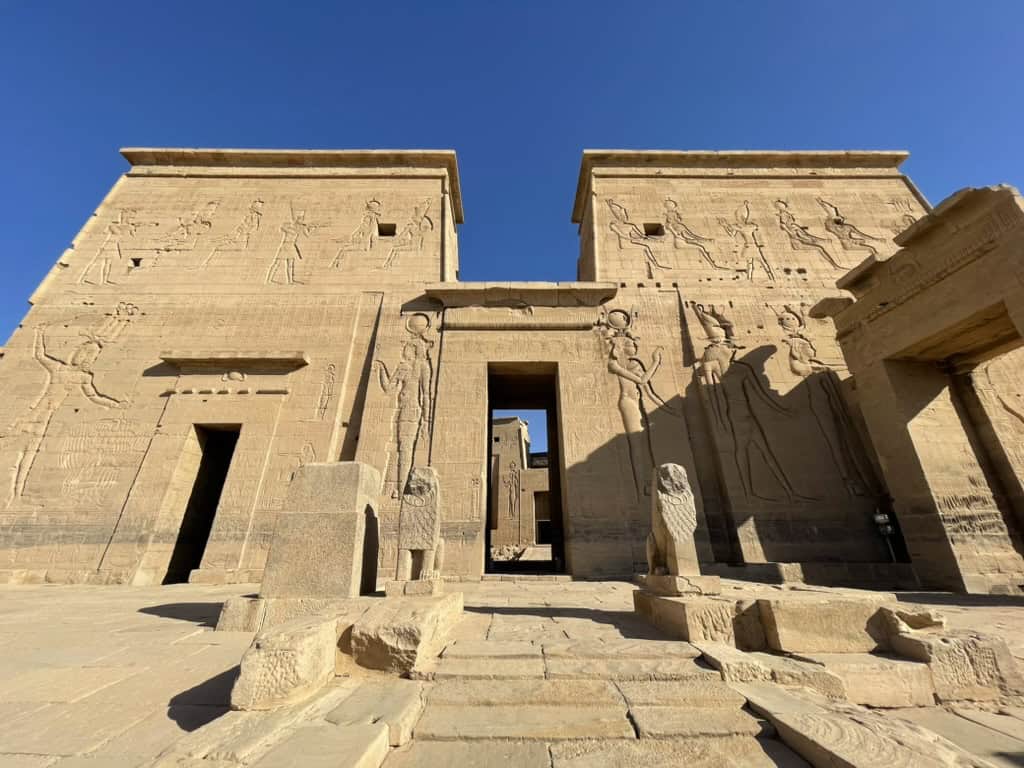
The Philae Temple complex, dedicated to the goddess Isis and relocated to Agilkia Island after the Aswan High Dam was built, is a short drive from the main Aswan boat landing and pairs well with a morning in the Nubian Village. Between the two you get a full picture of what the dam's construction changed, and what it saved.
Practical Tips
- Wear loose, lightweight, covering clothing out of respect for local customs and to manage the heat
- Bring cash in small denominations for tea, crafts, and boat fares, as card payment is not an option here
- Agree on your felucca fare before you board, including the return journey
- A local guide, arranged through your hotel or a reputable Aswan agency, adds real context and helps bridge the language gap
- If you are offered tea or a meal inside a home, a small gift (fruit, biscuits, or sweets for children) is a thoughtful gesture in return
- Sunscreen and a hat are not optional between April and October
- Visit on a weekday if possible, as weekend tour groups from Aswan can make the lanes noticeably busier
Frequently Asked Questions
Do I need to book in advance?
No booking is required to visit the Nubian Village. You show up, hire a boat, and walk in. If you want a guided experience or a home-cooked meal arranged, it helps to organize that a day ahead through your hotel or a local guide service in Aswan.
Is the Nubian Village safe for solo travelers?
Yes. The village is welcoming to solo visitors of all backgrounds. Solo women travelers report generally positive experiences, though dressing modestly and having a guide or a fixed plan for your return boat adds a layer of comfort.
How long should I plan to spend there?
A minimum of two to three hours lets you walk the lanes, stop for tea, and look around without feeling rushed. Half a day is better. If you combine it with Elephantine Island or Philae, block out a full day.
Are the crocodiles dangerous?
The ones kept in village enclosures are habituated to humans and generally calm, but they are still wild animals. Follow the lead of your host and do not reach toward them without clear permission from whoever is managing the interaction.
What should I buy here?
Handwoven baskets, printed cotton fabric, and beaded jewelry are the most authentic local crafts. Avoid mass-produced tourist items that you will find identical versions of back in central Aswan. If something looks like it came from a factory, it probably did.
Opening hours
Reviews
Sign in and mark this place visited to leave a review.
No reviews yet.
Free Trip Planner
Plan your Aswan trip with our free planner
Build a day-by-day itinerary with AI suggestions, hand-picked places, and friends. Free forever — no credit card.