Fort Qaitbey
29 88545 N 31. 21372 E, Alexandria 21599 Egypt Posted by bazartravelsAdmin
Fort Qaitbey Overview
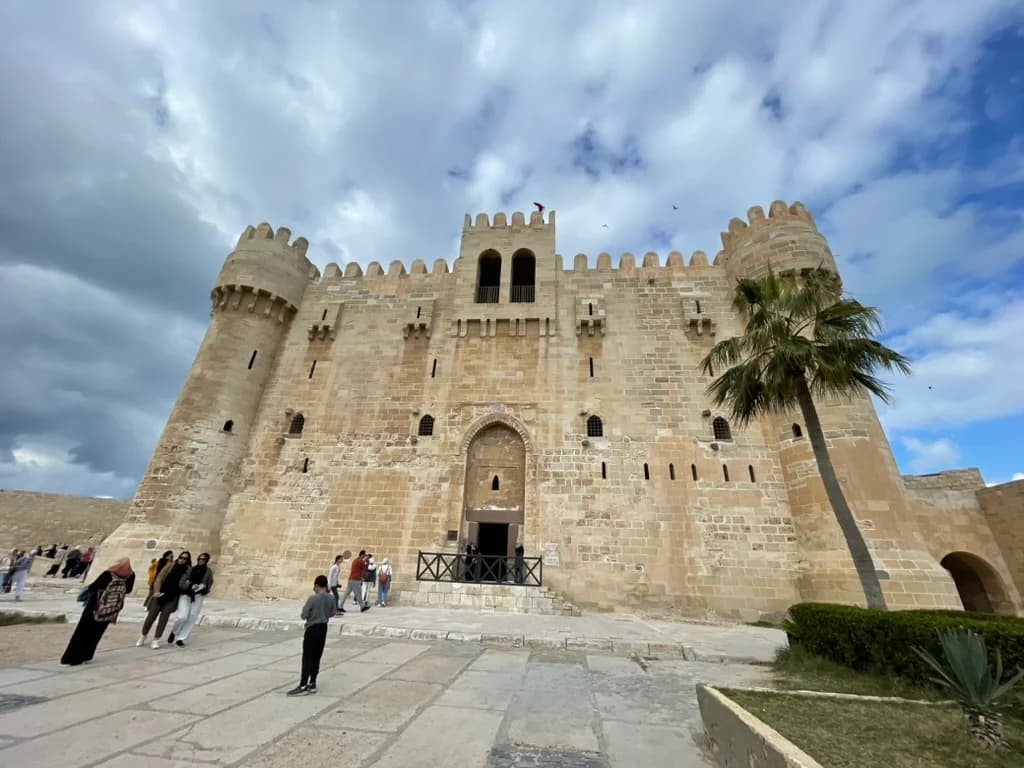
Fort Qaitbey rises from the eastern tip of Alexandria's harbor, a 15th-century limestone fortress that commands the Mediterranean coastline. Built in 1480 by Sultan Qaitbey, it occupies the site where the ancient Pharos lighthouse once stood, making it one of Egypt's most historically layered monuments. The fort dominates the skyline where the harbor narrows, visible from across the city's waterfront and instantly recognizable by its squat towers and crenellated walls.
The fortress functioned as a military stronghold for centuries, repelling invaders and controlling maritime traffic through Alexandria's port. Today it draws visitors who want to walk its ramparts, peer into its dungeons, and stand where both Mamluk and Ottoman soldiers once kept watch. The location itself matters as much as the structure. You're standing on bedrock that has hosted empires, and on clear days the view extends across the entire harbor.
Why This Place Matters
Fort Qaitbey represents a crucial moment in Mediterranean history when the Mamluks reasserted control over Egypt's most important port. The fort was built partly using stones salvaged from the fallen Pharos lighthouse, creating a direct material link between ancient and medieval Alexandria. This recycling of materials wasn't just practical. It symbolized the continuity of power and the way each era in Alexandria built upon the ruins of what came before.
The fortress also marks the shift from ancient to early modern Alexandria. While the city's Greek and Roman period was defined by trade and philosophy, the Mamluk era brought military architecture and defensive strategy to the waterfront. Fort Qaitbey became the symbol of that transition, and it remains one of the few structures from that period still substantially intact.
Quick Facts
- Built in 1480 by Sultan Qaitbey of the Mamluk Sultanate
- Located on the site of the ancient Pharos lighthouse, one of the Seven Wonders of the Ancient World
- Open most days from early morning through late afternoon, with some seasonal variation
- Entry is ticketed, with separate pricing for Egyptian nationals and foreign visitors
- Estimated visit time: 1.5 to 2 hours depending on how thoroughly you explore
- The fort's main tower stands approximately 17 meters high
- Accessible by car or taxi from central Alexandria, roughly 3 kilometers from the downtown area
Getting There
The fort sits on the Qaitbey Peninsula, which juts into the harbor at the eastern edge of Alexandria's waterfront. If you're coming from central Alexandria, a taxi or ride-share is the most straightforward option. The drive typically takes 10 to 15 minutes depending on traffic and your starting point. The street address places you at the fortress entrance, where a small parking area accommodates cars and buses.
Public transportation to the fort is less direct. You can take a local bus heading toward the eastern harbor, but you'll likely need to ask the driver or locals for confirmation that you're heading the right way. Walking is feasible if you're already in the Anfushi neighborhood, though the route winds through residential streets and isn't obviously marked.
The Layout and Experience
You enter through a gatehouse that leads into the main courtyard. The fort is compact by fortress standards, designed to maximize defensive capability within a limited footprint. The walls are roughly rectangular, with towers at the corners and a larger keep at the center.
The ground floor contains the dungeons, which are dimly lit and somewhat claustrophobic. Stone cells and passages branch off from a central corridor. These spaces feel intentionally oppressive, which is historically accurate. The dungeons were used to hold prisoners, and the architecture reflects their purpose.
Climbing to the upper levels opens the view dramatically. The ramparts offer 360-degree sight lines across the harbor, the Mediterranean, and back toward the city. On clear days you can see the outline of the modern port and the curve of the Corniche. The walls are thick enough to walk along safely, though there are no railings, so the experience feels exposed and slightly vertiginous if you have concerns about heights.
Several interior rooms on the upper levels contain small museum displays, though these are modest. Some rooms hold artifacts related to the fort's history, while others are simply empty chambers with small windows cut into the thick walls. The minimal interpretation means you're largely left to imagine what daily life looked like for the garrison soldiers.
Main Highlights
The rampart walk is the primary draw. The views are genuinely impressive, and the sense of standing in a place that has watched over Mediterranean trade for over five centuries is palpable. Photographers find the fortress especially rewarding during late afternoon when the angled light picks out the texture of the stone and the blue of the water contrasts sharply with the limestone walls.
The connection to the Pharos is the intellectual highlight. While nothing of the ancient lighthouse remains, standing on the spot where it once rose creates a tangible link to one of antiquity's most famous structures. The fort's stones, reused from the lighthouse, are literal fragments of that ancient monument embedded in a medieval one.
The dungeons, though uncomfortable to explore, offer a visceral sense of the fort's military purpose. They're not decorated or sanitized. You're walking through functional prison spaces that haven't been substantially altered since their original construction.
History and Background
The Pharos lighthouse stood on this peninsula for roughly 1,600 years, from the 3rd century BCE until the 14th century CE. It was one of the tallest structures in the ancient world and served as the navigational beacon for the entire Mediterranean. By the medieval period, earthquakes and erosion had damaged it so severely that it was no longer functional.
Sultan Qaitbey, recognizing the strategic importance of the site and the practical value of salvageable stone, ordered the fortress built in 1480. Workers dismantled what remained of the Pharos and incorporated its limestone blocks into the new defensive structure. Some of these ancient stones, identifiable by their size and finish, are still visible in the fort's walls if you know what to look for.
The fort served as Alexandria's primary military installation for the next four centuries. It was garrisoned by Mamluk soldiers, then Ottoman troops after the Ottoman conquest of Egypt in 1517. The fortress successfully repelled several naval attacks and functioned as a prison, barracks, and administrative center at different points in its history.
In the 20th century, the fort was partially restored and opened to the public. It remains one of Alexandria's most recognizable landmarks and one of the best-preserved examples of Mamluk military architecture in Egypt.
Tickets and Entry
Entry to Fort Qaitbey requires a paid ticket purchased at the gate. The pricing structure distinguishes between Egyptian residents and foreign visitors, with foreign visitor tickets at a higher rate. The fort operates on a seasonal schedule, with longer hours during summer months and shorter hours in winter. It's worth checking locally or asking your hotel about current opening times before you visit, as these can shift.
Photography is generally permitted throughout the fort, though you may be asked not to photograph certain restricted areas. Video recording sometimes requires a separate permit, so ask at the entrance if you plan to film.
The fortress is not wheelchair accessible. The stone floors are uneven, there are stairs without railings, and the rampart walk involves climbing and narrow passages. The dungeons are particularly challenging to navigate for anyone with mobility limitations.
Best Time to Visit
The fort is best visited in the cooler months, roughly October through April. Summer in Alexandria brings intense heat and humidity, and the fort offers no shade on its ramparts. You'll be exposed to the sun and the reflected heat from the stone walls.
Early morning visits are generally quieter and offer better light for photography. If you arrive around 8 or 9 AM, you'll encounter fewer tour groups and can explore the ramparts without navigating around crowds. Late afternoon brings dramatic light but also increases the likelihood of encountering school groups and guided tours.
Avoid visiting immediately after heavy rain, when the stone surfaces become slick and the rampart walk becomes genuinely hazardous.
Photography Tips
The exterior walls photograph best from the water side, which you can access by walking around the peninsula. The contrast between the fortress and the Mediterranean creates strong compositions. An early morning approach from the harbor side captures the fort against the rising sun, though this requires water access or a boat tour.
The ramparts themselves offer excellent vantage points for shooting back toward the city and the harbor. The crenellations (notched parapets) frame views nicely and provide compositional depth. Polarizing filters help cut glare off the stone and water.
Interior shots of the dungeons benefit from fast film or high ISO settings, as light is limited. The thick walls frame narrow windows, creating strong geometric compositions. Avoid flash, which flattens the texture of the stone and often isn't permitted.
Facilities and Preparation
The fort has minimal facilities. There is a small shop near the entrance selling bottled water, soft drinks, and basic snacks. There are no restaurants or cafes on site. The nearest dining options are in the surrounding neighborhoods, a short walk away.
Restroom facilities exist but are basic. Bring your own toilet paper and hand sanitizer if you prefer. The fort offers no shade except inside the interior rooms and dungeons, so sun protection is essential. Wear sturdy walking shoes with good grip, as the stone is worn smooth in high-traffic areas and can be slippery.
Bring water. More water than you think you'll need. The exposed ramparts offer no shade, and the Mediterranean wind can be deceptive about how much sun exposure you're getting.
Combining With Nearby Attractions
The fort sits within Alexandria's historic waterfront district. The Citadel of Qaitbey area includes several other sites worth visiting. The nearby Anfushi neighborhood contains smaller mosques and traditional Egyptian houses. The Corniche, Alexandria's famous waterfront promenade, is accessible within a 15-minute walk and offers restaurants, cafes, and views back toward the fort.
The Bibliotheca Alexandrina, a modern library built near the site of the ancient Library of Alexandria, is roughly 2 kilometers away. Many visitors combine a fort visit with time at the library, which offers air conditioning, exhibits, and a more extensive historical narrative about Alexandria's ancient period.
If you're interested in maritime history, the Naval Museum is located within the fort complex itself, though it's a separate ticketed attraction with modest exhibits focused on Egyptian naval history.
Sample Visit Plan
Arrive at the fort around 8:30 AM, before the heat peaks and tour groups arrive in force. Purchase your ticket and spend 20 minutes in the courtyard and lower levels, getting oriented and adjusting to the light levels in the interior spaces. Descend into the dungeons for 15 to 20 minutes, taking your time to explore the different cells and passages.
Climb to the ramparts and spend 45 minutes to an hour walking the walls, taking in views and photographs. Move slowly. There's no reason to rush, and the experience improves with lingering. Visit any interior museum displays on the upper levels, though expect these to be brief.
If you have energy remaining, walk around the exterior of the fort, particularly the harbor-facing side, for different perspectives. The total time on site typically works out to 90 minutes to two hours for a thorough visit.
Practical Tips
- Bring a hat and sunscreen even if you don't usually burn. The reflection off the stone and water intensifies UV exposure.
- Wear closed-toe shoes with good traction. Sandals leave you vulnerable to stubbed toes on uneven stones.
- Visit early in the day to avoid tour groups and heat. Most organized tours arrive between 10 AM and 2 PM.
- Ask the ticket seller about current opening hours and any areas that might be temporarily closed for restoration.
- If you're sensitive to enclosed spaces, the dungeons may be uncomfortable. You can skip them and focus on the ramparts.
- The fort is genuinely exposed. Wind can be strong, especially in winter. Secure any loose items.
- Bring a reusable water bottle and fill it before you enter, or purchase bottled water at the shop.
FAQ
How long does it take to see Fort Qaitbey? Most visitors spend 1.5 to 2 hours. You can move faster if you skip the dungeons and interior displays, or slower if you spend time on the ramparts taking photographs or simply observing the view.
Is the fort suitable for children? Children aged 8 and up generally handle the fort well, though the dungeons can feel creepy and the rampart heights concern some families. Younger children may find the uneven surfaces and lack of shade challenging.
Can I visit the fort in summer? Yes, but it's genuinely uncomfortable. Temperatures are high, shade is nonexistent on the ramparts, and the stone radiates heat. If you must visit in summer, go very early in the morning.
Is photography allowed? Yes, throughout most of the fort. Video recording sometimes requires a separate permit. Ask at the entrance if you plan to film professionally or extensively.
What's the closest restaurant or cafe to the fort? Small cafes and restaurants are scattered through the surrounding Anfushi neighborhood within a 5 to 10 minute walk. The Corniche, about 15 minutes away, has more substantial dining options.
Reviews
Sign in and mark this place visited to leave a review.
- Brandon B.Jul 2026


Free Trip Planner
Plan your Egypt trip with our free planner
Build a day-by-day itinerary with AI suggestions, hand-picked places, and friends. Free forever — no credit card.
Things to see near Fort Qaitbey

Catacombs of Kom el Shoqafa

Pompey’s Pillar
Ancient Roman Amphitheater