Mosque of Abu al-Abbas al-Mursi
Anfushi Old Alexandria, Alexandria 21599 Egypt Posted by bazartravelsAdmin
Mosque of Abu al-Abbas al-Mursi Overview
The Mosque of Abu al-Abbas al-Mursi stands in the Anfushi neighborhood of Alexandria, Egypt's second-largest city, overlooking the Mediterranean Sea. Built in the 18th century but substantially renovated in the 20th century, this mosque represents one of Alexandria's most important Islamic monuments and draws both worshippers and visitors interested in Islamic architecture and local history. The mosque honors Abu al-Abbas al-Mursi, a 13th-century Sufi saint whose tomb lies within its grounds, making it a site of spiritual significance across the Muslim world.
Why This Place Matters
Abu al-Abbas al-Mursi was a renowned Islamic scholar and Sufi mystic who lived in the 13th century and became one of Alexandria's most revered spiritual figures. His tomb transformed the location into a pilgrimage destination, particularly for followers of Sufi traditions. The mosque encapsulates Alexandria's layered religious and cultural identity, reflecting centuries of Islamic devotion in a city best known for its Hellenistic past. For visitors, the mosque offers insight into how Alexandria's inhabitants practice Islam today and how they honor their medieval heritage.
Quick Facts
- Located in Anfushi, the old harbor district of Alexandria
- Original structure dates to the 18th century, major renovation completed in 1990
- Contains the mausoleum of Abu al-Abbas al-Mursi, a 13th-century Islamic saint
- Features a distinctive dome and Ottoman-influenced architecture
- Open to visitors outside of prayer times
- Modest entry fee required for non-Muslim visitors
Getting There
The mosque sits in Anfushi, a historic neighborhood on Alexandria's harbor front, roughly 3 kilometers from Alexandria's central business district. If you're arriving by air at Borg El Arab Airport, the journey to Anfushi takes about 45 minutes by taxi or ride-share depending on traffic. Most visitors reach the mosque by taxi or on foot if staying nearby in the old city. Street signs in Arabic and English direct you toward the waterfront area.
Public transportation in Alexandria includes buses, though routes can be irregular. Asking locals or your hotel for directions is often more reliable than relying on maps alone. The neighborhood itself rewards wandering, with narrow lanes and traditional cafes tucked between older buildings.
The Layout and Experience
The mosque's exterior presents a striking profile with its large dome and slender minaret rising above the surrounding buildings. As you approach, you'll notice the main entrance leading into a courtyard area. Non-Muslim visitors typically remove their shoes or wear provided coverings before entering the prayer hall. The interior space feels calm and geometric, with Islamic calligraphy adorning the walls and a mihrab indicating the direction of Mecca.
The mausoleum of Abu al-Abbas al-Mursi occupies a sacred chamber within the mosque. Visitors often move through this space with quiet reverence, observing other pilgrims at prayer. The layout guides you naturally through different zones, from the courtyard to the main prayer hall to the tomb area. Natural light filters through high windows, creating an intimate atmosphere despite the building's scale.
If you arrive during prayer times, you may be asked to wait or return later. The five daily prayers, especially Friday's main congregation, take priority. Outside these hours, the mosque is more accessible to visitors.
Main Highlights
The dome is the mosque's architectural signature. Its proportions and decoration reflect both Ottoman and local Egyptian influences, giving the building a character distinct from other mosques in Egypt. The dome's interior surface carries intricate geometric patterns and calligraphic work.
The tomb chamber of Abu al-Abbas al-Mursi draws pilgrims year-round. His grave lies beneath an ornate cenotaph, and the space often fills with people praying, reciting Quran, or simply sitting in contemplation. The spiritual energy of the place is palpable, even for secular visitors unfamiliar with Islamic practice.
The minaret, visible from the harbor, serves as a neighborhood landmark. Its call to prayer echoes across Anfushi five times daily, anchoring the rhythms of local life.
History and Background
Abu al-Abbas al-Mursi lived from 1219 to 1287 and became one of the most influential Sufi teachers of his era. He established a school of Islamic thought that emphasized spiritual discipline and devotion. After his death in Alexandria, his followers built a mosque at his burial site, which became a center of pilgrimage. Over centuries, the mosque was rebuilt and expanded as its importance grew.
The structure you see today reflects a major renovation carried out in the late 20th century. Egyptian authorities undertook this project to restore the mosque to its historical importance while accommodating modern visitor numbers. The renovation preserved the essential character of the building while updating its infrastructure and structural integrity.
Anfushi itself has been inhabited for millennia, serving as Alexandria's harbor district under Ptolemaic, Roman, and Islamic rule. The neighborhood retains its medieval street patterns and traditional architecture, making it one of the oldest continuously inhabited parts of the city.
Tickets and Entry
Entry to the mosque is generally free for Muslim worshippers. Non-Muslim visitors typically pay a modest entry fee, though some days or times may have different policies. Check with your hotel or a local tour guide before visiting, as practices can vary.
Dress codes are important. Women should wear clothing that covers the shoulders, chest, and knees. Men should avoid shorts. Many visitors bring or borrow a headscarf or head covering. The mosque provides some coverings if needed, but bringing your own ensures comfort and respect.
Photography is often restricted inside the prayer hall and mausoleum, though the courtyard and exterior may allow photos. Ask permission before taking pictures of people or sacred spaces.
Best Time to Visit
Visit outside of the five daily prayer times if you want uninterrupted access. The call to prayer occurs at dawn, midday, mid-afternoon, sunset, and night. Friday is the holiest day in Islam, with the main congregation gathering around midday, so the mosque will be crowded or closed to casual visitors then.
Early morning or late afternoon tends to be quieter, offering a more peaceful experience. Alexandria's climate is Mediterranean, with mild winters and hot summers. The best seasons to visit are autumn and spring, when temperatures are moderate and humidity is lower.
If you're interested in observing religious practice, visiting during a prayer time lets you witness the devotion of the community, though you may need to step aside or wait outside the main prayer hall.
Photography Tips
The exterior of the mosque, especially the dome and minaret silhouetted against the Mediterranean light, makes for striking photographs. Shoot from the harbor side or nearby streets to capture the full profile of the building.
The courtyard's geometric spaces and shadows create compelling compositions, particularly in morning or late afternoon light. The walls and arches frame natural shots without requiring telephoto lenses.
Inside, photography is restricted in many areas. Focus on capturing the exterior and courtyard, or ask permission from staff if you wish to photograph other areas. Respect if anyone objects to being photographed.
Facilities and Preparation
The mosque has basic facilities. Bathrooms are available for worshippers and visitors. Water is provided for ritual ablutions. The neighborhood around the mosque has small cafes and shops selling drinks and light snacks, though options are modest compared to central Alexandria.
Bring water, especially in summer. The walk from the parking area or taxi drop-off may involve uneven streets. Wear comfortable shoes, though you'll remove them before entering the prayer hall. If you're sensitive to strong incense or perfumes, be prepared, as these are often present in the mosque.
Mobile phone signal is generally available. Most visitors don't need advance booking, though if you're planning a guided tour, arrange it beforehand through your hotel.
Combining with Nearby Attractions
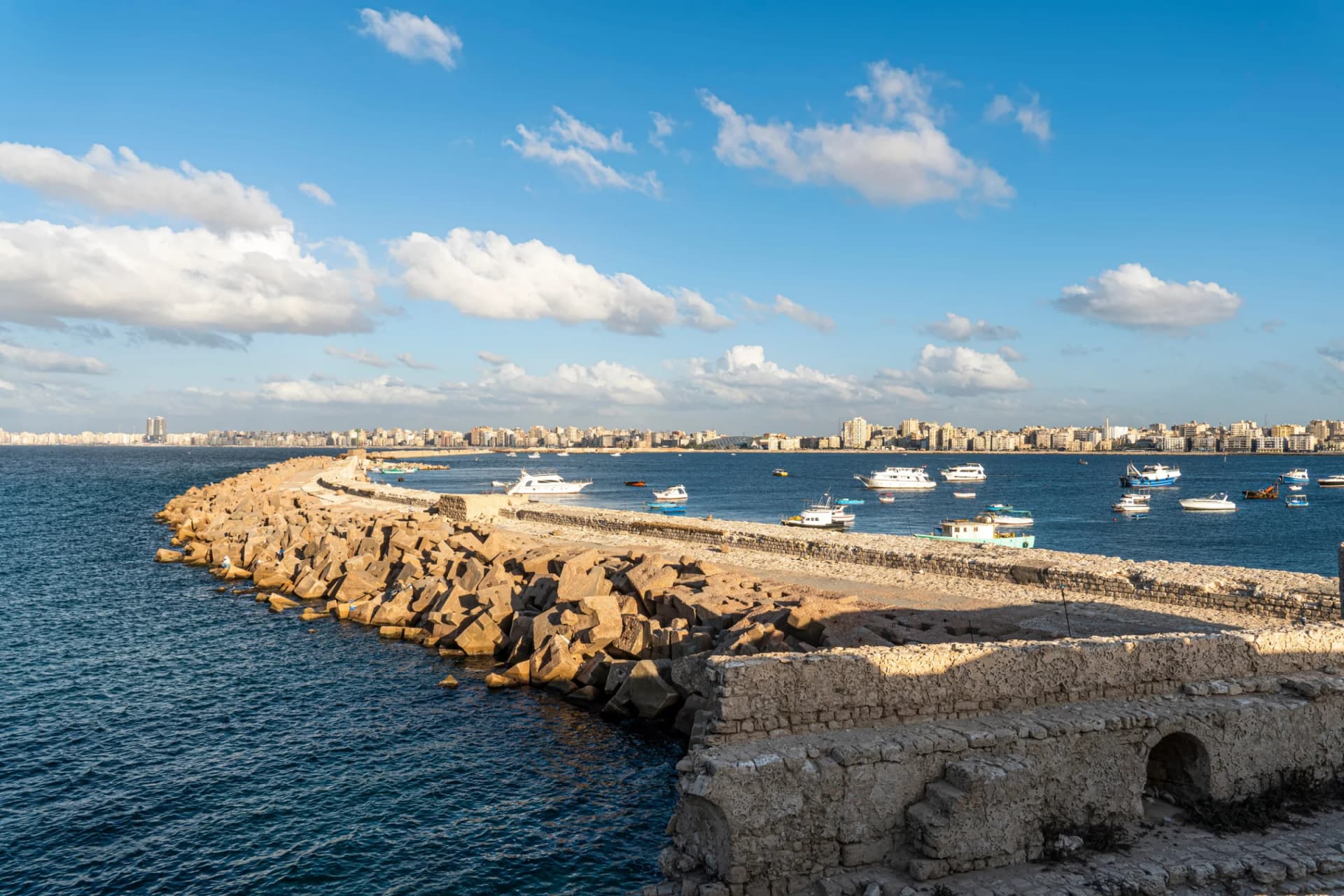
Anfushi's location on the harbor means you're steps away from the Mediterranean coastline and the historic harbor where Alexandria's maritime past unfolds. The neighborhood itself is worth exploring for its traditional architecture and street life.
The Citadel of Qaitbay, Alexandria's most famous landmark, sits about 1.5 kilometers away along the waterfront. If you're visiting both the mosque and the citadel, you can walk the harbor path or take a short taxi ride between them. The two sites represent different eras of Alexandria's history: Islamic and Mamluk, respectively.
The Alexandria National Museum and other cultural sites lie in the city center, roughly 20 to 30 minutes away by taxi. A full day in Alexandria might include the mosque, harbor walks, the citadel, and a museum visit.
Sample Visit Plan
If you have two hours, spend 45 minutes inside and around the mosque, then walk the harbor area for 45 minutes. Grab coffee or tea at a nearby cafe and observe local life.
For a half-day visit, combine the mosque with the Citadel of Qaitbay and a walk through Anfushi's streets. Start at the mosque in early morning to avoid crowds, then head to the citadel around mid-morning.
A full-day Alexandria itinerary might pair the mosque with the citadel, the harbor walk, lunch at a local fish restaurant, and a visit to a museum or the Bibliotheca Alexandrina downtown. This gives you a sense of Alexandria's Islamic, military, and cultural heritage.
Practical Tips
- Ask locals or your hotel staff about current entry policies and prayer times before visiting
- Wear modest clothing that covers shoulders, chest, and knees
- Bring a headscarf or head covering if you have one
- Remove shoes or wear provided coverings before entering prayer areas
- Avoid visiting during Friday midday prayers unless you specifically want to observe the congregation
- Carry water and wear comfortable walking shoes
- Use a taxi or ride-share to reach Anfushi, or ask your hotel for directions if walking
- Respect photography restrictions and ask permission before photographing people
- The neighborhood can feel quiet and less touristy than central Alexandria, which is part of its appeal
FAQ
Can I visit if I'm not Muslim? Yes, non-Muslim visitors are generally welcome outside of prayer times. Dress modestly and respect the sacred nature of the space.
Is there a guide available? The mosque doesn't always have official guides on-site, but your hotel can often arrange a knowledgeable guide to meet you there. Having a guide enriches the experience by explaining the history and significance of the space.
What is Abu al-Abbas al-Mursi known for? He was a 13th-century Sufi scholar and spiritual teacher whose teachings influenced Islamic practice across North Africa and the Middle East. His tomb became a pilgrimage site, and followers built the mosque around it.
How long should I spend here? Most visitors spend 45 minutes to an hour. If you're moving slowly and reflecting, or if you have a guide, budget 1.5 to 2 hours.
Is it appropriate to take photos inside? Photography is often prohibited in the prayer hall and mausoleum. The courtyard and exterior are usually fine. Ask staff or observe what others are doing before taking pictures.
Closing Thoughts
The Mosque of Abu al-Abbas al-Mursi offers visitors a window into Alexandria's Islamic heritage and the spiritual devotion that has sustained the city's communities for centuries. Unlike the grand monuments that dominate Alexandria's tourist circuits, this mosque remains a living place of worship where the sacred and everyday coexist. Whether you come to observe Islamic architecture, learn about Sufi tradition, or simply sit quietly in a space where thousands have prayed over eight centuries, the mosque rewards thoughtful attention and respect. Its location in Anfushi, overlooking the harbor where Alexandria's history was written, makes it an essential stop for anyone seeking to understand the city beyond its Hellenistic reputation.
Reviews
Sign in and mark this place visited to leave a review.
No reviews yet.
Free Trip Planner
Plan your Alexandria trip with our free planner
Build a day-by-day itinerary with AI suggestions, hand-picked places, and friends. Free forever — no credit card.