Catacombs of Kom el Shoqafa
Kom Al Shokafa, Alexandria 21599 Egypt Posted by bazartravelsAdmin
Overview
The Catacombs of Kom el Shoqafa sit beneath the streets of Alexandria, Egypt, roughly three kilometers south of the harbor. Built in the 2nd century, these underground burial chambers represent one of the largest subterranean cemeteries of the Greco-Roman world. Unlike the catacombs of Rome, Kom el Shoqafa blends Egyptian, Greek, and Roman traditions in a way that feels distinctly Alexandrian. You descend into a network of carved chambers where carved reliefs, sculptures, and sarcophagi tell the story of a cosmopolitan city at the crossroads of three cultures.
Walking through the passages, you encounter evidence of how Alexandria's residents lived and died during the Roman occupation. The site was lost for centuries, buried under the rubble of centuries, until construction work uncovered it in 1900. Today it remains one of the most important archaeological sites in Egypt and one of the most visited attractions in Alexandria.
Why this place matters
Kom el Shoqafa matters because it's not purely Egyptian or purely Roman. The catacombs show what happened when Greek, Egyptian, and Roman cultures mixed in a single port city. You see this fusion in the decorative program: traditional Egyptian funerary practices sit alongside Greek and Roman sculptural traditions. The mixture isn't haphazard. It reflects how Alexandria's middle and working classes actually lived.
The site also matters because so little has survived from Roman Alexandria above ground. The modern city sits atop the ancient one. These catacombs are among your best windows into what daily life, family structures, and religious practices looked like for ordinary Alexandrians during the 2nd century.
Quick facts
- Built in the 2nd century CE during the Roman occupation of Egypt
- Rediscovered in 1900 during construction work
- One of the largest subterranean cemeteries of the Greco-Roman world
- Located three kilometers south of Alexandria's harbor in the Kom el Shoqafa neighborhood
- Contains three main levels, with the deepest reaching approximately 35 meters below street level
- Access is by descending a spiral staircase into the underground chambers
Getting there
The catacombs are located in the Kom el Shoqafa district, roughly a 15-minute drive southwest of central Alexandria. If you're staying in the downtown waterfront area, a taxi or ride-share service is the simplest option. The site itself is marked, though street signage can be minimal. Most drivers know the location by name.
If you're using public transport, Alexandria's tram system runs through the city, but the catacombs are not directly on a major line. A combination of tram and local minibus works, though this requires patience and local knowledge. Many visitors book a guided tour through their hotel or a local tour operator, which includes transportation and expert interpretation.
The layout and experience
You enter through a modern structure that sits above the ancient catacombs. A spiral staircase descends into the first level, carved from living rock. The descent itself is the experience's first surprise. The air cools. The light shifts from bright Egyptian sun to the amber glow of electric lamps. The stairs are well-maintained and gentle, though they do go deep.
The first level is the most accessible and best-preserved. A central atrium opens onto side chambers where loculi (burial niches) line the walls. Some are sealed with stone plugs. Others are empty, their contents long since removed or lost. The walls bear carved reliefs and faint traces of paint.
The second level is smaller and less visited. It contains the famous "Hall of Caracalla," a chamber decorated with mosaics and sculptures. A third level exists but is often closed to the public for preservation reasons. Most visitors spend 45 minutes to an hour on the accessible sections.
The layout is straightforward. You follow a marked route through the chambers. It's cool underground, around 18 to 20 degrees Celsius year-round, which feels refreshing after the heat above. Humidity is moderate. The passages are narrow in places but never claustrophobic. Most of the route is level or gently sloped, though a few short flights of steps connect different chambers.
Main highlights
The central atrium of the first level is the largest open space. Its walls are carved with niches arranged in rows, a design borrowed from Roman columbaria (cremation burial sites). The ceiling is coffered and painted, though the pigment has faded.
The Triclinium, or banquet chamber, sits on the first level. It features a long stone bench carved into the rock wall, presumably where family members gathered for funerary feasts, a practice common in both Greek and Roman cultures. The walls here bear inscriptions in Greek and Latin.
The carved reliefs throughout show the blending of traditions most clearly. You see Egyptian gods like Anubis and Osiris carved in Greek sculptural style. Roman soldiers appear in Egyptian dress. A funerary stela shows a deceased person in a pose borrowed from Egyptian tomb art but executed in Greco-Roman technique. These aren't crude attempts at fusion. They're intentional choices by artists who understood multiple traditions.
Sarcophagi occupy the more elaborate chambers. Some are carved with relief decoration. Others remain plain. A few bear inscriptions identifying the deceased or their families. The variety suggests the site served people of different means and backgrounds, though primarily the middle classes and skilled workers.
History and background
Alexandria was founded in 332 BCE by Alexander the Great. By the 2nd century CE, when Kom el Shoqafa was constructed, it had been under Roman rule for more than a century. The city remained the largest in the eastern Mediterranean and the second-largest in the entire Roman Empire, after Rome itself.
The catacombs were carved during a period of peace and prosperity. Burials continued through the 4th century, possibly into the 5th. As Christianity spread through Alexandria, traditional pagan burial practices gradually declined, though the catacombs may have been reused by Christian communities.
The site was buried by debris and the shifting city above it. During construction in 1900, workers uncovered the entrance. Excavations continued sporadically through the early 20th century. The site was partially cleared and consolidated, though much remains unexcavated.
Tickets and entry
Entry requires a general admission ticket. Tickets are inexpensive and available at the site entrance. Timed entry is sometimes used during peak seasons to manage visitor flow, though this varies. A separate ticket is needed if you want to visit the adjacent Pompey's Pillar and the Serapeum ruins, which are nearby.
Guided tours are available through local operators. These tend to add significant depth to your visit, as the inscriptions and artistic details are difficult to interpret without explanation. Guides can also access areas that independent visitors cannot.
Best time to visit
The underground chambers maintain a cool, stable temperature year-round, so comfort depends on what's happening above ground. Visit early in the morning or late in the afternoon to avoid the peak heat of midday and the crowds that gather during tourist rush hours.
October through March offers the most pleasant weather in Alexandria. The sun is less intense. The humidity, while still present, is lower than in summer months. Winter is cool enough that the cool underground feels refreshing rather than necessary.
If you arrive between June and August, expect intense heat above ground and crowds in the catacombs during midday. Many visitors choose early morning visits during these months.
Photography tips
Light underground is limited. The electric lamps create amber tones and strong shadows. Bring a camera or phone that performs well in low light. A higher ISO setting helps if you're using a phone. Flash is typically not permitted, so a stable grip or a small tripod can help you avoid blurred images in the dim light.
The carved reliefs photograph best from an angle, where light rakes across the stone and reveals the depth of the carving. Straight-on shots often flatten the detail. Avoid shooting directly toward the electric lamps, which can fool your camera's exposure meter.
The spiral staircase descent is a strong compositional subject. The Triclinium with its carved bench is worth framing. Close-ups of inscriptions and relief details work well if you have good low-light capability.
Facilities and preparation
The entrance area has a small gift shop and basic facilities. Restrooms are available. Water is typically available for purchase. The site itself does not have extensive amenities, so bring water with you, especially if you're visiting during warm months.
Wear comfortable walking shoes with good grip. The stone floors are worn smooth in places and can be slippery if you're wearing smooth-soled shoes. The underground is cool, so a light jacket or long-sleeved shirt is practical if you're sensitive to cool temperatures.
The descent and ascent are not strenuous for most people, but if you have mobility issues or difficulty with stairs, discuss this with staff when you arrive. Some areas are not wheelchair accessible.
Combining with nearby attractions
Pompey's Pillar stands roughly 300 meters from the catacombs. It's a 27-meter granite column erected in the late 3rd century, among the tallest standing monuments from the Roman world. A single ticket often covers both sites.
The Serapeum ruins are adjacent to Pompey's Pillar. This temple complex was dedicated to Serapis, a Greco-Egyptian god. Little remains standing, but the site offers context for understanding the religious landscape of Roman Alexandria.
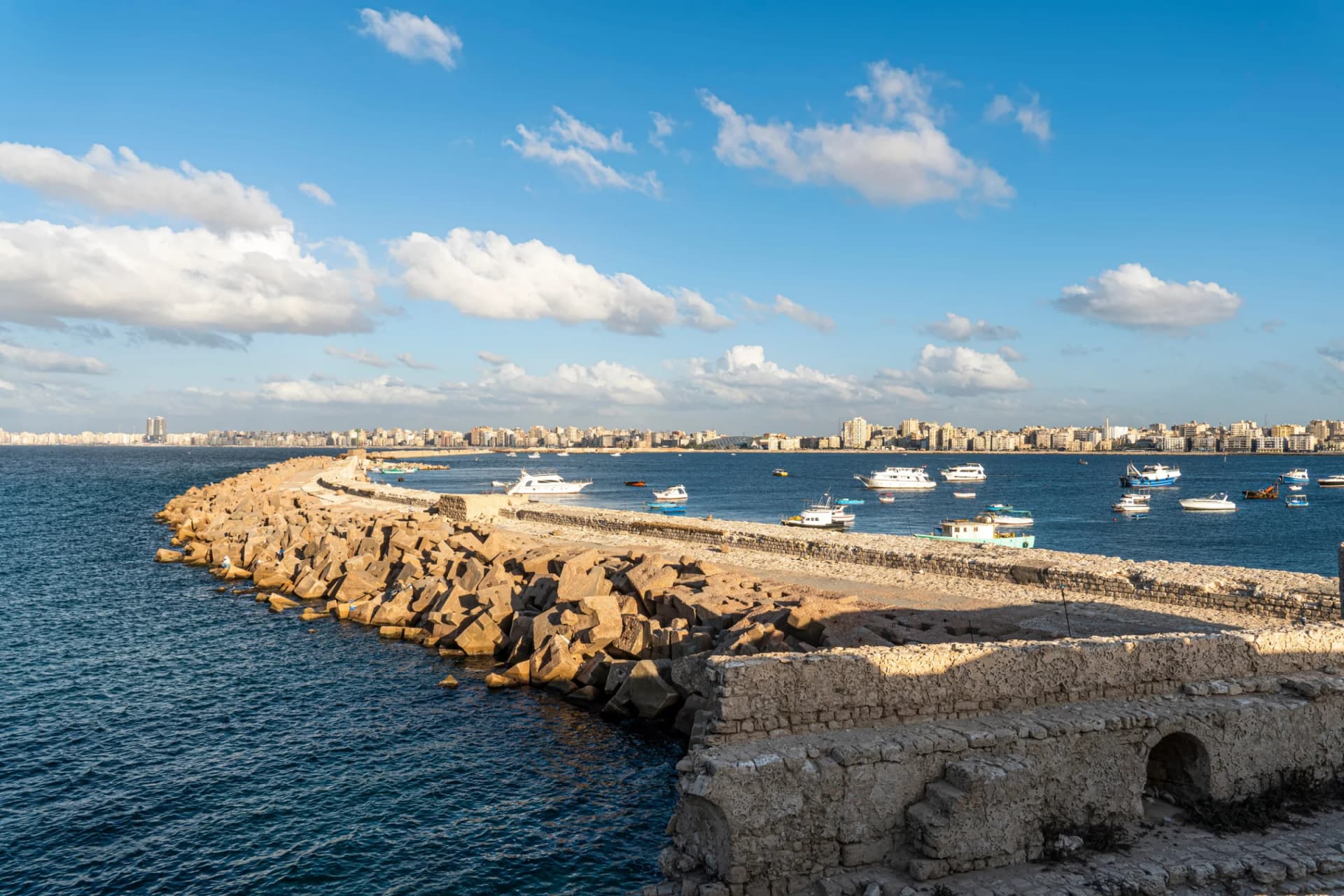
The Citadel of Qaitbay sits on the northern harbor, about two kilometers away. Built in the 15th century on the site of the ancient Lighthouse of Alexandria, it offers views of the harbor and the modern city. A visit to the catacombs and the nearby Greco-Roman monuments, followed by a walk through the citadel and the harbor area, makes a full day of Alexandria's layered history.
Sample visit plan
Start your morning by arriving at Kom el Shoqafa around 8 or 9 AM, before the midday crowds. Budget 45 minutes to an hour for the catacombs themselves. If a guide is available, this is a good time to book one or to listen to any available audio explanation.
After the catacombs, walk to Pompey's Pillar and the Serapeum ruins, which take another 30 to 45 minutes to explore. Both sites are open-air, so the contrast with the underground chambers is striking. Take water and sunscreen.
Return to central Alexandria for a midday meal. Restaurants near the harbor offer fresh seafood and views of the Mediterranean. Spend the early afternoon resting or exploring the city's museums and streets.
In the late afternoon, visit the Citadel of Qaitbay. The light at sunset over the harbor is strong and warm. The citadel's views extend across the Mediterranean and the modern city. This makes a natural end to a day focused on Alexandria's layers of history.
Practical tips
- Bring more water than you think you'll need, especially in warm months. The cool underground doesn't diminish thirst.
- Wear sunscreen and a hat for the time you spend above ground between sites.
- A light jacket or cardigan is practical for the cool underground chambers.
- Arrive early or late to avoid crowds and the intense midday heat.
- Hire a guide if possible. The inscriptions and artistic context are difficult to interpret without explanation.
- Allow extra time if you're visiting with people who move slowly or need frequent breaks.
- Cash is often preferred for tickets, though some sites accept cards. Check before you arrive.
FAQ
How deep do the catacombs go? The deepest accessible level is approximately 35 meters below street level. You descend via a spiral staircase, but the descent is gradual and not strenuous for most visitors.
Is it claustrophobic underground? The passages are carved from living rock and are generally spacious. The main atrium is a large open chamber. A few passages are narrow, but nowhere feels truly enclosed or confining.
Can I visit the third level? The third level is usually closed to the public for preservation and safety reasons. The first and second levels contain the main chambers and highlights.
How long should I plan to spend here? Most visitors spend 45 minutes to an hour in the catacombs themselves. If you're visiting Pompey's Pillar and the Serapeum as well, add another 45 minutes. A full morning or afternoon is typical.
Are there toilets and facilities? Basic facilities are available at the entrance. There are no facilities underground. Bring water and use restrooms before descending.
Opening hours
Reviews
Sign in and mark this place visited to leave a review.
No reviews yet.
Free Trip Planner
Plan your Alexandria trip with our free planner
Build a day-by-day itinerary with AI suggestions, hand-picked places, and friends. Free forever — no credit card.
Things to see near Catacombs of Kom el Shoqafa

Pompey’s Pillar
Ancient Roman Amphitheater

Mosque of Abu al-Abbas al-Mursi