Ancient Roman Amphitheater
Open now
Ancient Roman Amphitheater
Ismail Mahana Road Kom El Dekka Gharb, Alexandria 21599 Egypt Posted by bazartravelsAdmin
Alexandria's Ancient Roman Amphitheater at Kom El Dekka
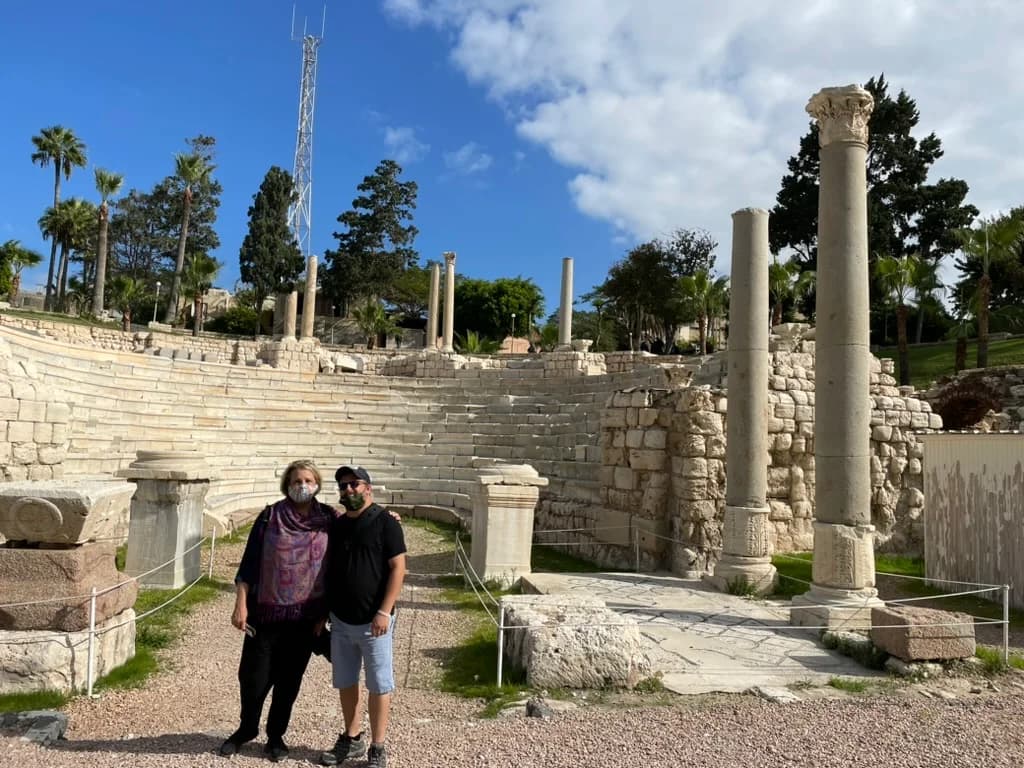
The Ancient Roman Amphitheater at Kom El Dekka is one of the most surprising finds in all of Egypt. While most visitors arrive in Alexandria thinking about Cleopatra or the lost Library, this well-preserved Roman theater sitting in the middle of a busy urban neighborhood tends to stop people cold. It is the only Roman-style theater discovered in Egypt, and it sits right off Ismail Mahana Road in the Kom El Dekka district, a short walk from Alexandria's main train station.
You don't have to be a classical history obsessive to feel something here. The white marble seating, the curved orchestra pit, the sheer fact that this structure survived underground for roughly two millennia beneath a modern city — it lands differently than a textbook ever could.
Why This Place Matters
Kom El Dekka, which translates roughly to "mound of rubble," was essentially a buried city until Polish and Egyptian archaeologists began excavating the site in the 1960s. What they found was extraordinary: a Roman civic complex that included the theater, a series of bath houses, lecture halls, and residential villas. The theater itself is believed to date to the second century AD, placing its construction during the height of Roman Alexandria's cultural influence.
Alexandria in that era was the second largest city in the Roman Empire. A civic theater wasn't just entertainment — it was a statement of urban identity. The fact that this one survived is almost accidental. The site was buried under centuries of debris and later Ottoman-era development, which ironically protected the marble and stonework from the kind of looting that stripped most ancient buildings in the Mediterranean world.
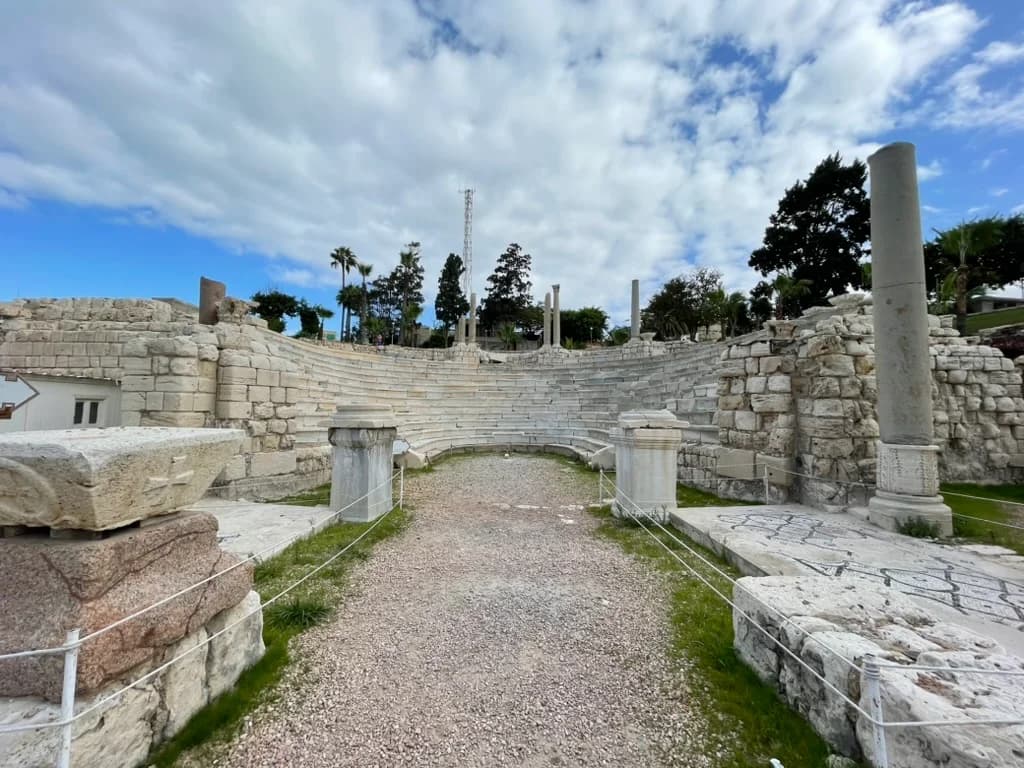
Thirteen of the original theater's white marble seating tiers remain intact. That number alone is worth pausing on. Most Roman theaters in this part of the world survive only as scattered column fragments or repurposed stones in later walls.
Quick Facts
Location: Ismail Mahana Road, Kom El Dekka, Alexandria, Egypt
Type: Open-air Roman theater and archaeological site
Estimated construction: Second century AD
Seating tiers intact: 13 rows of original white marble
Distinction: The only Roman-style theater discovered in Egypt
Managed by the Egyptian Ministry of Tourism and Antiquities
Photography generally permitted on site
Getting There
The site is centrally located in Alexandria, which makes it easier to reach than most ancient monuments in Egypt. Alexandria's main railway station, Mahattat Misr, is about 10 minutes on foot from the entrance. If you're coming from the Corniche or the downtown waterfront area, a taxi or rideshare will get you there in under 15 minutes depending on traffic.
The Kom El Dekka neighborhood itself is dense and urban. You'll walk past local shops, apartment buildings, and the general organized chaos of a working Egyptian city before the site entrance appears. That contrast — ancient marble against the noise of daily Alexandrian life — is actually part of what makes the visit memorable.
The Layout and Experience
The theater sits in an open excavation pit, which means you approach it from above and look down before descending into the site. That first view from the rim is the one most visitors photograph. The curved seating rows fan out in the classic Roman semicircular form, with the orchestra area and stage foundation visible at the bottom.
Beyond the theater itself, the excavated zone includes the remains of what archaeologists call the "auditoria" — a row of small lecture halls or classrooms that line one side of the complex. These were likely used for philosophical or rhetorical instruction, which fits Alexandria's historical reputation as a center of learning. The baths and residential structures further into the site give a sense of how layered and dense the Roman city was.
Walking through the site takes anywhere from 45 minutes to two hours, depending on how closely you read the signage and how long you spend with the lecture hall ruins. The explanatory panels on site are in Arabic and English, and while they don't cover everything, they give enough context to make the visit coherent without a guide.
History and Background
Alexandria was founded by Alexander the Great in 331 BC, and by the time Rome absorbed Egypt after the death of Cleopatra in 30 BC, the city was already one of the most sophisticated urban centers in the ancient world. The Romans built extensively on top of what the Ptolemaic dynasty had established, and Kom El Dekka represents a slice of that Roman layer.
The excavations that uncovered the theater were part of a broader Polish-Egyptian archaeological collaboration that began in 1960. The project is one of the longest-running urban excavations in the Middle East, and work has continued in phases over the decades since. New discoveries have been made as recently as the 2000s, including additional mosaics and structural remains that expanded the known footprint of the Roman complex.
The site was not formally opened to the public until the excavation had progressed far enough to allow safe access, which is why Kom El Dekka remains less globally famous than Luxor or Giza despite its genuine significance.
Best Time to Visit
Alexandria's climate is milder than Cairo's — the Mediterranean keeps temperatures more moderate year-round. That said, summer afternoons can still be uncomfortably hot, and the theater site is largely open to the sky. Morning visits, particularly between opening and noon, tend to be cooler and less crowded.
Spring and autumn are the most comfortable seasons overall. The site rarely draws the kind of overwhelming crowds you'd find at the Pyramids, so timing is more about weather comfort than beating tour groups, at least on most days.
Photography Tips
The best wide shot of the theater comes from the elevated walkway at the top of the excavation before you descend. Get there early if you want clean light — by midday the sun is directly overhead, which flattens the marble and washes out the texture of the seating tiers.
The lecture hall ruins on the eastern side of the complex photograph well in the afternoon, when the angle of light picks up the stonework detail. If you're interested in close detail shots, the mosaic fragments and column bases near the residential area reward patience and a wide-angle lens.
Combining with Nearby Attractions
Kom El Dekka's central location makes it easy to pair with other Alexandria landmarks in a single day. The Greco-Roman Museum, which holds an extensive collection of artifacts from the Ptolemaic and Roman periods, is within reasonable distance and adds historical depth to what you'll see at the theater. The Catacombs of Kom El Shoqafa, one of the largest Roman funerary complexes in Egypt, are accessible by taxi and represent another layer of Alexandria's ancient past.
The Alexandria National Museum is also worth an hour of your time. Together, these three sites give a fairly complete picture of Alexandria across its Greek, Roman, and later periods without requiring you to leave the city center.
Practical Tips
Wear comfortable shoes with grip — the excavated paths and stone steps can be uneven.
Bring water, especially if you're visiting between late spring and early autumn. Shade inside the site is limited.
Arrive at opening time if you want the site largely to yourself.
A basic Arabic phrasebook or translation app is useful at the ticket window, though English is generally understood.
Allow at least 90 minutes for the full site, more if you want to read all the interpretive panels carefully.
There is no formal dress code, but modest clothing is generally appropriate across Egyptian cultural sites.
Guided tours can be arranged locally and tend to substantially enrich the visit, particularly for the lecture hall and bath sections where signage is thinner.
FAQ
Is the Ancient Roman Amphitheater in Alexandria actually an amphitheater?
Technically, no. The structure is a theater, not an amphitheater. An amphitheater is oval or circular (like Rome's Colosseum), while this is a semicircular Roman theater designed for performances and civic gatherings. The distinction matters to archaeologists, though both terms tend to get used in casual conversation about the site.
How long does a visit take?
Most visitors spend between 60 and 90 minutes. If you're interested in the full archaeological complex, including the baths, lecture halls, and residential ruins, budget closer to two hours.
Is the site accessible for visitors with mobility limitations?
The site involves uneven terrain, stone steps, and sloped pathways into the excavation. It may be challenging for visitors with significant mobility limitations. It's worth contacting the site in advance if this is a concern.
Can you visit Kom El Dekka independently without a guide?
Yes. The signage is in Arabic and English, and the layout is straightforward enough to explore on your own. A guide adds context, particularly around the Roman civic life sections, but is not required for a meaningful visit.
The Ancient Roman Amphitheater at Kom El Dekka is the kind of place that earns its reputation quietly. No massive crowds, no elaborate sound-and-light show, just 13 rows of white marble that somehow outlasted everything built on top of them. If you're in Alexandria for even a single day, it belongs on your list.
---METADATA--- { "meta_title": "Ancient Roman Amphitheater Alexandria: Kom El Dekka Guide", "meta_description": "Explore the only Roman theater in Egypt at Kom El Dekka, Alexandria. Visitor tips, history, getting there, and what to expect at this remarkable ancient site.", "image_queries": [ "wide aerial view of Kom El Dekka Roman theater excavation pit showing semicircular white marble seating tiers Alexandria Egypt", "close detail shot of intact marble seating rows and orchestra level at the Roman theater Kom El Dekka", "visitors walking through the Roman lecture hall ruins and columned remains at Kom El Dekka archaeological site", "street-level view of Kom El Dekka neighborhood in Alexandria Egypt with urban buildings surrounding the ancient site entrance" ], "tags": [ "historic",
Opening hours
Reviews
Sign in and mark this place visited to leave a review.
- Brandon B.Jul 2026
I went during covid and it was an amazing experience. Really well preserved it seems. Would recommend if in Egypt.



Free Trip Planner
Plan your Alexandria trip with our free planner
Build a day-by-day itinerary with AI suggestions, hand-picked places, and friends. Free forever — no credit card.