German Museum of Technology
Trebbiner Str. 9, 10963 Berlin, GermanyWhat the German Museum of Technology Actually Is
The German Museum of Technology, known locally as the Deutsches Technikmuseum, sits in the Kreuzberg district of Berlin at Trebbiner Strasse 9, occupying a site that once served as a working railway depot. That history isn't incidental. The building itself is part of the experience. Walk up and the first thing you'll notice is a Douglas C-47 cargo plane mounted on the roof of the main building, positioned as though it just landed there. It didn't, of course, but the effect sets the tone for everything inside.
This is one of the largest technology museums in Europe, covering everything from printing presses and sailing ships to early computers and pharmaceutical production. It draws families, school groups, engineering students, and people who just want to spend a few hours doing something more hands-on than standing in front of paintings. Most days the place hums with activity, especially on weekends.
Quick Facts
- Official name: Deutsches Technikmuseum Berlin
- Address: Trebbiner Str. 9, 10963 Berlin (Kreuzberg)
- The museum opened in 1983
- The site covers roughly 26,500 square meters of exhibition space
- Connected to the Science Center Spectrum, an interactive science facility on the same grounds
- The museum is publicly funded and run by a foundation
- Admission is paid; children under a certain age typically enter free or at reduced cost
- Closed on Mondays
Getting There
The museum is easy to reach by public transit. The closest U-Bahn stop is Gleisdreieck on the U1 and U3 lines, which puts you about a five-minute walk from the entrance. Möckernbrücke station on the U1 and U7 is another option, roughly the same distance. If you're coming from central Berlin, the ride from Alexanderplatz takes around 20 minutes depending on your connection.
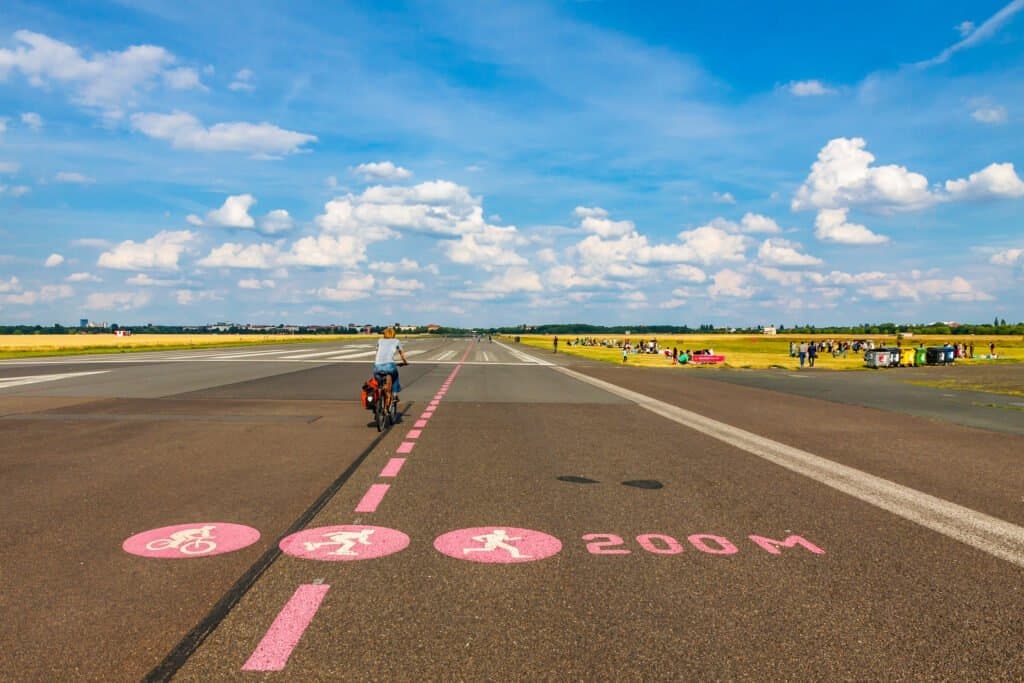
The area around Gleisdreieck has changed significantly in recent years. The elevated rail park, Park am Gleisdreieck, runs right past the museum's northern edge and connects through to the Tempelhof area if you want to make a half-day of it on foot or by bike. There's no reason to drive here. Parking in Kreuzberg tends to be frustrating and the transit links are genuinely good.
The Layout and Experience
The museum sprawls across several connected buildings, and it's worth knowing the basic geography before you arrive. The main building holds the aviation, nautical, and railway collections. The locomotive hall, which occupies the old engine shed, is where you'll find dozens of full-size steam and diesel trains spanning well over a century of German rail history. Standing next to a 19th-century locomotive and then walking twenty meters to a mid-20th century express train gives you a physical sense of how fast engineering moved.
The nautical section includes historic vessels that are genuinely large, displayed inside a purpose-built hall. Textiles, printing, photography, film, and brewing all have their own dedicated wings. It takes longer than most people expect.
The Science Center Spectrum is a separate building on the same grounds and is included with general admission. It's built around hands-on experiments, which makes it especially popular with children. If you're traveling with kids, budget at least an hour just for that space.
Main Highlights
The Railway Hall
The locomotive collection is the emotional core of the museum for a lot of visitors. The old Berlin Anhalter Güterbahnhof repair shed, which dates to the late 19th century, now houses trains that look almost alive despite being stationary. Several of the exhibits are walk-through, meaning you can climb aboard and see the cab or passenger compartment up close.
Aviation
The Douglas C-47 on the roof is the famous image, but the aviation gallery inside holds a broader collection of aircraft and components. There's context around the Berlin Airlift of 1948 and 1949, which gives the C-47 its specific meaning in this city. That plane isn't just decoration.
Printing and Photography
These floors tend to be quieter, which makes them worth seeking out if you want to slow down. The printing section traces the development of moveable type through to early industrial printing, with working machinery on display. The photography and film collections cover early German contributions to both industries.
The Historic Vessels
The nautical hall contains sailing ships and other historic vessels that are difficult to see in context anywhere else in central Europe. The scale of some of these boats inside an enclosed space is genuinely surprising.
History and Background
The museum opened in 1983 on a site with deep industrial history. The Anhalter freight station and its repair facilities once made this corner of Kreuzberg a working engine of Berlin's rail network. After the war, the site sat largely unused or was repurposed piecemeal. The decision to found a technology museum here was partly practical and partly symbolic, anchoring a new cultural institution to a place that had actually produced and maintained technology for decades.
Kreuzberg in 1983 was a very different neighborhood than it is today. It was affordable, politically charged, and in some ways isolated by the Wall, which ran not far from here. The museum grew alongside the neighborhood's transformation and today sits comfortably among the galleries, restaurants, and parks that have made this part of Berlin one of the more interesting places in the city to spend a day.
Tickets and Entry
The museum charges a general admission fee that falls into the mid-range bracket for Berlin attractions. Reduced tickets are available for students, seniors, and registered unemployed visitors. Children under a certain age enter free, though it's worth checking the current policy on the museum's website before you go since these thresholds occasionally change.
There are no timed entry slots as of recent years, meaning you can arrive and buy tickets at the door. Guided tours are available in German and sometimes in English depending on the season and booking. Audio guides are available for rent at the entrance. If you plan to visit both the main museum and the Science Center Spectrum, confirm at the desk that your ticket covers both, as this is typically the case with standard admission.
Best Time to Visit
Weekday mornings are the calmest. School groups tend to arrive mid-morning, so if you get there when the doors open, you'll have the locomotive hall and the larger galleries largely to yourself for the first hour or so. Saturday afternoons in summer are the busiest, with families filling the Spectrum building in particular.
The museum is indoors throughout, so weather doesn't affect the visit much. That said, the grounds and the connection to Park am Gleisdreieck make a warm-weather visit more pleasant if you want to combine the museum with some time outside. The park itself has become a popular cycling and walking corridor, and it's a good way to decompress after several hours of dense exhibition content.
Combining with Nearby Attractions
Topography of Terror, one of Berlin's most important historical documentation centers, is about a 15-minute walk northeast along Stresemannstrasse. It's free to enter and covers the SS and Gestapo apparatus in detail. The contrast with a morning at the technology museum is stark but meaningful if you're trying to understand how Berlin holds its history.
Martin-Gropius-Bau, a major exhibition venue, is also within walking distance and regularly hosts large-format international exhibitions. If you're spending a full day in this part of Kreuzberg, those three sites alone will keep you occupied from opening to close.
Practical Tips
- Wear comfortable shoes. The museum is large and the floors in the old industrial buildings are hard concrete and stone.
- Allow at least three hours for the main building alone. Four is more realistic if you read labels.
- The museum has a café on site. It's fine for a break but not a destination meal. Kreuzberg has better options within a ten-minute walk.
- Photography is generally permitted throughout the museum without flash. Check signage in specific galleries.
- The museum is closed on Mondays. Plan accordingly.
- Lockers are available near the entrance for bags and coats.
- The building is wheelchair accessible, though some older sections of the site have limitations. Check accessibility information in advance if this is relevant for your group.
FAQ
Is the German Museum of Technology worth it for adults without children?
Yes, without qualification. The railway, aviation, and nautical collections are serious museum-quality exhibitions that reward adult attention. The Spectrum building is more child-oriented, but the main museum is aimed at a general adult audience.
How long does a visit take?
Most visitors spend between three and five hours. If you're thorough and visit the Spectrum as well, a full day isn't unreasonable.
Is there a gift shop?
Yes, there is a museum shop near the entrance carrying books, models, and design-related merchandise. It's one of the better museum shops in Berlin for technically minded gifts.
Can you visit just the Science Center Spectrum separately?
The Spectrum is on the same grounds and typically included with standard admission to the main museum. It's not generally marketed as a standalone visit, but check with the ticket desk on arrival.
Is the museum suitable for very young children?
The Spectrum is well suited to children from around age five upward. The main museum has impressive large-scale exhibits that young children often find visually exciting, though much of the interpretive content is aimed at older visitors.
Reviews
Sign in and mark this place visited to leave a review.
No reviews yet.
Free Trip Planner
Plan your Berlin trip with our free planner
Build a day-by-day itinerary with AI suggestions, hand-picked places, and friends. Free forever — no credit card.