Tiergarten
Tiergarten, 10 Berlin, GermanyBerlin's Tiergarten: A Park That Runs Through the City's Core
Tiergarten is the kind of place that doesn't announce itself. You step off the S-Bahn, cross a street, and suddenly you're under a canopy of old linden and oak trees, the noise of central Berlin dropping away behind you. At roughly 210 hectares, it is one of the largest urban parks in Germany, and it sits almost exactly at the geographic and symbolic center of the capital. Whether you're walking west from the Brandenburg Gate or cycling south from the Hauptbahnhof, Tiergarten is hard to avoid — and once you're in it, hard to leave.
The park stretches between the Mitte district to the east and Charlottenburg to the west, with Potsdamer Platz anchoring its southeastern corner. It is not a manicured garden in the French style. It feels more like a managed forest, with long winding paths, dense stands of trees, and open meadows that fill with Berliners the moment the sun appears.
Why Tiergarten Matters
This is not simply a green space. Tiergarten has been a hunting ground for Prussian electors, a battlefield, and a source of firewood during the desperate winters after World War II. The park was almost entirely stripped of its trees by 1945, then painstakingly replanted starting in the early 1950s, largely with saplings donated by cities across West Germany and beyond. The trees you walk under today are, in most cases, less than 80 years old — which makes the forest feel all the more deliberate.
Standing at the Siegessäule, the golden victory column at the park's center, you're looking at a monument that was moved to its current location by the Nazi government in 1939. It was originally placed in front of the Reichstag. The relocation added a fourth drum to the column's height, making it taller than it was ever intended to be. Small detail, but it tells you something about how many layers of history are compressed into this one patch of land.
Quick Facts
- Size: approximately 210 hectares
- Location: central Berlin, between Mitte and Charlottenburg
- Entry: free and open at all hours
- Nearest S-Bahn stations: Tiergarten, Bellevue, and Unter den Linden
- Nearest U-Bahn: Hansaplatz (U9) for the northern section
- Cycling: permitted on designated paths throughout the park
- Dogs: allowed on a leash in most areas
- The Siegessäule observation deck charges a small admission fee
Getting There
From Berlin Hauptbahnhof, the park's northern edge is about a 10-minute walk south. From the Brandenburg Gate, you're already at the eastern entrance — just keep walking west along Strasse des 17. Juni, the wide boulevard that bisects the park. If you're coming from Potsdamer Platz, the southeastern corner of the park is roughly a 5-minute walk.
Cycling is genuinely the best way to arrive if you're coming from further afield. Berlin's bike infrastructure is solid, and you can ride directly into the park from most central neighborhoods without touching a major road for long.
The Layout and Experience
Tiergarten is not a park you can "do" in an hour. It rewards wandering. The main east-west axis is Strasse des 17. Juni, which cuts straight through toward the Siegessäule. But the more interesting experience is in the quieter network of paths north and south of that boulevard, where you'll find small lakes, rose gardens, and the occasional sculpture tucked between the trees.
The Neuer See, a lake in the southwestern part of the park, is a good target if you want somewhere to sit. There's a beer garden on its shore that tends to fill up on warm afternoons. The English Garden section, near the Soviet War Memorial on the eastern edge, has a more formal, open feel compared to the denser woodland further west.
The Siegessäule itself sits on a large roundabout called the Großer Stern, and you can climb the internal staircase to the viewing platform for a panoramic look across the treetops toward the Reichstag and the TV Tower. On clear days, you can see surprisingly far.
Main Highlights
The Siegessäule
The gold-leafed Victoria at the top of the victory column is visible from a distance, but the view from the observation platform is worth the climb. The column dates to 1873, commemorating Prussian military victories in the 1860s and early 1870s. The mosaic-lined interior of the lower drum is often overlooked by visitors heading straight for the stairs.
Soviet War Memorial
Just inside the eastern edge of the park, near the Brandenburg Gate, stands one of three Soviet war memorials in Berlin. Built in 1945, it was constructed partly from marble taken from the demolished Reich Chancellery. It remains a functioning memorial and is flanked by two Soviet tanks. It's quieter and less visited than the larger memorial in Treptower Park, which gives it a more contemplative feel.
Schloss Bellevue
On the park's northern edge, the white neoclassical Bellevue Palace serves as the official residence of the German Federal President. You can't go inside, but the building and its grounds are visible from the path along the Spree, and the surrounding area is one of the calmer parts of the park.
The Rose Garden
Near the center of the park, not far from the Siegessäule, there's a formal rose garden that tends to peak in June. It's a small detour off the main paths but worth it if you're visiting in early summer.
Best Time to Visit
Spring and early summer are when Tiergarten is at its most alive. Cherry blossoms appear in April near the Japanese-German Center area, and by May the meadows are genuinely green. Summer weekends bring out large crowds, with families, cyclists, and groups grilling in the designated barbecue areas. If you want the park to yourself, come on a weekday morning in spring or autumn.
Winter has its own appeal. The trees are bare, the paths are mostly empty, and the scale of the park becomes more apparent without the leaf cover. The Siegessäule looks particularly stark against a grey Berlin sky. Not everyone's preference, but it's a different and honest way to see the place.
Photography Tips
The Siegessäule is most photogenic from the east, with Strasse des 17. Juni leading the eye toward it. Early morning gives you the column without the tour groups. The Soviet War Memorial photographs well in overcast light, which softens the contrast between the pale stone and the dark bronze figures. For the park itself, the Neuer See at golden hour is a reliable shot, especially if there are rowing boats on the water.
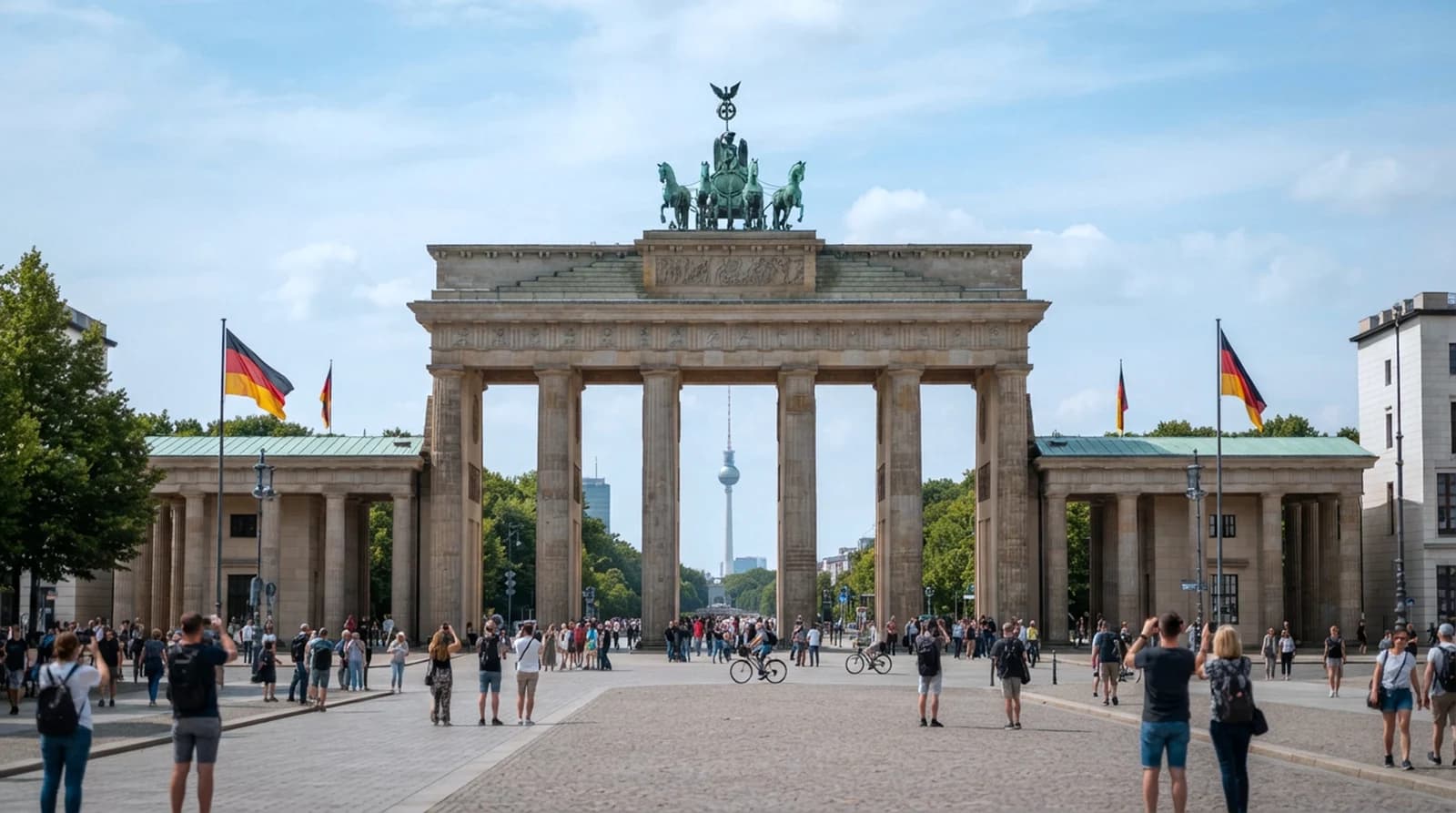
If you're shooting the Reichstag or Brandenburg Gate, Tiergarten provides useful foreground framing from the east side of the park. The tree line along the Platz der Republik gives context that a straight-on shot from the plaza doesn't.
Combining with Nearby Attractions
Tiergarten is genuinely central, which makes combining it with other visits easy. The Reichstag building is right at the eastern edge. The Kulturforum, which includes the Gemäldegalerie and the Philharmonie, sits just south of the park near Potsdamer Platz. The Berlin Zoo and Aquarium are on the western edge, at the Hardenbergplatz end of the Kurfürstendamm corridor. A full day that starts at the Brandenburg Gate, walks through the park to the Siegessäule, and then continues to the Zoo covers a lot of ground without feeling rushed.
Practical Tips
- Bring water if you're spending more than an hour — the park is large and vendors are not always nearby on the quieter paths
- The designated barbecue areas fill up fast on summer weekends; arrive before noon if you want a spot
- Cycling on the pedestrian paths is technically prohibited; stick to the marked cycling routes to avoid friction with other visitors
- The park has limited lighting at night; stick to the main paths after dark
- If you're visiting the Siegessäule, check opening hours in advance as they can vary seasonally
- Public toilets are available near the Siegessäule and at a few other points, but they're not abundant throughout the park
FAQ
Is Tiergarten safe at night?
The main paths and well-lit areas around the Großer Stern are generally fine in the evening. The denser, darker sections of the park are best avoided late at night, as with most large urban green spaces.
Can you swim in the Neuer See?
Swimming in the Neuer See is not permitted. You can rent rowing boats in warmer months, which is a more relaxed way to be on the water.
Is the park accessible for wheelchairs and strollers?
The main paved paths and Strasse des 17. Juni are accessible. Some of the smaller forest paths are unpaved and can be uneven, so surface quality varies depending on where you go.
How long should you plan to spend in Tiergarten?
A focused visit covering the Siegessäule, the Soviet Memorial, and the Neuer See takes around two hours at an easy pace. If you're combining it with a picnic or cycling the full extent of the park, half a day is more realistic.
Reviews
Sign in and mark this place visited to leave a review.
No reviews yet.
Free Trip Planner
Plan your Berlin trip with our free planner
Build a day-by-day itinerary with AI suggestions, hand-picked places, and friends. Free forever — no credit card.