Hermit’s Road
Grand Canyon, Arizona 86023, United States Posted by Brandon B.Admin
Hermit's Road: The Grand Canyon's Quieter South Rim Drive
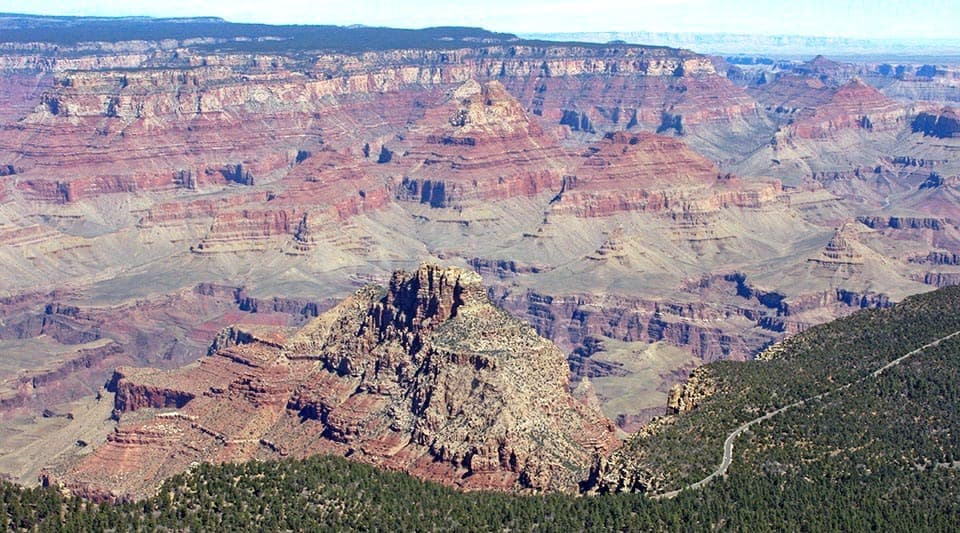
Hermit's Road is one of the best ways to see the South Rim of the Grand Canyon without fighting the crowds at the main overlooks. Stretching roughly 8 miles along the western edge of the rim from the Village area toward Hermit's Rest, this scenic drive connects nine distinct viewpoints, each one offering a slightly different angle on the canyon's layered geology. If you've only experienced the Grand Canyon from Mather Point or Yavapai, this road will reframe the whole thing.
The route follows terrain that drops away sharply to the north, and on a clear morning you can see more than 200 miles into the canyon's interior. That kind of visibility is rare anywhere.
Why Hermit's Road Matters
Most visitors to the South Rim arrive, photograph the canyon from the busiest spots near the Village, and leave. Hermit's Road pulls you away from that pattern. The viewpoints here tend to be less congested, the shuttle system is well-organized, and the western end of the road near Hermit's Rest gives you a genuine sense of remoteness that's hard to find on the South Rim's main corridor.
It's also the starting point for the Hermit Trail, one of the canyon's more demanding backcountry routes. Even if you're not hiking in, standing at the trailhead and looking at where the trail disappears into the rock puts the canyon's scale into perspective in a way that photographs never quite manage.
Quick Facts
- Location: South Rim, Grand Canyon National Park, Arizona
- Total length: approximately 8 miles (one way)
- Number of named overlooks: nine, including Trailview, Maricopa Point, Powell Point, Hopi Point, Mohave Point, The Abyss, Pima Point, and Hermit's Rest
- Private vehicles: restricted most of the year; free park shuttle runs regularly
- Open to private vehicles: typically from December 1 through February 28
- Cyclists and pedestrians: welcome year-round
- Hermit's Rest building: designed by Mary Colter, completed in 1914
- Park entrance fee required: yes (covers all South Rim access)
Getting There
You reach Hermit's Road from the South Rim Village area. The road begins near Monument Creek Vista and heads west, terminating at Hermit's Rest. During most of the year, private cars are not permitted on the road, so you'll board the free Hermit Rest Route shuttle at the transfer hub near the Village. The shuttle runs frequently throughout the day, and you can hop on and off at any overlook as many times as you like.
If you're driving in from the South Rim entrance, the Village is about 6 miles from the main gate. Follow signs for the Visitor Center and then look for the shuttle transfer area, which is well marked. Parking near the Village fills up by mid-morning in peak season, so arriving early or using the park-and-ride service from Tusayan is worth considering.
Cyclists can ride the full length of the road year-round, which is genuinely one of the more rewarding ways to experience it. The pavement is in decent condition and the elevation changes are manageable for most riders.
The Layout and Experience
The road moves west in a roughly linear sequence, and each overlook has its own character. Hopi Point is widely considered the standout for sunsets because it juts out further into the canyon than most of the others, giving you a wider panorama. Mohave Point sits directly above the Colorado River and on a clear day you can actually see the water far below, which feels like a different canyon from what you see at the eastern overlooks.
The Abyss is worth a stop even if the name sounds dramatic for the sake of it. The near-vertical drop here is around 3,000 feet from the rim, and the walls are unusually sheer. It's disorienting in the best way.
Pima Point, near the western end, is quieter than Hopi and gives you a long view down into the Hermit Creek drainage. On calm days you can sometimes hear the Colorado River from here, though you have to be patient and the wind has to cooperate.
Hermit's Rest at the end of the road is worth staying for a few minutes even if you're not hiking. The stone building was designed by architect Mary Colter in 1914 and it looks like it grew out of the cliff rather than being built on it. There's a gift shop and a water station inside, and the fireplace in the main room is a legitimate piece of architecture.
History and Background
The road was originally developed in the early 20th century as a tourist route along the South Rim, part of the broader effort by the Santa Fe Railway and the Fred Harvey Company to make the Grand Canyon accessible to travelers arriving by train. Mary Colter, who worked as a designer for the Harvey Company, left a significant mark on this stretch of the rim. Hermit's Rest is one of her most celebrated structures, and her approach of building structures that looked weathered and indigenous to the landscape was genuinely unusual for the era.
The name "Hermit" comes from Louis Boucher, a prospector and trail guide who lived alone in the canyon in the late 1800s. He built a trail into the interior and grew citrus trees near his camp, which struck other canyon visitors as improbable enough to earn him the nickname.
Best Time to Visit
Sunrise and sunset are the obvious answers, and for good reason. The canyon's color shifts dramatically depending on the angle of light, and the western orientation of Hermit's Road makes it particularly suited to late afternoon and evening visits. Hopi Point draws a real crowd at sunset, but if you position yourself there at least 30 minutes before the sun drops, you'll have a better chance of a decent spot near the rim edge.
Summer mornings, before 9am, are the most comfortable in terms of heat and crowd density. Midday in July can be punishing on exposed overlooks. Spring and fall offer the most forgiving conditions, and the light in October especially tends to be warm and clear.
Winter visits have their own logic. The road opens to private vehicles from December through February, which means you can drive the entire route at your own pace. Snow on the rim with the canyon walls below is a combination that most visitors never see and it's worth planning around if your schedule allows.
Photography Tips
The overlooks face generally north and west, so morning light comes from behind you and hits the far canyon walls directly. Afternoon and evening light rakes across the formations from the side, which is what creates the shadow and depth that make canyon photographs compelling. If you're serious about photography, plan to be at Hopi or Mohave Point in the late afternoon rather than the morning.
A wide-angle lens is useful but the canyon also rewards a longer focal length for pulling in distant buttes and mesas. The scale can make wide shots feel flat without a strong foreground element, so look for rim rocks, twisted juniper trees, or other visitors to establish depth.
Combining with Nearby Attractions
Hermit's Road connects naturally with the South Rim Village area, which has the Bright Angel Trailhead, Lookout Studio (another Mary Colter building), and the historic El Tovar hotel. If you're spending a full day on the South Rim, start with the eastern Desert View Drive in the morning, spend the middle of the day in the Village, and then take the Hermit Road shuttle in the late afternoon for the sunset from Hopi Point.
The Hermit Trail, which begins at the western end of the road, is a serious undertaking requiring a backcountry permit for overnight trips. Day hikers can descend a few miles without a permit, though any hiking into the canyon demands water, sun protection, and a realistic understanding of how much harder the return trip will be than the descent.
Practical Tips
- Shuttles run from roughly sunrise to around 9pm depending on the season; check the current schedule at the Visitor Center when you arrive
- Water is available at Hermit's Rest but not at the overlooks along the route, so carry your own
- Restrooms are at the shuttle transfer area and at Hermit's Rest; no facilities at the intermediate overlooks
- The rim trail connects most of the overlooks on foot, so you can walk sections between shuttle stops if you prefer
- Cell service is unreliable along the road; download offline maps before you go
- Pets are allowed on the rim trail but not on trails below the rim
- The park's annual pass covers all entry fees and pays for itself quickly if you're staying more than a day or two
FAQ
Can I drive Hermit's Road in my own car?
Only during the winter months, generally December through February. The rest of the year, private vehicles are restricted and the free park shuttle is the only motorized option aside from bicycles.
How long does it take to see the whole road?
If you stop at every overlook, plan on at least three to four hours. A quick trip to Hopi Point and Hermit's Rest and back takes closer to 90 minutes by shuttle.
Is Hermit's Road accessible for visitors with mobility limitations?
The shuttle is accessible and most overlook viewing areas are paved and reachable without significant walking. The rim itself is uneven in places, so conditions vary by specific overlook.
What's the difference between Hermit's Road and Desert View Drive?
They run in opposite directions from the Village. Desert View Drive heads east toward the park's eastern entrance and includes Watchtower. Hermit's Road goes west and is vehicle-restricted most of the year. They offer different perspectives on the canyon and are worth doing separately.
Reviews
Sign in and mark this place visited to leave a review.
No reviews yet.
Free Trip Planner
Plan your Arizona trip with our free planner
Build a day-by-day itinerary with AI suggestions, hand-picked places, and friends. Free forever — no credit card.