Valley of the Nobles
West Bank near Ramesseum Gurna, Luxor Egypt Posted by bazartravelsAdmin
Valley of the Nobles Overview
The Valley of the Nobles sits on the West Bank near Luxor, Egypt, a short distance from the Ramesseum temple. This necropolis holds hundreds of rock-cut tombs belonging to ancient Egypt's administrators, priests, and regional officials who served during the New Kingdom, roughly 1550 to 1070 BC. Unlike the more famous Valley of the Kings across the landscape, the Valley of the Nobles remains quieter and far less crowded, making it an essential stop for anyone spending time in Luxor who wants to see well-preserved wall paintings and gain insight into how non-royal ancient Egyptians lived and died.
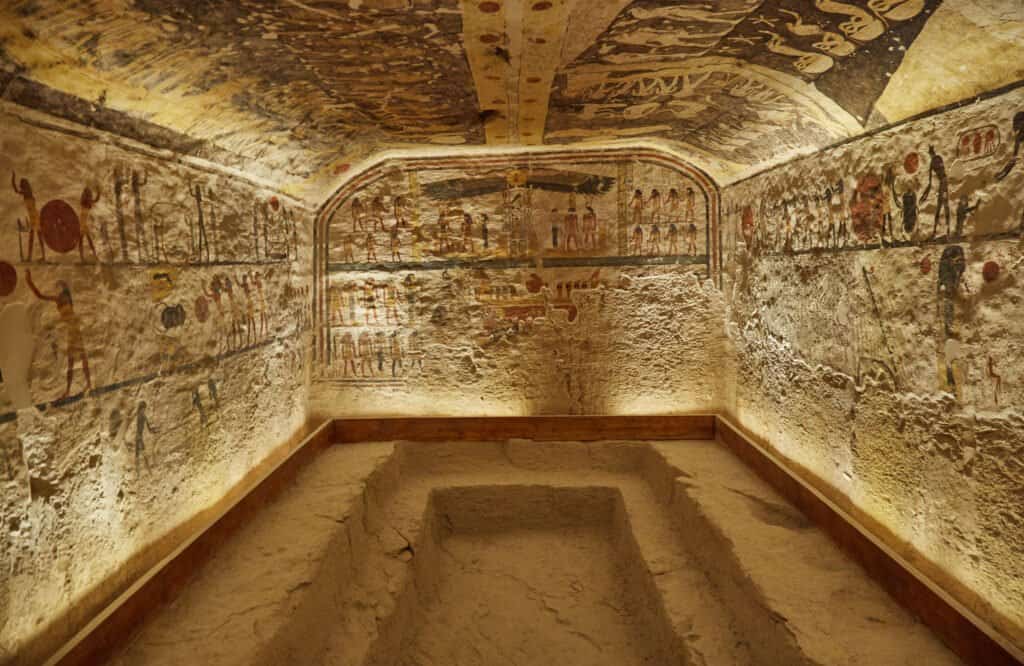
Walking through the Valley of the Nobles means stepping into tombs carved directly into limestone cliffs. Inside, the walls glow with color. Hieroglyphics cover nearly every surface. Scenes of daily life, religious rituals, and the afterlife journey appear in vibrant blues, reds, and yellows that have survived millennia. You'll see depictions of hunting, fishing, feasting, and farming. These aren't the grand monuments of pharaohs, but the intimate record of how officials wanted to be remembered.
Why This Place Matters
The Valley of the Nobles fills a gap in understanding ancient Egypt that the royal tombs alone cannot. While the Valley of the Kings showcases pharaonic ideology and religious beliefs tied to kingship, the nobles' tombs reveal the texture of daily life, family structures, and the professional roles of the people who actually ran the administration. Scribes, mayors, generals, and high priests left behind visual narratives of their accomplishments and aspirations.
The tombs also demonstrate the sophistication of ancient Egyptian art and craftsmanship at a scale that feels human. The paintings show recognizable scenes: a wife standing beside her husband, children playing, servants preparing food. For modern visitors, this familiarity across 3,500 years creates a direct emotional connection that more abstract royal tombs sometimes lack.
Quick Facts
- Located on Luxor's West Bank, approximately 15 minutes by car from the Ramesseum
- Home to over 400 rock-cut tombs from the 18th to 20th dynasties (roughly 1550 to 1070 BC)
- Open daily, though specific hours vary by season
- Requires a separate ticket from Valley of the Kings sites
- Most tombs are reached via a series of dirt paths and stairs carved into the hillside
- Many tombs remain closed to visitors, while approximately 10 to 15 are regularly accessible
- No cafes or shops inside the valley itself
Getting There
From central Luxor, you'll need to cross the Nile to reach the West Bank. Most visitors take a ferry from the central dock, a crossing that takes roughly 10 to 15 minutes. Once on the West Bank, taxis and private drivers are readily available. If you're exploring multiple sites like the Ramesseum, Medinet Habu, or the Valley of the Kings, arranging a driver for the day is more efficient than haggling for transport between each location.
The Valley of the Nobles is signposted from the main road on the West Bank. The entrance sits at the base of the valley, where you'll pay for your ticket. From there, you walk uphill into the necropolis. The walk from the entrance to the first major tombs takes about 10 minutes on foot. Wear sturdy shoes with good grip, as the paths are uneven and dusty.
The Layout and Experience
The valley spreads across a large hillside with tombs scattered at different elevations. There is no single prescribed route. Most visitors follow the main paths that wind upward, stopping at tombs that are open and that interest them. A map at the entrance shows the general layout, though signage inside the valley is minimal.
The experience is one of discovery. You climb a set of steps, peer into a darkened entrance, and step inside. Your eyes adjust to the dim light. A tomb might be small, with just one or two chambers, or larger with multiple rooms connected by low passages. The walls close in around you. Paint covers nearly every surface, and in some tombs, the colors remain startlingly vibrant. You may find yourself alone in a tomb for minutes at a time, reading the scenes, trying to imagine the person who commissioned this eternal home.
The quietness is the gift. On most days, you'll encounter far fewer visitors here than at the Valley of the Kings. This solitude changes the feeling of the place. You're not shuffling through a crowd or being herded by a tour guide's schedule. The pace is yours to set.
Main Highlights
Several tombs are particularly worth visiting if they're open during your visit. The Tomb of Kheti (Tomb 17) belonged to a mayor of Thebes during the 12th Dynasty. His walls show scenes of daily life, agriculture, and his own funerary journey. The Tomb of Beni Hassan (Tomb 2) contains hunting and fishing scenes that exemplify the skill of New Kingdom artists. The paintings depict a richness of detail: individual birds in flight, fish underwater, nets being cast.
The Tomb of Amenemheb (Tomb 85) served a general and shows military campaigns and hunting expeditions. These aren't static images. The compositions have movement and narrative. You follow the action across the wall from left to right, watching a hunt unfold or a battle progress.
Not every tomb is equally decorated or equally open. Some contain only faint traces of paint or carvings. Others are sealed or in active conservation. Ask at the entrance which tombs are accessible that day. The staff can guide you toward the most rewarding options and help you prioritize if you have limited time.
History and Background
The Valley of the Nobles developed over roughly 500 years, beginning in the 18th Dynasty around 1550 BC. During this period, Thebes (modern Luxor) was the capital of Egypt and the center of religious and administrative power. Officials who served the pharaoh and the temples accumulated wealth and status. When they died, they commissioned tombs that reflected their importance and ensured their continued existence in the afterlife, according to Egyptian belief.
The tombs follow a consistent design. An entrance staircase or sloping passage leads downward into the hillside. The main chamber, called the transverse hall, opens off this passage. Additional rooms branch off for storage of burial goods or for the placement of statues. The walls are plastered with mud and painted or carved with hieroglyphic text and scenes.
Unlike royal tombs, which focused on the pharaoh's journey to the afterlife and his relationship with the gods, the nobles' tombs centered on the individual's life and accomplishments. The paintings emphasized career, family, leisure, and the provisioning needed for the afterlife. A nobleman wanted viewers to remember him as powerful, wealthy, and pious. His tomb was a monument to that identity.
By the end of the New Kingdom, around 1070 BC, the practice of building private tombs in this valley had largely ceased. The necropolis was abandoned for centuries, and its tombs were sometimes plundered or repurposed. In modern times, archaeologists have studied and conserved many of the tombs, though restoration work is ongoing. Some tombs have been fitted with protective gates and improved lighting to help visitors see the paintings more clearly.
Tickets and Entry
Entry to the Valley of the Nobles requires a separate ticket from the Valley of the Kings and other West Bank sites. Tickets are purchased at the entrance gate. The price tier is modest, significantly cheaper than a Valley of the Kings ticket. Guided tours are available but not necessary; you can explore independently at your own pace.
Some tombs are kept locked and require a guard to unlock them for you. This is done for conservation reasons. If a tomb you want to see is locked, ask at the entrance, and staff will arrange access. Tipping the guard who opens the tomb is customary and appreciated.
Photography is generally permitted inside the tombs, though flash photography is prohibited to protect the paintings. A camera with a steady hand or a tripod will help you capture images in the dim light without flash.
Best Time to Visit
The Valley of the Nobles is best visited early in the morning, between 6 AM and 9 AM. At this hour, the temperature is cooler, and you're likely to have many tombs to yourself. The light entering the tomb entrances is also more favorable for viewing the paintings and for photography.
The winter months, from November to February, offer the most comfortable weather. Temperatures are mild, and the sun is less intense. By midday in summer, the heat becomes oppressive, and the valley can feel airless inside the tombs. If you're visiting in summer, plan your West Bank exploration for the early morning and skip the midday hours entirely.
The valley is open year-round, but hours may shift seasonally. Check locally or ask your hotel about current opening times before you go.
Photography Tips
The tomb paintings are your primary subject, and they're challenging to photograph well. Inside the tombs, light is limited. Your camera will struggle with the contrast between dark shadows and brightly painted areas. A camera capable of shooting at higher ISO settings, or a smartphone with good low-light performance, will give you better results than an older point-and-shoot.
Position yourself to let natural light from the entrance illuminate the walls you're photographing. Avoid standing in your own shadow. If possible, shoot when the sun angle is favorable, which is often in the early morning.
Consider bringing a small flashlight to help you see details in the darker corners of tombs. A red light or a headlamp with a red filter is less intrusive than white light and won't disrupt others if you're not alone.
The exterior views of the valley and the landscape around it are also worth photographing. The cliffs, the pathways, and the distant views across the West Bank toward the Nile create compelling context shots.
Facilities and Preparation
The Valley of the Nobles has no shops, cafes, or bathrooms inside. Bring plenty of water. A liter per person is a reasonable minimum for a morning visit. The sun at the West Bank is intense, and you'll be walking uphill and sitting in dark tombs. Dehydration happens quickly.
Wear a hat and sunscreen. Comfortable walking shoes with good ankle support are essential. The paths are uneven, and some involve steep steps or scrambling over loose stones. Avoid flip-flops or sandals without a heel strap.
Lightweight, breathable clothing that covers your shoulders and knees is both practical and respectful in a sacred archaeological site. A light scarf or wrap is useful for blocking sun and for descending into cooler tombs where the temperature can feel chilly after exposure to heat outside.
A small notebook and pencil can enhance your visit. Many tombs include inscriptions and scenes that reward closer study, and jotting down observations or sketching details helps you engage more deeply with what you're seeing.
How It Compares to Similar Places
The Valley of the Nobles differs fundamentally from the Valley of the Kings in character and scale. The royal tombs are larger, more ornate, and more heavily trafficked. They showcase the pinnacle of pharaonic power and religious ideology. The nobles' tombs are more intimate and more numerous. They're less famous, less crowded, and in many ways more accessible to non-specialists.
If you only have time for one West Bank necropolis, the Valley of the Kings is the more iconic choice. If you have a day or more on the West Bank, the Valley of the Nobles deserves several hours. The two sites complement each other. The Valley of the Kings answers the question of how pharaohs prepared for the afterlife. The Valley of the Nobles answers the question of how everyone else did.
Combining with Nearby Attractions
The Ramesseum, a mortuary temple built by Ramesses II, sits just minutes away from the Valley of the Nobles entrance. Many visitors combine the two sites in a single morning. The Ramesseum shows pharaonic architecture and the grandeur of temple construction, while the Valley of the Nobles shows private funerary art. Together, they offer a fuller picture of New Kingdom Egypt.
Medinet Habu, another major temple complex, is also on the West Bank and roughly 20 to 30 minutes from the Valley of the Nobles by car. If you're spending a full day exploring West Bank sites, you can feasibly visit the Valley of the Nobles, the Ramesseum, and Medinet Habu in sequence, breaking for lunch at a restaurant near the ferry landing.
The Valley of the Kings is also on the West Bank, about 20 minutes away by car. Many travelers visit both necropoli on the same day, though this requires early starts and sustained energy.
Sample Visit Plan
Arrive at the Valley of the Nobles entrance as soon as it opens, ideally between 6 AM and 7 AM. Purchase your ticket and orient yourself with the map. Spend your first 30 to 45 minutes exploring the most accessible and well-decorated tombs near the entrance. These include several of the highlighted tombs mentioned earlier, depending on which are open that day.
If you have stamina and time, venture further into the valley along the main pathways. Climb to the upper tombs, which are less visited but sometimes equally rewarding. Allocate roughly two to three hours for a thorough visit. By 9 AM or 10 AM, you'll have seen the key sites and will be exiting as the valley warms up and other tour groups begin arriving.
After leaving the Valley of the Nobles, head to the Ramesseum, which is very close. Spend an hour or so exploring the temple. This gives you a change of scenery and a chance to see a different type of monument. If you're interested in a midday break, restaurants near the ferry dock serve local and international food at moderate prices.
Practical Tips
- Hire a driver for the day rather than relying on taxis between sites. It's more economical and more flexible.
- Bring a printed or downloaded map of the West Bank. Signage in the valley is sparse.
- Ask the entrance staff which tombs are open and which are most worth visiting. They can save you time and help you prioritize.
- Explore the smaller, less famous tombs as well as the highlighted ones. You may find them less crowded and equally interesting.
- Don't rush. The Valley of the Nobles rewards slow, attentive looking. Sit in a tomb for a few minutes and let your eyes adjust and your mind settle.
- Bring a lightweight backpack rather than a large bag. You'll be navigating stairs and uneven ground.
- If you're sensitive to confined spaces, some tombs may feel claustrophobic. The smaller tombs are the most restrictive. Larger tombs with high ceilings feel more open.
- The West Bank can be very hot and very dusty. Plan accordingly, and don't underestimate the physical demands of walking uphill in heat.
FAQ
Is the Valley of the Nobles worth visiting if I'm already seeing the Valley of the Kings? Yes. The two sites are complementary and show different aspects of ancient Egypt. The Valley of the Nobles is less crowded and offers intimate, human-scaled tomb art that many visitors find more emotionally engaging.
How long should I spend at the Valley of the Nobles? Two to three hours is ideal. This gives you time to visit several tombs carefully without rushing. You can do it in 90 minutes if you're selective, or spend a full half-day if you want to explore deeply.
Do I need a guide? No. The site is small enough to navigate independently, and the tombs are relatively self-explanatory. A guide can provide historical context and help you access locked tombs more easily, but it's not necessary.
Are the tombs accessible if I have limited mobility? Most tombs require climbing stairs or navigating uneven ground. Some involve ducking through low passages. If mobility is a concern, ask staff about the most accessible tombs at the entrance.
What's the difference between the Valley of the Nobles and the Valley of the Kings? The Valley of the Kings holds the tombs of pharaohs and their immediate families. The Valley of the Nobles holds the tombs of officials, priests, and administrators. The royal tombs are larger and more famous. The nobles' tombs are more numerous, less crowded, and more focused on daily life scenes rather than royal funerary ideology.
Reviews
Sign in and mark this place visited to leave a review.
No reviews yet.
Free Trip Planner
Plan your Egypt trip with our free planner
Build a day-by-day itinerary with AI suggestions, hand-picked places, and friends. Free forever — no credit card.