
Hwaseong Haenggung
Closed now
Hwaseong Haenggung
825 Jeongjo-ro, Paldal-gu, Suwon, Gyeonggi-do, South KoreaOverview
Walking into Hwaseong Haenggung on a clear afternoon, you're struck by how the reconstructed palace pavilions sit so lightly on the grounds, their wooden pillars and curved tile roofs catching the sun. This was never meant to be a permanent royal residence. King Jeongjo built it in the late 18th century as a temporary palace to house his court whenever he traveled the 50 kilometers south from Seoul to visit his father's tomb in Suwon. What survives today is a carefully restored complex that opens a window onto Joseon dynasty court life and royal architecture at a specific, pivotal moment in Korean history.
Hwaseong Haenggung sits within the larger Hwaseong Fortress compound in central Suwon. The palace grounds occupy roughly 42,000 square meters and contain a dozen major structures arranged along a north-south axis. Unlike the grand permanent palaces of Seoul, this complex was designed for efficiency and flexibility. You can walk the entire site in two to three hours, depending on how closely you examine the buildings and gardens.
Why this place matters
King Jeongjo (ruled 1776 to 1800) was one of the Joseon dynasty's most capable reformers. His father, Crown Prince Sado, had died under tragic circumstances decades earlier, and Jeongjo made regular pilgrimages to his tomb at Hwaseong to honor his memory. These weren't quick visits. Royal processions could take days, and the court required proper facilities. Rather than stay in temporary tents or commandeer local buildings, Jeongjo commissioned a purpose-built palace complex that could be maintained and expanded over time.
The architectural choices reveal something deeper about Joseon court priorities. The buildings emphasize function and good sight lines over overwhelming grandeur. Administrative offices cluster near the entrance. Residential quarters sit further back. Gardens and walkways connect everything in a logical flow. This practical approach contrasts sharply with the more ceremonial palace complexes in Seoul, making Hwaseong Haenggung valuable evidence of how the royal court actually organized itself beyond the formal state occasions.
Quick facts
- Built in phases starting 1789, with major construction completed by 1796
- Located within Hwaseong Fortress, a UNESCO World Heritage site designated in 1997
- The palace complex was largely destroyed during the Korean War and reconstructed beginning in 1989
- Open year-round, closed Mondays
- Admission requires a ticket to Hwaseong Fortress; the palace is included in general fortress entry
- Guided tours in Korean available most days; English-language tours run less frequently
Getting there
Suwon sits on the Seoul-Busan railway corridor, about 30 kilometers south of central Seoul. If you're coming from Seoul, the Bundang Line subway connects directly to Suwon Station in roughly 40 minutes from Gangnam. From Suwon Station, Hwaseong Haenggung is not within walking distance for most travelers. A taxi ride takes 10 to 15 minutes depending on traffic. Local buses also serve the area, but the fortress is easier to reach by taxi if you're unfamiliar with the route.
If you're driving, parking exists near the fortress entrance on Jeongjo-ro. The address is 825 Jeongjo-ro, Paldal-gu. The fortress entrance is well signposted from major roads in central Suwon.
Note that Hwaseong Fortress itself is large and sprawling. Hwaseong Haenggung occupies the eastern section. When you enter, confirm with staff or your map that you're heading toward the palace complex, not the fortress walls or other sections.
The layout and experience
The palace grounds are arranged along a central spine running north to south. The main entrance gate (Gwangyemun) opens onto a broad courtyard. To your left and right are administrative buildings where court officials would have worked during royal visits. Straight ahead, the layout becomes more residential and ceremonial as you move deeper into the complex.
The central hall, Naejon, serves as the visual and functional heart of the palace. This is where the king would have received officials and conducted court business. It's a substantial wooden structure with a raised stone platform, giving it weight and formality without being ostentatious. The interior is open and unadorned, painted in the soft greens and reds typical of the period.
Behind Naejon lie residential quarters and smaller pavilions arranged to take advantage of the sloping terrain. Paths wind between buildings, creating a sense of discovery as you move through the complex. Unlike the compressed, fortress-like atmosphere of some Korean palaces, Hwaseong Haenggung feels spacious and almost residential, which is exactly what Jeongjo intended.
The gardens are modest but thoughtfully placed. Flowering trees and shrubs frame views between buildings. A small artificial pond sits in the western section, fed by channels that still function. These elements soften the architectural geometry and suggest how the royal family might have spent leisure time during extended stays.
Main highlights
Naejon, the main audience hall, is the logical starting point. The scale is substantial enough to convey royal authority, but the proportions remain human. Walk around the exterior to see how the wooden pillars are jointed and how the stone foundation is laid. These details reveal the technical sophistication of late Joseon carpentry and masonry.
The royal quarters (Seonjeongjeon and adjacent buildings) lie in the southern section. These spaces are smaller and more intimate than the public halls, with heated ondol floors and alcoves for furniture and screens. The reconstruction here is based on documentary sources and archaeological evidence, making these rooms useful for understanding how royal families actually lived when away from the grand Seoul palaces.
Danhyangnu, a two-story pavilion on the western side, offers views across the palace grounds and toward the fortress walls beyond. The structure is relatively simple, with large open bays, suggesting it was used for both ceremonial and leisure purposes. On clear days, you can see the surrounding landscape that made Suwon strategically and culturally important to Jeongjo.
The reconstruction of the eastern wall and its gates shows how the palace was integrated into the larger fortress system. Unlike isolated palace compounds, Hwaseong Haenggung existed as a fortified royal space within a fortified city. Walking the perimeter helps you understand this relationship.
History and background
King Jeongjo ascended the throne at age 11 following political upheaval at court. His father, Crown Prince Sado, had been executed on the orders of Jeongjo's grandfather in 1762 under circumstances that remained controversial. To rehabilitate his father's memory and establish his own legitimacy, Jeongjo made annual visits to Sado's tomb, which he relocated to Suwon and enclosed within a new, fortress-like complex called Hwaseong.
The fortress itself, completed in 1796, was an engineering marvel for its time. It incorporated both traditional Korean defensive design and contemporary military technology influenced by Western fortification theory. The walls stretch about 5.7 kilometers and include four gates and multiple bastions. Within this fortress, Jeongjo commissioned a palace complex that would serve as his temporary court during these visits.
Construction of Hwaseong Haenggung took place in phases. Initial pavilions were built in 1789. Expansion and refinement continued through the 1790s as the king and his planners refined their vision. By the early 1800s, the complex was fully functional, with administrative offices, royal quarters, ceremonial halls, and service buildings all in place.
The palace functioned in this form for roughly four decades. After Jeongjo's death in 1800, his successors visited less frequently, and the complex gradually fell into disuse. The Japanese colonial period (1910-1945) saw neglect and partial demolition. The Korean War (1950-1953) devastated what remained. For several decades, only ruins and foundations survived.
In 1989, South Korea's government began a comprehensive restoration of Hwaseong Fortress and its palace complex. Using historical records, architectural drawings, and archaeological excavation, teams reconstructed the major buildings and gardens. The work continued through the 1990s and into the 2000s, with ongoing refinement and scholarship informing the details. Today's complex is a scholarly reconstruction, not a preserved original, but it's grounded in genuine historical evidence rather than speculation.
Tickets and entry
Hwaseong Haenggung is accessible only with admission to Hwaseong Fortress. General fortress admission includes access to all sections of the palace complex. Tickets can be purchased at the main fortress entrance. If you're combining a visit to the fortress walls with the palace, you'll want to allocate time accordingly.
Guided tours in Korean are offered regularly throughout the day. English-language tours are available but run on a less frequent schedule. If you prefer to explore independently, maps are provided at the entrance in multiple languages. The layout is logical enough to navigate without a guide, though a knowledgeable tour adds context and historical detail that enriches the experience.
Some visitors choose to hire a private guide through tourist agencies in Suwon or Seoul. This option allows you to spend as much or as little time as you wish on specific buildings and to ask detailed questions about architectural or historical matters.
Best time to visit
Spring (April to May) and autumn (September to October) offer the most pleasant weather for walking the palace grounds. Temperatures are moderate, and the grounds are less crowded than summer weekends. The gardens are also at their best during these seasons, with flowering trees in spring and clear air in autumn.
Winter is cold but clear. If you visit in January or February, expect temperatures around freezing, but the site is quieter and the light is crisp. Summer (June to August) can be hot and humid, and afternoon thunderstorms are common. Weekday visits tend to be less crowded than weekends and holidays, which can draw larger crowds from Seoul.
The complex is open year-round, but hours are shorter in winter (typically closing by 5 p.m.) and longer in summer. Mondays are closed, so plan accordingly if you're visiting over a weekend.
Photography tips
The palace buildings photograph well in morning light, when shadows are soft and the wooden details are visible. The main hall (Naejon) is particularly photogenic from the courtyard approach, especially if you position yourself to include the stone platform and the surrounding structures in the frame.
The gardens offer opportunities for detail shots: carved stone water channels, the curves of roof tiles, flowering trees in season. The two-story pavilion (Danhyangnu) provides elevated views across the entire complex. Climbing to the second floor early in your visit can help you orient yourself to the layout before exploring on foot.
Late afternoon light across the fortress walls in the background creates a sense of context. If you photograph the palace buildings with the walls visible beyond, you convey the relationship between the two structures that's central to understanding Hwaseong as a whole.
Facilities and preparation
Hwaseong Haenggung has basic facilities. Restrooms are located near the entrance and scattered throughout the grounds. A small cafe or kiosk near the entrance sells drinks and light snacks. For a more substantial meal, you'll want to venture into Suwon's town center or eat before arriving.
The grounds are partially paved, but there are also gravel and dirt paths between buildings. Comfortable walking shoes are essential. The site is not heavily shaded, so sunscreen and a hat are advisable, especially in summer. If you're visiting in winter, layers are important, as wind can be strong in the open courtyards.
Most of the palace is outdoors or in unheated pavilions, so plan for weather. Rainfall is possible in spring and summer, so a light rain jacket is practical. The site is accessible to visitors with mobility challenges in the main courtyard areas, but some paths to outlying buildings are uneven.
Combining with nearby attractions
Hwaseong Fortress itself is the most obvious companion to the palace visit. The walls, gates, and bastions form a continuous circuit that can be walked in a few hours. The fortress provides the defensive and urban context that makes the palace's location meaningful. Many visitors spend a full day combining both.
Suwon's city center is about 2 kilometers away. The area around Paldal-gu has restaurants, shops, and smaller museums. If you're interested in Korean food, Suwon is known for galbi (grilled short ribs), and the town has numerous restaurants serving both traditional and contemporary Korean cuisine.
The tomb of Crown Prince Sado (Yungnyeongwon) sits within the fortress complex, a short walk from the palace. This site is deeply connected to Jeongjo's motivation for building both the fortress and the palace, making it a logical addition to your visit if you want to understand the personal and political dimensions of the project.
Sample visit plan
A focused visit to Hwaseong Haenggung alone takes two to three hours. Enter at the main gate, orient yourself at the information center, and pick up a map. If a guided tour is available and you want context, join one. If not, walk the central axis first (Gwangyemun to Naejon to the royal quarters), then explore the side buildings and gardens at your own pace. Climb to the second floor of Danhyangnu for views, then walk the perimeter to understand the palace's relationship to the fortress walls.
If you're combining the palace with Hwaseong Fortress, consider spending the morning on the fortress walls (starting from the south gate and walking the circuit) and the afternoon in the palace. This order allows you to get a sense of the fortress's scale and then appreciate how the palace fits within it. Alternatively, start with the palace in early morning, then explore the fortress walls later when the sun is lower and photography conditions improve.
For a full day in Suwon, you might visit the palace and fortress in the morning, eat lunch in the city center, visit the tomb of Crown Prince Sado in the early afternoon, and explore other fortress sections or museums in the late afternoon before returning to Seoul.
Practical tips
- Bring cash for admission and small purchases. Card payment is available at the entrance, but some kiosks and vendors prefer cash.
- Start your visit early if possible. The site is less crowded in the morning, and you'll have better light for photography.
- The fortress entrance is well signposted, but if you're unsure, ask your taxi driver to take you to Hwaseong Haenggung specifically, not just "Hwaseong Fortress," which is a much larger area.
- If you don't speak Korean, download a map before you arrive or request an English-language map at the entrance. Staff can point you toward key buildings.
- Plan for at least 2.5 hours if you want to see all the main buildings and gardens without rushing.
- The site is exposed to weather. Even on seemingly mild days, wind can be strong in the open courtyards.
FAQ
How long does it take to see everything? Most visitors spend two to three hours on the palace grounds alone. If you're combining it with Hwaseong Fortress, add another two to three hours for the walls and gates.
Is the palace wheelchair accessible? The main courtyard and central halls are accessible on paved paths. Some side buildings and outlying areas have uneven terrain and steps. Call ahead if you have specific accessibility needs.
Are there English-language guides? Yes, but they run less frequently than Korean tours. Ask at the entrance about timing when you arrive. Private guides can also be arranged through tourist agencies.
What's the best season to visit? Spring and autumn offer the most comfortable weather. The gardens are especially pleasant in May (flowering trees) and October (clear air and warm afternoons).
Can I visit both the palace and the fortress in one day? Yes. Most visitors allocate four to five hours for both, though you could spend a full day if you walk the entire fortress circuit and explore the palace slowly.
Opening hours
Reviews
Sign in and mark this place visited to leave a review.
No reviews yet.
Free Trip Planner
Plan your Suwon trip with our free planner
Build a day-by-day itinerary with AI suggestions, hand-picked places, and friends. Free forever — no credit card.
Things to see near Hwaseong Haenggung

Korean Folk Village

Suwon Hwaseong Fortress

Starfield Suwon

Gangnam District
Places to eat or drink near Hwaseong Haenggung
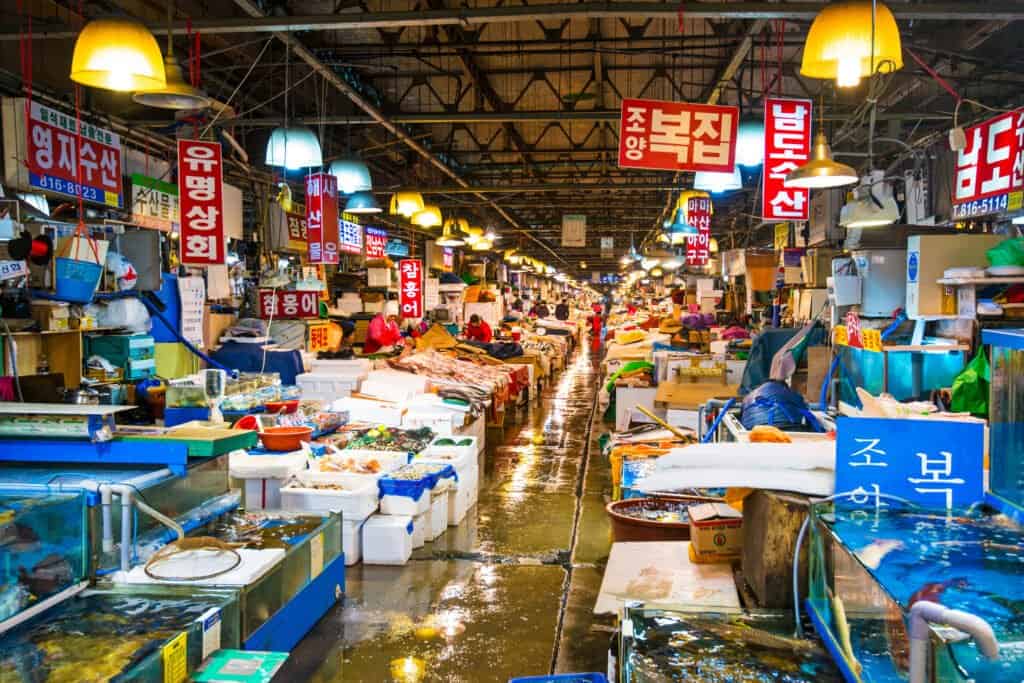
Noryangjin Fisheries Wholesale Market

Gebangsikdang

Gaon
