
Suwon Hwaseong Fortress
320-2 Yeonghwa-dong, Jangan-gu, Suwon, Gyeonggi-do, South KoreaOverview
Walk the perimeter of Suwon Hwaseong Fortress and you're tracing one of the most deliberate acts of urban planning in 18th-century Asia. The walls rise and dip across 5.74 kilometers of wooded hillside, their angles sharp and purposeful, their stonework fitted with such precision that you can barely slide a knife between blocks. This is not a ruin you visit to imagine what once stood. It is a nearly complete fortress that has survived earthquakes, wars, and two centuries of weather. You come here to walk inside a functioning vision of military architecture, restored not as a museum piece but as an inhabited landscape.
Why this place matters
Suwon Hwaseong Fortress represents a singular moment in Korean history. Built between 1794 and 1796, it was commissioned by King Jeongjo as a monument to his father, the Crown Prince Sado, and as a practical center of power in the southwest of Seoul. The fortress was designed by the scholar and engineer Jeong Yak-yong, whose approach blended traditional Korean military principles with contemporary ideas from the West about fortification geometry and cannon placement.
The walls themselves embody this fusion. They follow the contours of the surrounding hills rather than imposing a rigid grid, making them harder to breach. Towers are positioned to cover every approach. Bastions jut outward in angled geometry that allows defenders to rake an approaching force with crossfire. At the same time, the fortress was built around a planned city, with markets, administrative buildings, and residential quarters. It was a complete settlement, not just a military installation.
In 1997, Suwon Hwaseong was recognized as a UNESCO World Heritage Site. The fortress stands today as one of the best-preserved examples of a walled city from the Joseon Dynasty, and its architectural principles influenced fortress design across East Asia.
Quick facts
- Perimeter: 5.74 kilometers of walls
- Built: 1794 to 1796
- Designer: Jeong Yak-yong
- UNESCO World Heritage Site since 1997
- Main entrance: Paldalmun Gate (Paldal Gate)
- Open daily; hours vary by season
- Admission: General admission ticket required; separate fees for climbing towers and pavilions
Getting there
Suwon sits about 30 kilometers south of Seoul, reachable by train or car in roughly 45 minutes from central Seoul. If you're using the subway, take Line 1 from Seoul Station toward Suwon Station. The fortress is not directly adjacent to the station, so most visitors take a taxi or local bus from there. The ride takes about 15 minutes depending on which gate you're heading to.
If you're driving, the main parking area serves the Paldalmun Gate entrance, which is the most commonly used access point. Parking is available but can fill during weekends and holidays, especially in spring and autumn.
The fortress has multiple gates around its perimeter. Paldalmun Gate to the south is the largest and most accessible. Janganmun Gate to the north and Gwangjumun Gate to the east are also open to visitors. Each gate has its own parking and approach, so consider which section you want to explore before choosing your entry point.
The layout and experience
The fortress unfolds as a series of overlapping experiences depending on how much time and energy you bring. At minimum, you can walk the accessible stretches of wall at ground level, moving between gates and taking in the stonework and the views outward toward the city and countryside. This walk takes about two hours if you move at a leisurely pace and stop to examine details.
For a fuller experience, you'll want to climb the towers and pavilions that rise from the walls. Four main towers punctuate the perimeter: Paldalmun Gate itself, which is a two-story defensive structure, Hwaseong Seojangdae (a four-story observation tower), Banghwasuryujeong (a pavilion built over water), and Dongnjangdae (an eastern observation tower). Each requires a separate ticket or a combined ticket that covers multiple structures. The climb to the top of the observation towers takes ten to fifteen minutes and rewards you with views across the entire fortified area and out toward the surrounding Suwon cityscape.
The walls themselves are wide enough to walk on in most sections, though some stretches are more crowded with visitors than others. Early morning, especially on weekdays, offers the quietest experience. By late afternoon on weekends, the most popular sections near Paldalmun and along the southern wall fill with school groups and families.
Inside the fortress walls, the original city has been largely replaced by modern Suwon, though several reconstructed buildings and museums sit within the perimeter. Hwaseong Haenggung, a royal palace complex, occupies a section near Paldalmun and has been rebuilt to approximate its 18th-century state. You can visit this separately if you want to understand how the fortress functioned as more than just a military installation.
Main highlights
Paldalmun Gate is the largest and most photographed structure. Its two-story wooden superstructure sits atop a stone base with multiple archways, allowing traffic to flow through even during a siege. The gates themselves are ornately carved and painted in the traditional dancheong style. If you enter through this gate, you're experiencing the same passage that merchants, soldiers, and officials would have used nearly 230 years ago.
Hwaseong Seojangdae is the tallest structure on the fortress, a four-story tower that rises above the surrounding walls. The climb is steep and narrow, but the view from the top encompasses the entire fortress in its landscape context. On clear days, you can see well beyond the walls into the surrounding provinces. The interior is spare, with minimal decoration, emphasizing the tower's practical function as an observation and signaling post.
Banghwasuryujeong is a pavilion built over a small stream on the eastern side of the fortress. It's one of the few structures that merges defensive purpose with aesthetic intent. The wooden beams and painted interior suggest a place where officials might have paused to contemplate, even as its position allowed observation of the eastern approach. The water beneath it adds a sensory dimension that the stone walls alone do not provide.
The northern wall section is quieter than the southern approach and offers long views across agricultural land to the north. If you want to walk the fortress without constant crowds, this section rewards the detour. The stonework is equally impressive, and you'll encounter far fewer other visitors.
History and background
King Jeongjo inherited the throne in 1776 and spent much of his reign consolidating power and modernizing the kingdom. His father, Crown Prince Sado, had been executed in 1762 under circumstances that haunted Jeongjo throughout his life. Building Suwon Hwaseong was an act of filial piety and political strategy in equal measure. The new fortress would honor his father's memory while establishing a secondary power base in the southwest, reducing Seoul's dominance and spreading royal authority across the kingdom.
The fortress was not built by traditional methods or through traditional authorities. Jeong Yak-yong, who designed it, was a polymath and a member of the Silhak movement, which emphasized practical scholarship and evidence-based inquiry. He applied contemporary military engineering principles to the design, incorporating ideas from Chinese and Western fortification manuals. The result was something new to Korea, a fortress that was simultaneously deeply rooted in Korean tradition and informed by outside influence.
Construction took two years and involved thousands of workers. The speed was remarkable for such an ambitious project. By 1796, the main walls, gates, towers, and internal structures were substantially complete. The city within the walls grew rapidly, becoming a significant commercial and administrative center.
The fortress survived the Japanese occupation of Korea, though not without damage. During the Korean War in the 1950s, the walls again saw conflict. Reconstruction and restoration efforts began in the 1970s and have continued in phases ever since. Much of what you see today is faithful reconstruction based on historical records and archaeological evidence, though the underlying stone walls are substantially original.
Tickets and entry
General admission to the fortress grounds is required. You can walk the walls and explore the exterior at this tier. Individual tickets are available for climbing specific towers and pavilions like Hwaseong Seojangdae and the gate structures. A combined ticket covering multiple structures offers better value if you plan to visit more than one or two. Children and seniors typically receive reduced rates.
Timed entry is not required for general wall walking, but during peak seasons on weekends, the most popular towers may have brief queues. Arriving before 10 am or after 3 pm tends to reduce wait times.
Tickets are sold at the main entrance near Paldalmun Gate and at smaller kiosks near other entry points. English-language signage is clear, and staff can provide maps showing the locations of all structures.
Best time to visit
Spring, from late March through April, brings cherry blossoms to the grounds and mild weather for walking. The walls are particularly beautiful when framed by flowering trees. Autumn, from September through October, offers cool temperatures and clear skies. The stonework photographs particularly well in autumn light, and the lower humidity makes the climb to the towers less strenuous.
Summer can be humid and hot, though the tree cover along the walls provides some shade. Winter is cold but clear, and the fortress is at its least crowded during this season. The walls themselves are stable in all weather, though ice can form on stone steps after rain or snow.
Weekdays are quieter than weekends year-round. If you visit on a Saturday or Sunday during spring or autumn, arrive before 9 am to avoid the largest crowds.
Photography tips
The fortress offers numerous vantage points, but some work better than others depending on the time of day and the light. The southern wall near Paldalmun Gate is best photographed in morning light, when the stone shows its texture and color most clearly. By afternoon, the light flattens the detail.
The view from Hwaseong Seojangdae looking west across the fortress and toward Seoul is most dramatic in late afternoon, when the city lights begin to emerge and the walls create strong silhouettes. If you want to photograph the tower itself, position yourself on the wall to the east or north to avoid backlighting.
Banghwasuryujeong is best approached from the water level if possible, to capture its reflection. The pavilion's wooden structure and painted details reward close photography, so bring a macro lens or move in tight with your phone if you want to capture the dancheong painting patterns.
The fortress walls create strong diagonal lines that benefit from wide-angle composition. A 35mm or 50mm lens on a full-frame camera, or equivalent on a crop sensor, tends to work better than ultra-wide angles for capturing both the walls and their landscape context.
Facilities and preparation
The fortress grounds span 5.74 kilometers, and while you don't have to walk the entire perimeter, expect to cover 2 to 4 kilometers depending on which sections you visit. Wear comfortable walking shoes with good support. The stone walls are uneven in places, and the ground near the towers can be muddy after rain.
Water fountains are available near the main entrances and near some of the larger structures, but they're not distributed across the entire perimeter. Bring your own water, especially in warm weather or if you plan to spend more than two hours on the grounds.
Restroom facilities are located near Paldalmun Gate and at a few other major points. If you're exploring the northern or eastern sections of the wall, plan your timing accordingly, as facilities are sparse in those areas.
The fortress has no food vendors on the walls themselves, though small restaurants and cafes operate in the streets immediately outside the perimeter, particularly near Paldalmun Gate. If you want to eat inside the fortress area, bring snacks or plan to exit and return.
During summer, bring sunscreen and a hat. Tree cover is intermittent, and the stone walls reflect heat. In winter, layers are essential, as wind funnels across the open wall sections.
How it compares to similar places
South Korea has several other fortresses and walled cities from the Joseon Dynasty, but Suwon Hwaseong is distinctive for its completeness and its integration of 18th-century engineering principles. Namhansanseong, another fortress near Seoul, is older and emphasizes military defense above all else. Hwaseong, by contrast, was built as a functioning city and a symbol of royal authority, not purely as a defensive stronghold.
Compared to fortress sites in other East Asian countries, Hwaseong sits somewhere between the heavily reconstructed ancient walls of Xi'an in China and the largely original stone walls of Japanese castles like Matsumoto. Much of what you see is reconstruction, but it's based on detailed historical records and archaeological evidence, not on speculation.
If you're familiar with Korean palace architecture from visiting Gyeongbokgung or Changdeokgung in Seoul, you'll recognize similar design principles in the reconstructed buildings within the fortress, but on a much grander scale and integrated into a landscape rather than concentrated in a single compound.
Combining with nearby attractions
Suwon itself offers several museums and cultural sites beyond the fortress. The Suwon Museum, located outside the fortress walls, provides context for the fortress's history and the Joseon Dynasty's later period. If you have a full day, you can visit the fortress in the morning and the museum in the afternoon.
Hwaseong Haenggung, the reconstructed royal palace within the fortress, deserves its own two to three hours if you want to tour the buildings and understand how the fortress functioned as an administrative center. It's included in some combined tickets but can also be visited separately.
The Suwon Traditional Culture Center, also within the fortress perimeter, occasionally hosts performances and workshops related to Korean music and dance. Check the schedule when you arrive, as programming is seasonal.
If you're spending a full day in Suwon, you might combine the fortress with a visit to Gwanggyo Mountain Park, which sits about 20 minutes away by car and offers hiking and views of the broader region. This makes for a more complete day trip from Seoul.
Sample visit plan
For a two-hour visit focused on the main highlights, arrive at Paldalmun Gate by 9 am. Enter through the gate, spend 20 minutes examining its structure and the immediate interior area. Walk the southern wall toward Banghwasuryujeong, taking 30 to 40 minutes. Climb to the pavilion if you want an interior experience. Return along the same path or continue along the eastern wall toward Dongnjangdae, another 30 to 40 minutes. If time permits, climb Hwaseong Seojangdae for the panoramic view. Exit by noon or 1 pm.
For a four-hour visit that includes more of the perimeter and multiple tower climbs, follow the same morning route but extend it. After Dongnjangdae, continue along the northern wall, which is quieter and offers longer views. Allocate 45 minutes to an hour for this section. Stop for a late lunch outside the fortress near Paldalmun Gate. In the afternoon, visit Hwaseong Haenggung if you're interested in the palace structures, or revisit favorite sections of the wall at different light angles. Depart by 4 or 5 pm.
For a full day, add the Suwon Museum or a longer exploration of the quieter northern and western walls. This allows you to walk larger portions of the 5.74-kilometer perimeter without rushing and to experience the fortress at different times of day and under different light conditions.
Practical tips
- Visit on a weekday if possible. Weekends, especially Saturday mornings in spring and autumn, draw large crowds.
- Start at Paldalmun Gate, the largest entrance with the most facilities. This gives you options for which direction to walk based on your energy level.
- Bring more water than you think you'll need. The fortress is exposed in places, and water sources are not evenly distributed.
- Wear layers. Wind across the open wall sections can be strong even when temperatures seem mild.
- The stone walls can be slippery after rain. Avoid visiting immediately after heavy rainfall, and wear shoes with good grip if you do visit in wet conditions.
- A combination ticket covering multiple towers and structures offers better value than buying individual tickets. Ask at the entrance kiosk.
- Allow extra time if you want to climb Hwaseong Seojangdae. The queue can build up during peak hours, and the climb itself is steep.
- Download a map at the entrance or ask for one in English. Signage is clear, but having a map helps you plan which sections to prioritize.
- The fortress is open daily, but hours vary by season. Check ahead if you're visiting in winter or on a holiday.
FAQ
Can you walk the entire 5.74-kilometer perimeter in one visit? Technically yes, but it takes a full day without stopping to explore interior structures or climb towers. Most visitors cover 2 to 3 kilometers and focus on the main gates and towers.
Is the fortress accessible for people with limited mobility? The main gate and ground-level wall sections near Paldalmun are accessible, but the tower climbs are steep and narrow. Some sections of the wall have uneven stone steps. Ask staff at the entrance about which areas are most accessible for your needs.
Do I need a guided tour to understand the fortress? A good map and the signage in English are sufficient for most visitors. Guided tours are available but must be arranged in advance. The fortress is intuitive to navigate on your own.
What's the best way to get back to Seoul after visiting? Return to Suwon Station and take the subway line back to Seoul, which takes about 45 minutes. A taxi to the station is faster than waiting for a bus. Direct trains and buses also run between Suwon and central Seoul.
Are there restaurants inside the fortress? No food vendors operate on the walls or inside the main fortress area. Restaurants and cafes are concentrated in the streets immediately outside Paldalmun Gate and near other entrances. Plan to exit if you want a full meal.
Opening hours
Reviews
Sign in and mark this place visited to leave a review.
No reviews yet.
Free Trip Planner
Plan your Suwon trip with our free planner
Build a day-by-day itinerary with AI suggestions, hand-picked places, and friends. Free forever — no credit card.
Things to see near Suwon Hwaseong Fortress

Korean Folk Village

Hwaseong Haenggung

Starfield Suwon

Gangnam District
Places to eat or drink near Suwon Hwaseong Fortress
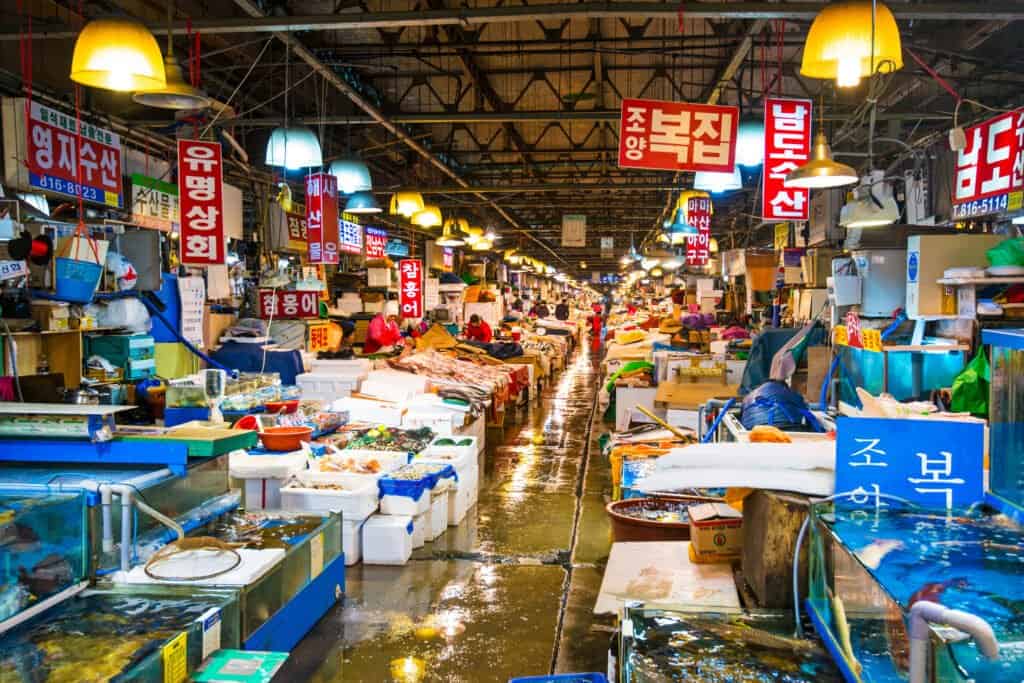
Noryangjin Fisheries Wholesale Market

Gebangsikdang

Gaon
