
Korean Folk Village
Closed now
Korean Folk Village
90 Minsokchon-ro, Giheung-gu, Yongin-si, Gyeonggi-do, South KoreaOverview
You step through the main gate and the present-day parking lot falls away behind you. Suddenly it's the 19th century: thatched-roof farmhouses line unpaved lanes, smoke drifts from a blacksmith's forge, and the smell of woodsmoke and earth fills the air. The Korean Folk Village sprawls across 240 acres of Gyeonggi-do countryside, about 30 minutes south of Seoul, preserving over 260 restored buildings from the Joseon Dynasty era. It's not a museum in the traditional sense. You walk through an actual village, watching artisans work at traditional trades and performers reenact daily life as it was lived centuries ago.
What sets this place apart from typical open-air museums is the scale and the commitment to function. The buildings aren't just facades. You can enter farmhouses, watch weavers at their looms, observe a blacksmith shaping metal, and see how ordinary Koreans actually lived. The village operates year-round, and depending on the season, the experience shifts dramatically. Spring brings cherry blossoms and the planting season. Winter transforms it into a quieter, more contemplative space where frost clings to the thatch.
Why this place matters
The Korean Folk Village opened in 1974 with a specific mission: to document and preserve Joseon-era architecture and daily life before urbanization erased it entirely. Most of the structures were relocated here from rural areas across the country, rescued from demolition. This wasn't casual nostalgia. The founders recognized that once these buildings disappeared, so would the knowledge embedded in how they were constructed, how families organized their living spaces, and how work was structured around seasons and community.
For visitors, the village offers something you can't get from textbooks or museum displays. You see how the height of doorways forced people to crouch, how kitchens were positioned to catch smoke for insect control, how the social hierarchy of a household played out in room placement. A yangban (aristocratic) house sits on the same pathways as a slave's quarters, both preserved with equal care. That physical proximity tells a story about Korean society that words alone can't convey.
Quick facts
- Located 30 kilometers south of Seoul in Yongin, Gyeonggi-do
- 240 acres with over 260 restored buildings from the Joseon Dynasty
- Opened to the public in 1974
- General admission includes access to all outdoor areas and most buildings
- Guided tours available in Korean, English, Japanese, and Chinese
- Operating hours typically 9 a.m. to 6 p.m. in summer, with shorter hours in winter
- Plan for 2 to 4 hours depending on your pace
Getting there
From Seoul, take the Bundang Line (subway line 8) to Yongin Station, then transfer to a local bus. The journey takes roughly 50 minutes total from central Seoul. If you're driving, the village is accessible via the Youngdong Expressway. Parking is available at the main entrance, and it's straightforward to navigate from there.
The main gate is where most visitors enter. From here, you can pick up a map (available in multiple languages) that shows the layout and highlights major buildings. The village is designed to be walked, and most paths are well-maintained, though some areas involve gentle slopes.
The layout and experience
The village isn't organized chronologically or by building type. Instead, it follows the topography of the land, creating a natural flow that mimics how a real village would have developed. You'll move through residential zones, then encounter communal spaces like a marketplace or schoolhouse, then shift to craft areas where artisans work.
Pathways branch frequently. This means you can either follow a loose circuit or meander, discovering smaller buildings tucked away from the main routes. A map helps, but getting slightly lost is part of the experience. You might turn a corner and find a small shrine, a traditional printing house, or a storage building for grain.
Throughout the day, performers dressed in period clothing stage scenes. You might see a traditional wedding procession, martial arts demonstrations, or actors playing out everyday scenarios like a market negotiation or a family meal. These aren't theatrical productions. They're brief, naturalistic reenactments that happen in the spaces where they would have occurred historically.
Main highlights
The yangban house is one of the most visited structures. These aristocratic residences feature multiple courtyards, elevated wooden floors, and an architectural complexity that reflects centuries of refinement. The men's quarters, women's quarters, servant spaces, and storage areas reveal how a wealthy household functioned. The contrast with a nearby commoner's house, which consists of a single large room with a central hearth, is striking.
The blacksmith's forge is worth visiting during working hours. A craftsperson demonstrates traditional metalworking techniques, shaping tools and decorative items using methods unchanged for centuries. You can watch the entire process from raw metal to finished object. The sound of hammer on anvil carries across the village and gives the place an unexpected vitality.
The traditional marketplace recreates the commercial heart of a Joseon-era town. Vendors' stalls sell period-appropriate goods, and actors roleplay as merchants and customers. It's touristy in the best sense: immersive without being artificial. You can purchase snacks and drinks here, including traditional items like sikhye (sweet rice drink) and hotteok (Korean street pancakes).
The schoolhouse, where children learned classical Chinese and Confucian principles, is smaller than you'd expect. Wooden desks and writing materials sit as they might have been left by students centuries ago. It's a quiet space that often gets overlooked, but it offers genuine insight into how education functioned in the Joseon era.
Don't miss the storage buildings and granaries scattered throughout. These humble structures reveal practical details about food preservation, pest control, and resource management. They're often quieter than the larger houses, giving you space to observe details without crowds.
History and background
The Joseon Dynasty lasted nearly 500 years, from 1392 to 1910, and the Korean Folk Village captures the architecture and daily life of its final centuries. By the 1970s, when the village was being conceived, rapid industrialization was erasing rural Korea. Farmland was being converted to factories and apartment blocks. Traditional buildings were demolished as they became economically unviable.
The founders of the Korean Folk Village, working with government support, systematically relocated buildings from across the country. Structures were carefully disassembled, transported, and reconstructed on the Yongin site. This wasn't always straightforward. Many buildings had been modified or partially destroyed. Restoration required research into original construction methods and historical documentation.
The village was designed to function as an educational and cultural institution, not just a static museum. This philosophy remains central to how it operates. Staff members, many trained in traditional crafts, continue working in the village using historical techniques. The goal is to keep knowledge alive, not merely to preserve artifacts.
Tickets and entry
General admission provides access to outdoor areas and most buildings. Some special exhibitions or performances may require additional fees. Guided tours are available at set times throughout the day. Group tours can be arranged in advance if you're visiting with a larger party.
Entrance tickets can be purchased at the gate. If you're planning to visit during peak season (summer holidays or cherry blossom season), arriving early helps you avoid the largest crowds. Off-season visits tend to be quieter and can feel more meditative, though some seasonal activities won't be operating.
Best time to visit
Spring and autumn offer ideal weather. April and May bring cherry blossoms and the village's spring planting activities. September through October features clear skies and comfortable temperatures for walking. Summer is warm and humid, with peak tourist crowds. Winter is cold and some pathways may be icy, but the village takes on a spare, atmospheric quality with frost on the thatch roofs and fewer visitors.
Weekends draw significantly more people than weekdays. If you prefer a quieter experience, visit on a weekday if possible. Early morning offers the advantage of catching artisans before the day's performances begin, though some craftspeople may not start work until mid-morning.
Photography tips
The thatched-roof buildings photograph best in soft, diffuse light. Overcast days eliminate harsh shadows on the facades, and the traditional materials read better on film or digital sensors when the light is even. Golden hour (just after sunrise or before sunset) creates dramatic sidelighting on the structures, though crowds are lowest at these times.
Interior shots of the homes require patience. Many buildings are dimly lit to preserve the historical atmosphere and protect interior wood and textiles. A tripod or fast lens helps. Details like wood joinery, door hardware, and hearth construction photograph well and tell stories that wide shots can't.
Performers and artisans are generally cooperative about photography, but ask before photographing someone working. Action shots of the blacksmith or weavers make for compelling images, especially if you capture the moment of concentration or craftsmanship.
Facilities and preparation
The village has restrooms distributed throughout, though they're not as numerous as in modern attractions. Bring water, especially in warm months. While there are vendors and a few food stalls, options are limited compared to Seoul. Many visitors pack snacks or plan to eat at one of the village restaurants serving traditional Korean meals.
Wear comfortable walking shoes. The village spans 240 acres, and many visitors end up covering 2 to 3 kilometers on foot. In summer, sunscreen and a hat are essential. In winter, warm layers are necessary, as there's little shelter from the wind in the open village spaces.
Renting a guide can enhance the experience significantly. English-speaking guides offer context and details you'd miss on your own. They can also help you navigate to less-obvious buildings and explain the significance of architectural features. Tours are typically available on the hour.
How it compares to similar places
Korea has several other folk villages and open-air museums, but the Korean Folk Village in Yongin is the largest and most developed. Namhae Island has a smaller traditional village focused on maritime culture. The Yangdong Folk Village in Andong preserves Joseon architecture but focuses more on yangban culture specifically. The Korean Folk Village's breadth—encompassing multiple social classes, trades, and building types across 240 acres—gives it a comprehensiveness that others lack.
Compared to folk museums in other countries, the Korean Folk Village prioritizes living demonstration over passive observation. You're more likely to encounter working artisans and staged activities here than at equivalent sites in Japan or Europe, where the focus tends to be more curatorial.
Combining with nearby attractions
Yongin is home to several other significant sites. Hwaseong Fortress, a UNESCO World Heritage site located about 15 kilometers away, is a masterpiece of 18th-century military architecture. The fortress can be visited in a half-day trip. Combining it with the folk village makes for a full day exploring different aspects of Korean heritage.
If you're interested in contemporary Korean culture, the Samsung Innovation Museum is also in Yongin, though it contrasts sharply with the historical focus of the folk village. Most visitors combine the folk village with Seoul attractions rather than other Yongin sites, since it's easily accessible from the city via public transit.
Sample visit plan
A typical 3-hour visit would begin at the main entrance, where you pick up a map and possibly rent an audio guide or join a guided tour. Spend 45 minutes exploring the yangban house and surrounding residential area. Move to the marketplace and spend 30 minutes observing performances and the commercial activity. Head to the blacksmith's forge and craft areas for another 45 minutes. If time permits, explore smaller buildings like the schoolhouse and storage structures. End near the main gate, allowing 15 minutes to purchase any souvenirs or snacks before departure.
A more leisurely 4 to 5 hour visit would include lunch at one of the traditional restaurants, more time spent in individual buildings reading historical placards, and a slower pace that allows you to notice architectural details and observe multiple performances. This pacing works well if you've rented a guide.
Practical tips
- Arrive early to avoid peak crowds and secure parking close to the entrance
- Bring a small backpack or crossbody bag; large bags can be cumbersome on the narrow village paths
- Download the village map or take a photo of the printed version at the gate for reference
- Wear layers; the village has minimal shelter, and temperature can vary significantly throughout the day
- Use the restrooms near the entrance before heading into the village; facilities become sparse away from the main areas
- Allow extra time if you want to participate in any hands-on activities like traditional craft demonstrations
- Visit during weekday mornings for the quietest experience and best light for photography
- Budget for a guide if you want deeper context; the investment typically enhances understanding significantly
FAQ
How long should I spend at the Korean Folk Village? Most visitors spend 2 to 4 hours. Three hours allows you to see the major buildings and watch a few performances. A full afternoon or morning provides time to explore more thoroughly and linger in spaces without rushing.
Is the Korean Folk Village accessible by public transportation? Yes. Take subway line 8 (Bundang Line) to Yongin Station, then transfer to a local bus. The journey from central Seoul takes approximately 50 minutes total. Driving is also an option if you have access to a rental car.
Can I eat at the village? Limited food options are available at the marketplace and a few designated restaurant areas. Traditional Korean meals are served in some buildings. Most visitors bring snacks or eat before arriving. Options are more limited than at major Seoul attractions.
What's the best season to visit? Spring (April to May) and autumn (September to October) offer ideal weather and natural scenery. Spring includes planting activities and cherry blossoms. Summer is hot and crowded. Winter is quiet but cold, with some pathways potentially icy.
Are guided tours worth the extra cost? If you're interested in architectural details and historical context, yes. Guides provide information that isn't obvious from casual observation and can direct you to less-visited buildings that reveal interesting details about daily life.
Opening hours
Reviews
Sign in and mark this place visited to leave a review.
No reviews yet.
Free Trip Planner
Plan your Yongin-si trip with our free planner
Build a day-by-day itinerary with AI suggestions, hand-picked places, and friends. Free forever — no credit card.
Things to see near Korean Folk Village

Hwaseong Haenggung

Suwon Hwaseong Fortress

Starfield Suwon

Gangnam District
Places to eat or drink near Korean Folk Village
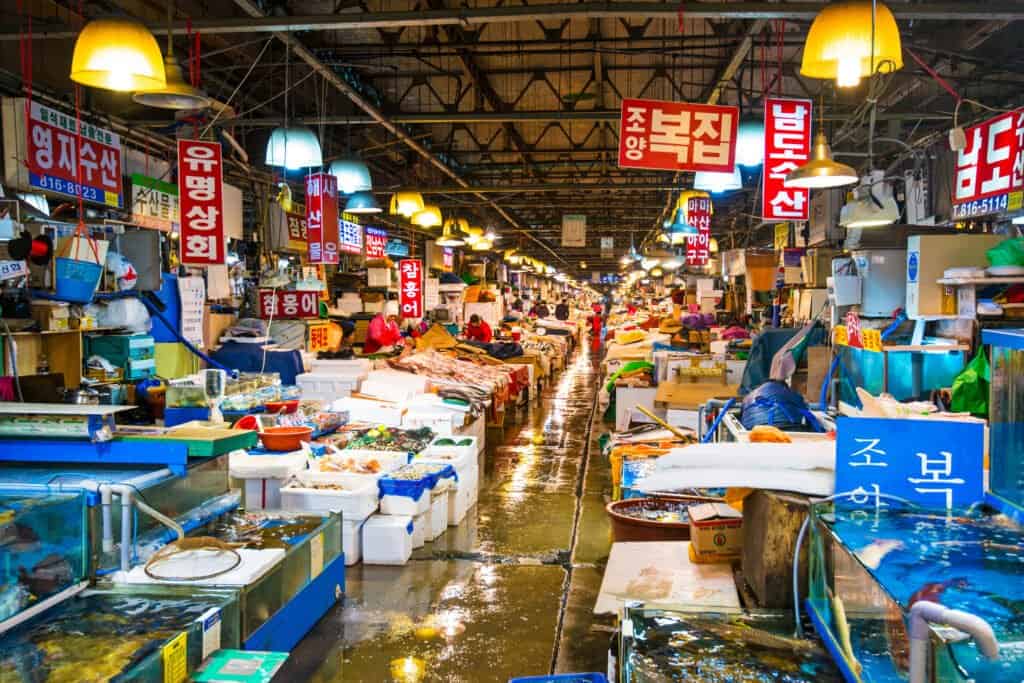
Noryangjin Fisheries Wholesale Market

Gebangsikdang
Gaon
