
Museo Regional de Guanajuato Alhondiga de Granaditas
Calle Mendizabal 6, Guanajuato 36000 Mexico Posted by Brandon B.Admin
Overview
The Museo Regional de Guanajuato Alhondiga de Granaditas occupies one of Mexico's most historically charged buildings. Located in the heart of Guanajuato, this museum sits inside a massive stone grain warehouse that became the site of a pivotal moment during Mexico's War of Independence. Today it functions as both a regional history museum and an architectural landmark that draws visitors interested in colonial Mexico, independence history, and the visual legacy of the Bajio region.
The building itself, constructed in 1809, dominates a corner of Calle Mendizabal in the downtown core. Its fortress-like facade and strategic location made it the natural choice for housing both grain commerce and, later, the region's most important historical artifacts. Walking inside, you move through galleries that layer colonial administration, indigenous heritage, and the violent transformation of Mexican independence across multiple floors.
Why this place matters
The Alhondiga de Granaditas is inseparable from the Grito de Dolores, the cry for independence that began on September 16, 1810. When Father Miguel Hidalgo's rebel forces attacked Guanajuato early in the independence war, Spanish royalists barricaded themselves inside this warehouse. The building became the scene of a brutal siege and massacre that killed hundreds. The Spanish defenders were later executed, and their heads were displayed on the four corners of the building's roof for ten years as a warning.
That violent history is present in the museum's design. The building remains largely unchanged since those events. Walking its stone corridors and climbing its narrow staircases, you're moving through the same physical space where that pivotal conflict unfolded. The museum doesn't shy away from depicting this brutality. It treats the independence war not as triumphant narrative alone but as a conflict with real human cost.
Beyond the independence story, the museum preserves Guanajuato's role as a regional power during the colonial period. The Bajio region was wealthy from mining and agriculture. The Alhondiga was the administrative and commercial heart of that wealth. The museum's collections reflect that economic importance and the indigenous populations whose labor sustained it.
Quick facts
- Built in 1809 as a grain storage and trading facility
- Site of the Siege of Guanajuato during the War of Independence in 1810
- Located at Calle Mendizabal 6 in central Guanajuato
- Multiple floors with galleries organized thematically
- Combination of colonial artifacts, indigenous textiles, and historical documents
- The building's architecture is part of the museum experience
Getting there
The museum sits in Guanajuato's historic center, accessible on foot from the main plaza and most central hotels. If you're arriving by bus, the central station is about a 15-minute walk downhill through the city's winding streets. Calle Mendizabal is one of the main thoroughfares, so asking locals for directions to "la Alhondiga" will get you pointed in the right direction quickly.
Street parking near the building is limited. Most visitors either walk or use the paid parking lots scattered throughout the downtown area. The museum's entrance is on the street level, clearly marked. If you arrive after midday, you may encounter crowds, particularly on weekends and during Mexican school holidays.
The layout and experience
The building is organized around a central courtyard that once functioned as the loading and unloading space for grain shipments. This courtyard is now an open-air gallery space. The museum's galleries occupy the surrounding rooms and upper floors, connected by narrow staircases and corridors that feel authentically colonial.
The ground floor typically houses temporary exhibitions and introductory materials. From there, you move upward through galleries dedicated to pre-Hispanic cultures of the region, colonial administration and commerce, indigenous labor systems, and the independence period. The upper floors can feel cramped and maze-like, which is intentional. You're moving through a working 19th-century building, not a modern museum designed for visitor flow.
Exhibits are labeled in Spanish, with some English translation available. The presentation style is straightforward rather than immersive. You'll find glass cases with textiles, ceramics, documents, and weapons. The strength lies in the specific objects rather than elaborate multimedia displays. A Tarascan weaving from the 1700s tells more than any description could.
Plan to spend two to three hours here if you read the labels and engage with the displays. The building's physical challenge (stairs, narrow passages, no elevator) means you won't rush through. That slowness is valuable. It gives the space time to settle into your awareness.
Main highlights
The independence war section is the most visceral. Weapons from the siege, period documents, and paintings depicting the conflict occupy the upper galleries. The museum doesn't hide the fact that this was a massacre. Spanish soldiers and Guanajuato's Spanish and creole elite died here, as did many indigenous people and lower-class residents who were fighting or were simply caught in the violence.
The colonial administration section reveals how the region functioned as an economic machine. You'll see documents related to mining operations, agricultural production, and the bureaucratic systems that extracted wealth and labor from indigenous populations. The textiles collection is exceptional. Woven pieces from the Otomi and other indigenous groups show patterns and techniques that persisted across centuries.
The building's four corner towers and the views from the upper levels offer moments to step back and see the city spreading across the hillsides. The museum's position in the city's layout becomes clear from these vantage points. The Alhondiga wasn't a random choice for a siege location. It controlled a strategic position overlooking major routes through the city.
History and background
The Alhondiga de Granaditas was built between 1808 and 1809 as a response to grain shortages and the need for centralized storage and distribution in the Bajio region. Its architect was a Spanish military engineer named Manuel Tolsa, who designed it with defensive features that proved prescient. The building was completed just one year before the independence war began.
On September 28, 1810, rebel forces under Miguel Hidalgo and Juan Jose de los Reyes attacked the building where Spanish authorities and local elites had fortified themselves. The siege lasted hours and resulted in the deaths of hundreds of people, including many Spanish soldiers and officials. The victory was brutal and symbolic. Guanajuato's Spanish leadership was largely eliminated in this single day.
After the siege, Spanish forces eventually regained control of the city. In retaliation, the Spanish executed four rebel leaders and placed their heads on the four corners of the Alhondiga's roof. Those heads remained visible for ten years, until Mexican independence was finally secured. The building became a monument to the cost of that independence struggle.
Following independence, the Alhondiga continued to function as a public warehouse and administrative building. It was converted to a museum in the 20th century as Guanajuato's colonial heritage became increasingly valued as a cultural asset and tourist draw.
Tickets and entry
The museum charges a modest general admission fee. Timed entry is not required. You can enter during operating hours and stay as long as you wish. Guided tours are available in Spanish and sometimes in English, depending on staff availability. Asking at the entrance about tour options is your best approach.
Children and students typically receive discounted rates. Mexican nationals often have reduced admission as well. The museum is closed on Mondays and on certain national holidays. Checking the current schedule before visiting is worthwhile, especially if you're traveling during holiday periods.
Best time to visit
Early morning, shortly after opening, tends to be quietest. The museum gets noticeably busier by late morning and remains crowded through mid-afternoon. If you prefer a contemplative experience, arrive when the doors open.
Weekdays outside of Mexican school holidays are less crowded than weekends. The Christmas and Easter periods bring significantly more visitors. Weather in Guanajuato is mild year-round, so seasonal climate isn't a major consideration. The building itself stays relatively cool, which is pleasant when exploring multiple floors.
Photography tips
Interior photography is generally allowed, though specific rules about flash or tripods should be confirmed at the entrance. The central courtyard provides good natural light for exterior shots. The stone facade photographs well in morning light when shadows define the architectural details.
The interior galleries are dimly lit, which suits the historical atmosphere but makes photography challenging without high ISO or a fast lens. Close-ups of textile details and artifacts are more successful than wide gallery shots. The narrow staircases and corridors create framing opportunities that emphasize the building's age and character.
Facilities and preparation
The museum has basic facilities. A small shop near the entrance sells books, postcards, and regional crafts. There is no cafeteria inside the building, but restaurants and cafes are plentiful in the surrounding streets. Water fountains are available.
The building has no elevator. You'll navigate multiple flights of stairs to reach upper galleries. If mobility is a concern, the ground floor and courtyard are accessible, but significant portions of the collection remain on upper levels. Wear comfortable shoes. The stone floors are uneven in places, and the stairs are steep and narrow by modern standards.
The museum is not climate-controlled in the modern sense. It maintains the temperature of the stone building itself. Summer afternoons can feel warm, and winter evenings can be cool. Layering is a practical choice. Bring water if you plan to spend several hours inside.
How it compares to similar places
Guanajuato has several museums, but none occupy as significant a historical building or tell the independence story as directly as the Alhondiga. The Museo del Pueblo de Guanajuato, housed in a mansion elsewhere in the city, focuses more on local art and decorative traditions. The Alhondiga prioritizes historical documentation and the building itself as a primary artifact.
Other Mexican museums dedicated to independence history exist in Mexico City and elsewhere, but few place you inside the actual location where major events occurred. That physical presence is what distinguishes this museum. You're not viewing a replica or interpretation. You're standing in the space where hundreds of people died during a pivotal moment in Mexican history.
Combining with nearby attractions
The Alhondiga's location makes it easy to combine with other downtown sites. The Basilica Colegiata de Guanajuato is a 10-minute walk away. The Teatro Juarez, an ornate 19th-century performance venue, is similarly close. The main plaza and its surrounding colonial architecture are accessible on foot.
The Jardin de la Union, Guanajuato's central plaza, is about a 15-minute walk downhill. You could easily visit the Alhondiga in the morning and spend the afternoon exploring the plaza and nearby galleries. The Museum of Mummies, if you're interested in an unusual and somewhat macabre attraction, is a bus ride or taxi away but worth considering as a second stop if you have an afternoon free.
Sample visit plan
Arrive at the museum shortly after opening, before crowds build. Spend 20 to 30 minutes in the ground floor galleries to orient yourself to the region's pre-Hispanic and colonial context. Move to the independence war section and give that material the time it deserves. The siege and its aftermath are complex and deserve careful attention.
Take a break in the courtyard, examining the building's architecture and proportions. Climb to the upper levels to see the city views and explore the textile collections. Plan for two to three hours total. Leave before mid-afternoon if possible, when tour groups tend to arrive.
After the museum, walk to the Basilica or spend time in the Jardin de la Union. Both are walking distance. If you want a meal, restaurants near the plaza are better than options near the Alhondiga itself, though a few cafes are nearby.
Practical tips
- Arrive early in the day for a less crowded experience
- Wear comfortable walking shoes with good grip for uneven stone floors and stairs
- Bring water and plan to stay two to three hours
- Labels are in Spanish primarily; bring a translation app if needed
- The building has no elevator; upper galleries require stair climbing
- Ask at the entrance about guided tour availability before deciding to explore independently
- The central courtyard is a good spot to rest and take in the building's scale
- Verify current opening hours before visiting, as schedules can change
FAQ
How long should I spend at the Museo Regional de Guanajuato Alhondiga de Granaditas? Most visitors spend two to three hours. The building's physical challenges and the depth of the collections justify this time. You can move through more quickly if you're selective about which galleries you enter fully.
Is the museum accessible for people with mobility issues? The ground floor and courtyard are accessible, but the upper galleries require climbing stairs and navigating narrow passages. There is no elevator. If stairs are difficult, focus on the ground level and courtyard.
Can I take photographs inside? General photography is typically allowed, but confirm current policies at the entrance. Flash and tripods may have restrictions. The lighting inside is dim, so bringing a camera capable of higher ISO settings is practical.
What's the best time to visit to avoid crowds? Weekday mornings, shortly after opening, are quietest. Weekends and afternoons are busier. Avoid Mexican school holidays if you prefer fewer visitors.
Are there restaurants near the museum? Yes, several cafes and restaurants are within a five-minute walk. The Jardin de la Union and surrounding plaza have more extensive dining options, about 15 minutes away on foot.
Reviews
Sign in and mark this place visited to leave a review.
No reviews yet.
Free Trip Planner
Plan your Guanajuato trip with our free planner
Build a day-by-day itinerary with AI suggestions, hand-picked places, and friends. Free forever — no credit card.
Things to see near Museo Regional de Guanajuato Alhondiga de Granaditas

Monumento Al Pipila

Jardín de la Unión
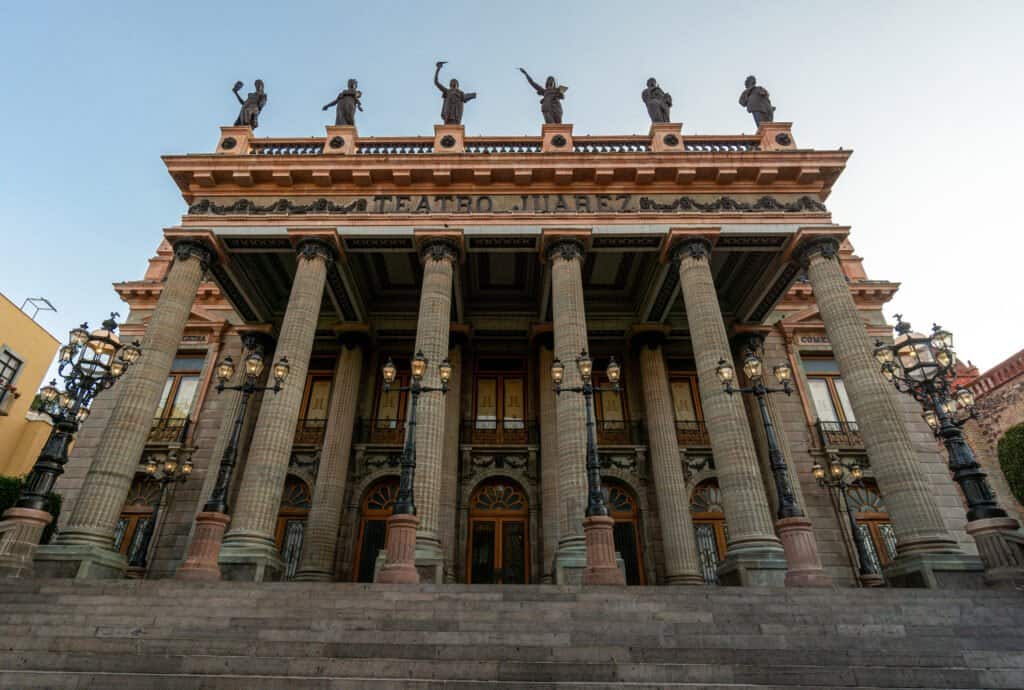
Teatro Juarez

Jardín de la Unión
More places in Guanajuato

Museo de las Momias de Guanajuato

Parroquia de San Miguel Arcángel

The Alley Of The Kiss
