Spiaggia di Positano Marina Grande
Via del Brigantino, 84017 Positano SA, ItalyOverview
Walk down the narrow streets of Positano and the beach announces itself before you see it. The sound of the Tyrrhenian Sea hitting pebbles, the smell of salt and lemon trees, the sudden explosion of light as the pastel buildings part to reveal Marina Grande. This is Positano's main beach, a crescent of grey and black pebbles tucked beneath the vertical village that tumbles down the cliffs. Spiaggia di Positano Marina Grande is where the Amalfi Coast's most famous village meets the water, and the scene rarely disappoints: fishing boats bob in the shallows, the beach bars serve cold drinks, and the water runs from pale green to deep blue depending on the hour and the light.
The beach is small by most standards. You could walk its length in three or four minutes. What it lacks in size it makes up in character. This is not a sprawling resort beach with umbrellas planted in neat rows as far as the eye can see. Marina Grande is tighter, more intimate, more essentially Positano. Families and couples share the pebbles with day-trippers from the cruise ships, and the whole scene has a relaxed, unhurried rhythm even in high summer when every inch of sand holds someone's towel.
Why this place matters
Marina Grande is the village's anchor. It's where the fishing boats still operate, where the water taxis depart for Capri and Amalfi, and where Positano's social life happens. The beach connects the village to the sea in a way that feels organic rather than engineered. There are no boardwalks or promenades here, just the steep street grid of Positano emptying directly onto the pebbles. This is the heart of one of Italy's most photographed coastal villages, and for good reason.
Quick facts
- Location: Via del Brigantino, Positano, Provincia di Salerno
- Beach type: Pebble beach (grey and black stones)
- Approximate length: 150 meters
- Water access: Open and free year-round
- Nearest town center: Positano village center, 5 minutes on foot
- Lifeguard presence: Seasonal (summer months)
- Facilities: Beach bars, lounger rental, shower access
Getting there
Positano sits on the Amalfi Coast, roughly 50 kilometers south of Naples and accessible by car, bus, or ferry. The village has no proper road access from outside. If you're driving, you'll park in one of the paid lots on the outskirts and walk down into the village. The SITA bus runs along the coastal highway and stops at the top of Positano. From there, the walk down to Marina Grande takes about 15 minutes, though the steep streets and stairs mean you'll feel every meter.
The easiest arrival is by water. Ferries run between Positano, Amalfi, Salerno, and Capri during the summer months. If you arrive by ferry, you land directly at Marina Grande. This is also the most scenic entry point. If you're already in Positano village, Marina Grande is at the lowest point of the town, reachable by following any of the main pedestrian streets downhill until the sea appears.
Parking in Positano is limited and paid. The nearest major parking area is above the village center. There is no designated parking at the beach itself.
The layout and experience
The beach curves in a gentle arc, with the village stacked vertically on both sides. The western end (left as you face the water) has most of the commercial activity: the larger beach bars, lounger rental stands, and water taxi departure point. This is where the fishing boats are moored and where the energy concentrates. The eastern end is quieter, with fewer facilities but a bit more of a local feel.
The pebbles are substantial enough to be uncomfortable without shoes for more than a few minutes. Most visitors rent loungers and umbrellas from the beach establishments rather than spreading towels directly on the stones. The water shelves gradually, so wading in is easy for children and weaker swimmers. By mid-morning in summer, the beach fills completely, and finding a spot becomes a matter of timing or luck.
The beach bars operate year-round, though with reduced hours in winter. They serve drinks, light snacks, and simple meals. The service is casual and the atmosphere is more local gathering spot than tourist trap, though tourists are certainly welcome and expected.
Main highlights
The primary draw is the water itself. The sea here is clean, clear, and warm enough for comfortable swimming from late May through early October. On windless days, the water is so transparent you can see the pebbles ten meters down. Snorkeling directly off the beach is possible, though for anything more serious you'd hire a boat.
The view from the beach looking back up the village is one of the most photographed scenes on the Amalfi Coast. The pastel-colored houses, the narrow streets cutting through the cliff face, the boats in the foreground. This is the image that draws people to Positano in the first place, and standing in the water looking up, you understand why.
The fishing boats themselves are worth noticing. These are working vessels, not tourist attractions. You'll see fishermen unloading their catch in the early morning, and the restaurants in the village will serve fish caught from these same boats. The connection between the boat and your dinner plate is direct and visible here in a way it rarely is elsewhere.
History and background
Positano has been a fishing village for centuries, and Marina Grande has always been its lifeline. The beach was the village's only real connection to the outside world before the coastal road was built in the 1950s. Everything arrived and departed by water: supplies, mail, people. The village's vertical layout developed because there was nowhere else to build except straight up the cliff face.
The pastel colors of the buildings are not recent tourist invention. They developed over centuries as a practical matter: bright, light colors reflected heat in a village built into the sun-baked cliff. The effect became iconic, and now it's carefully maintained as part of Positano's identity.
Positano remained relatively obscure until the mid-20th century, when it was discovered by artists and writers. By the 1960s and 1970s, it had become fashionable enough to draw wealthy Italians and foreigners. The construction of better roads and the expansion of tourism transformed the village, but Marina Grande itself has changed remarkably little. It's still the working heart of the place, even as the village above has become increasingly upscale.
Best time to visit
The water is warmest and most inviting from June through September. July and August are peak season, meaning the beach will be crowded and accommodation prices will be at their highest. If you want to swim and don't mind crowds, these months are ideal.
April, May, September, and October offer warmer water than winter months but fewer tourists. The sea temperature in May and early June hovers around 20 degrees Celsius. By September it's still warm, and the summer crowds have thinned considerably. These shoulder months tend to be the best balance of good weather and manageable tourism.
Winter is possible if you're willing to forgo swimming. The water temperature drops to around 13 degrees Celsius. The village empties, accommodation prices fall, and the light becomes clearer. But the beach itself is less inviting without the possibility of a swim.
Photography tips
The best light for photographing the village from the beach is morning or late afternoon, when the sun hits the buildings at an angle and creates shadows that emphasize the vertical architecture. At midday, the light is harsh and flat, and the colors wash out.
Shooting from the water looking back toward the village gives you the iconic Positano view. Wading in waist-deep and shooting from water level includes the boats and beach in the foreground, which adds context and scale. The water itself photographs beautifully in the early morning when it's calm and translucent.
The fishing boats are best photographed in early morning, before the beach fills with tourists and when the fishermen are still working. The light is also softer and more flattering to the worn paint and weathered wood of the boats.
Facilities and preparation
There are shower facilities available at the beach, typically operated by the beach bar establishments. A small fee applies. Restrooms are also available, though they can be crowded in high season.
Bring your own water and snacks if you prefer not to buy from the beach bars. Prices are marked up, as they are at most coastal destinations. The beach bars do rent loungers and umbrellas, which is the standard way most people spend time here rather than spreading towels on the pebbles. Rental rates vary by establishment.
Bring water shoes or sandals. The pebbles are sharp enough to make walking barefoot uncomfortable for extended periods. Sunscreen is essential, particularly if you're spending the day. The water reflects the sun intensely, and the pebbles absorb and radiate heat.
The beach has no lifeguard outside of summer months. Even when lifeguards are present, swimming conditions depend on weather and sea state. Check conditions before entering the water if you're not a confident swimmer.
Combining with nearby attractions
Positano village itself is the natural extension of a beach visit. The streets above Marina Grande are lined with restaurants, shops, and galleries. The walk up takes effort, but it's essential to the full Positano experience. Most visitors spend part of their day on the beach and part exploring the village.
Amalfi town is 10 kilometers away by water taxi or about 25 kilometers by road. The ferry journey takes roughly 45 minutes and is scenic. Amalfi has its own beach and the famous cathedral, and it's easily combined with a day at Marina Grande.
Capri is reachable by water taxi in about 45 minutes during summer months. Day trips are feasible if you start early. Ravello, perched high above the coast, is about 10 kilometers from Positano and worth a visit for its gardens and views, though it requires a drive or taxi ride up into the hills.
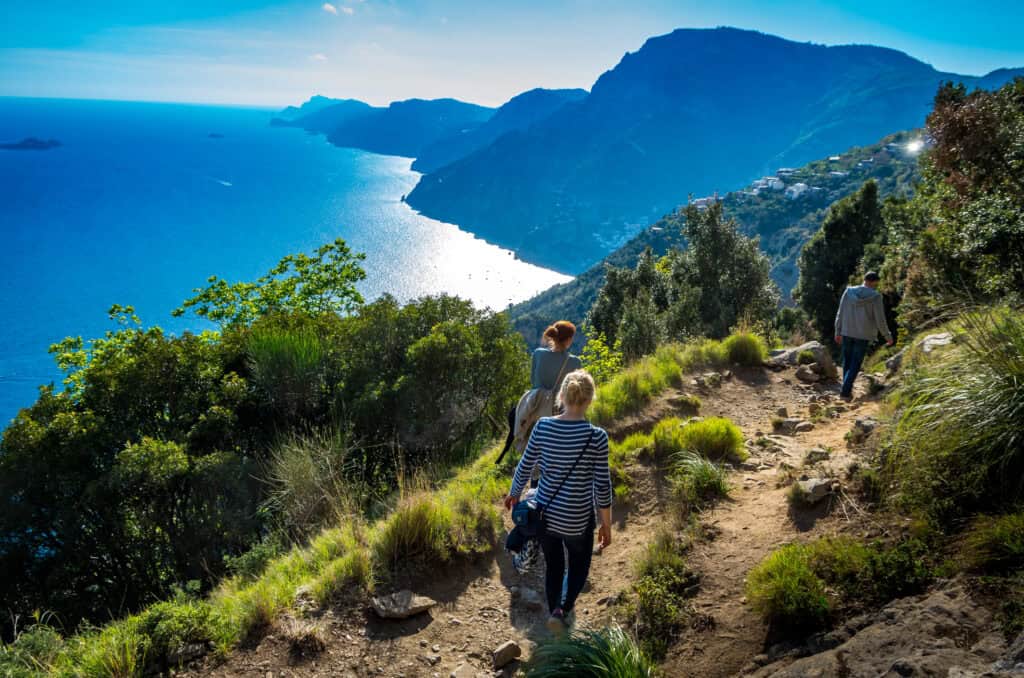
The Path of the Gods hiking trail connects Positano to Praiano and offers stunning coastal views. The trailhead is accessible from the village, and the hike takes about 2 to 3 hours depending on pace and which direction you walk.
Sample visit plan
Arrive at Marina Grande early, around 8 or 9 in the morning, before the beach fills. Swim or wade in the clear water while it's still relatively quiet. The light is best for photography at this hour.
Spend mid-morning and early afternoon on the beach. Rent a lounger if you want to stay comfortable. Have a light lunch at one of the beach bars. The pace is deliberately slow here.
In late afternoon, when the sun is lower and the light turns golden, head up into Positano village. Explore the streets, visit a gallery or shop, and have an aperitivo at one of the bars with a view back down to Marina Grande.
Have dinner at a restaurant in the village. Fresh fish from the boats at Marina Grande is likely on the menu. Return to the beach in the evening if you want to see the light fade, or simply head back to your accommodation.
Practical tips
- Arrive early in high season if you want a comfortable spot on the beach. By 10 AM in July and August, it can be quite crowded.
- The water is calmest in the morning. By afternoon, wind can pick up and make the water choppy.
- If you're staying elsewhere on the Amalfi Coast, a day trip to Positano is feasible by bus or car, though the drive is slow and winding. The ferry is more pleasant if available.
- Cash is still common at beach bars, though most now accept cards. Bring both.
- The streets of Positano have no cars, and everything is pedestrian-only. Luggage or beach bags with wheels are not practical.
- Sunset views are best enjoyed from a restaurant or bar in the village looking down at the beach, not from the beach itself, which is in shadow by evening.
- If you plan to snorkel, bring your own gear or rent from one of the water sports operators on the beach.
FAQ
Is Marina Grande suitable for children? Yes. The water shelves gradually, making entry easy for small children. The beach is compact enough that parents can keep watch easily. The main challenges are the pebbles (water shoes help) and the crowds in summer.
Can you visit Positano for just a few hours? Yes. A half-day visit (3 to 4 hours) gives you time for a swim, a meal, and a walk around the village. Many people visit Marina Grande as a day trip from Amalfi or Salerno.
Is there parking at the beach? No. Parking is in paid lots above the village, and you walk down to reach the beach. The walk is steep but manageable.
What's the water temperature? It ranges from about 13 degrees Celsius in winter to around 26 degrees Celsius in August. The water is comfortable for swimming from May through October.
Do you need to book a beach lounger in advance? Not typically. In high season, arriving early increases your chances of getting a lounger, but they're usually available. If you're visiting in July or August and want to guarantee a lounger for a specific day, you can ask at your accommodation or contact one of the beach establishments in advance.
Opening hours
Reviews
Sign in and mark this place visited to leave a review.
No reviews yet.
Free Trip Planner
Plan your Positano trip with our free planner
Build a day-by-day itinerary with AI suggestions, hand-picked places, and friends. Free forever — no credit card.