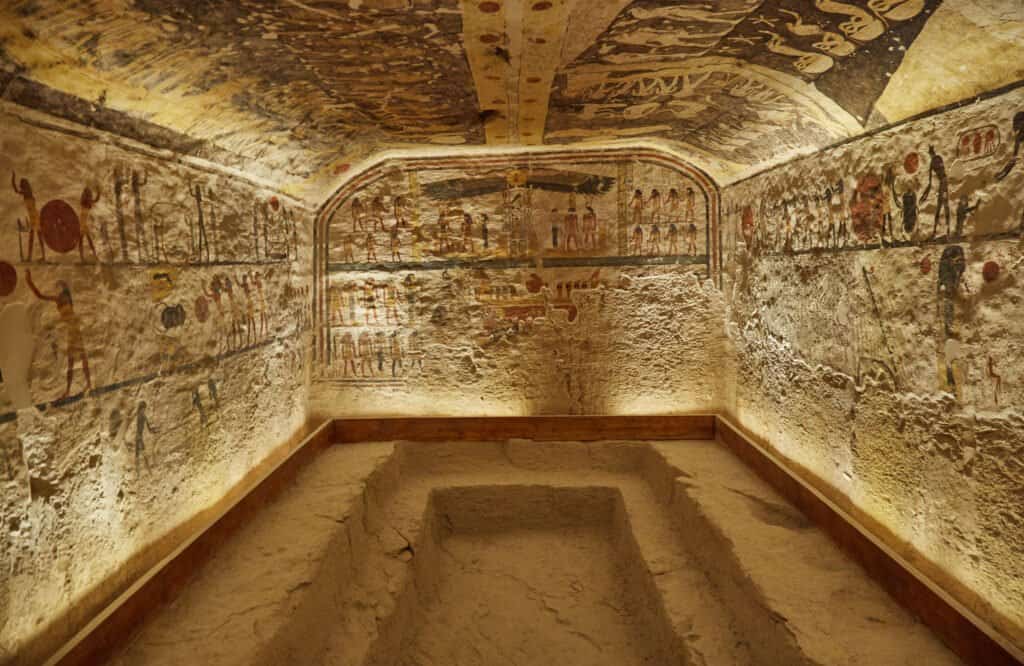
Temple of Medinat Habu
Al Bairat, Luxor Egypt Posted by bazartravelsAdmin
Overview
The Temple of Medinat Habu stands as one of Egypt's most impressive and well-preserved mortuary temples, located on the west bank of the Nile in Luxor. Built during the reign of Ramesses III in the 12th century BC, this monumental complex rivals the scale of any pharaonic temple in Upper Egypt. Unlike the more crowded attractions across the river, Medinat Habu remains relatively quieter, giving you a genuine sense of immersion in ancient Egyptian grandeur without fighting through tour groups at every corner.
The temple's name derives from the Arabic term for the site's original purpose: a sacred space dedicated to the cult of the deceased king. What makes Medinat Habu exceptional is not just its size but the remarkable preservation of its decorated walls, which contain some of the finest relief carving and painted hieroglyphics you'll encounter in Upper Egypt. The complex includes the main temple, a sacred lake, administrative buildings, and a massive mud-brick enclosure wall that once surrounded the entire precinct.
Why This Place Matters
Ramesses III chose to build his mortuary temple at Medinat Habu as a statement of power and religious devotion during the 20th Dynasty. The site functioned as more than a burial monument. It served as an economic and administrative center, with workshops, storage facilities, and housing for priests and workers. The temple's reliefs document crucial historical events, including the famous battle against the Sea Peoples, which provides us with invaluable information about Bronze Age Mediterranean conflicts.
The artistic quality of the reliefs here sets Medinat Habu apart from many other temples. The colors have survived remarkably well on protected interior walls, offering rare glimpses of how ancient Egyptian temples actually looked. Walking through the hypostyle halls and courtyards, you're seeing craftsmanship that has endured for over 3,200 years.
Quick Facts
- Built by Ramesses III, approximately 1186 to 1155 BC
- Located on Luxor's west bank in the Al Bairat area
- One of the largest mortuary temples ever constructed
- Contains extensive wall reliefs depicting historical events and religious scenes
- Surrounded by a mud-brick enclosure wall approximately 4 meters thick
- Features a sacred lake and multiple courtyards
Getting There
From Luxor city center, you'll need to cross the Nile to reach the west bank. Most travelers use the west bank ferry, which departs regularly from the main dock near the Luxor Temple. The crossing takes roughly 15 to 20 minutes. Once on the west bank, you can hire a taxi, arrange transport through your hotel, or join an organized tour that includes Medinat Habu along with nearby sites like the Valley of the Kings.
If you're staying on the west bank itself, Medinat Habu is approximately 3 kilometers south of the main tourist area. The site sits inland from the river, not directly on the Nile. Allow at least 10 to 15 minutes of travel time depending on traffic and which part of the west bank you're coming from. The road leading to the temple is well-signposted, and the massive mud-brick walls are visible from a distance, making it difficult to miss.
The Layout and Experience
Medinat Habu's layout follows the classic pharaonic temple design but on an expansive scale. You approach through the eastern mud-brick enclosure wall, entering what was once a bustling temple precinct. The first major feature is the High Gate, a fortified structure that served defensive and ceremonial purposes. The gate's towers and decorated surfaces immediately establish the temple's grandeur.
Beyond the High Gate lies the outer courtyard, flanked by administrative buildings and storerooms on either side. These structures, though partially ruined, give you a sense of the complex's former function as an economic hub. The reliefs on the courtyard walls show scenes of daily life, religious processions, and royal activities.
The main temple building rises ahead, its pylon towers framing the entrance. The first pylon is decorated with scenes of Ramesses III smiting enemies, a common motif emphasizing the king's power. You then pass through a series of courtyards and hypostyle halls, each smaller and more interior than the last. The progression from open to enclosed spaces creates a natural journey inward toward the sanctuary, the temple's spiritual heart.
The second courtyard contains some of the best-preserved reliefs on the entire site. Here you'll find detailed scenes of religious festivals, offering rituals, and scenes related to the afterlife. The colors on the protected interior walls are genuinely striking: blues, reds, greens, and yellows still visible after millennia.
The hypostyle halls feature columns topped with papyrus-form capitals. Natural light filters through high windows, creating dramatic shadows across the decorated walls. The innermost sanctuaries, though off-limits to visitors, can be viewed from the hypostyle hall entrance. The sacred lake, located to the south of the main temple, is another significant feature worth visiting if you have time.
Main Highlights
The High Gate stands as the temple's most imposing entrance feature. This fortified gateway, unique among mortuary temples, demonstrates Medinat Habu's dual role as both religious sanctuary and defended settlement. The gate's reliefs show military scenes, emphasizing the temple's connection to royal power and protection.
The battle reliefs on the first pylon and courtyard walls depict Ramesses III's conflicts with the Sea Peoples, a confederation of naval raiders who threatened Egypt during the late Bronze Age. These scenes provide crucial historical documentation of ancient Mediterranean warfare and migration patterns. The detail and artistic quality make them essential viewing for anyone interested in ancient Egyptian military history.
The second courtyard's reliefs showcase religious ceremonies and daily temple activities. One particularly notable scene shows Ramesses III receiving the insignia of kingship from the gods. The preserved colors here rival anything in the Valley of the Kings, offering insight into the visual richness of pharaonic art.
The hypostyle halls contain some of the finest remaining examples of painted hieroglyphic reliefs. The preserved paint shows how temples once gleamed with color and gilt, challenging our often monochromatic image of ancient Egypt. Certain interior walls retain vibrant blues and reds that still seem fresh.
History and Background
Ramesses III reigned from approximately 1186 to 1155 BC, during the 20th Dynasty. This period marked the final flourishing of Egypt's imperial power during the New Kingdom. Ramesses III faced significant military and economic challenges, including invasions by the Sea Peoples and pressure from Libyan groups. Building Medinat Habu was both a spiritual act of devotion and a political statement of strength and stability.
The temple's construction took many years and employed hundreds of workers, artisans, and priests. Unlike the Valley of the Kings, where pharaohs were buried in hidden tombs in the desert, mortuary temples were public monuments. Ramesses III's actual burial location is uncertain, though his tomb in the Valley of the Kings was discovered but never fully intact.
After the pharaonic period, Medinat Habu continued to be occupied and used. Early Christians built a church within the complex, incorporating temple walls into their structures. The site eventually became a small village, with houses built against and even within the temple structures. This continuous occupation, while damaging in some ways, also contributed to the site's preservation by protecting it from complete erosion and looting.
During the 19th and 20th centuries, archaeologists and Egyptologists conducted systematic excavations and documentation of Medinat Habu. The work revealed the full extent of the complex and allowed for careful preservation and restoration of the most significant reliefs and structures.
Tickets and Entry
Medinat Habu requires a ticket for entry. You can purchase tickets at the site's entrance gate. The entrance fee is reasonable, with standard pricing for general admission. There are typically discounts available for students with valid identification. Children often receive reduced rates. Tickets are usually good for a full day of exploration, allowing you to move at your own pace through the complex.
Photography is permitted throughout most of the site. If you plan to use professional equipment or conduct commercial photography, inquire about additional permissions at the ticket office.
Best Time to Visit
The west bank of Luxor experiences intense heat from May through September. Temperatures regularly exceed 40 degrees Celsius (104 Fahrenheit) in summer months. If you have a choice, visit during the cooler season from October through April, when daytime temperatures are more manageable and the site is more comfortable to explore on foot.
Morning visits, ideally before 9 AM, offer cooler temperatures and better light for photography. The sun is less intense, and you'll encounter fewer tour groups. The site tends to be quieter in the shoulder seasons of October and April compared to the peak months of December through February.
Sunset visits are possible if you arrive in the late afternoon. The low light creates dramatic shadows across the reliefs and casts the mud-brick walls in warm tones. However, you'll need to move quickly to see the main features before closing time.
Photography Tips
The reliefs photograph best during morning hours when the sun angle creates shadow definition without washing out details. Midday light, while bright, can flatten the three-dimensional relief carving. The decorated interior walls of the hypostyle halls preserve color that photographs particularly well under softer, diffused light.
The second courtyard's reliefs are among the most photogenic spots on the site. The preserved paint stands out dramatically, and the composition of the scenes is compelling. Bring a wide-angle lens if you have one, as the scale of the courtyards and hypostyle halls benefits from capturing the full spatial context.
The High Gate is striking at almost any time of day, though the carved reliefs read more clearly in morning light. The mud-brick enclosure walls offer good compositional framing if you step back and include the larger context of the complex.
Facilities and Preparation
Medinat Habu has limited facilities on-site. There is a small visitor center near the entrance with basic amenities. Restrooms are available, though they are basic. There is no restaurant or cafe at the temple itself, so bring water and snacks if you plan to spend several hours exploring.
The site is largely open air and unshaded. Bring sun protection including a hat, sunscreen, and sunglasses. Comfortable walking shoes are essential, as you'll cover significant ground navigating the courtyards and halls. The ground is uneven in places, with ancient stone floors and rubble. Wear sturdy footwear with good ankle support.
The mud-brick enclosure walls and ancient stone structures can be slippery if wet from rare rainfall. Most of the site is accessible to visitors with normal mobility, though some areas involve steps or uneven surfaces.
Combining with Nearby Attractions
Medinat Habu sits within the broader west bank archaeological zone. Many visitors combine it with a visit to the Valley of the Kings, located approximately 8 kilometers north. The two sites can be visited in a single day, though doing justice to both requires an early start and several hours of exploration.
The Temple of Hatshepsut stands roughly 4 kilometers north of Medinat Habu and is another major mortuary temple worth visiting. Hatshepsut's temple, built about four centuries before Medinat Habu, offers an interesting comparison in architectural style and scale.
The Colossi of Memnon, two massive stone statues of Amenhotep III, are located between Medinat Habu and Hatshepsut's temple. These can be viewed quickly if you're passing through the area. The Valley of the Nobles, containing tombs of New Kingdom officials, is another nearby option if you're interested in non-royal burial sites.
Sample Visit Plan
A focused visit to Medinat Habu typically takes 2 to 3 hours if you're moving at a steady pace and reading the major reliefs. If you're interested in detailed examination of the artwork and hieroglyphic inscriptions, allow 3 to 4 hours.
Start at the High Gate and work your way inward through the courtyards toward the main temple. This follows the intended processional path and creates a natural narrative as you move deeper into the sacred space. Spend extra time in the second courtyard examining the preserved reliefs and colors.
Visit the hypostyle halls and view the inner sanctuaries from the designated viewing areas. If you have energy remaining, walk around to the sacred lake on the south side of the complex. This adds roughly 30 to 45 minutes but gives you a sense of the full temple precinct's scale.
Practical Tips
- Bring at least 2 liters of water per person. The site offers no shade and heat reflects off stone surfaces
- Visit early morning before 9 AM to avoid crowds and intense heat
- Hire a local guide if you want detailed historical and religious context. They can be arranged at the entrance or through your hotel
- Wear lightweight, loose-fitting clothes that cover your shoulders and knees out of respect for the sacred site
- The site can be muddy in places if recent rain has fallen, so avoid light-colored shoes
- Allow time to sit and absorb the atmosphere. The quiet moments often reveal details you'd miss while moving quickly
- If you're sensitive to heat, plan to finish exploration by 1 PM and rest during afternoon hours
FAQ
How long should I spend at Medinat Habu? Most visitors spend 2 to 4 hours depending on their interest level in reliefs and hieroglyphic inscriptions. You can see the main features in 2 hours if you move steadily, but 3 to 4 hours allows for deeper engagement with the artwork.
Is Medinat Habu worth visiting if I'm also going to the Valley of the Kings? Yes. While both are mortuary temples, Medinat Habu is better preserved, less crowded, and offers excellent examples of colored reliefs. The two sites complement each other well and provide different perspectives on royal burial practices.
Can I hire a guide at the site? Yes, local guides are typically available at the entrance. They can provide historical context and point out details you might otherwise miss. Negotiate fees beforehand if not booking through your hotel.
What's the best time of day to visit Medinat Habu? Early morning, before 9 AM, offers the coolest temperatures and best light for photography. You'll also encounter fewer tour groups at this time.
Is the Temple of Medinat Habu accessible for people with mobility issues? Most of the outer courtyards are accessible, though some areas involve steps or uneven surfaces. The main temple building's interior has several stairs. Contact the site ahead of time if you have specific accessibility needs.
Reviews
Sign in and mark this place visited to leave a review.
No reviews yet.
Free Trip Planner
Plan your Egypt trip with our free planner
Build a day-by-day itinerary with AI suggestions, hand-picked places, and friends. Free forever — no credit card.