The Panama Hotel sits at 605 South Main Street in Seattle's International District, a few blocks from Uwajimaya and the light rail stop at Chinatown-International District Station. From the sidewalk it looks like a modest brick building from another era, which it is. Built in 1910, it was designed by Sabro Ozasa, one of the first Japanese American architects to practice in Seattle, and it has spent most of its life as a residential hotel serving Japanese and Japanese American tenants. What makes it worth a detour isn't the architecture, though. It's what's underneath it.
In the basement, behind a pane of glass set into the floor of the tea room, you can look down and see steamer trunks and suitcases that have been sitting there since 1942. They belonged to families who were forced from their homes under Executive Order 9066 and sent to incarceration camps. Some came back for their belongings after the war. Many did not. The luggage that's visible today is what was left behind, untouched, for decades.
Why the Panama Hotel matters
Seattle lost a huge portion of its Japanese American community almost overnight in the spring of 1942. Families had days, sometimes hours, to decide what to do with everything they owned. The Panama Hotel, like a handful of other buildings in the neighborhood, became an informal storage site. People packed what they could into trunks and left them in the basement, trusting they'd be back for them. The hotel's longtime owner kept the unclaimed items rather than clearing them out, and that decision is the reason you can stand in the tea room today and look straight down into 1942.
It's also one of the last places in the country with an intact Japanese bathhouse, the sento that served hotel residents and neighborhood families in the building's basement level. Public bathhouses like this one were a fixture of Japanese immigrant life in the early twentieth century, and almost none of them survive anywhere in the United States. The Panama Hotel was designated a National Historic Landmark in part because of it.
Quick facts
- Address: 605 South Main St, Seattle, WA 98104
- Neighborhood: International District / Chinatown-ID, downtown Seattle
- Built: 1910, designed by Sabro Ozasa
- Status: National Historic Landmark
- Known for: a tea room with a glass floor panel over a basement of unclaimed 1942 belongings, and one of the last intact Japanese bathhouses in the US
Getting there
The hotel is an easy walk from Chinatown-International District Station, which sits on both the light rail and streetcar lines, about five minutes on foot. If you're coming from downtown proper, it's roughly a fifteen-minute walk south along 4th or 5th Avenue, or a short ride on the light rail. Street parking in the area is metered and can be tight during lunch hours, when the neighborhood's restaurants draw a steady crowd.
The layout and experience
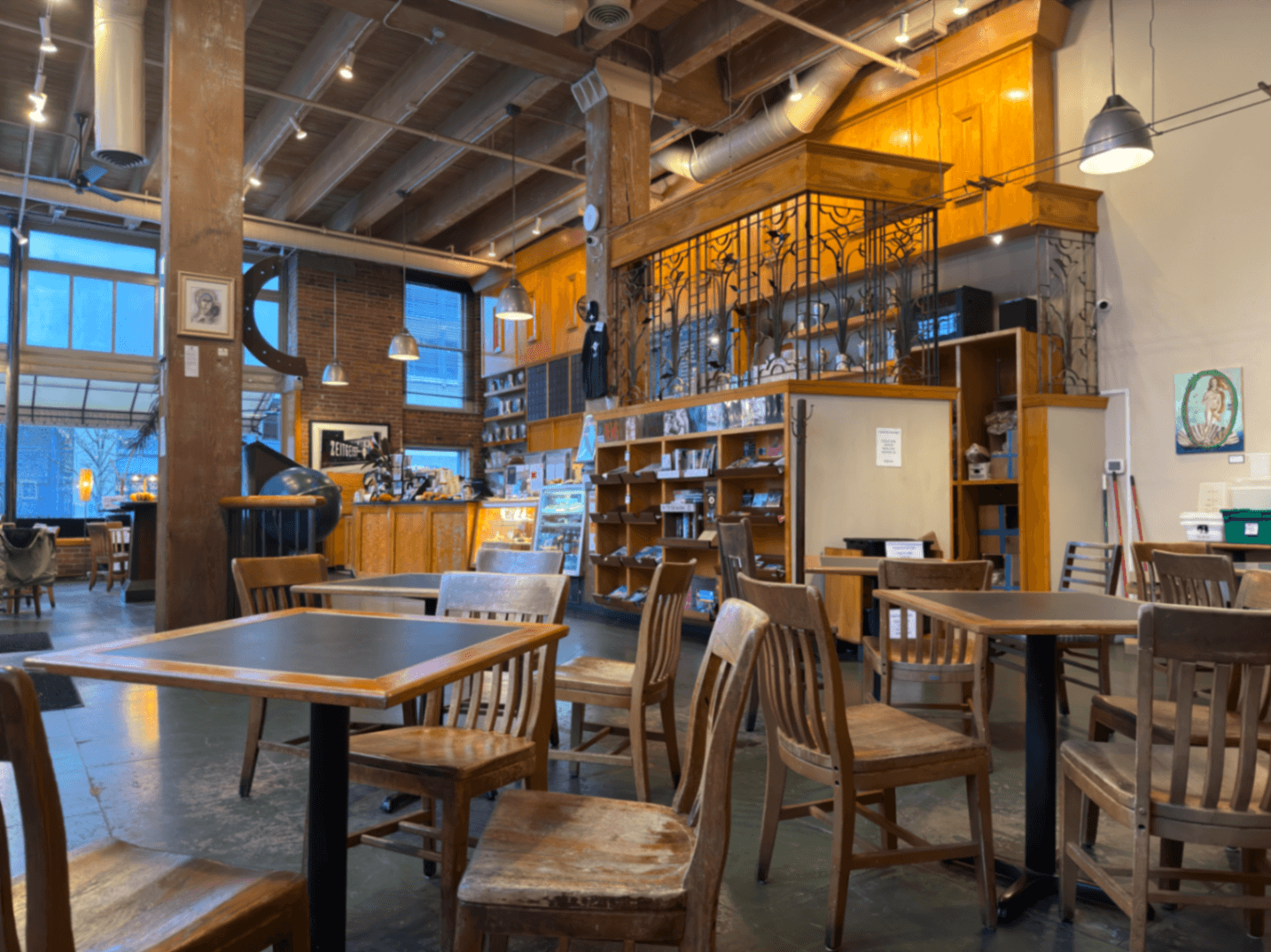
The ground floor operates as a tea room, a plain, low-lit space with mismatched furniture and the feel of somewhere that hasn't been redecorated to impress anyone. You can order tea and sit for as long as you like. The hotel rooms above are not part of the visitor experience in any formal sense, and the bathhouse itself is generally not open for walk-through visits, it's preserved rather than operated.
The reason people come is the floor. Near the center of the tea room, a section of flooring has been replaced with glass, and underneath it, lit just enough to see clearly, are the trunks and suitcases that have been there since families packed them up before being sent to camps like Minidoka. There's no barrier, no dramatic lighting rig, nothing staged about it. You just look down, and there it is. It tends to be the kind of thing that quiets a room. People who've been there describe it as the heaviest few square feet in the city, and that's not an exaggeration for effect, it's just what it does to you to realize you're looking at someone's actual belongings, left mid-decision, eighty-some years ago.
The walls carry historical photographs and some printed information about the hotel's history and the incarceration, enough context to understand what you're looking at without needing a guide.
History and background
Seattle's Nihonmachi, or Japantown, once centered on this stretch of South Main and Jackson Streets, overlapping with what's now Chinatown-International District. Before the war, this was a dense neighborhood of Japanese-owned hotels, shops, and bathhouses serving a community of immigrants and their American-born children. The Panama Hotel was built to house single Japanese laborers and later families, with the bathhouse in the basement functioning as a communal gathering space as much as a practical necessity, since many residents didn't have private bathing facilities in their rooms.
That all changed in the spring of 1942. Roughly 120,000 Japanese Americans on the West Coast, most of them US citizens, were forced into incarceration camps under Executive Order 9066. In Seattle, families had only days to arrange their affairs. Businesses were sold at a loss, homes were abandoned or leased out, and belongings that couldn't be carried were stored wherever people could find space. The Panama Hotel's basement became one of those spaces. After the war, some families returned to reclaim their things. Others had been scattered elsewhere, had nothing to come back to, or simply never returned. The trunks you see today are what nobody came back for.
The hotel earned its National Historic Landmark designation for this combined history, the building itself as a surviving piece of prewar Japantown architecture, the bathhouse as one of the last of its kind, and the basement as a physical record of the incarceration that's rare in its directness. Most sites that commemorate this history do so through museums and plaques. This one does it through actual objects, still where they were left.
Tickets and entry
There's no admission fee to visit, since the tea room operates as a regular café, you simply walk in and order something if you'd like to sit. This isn't a museum with timed entry or a ticket booth. It functions more like stumbling into a piece of history while looking for a place to get tea, which is more or less exactly what happens to most first-time visitors.
Best time to visit
Weekday mornings or early afternoons tend to be quietest, which matters here more than at most tea rooms, since part of the experience is having enough stillness to actually look at what's under the glass without feeling rushed. Weekends bring more foot traffic from the surrounding restaurants and shops. If you're visiting specifically for the historical weight of the place, aim for a slower moment rather than squeezing it between other International District stops.
Facilities and preparation
This is a small, informal space, not an accessible, fully staffed museum. There isn't a gift shop beyond maybe some postcards or small items near the counter, and don't expect docent-led tours. Bring cash or a card for tea, and bring a willingness to sit quietly for a few minutes. It's not a place that rewards rushing through on a checklist of Seattle attractions.
Combining with nearby attractions
The Panama Hotel sits inside the Chinatown-International District, one of Seattle's oldest and most layered neighborhoods, home to Chinese, Japanese, Filipino, and Vietnamese communities going back more than a century. The Wing Luke Museum of the Asian Pacific American Experience, a few blocks away on South King Street, covers this same incarceration history in much greater depth and is a natural pairing for anyone who wants more context after visiting the Panama Hotel. Uwajimaya, the large Asian grocery and food court, is close by if you want lunch afterward, and Hing Hay Park and the Chinatown gate are both within a short walk. If you're combining this with a broader day downtown, Pioneer Square is about ten minutes north on foot.
Practical tips
- Go slow in the tea room, the glass panel is easy to miss if you're moving quickly or just looking for a table
- Pair the visit with the Wing Luke Museum if you want the fuller historical narrative behind what you're seeing
- Weekday visits are quieter and give you more space to actually sit with the basement view
- Bring small cash in case the tea room doesn't take cards for smaller orders
- Don't expect a formal museum experience, this is a working café with history built into the floor, not a staffed exhibit
FAQ
Can you actually see the belongings, or is it recreated?
What you see through the glass panel is the real basement and the real trunks and suitcases that were stored there in 1942. Nothing about it is staged or recreated for visitors.
Is the bathhouse open to walk through?
The Japanese bathhouse in the basement is preserved as part of the building's landmark status, but it's generally not set up for public walk-through visits the way the tea room is.
Do I need a reservation to visit?
No. You can walk in during the tea room's open hours and order something, there's no ticketing system or advance booking required.
How long should I plan to spend here?
Most people spend somewhere between fifteen minutes and half an hour, though there's no reason to rush if you want to sit longer with your tea and the history around you.
Reviews
Sign in and mark this place visited to leave a review.
No reviews yet.
Free Trip Planner
Plan your United States trip with our free planner
Build a day-by-day itinerary with AI suggestions, hand-picked places, and friends. Free forever — no credit card.