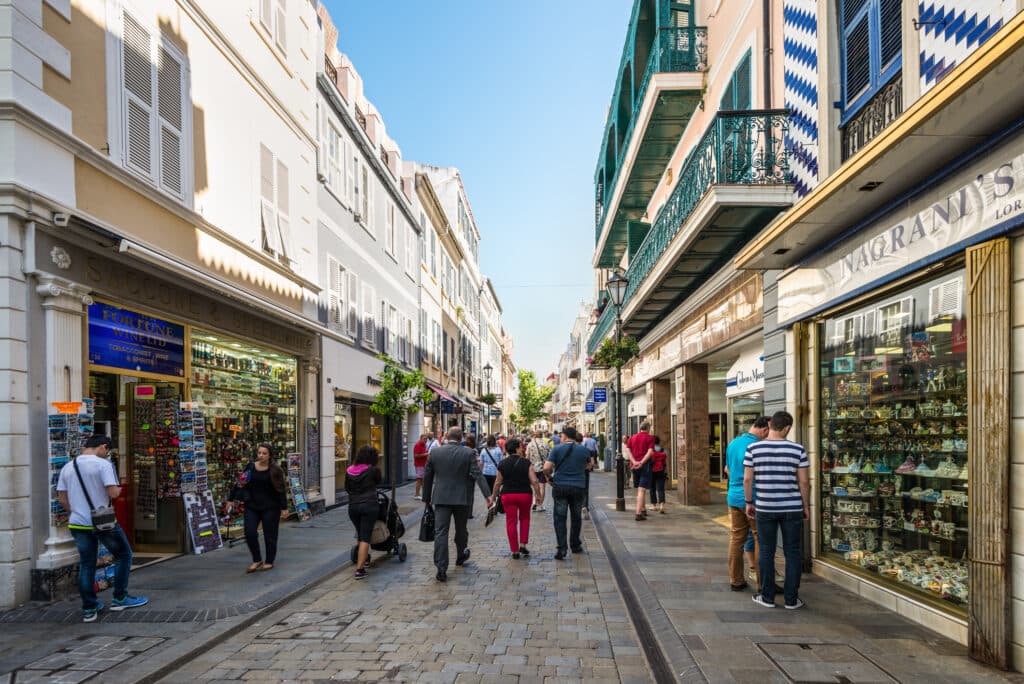
The Rock of Gibraltar
Gibraltar Posted by Brandon B.Admin
What Is the Rock of Gibraltar and Why Should You Go
The Rock of Gibraltar is one of those places that makes you stop and stare before you've even reached the entrance. Rising nearly 426 metres above sea level at the southern tip of the Iberian Peninsula, this limestone monolith guards the narrow strait where the Atlantic meets the Mediterranean. It's been a symbol of military power, a crossroads of civilisations, and a navigational landmark for sailors for well over two thousand years. And somehow, despite being only about 6.8 square kilometres in total, it packs in an extraordinary amount of history, wildlife, and scenery.
For most visitors, the Rock announces itself long before they arrive. You can see it from across the bay in Algeciras, from the beaches of Tarifa, and on clear days from the Moroccan coastline. Up close, the experience is different again.
Quick Facts
- Height: 426 metres above sea level
- Location: Southern tip of the Iberian Peninsula, British Overseas Territory
- The Upper Rock Nature Reserve covers roughly 40% of Gibraltar's total land area
- Home to Europe's only wild population of Barbary macaques
- The Great Siege Tunnels were carved by hand in the late 18th century
- Currency used in Gibraltar is the Gibraltar pound, though euros are widely accepted
- No visa required for EU, UK, and most Western passport holders
Getting There
Gibraltar sits at the southern end of Spain's Costa del Sol, connected by land through the town of La Línea de la Concepción. If you're coming from Málaga, the drive takes roughly 1 hour and 45 minutes. From Tarifa, you're looking at about 45 minutes. There's a border crossing at La Línea where you'll pass through both Spanish and British passport control, which can involve a wait depending on the day and time.
One thing that surprises a lot of first-time visitors: the main airport runway crosses the only road into Gibraltar. Traffic literally stops when planes land or take off. It's a memorable introduction to the place.
Once inside Gibraltar, the town centre is walkable. To reach the Upper Rock, you can take a cable car from the town side, hire a taxi for a tour, or walk up through the nature reserve. The cable car runs from near the Alameda Botanical Gardens and deposits you near the top in a matter of minutes, with views over the strait on the way up that are worth the ride alone.
The Upper Rock and What You'll Find There
Most of what draws visitors to the Rock of Gibraltar sits within the Upper Rock Nature Reserve, a protected area that requires a separate entry ticket. Inside, the main attractions are clustered enough that you can cover them in a single half-day visit if you're organised, though rushing through the tunnels does them a disservice.
The Great Siege Tunnels are probably the most impressive single thing on the Rock. They were blasted and chiselled out of solid limestone during the Great Siege of Gibraltar, which lasted from 1779 to 1783, when Spanish and French forces attempted to reclaim the territory from Britain. The tunnels allowed British defenders to position artillery at angles that would otherwise have been impossible. Walking through them today, with the original cannon emplacements still in place, gives you a visceral sense of what the work involved. The rock face is close on all sides and the lighting is deliberately minimal in places.
St Michael's Cave is a different kind of spectacle entirely. This natural limestone cavern extends deep into the Rock and features dramatic stalactite and stalagmite formations that have been forming for millions of years. The main chamber has been adapted for concerts and performances, which speaks to its size and acoustics. It's genuinely impressive, and not in a theme-park way.
The Barbary Macaques
You will meet the macaques. They tend to congregate around the cable car station at the top and along the paths near the Apes' Den. There are several hundred of them living across the Upper Rock, and they are completely unintimidated by tourists. Do not feed them, even if other visitors are doing it. Do not leave bags open. They are fast, they are clever, and they will take your lunch.
The legend that Britain will hold Gibraltar only as long as the macaques remain has been attached to the Rock for centuries. Whether Churchill actually intervened during World War II to replenish the population when numbers dropped is a story locals still enjoy telling.
History and Background
Gibraltar's history as a strategic prize is long and layered. The Moors held it for over seven centuries after 711 AD, and the name Gibraltar itself derives from Jabal Tariq, Arabic for "Mountain of Tariq," after the Berber commander Tariq ibn Ziyad who led the Umayyad crossing into Iberia. Spain recaptured it in 1462. Then Britain took it during the War of the Spanish Succession in 1704 and has held it since, formalised by the Treaty of Utrecht in 1713.
The question of sovereignty has never fully gone away. Spain has maintained its claim for centuries, and Gibraltar voted overwhelmingly to remain British in referendums in both 1967 and 2002. The territory has its own parliament and a significant degree of self-governance, while remaining a British Overseas Territory. Walking around Gibraltar, the mix of British red phone boxes, Spanish tapas bars, and Moorish castle walls makes the layered identity feel entirely real rather than performed.
The Rock of Gibraltar Tickets and Entry
Access to Gibraltar itself is free, and the town centre requires no ticket. The Upper Rock Nature Reserve charges a general admission fee that covers entry to the main sites including St Michael's Cave, the Great Siege Tunnels, the Apes' Den, and the Moorish Castle. The cable car is priced separately and is mid-range in cost. Combination tickets covering the cable car and nature reserve entry are available and tend to offer better value than buying each separately.
Guided taxi tours are popular and include the main highlights with a local driver narrating. They're worth considering if you have limited time, as drivers know which spots are less crowded at which hours.
Best Time to Visit
Spring and early autumn are the most comfortable times to visit. Summer brings heat and crowds, and Gibraltar in July and August can feel genuinely packed, particularly at the cable car and around the macaque viewing areas. The Levante wind, which blows from the east and wraps a distinctive cloud around the top of the Rock, can reduce visibility at the summit at any time of year. Locals call it "the cloud" and it's as much a part of the Rock's identity as anything else, though it does make the upper paths damp and occasionally cold even in warm months.
Weekday visits tend to be quieter than weekends, when day-trippers come over from the Costa del Sol in numbers.
Photography Tips
The most iconic view of the Rock itself comes from across the bay, either from the waterfront in Algeciras or from the road approaching La Línea. You cannot get a proper wide shot of the Rock while standing on it. For views from the top, the eastern face looks down over the Mediterranean and on clear days you can see the Moroccan Rif mountains. The western side looks over the town, the bay, and the Spanish coast. Early morning light on the eastern face tends to be the most dramatic, though it requires an early start.
Inside St Michael's Cave, flash photography rarely does the formations justice. The cave's built-in lighting shifts colour and intensity, and shooting in the available light with a slower shutter speed produces more atmospheric results.
Combining With Nearby Attractions
Gibraltar pairs naturally with a visit to Tarifa, about 45 minutes to the west, which sits at the actual southernmost point of continental Europe and offers whale and dolphin watching trips in the strait. The town of Ronda, famous for its dramatic gorge and 18th-century bullring, is about an hour and a half north. If you're crossing into Morocco, Tarifa is the more common departure point, but the symbolic weight of looking across the strait from the top of the Rock toward Africa adds something to that crossing if you're planning it.
Practical Tips
- Bring a layer even in summer. The top of the Rock can be significantly cooler and windier than the town below.
- Wear shoes with grip. The paths on the Upper Rock are uneven limestone and can be slippery when wet or cloudy.
- The cable car does not run in high winds, which happen more often than you'd expect. Have a walking route as backup.
- The border crossing into Gibraltar can involve a wait of 30 minutes to over an hour at busy times. Factor this in both ways.
- Euros are accepted widely in shops and restaurants, but change may come back in Gibraltar pounds, which are not accepted in Spain.
- Fuel and alcohol are significantly cheaper in Gibraltar than in Spain, which partly explains the border queues.
- If you're driving, parking in Gibraltar is limited and expensive. Leaving your car in La Línea and walking across the border is often easier.
FAQ
Do I need a passport to visit Gibraltar?
Yes. Even for EU citizens, you are crossing an international border. A valid passport or national ID card is required.
How long does a visit to the Rock of Gibraltar take?
A half-day covers the Upper Rock highlights comfortably. A full day lets you explore the town, the Gibraltar Museum, and the waterfront as well.
Can you walk up the Rock instead of taking the cable car?
Yes. There are several walking routes up the Rock, and they're used regularly by residents and fit visitors. The paths are steep and some sections involve steps cut into the rock face. Allow at least 45 minutes to an hour to reach the upper areas on foot.
Is Gibraltar worth visiting if you're already on the Costa del Sol?
Most people who make the trip say yes without much hesitation. There's genuinely nothing else quite like it in Europe, and the combination of the tunnels, the cave, the macaques, and the views makes for a day that's hard to replicate elsewhere.
Reviews
Sign in and mark this place visited to leave a review.
No reviews yet.
Free Trip Planner
Plan your Gibraltar trip with our free planner
Build a day-by-day itinerary with AI suggestions, hand-picked places, and friends. Free forever — no credit card.