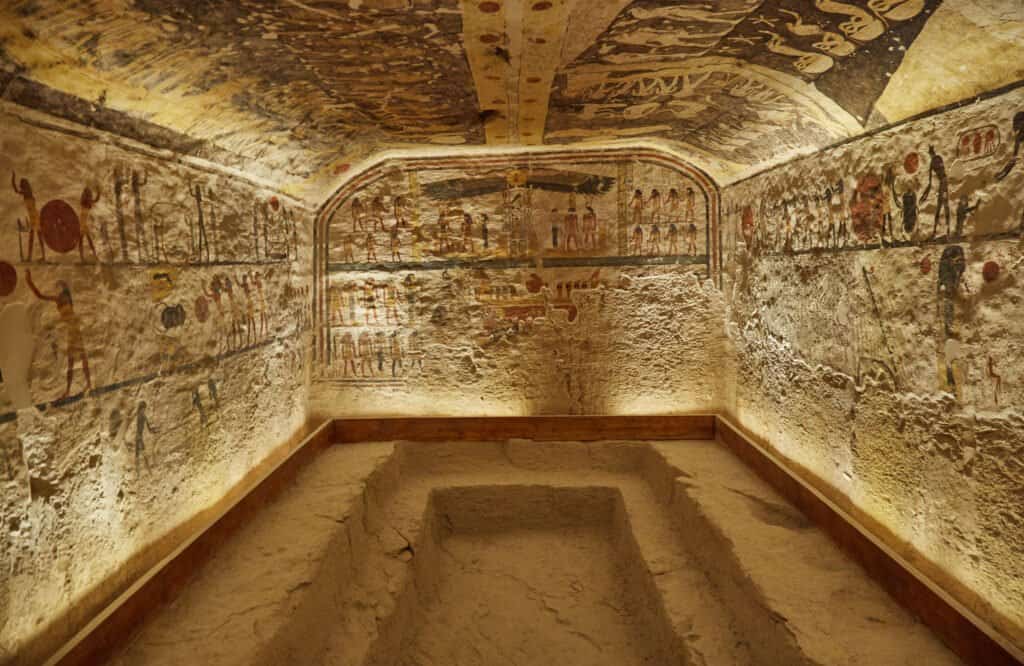
Valley of the Kings
Luxor City, Luxor 85511 Egypt Posted by Brandon B.Admin
Inside the Valley of the Kings
The Valley of the Kings sits on the west bank of the Nile, roughly a 15-minute drive from central Luxor, and it remains one of the most extraordinary archaeological sites on earth. For nearly 500 years, spanning roughly 1539 to 1075 BCE, the ancient Egyptians buried their pharaohs here in elaborate rock-cut tombs hidden beneath the pale limestone cliffs of the Theban hills. More than 60 tombs have been discovered so far, ranging from modest single-chamber affairs to the sprawling, multi-corridor labyrinth of Seti I. If you have any interest in the ancient world, this is not optional.
The scale of it tends to surprise first-time visitors. You are not walking through a museum. You are descending into actual burial chambers, reading actual hieroglyphs, standing in rooms that were sealed for thousands of years. The colors in some tombs still hold. That is the thing that stays with you.
Why the Valley of the Kings Matters
This valley was chosen deliberately. The dominant peak overhead, known as al-Qurn, naturally resembles a pyramid, and the ancient Egyptians considered it sacred to the goddess Meretseger. The location also offered practical advantages: remote enough to discourage casual theft, close enough to the Nile to allow construction teams to ferry materials across. Despite those precautions, virtually every tomb in the valley was robbed in antiquity, most of them within a few centuries of sealing.
The one famous exception is KV62, the tomb of Tutankhamun, discovered by Howard Carter in 1922. It remains the only royal tomb found with most of its contents intact, which is why the treasures now in the Egyptian Museum in Cairo are so overwhelming in quantity. The tomb itself, in the valley, is relatively small compared to others nearby. Many visitors find this surprising. The real spectacle at the Valley of the Kings is not KV62 but the deeper, more elaborately decorated tombs of rulers like Ramesses III, Ramesses VI, and Seti I.
Quick Facts
- Location: West bank of the Nile, Luxor, Upper Egypt
- More than 60 tombs discovered across the main valley (KV) and a smaller western branch
- The site is managed by the Egyptian Ministry of Tourism and Antiquities
- General admission includes entry to three tombs; Tutankhamun's tomb and several others require a separate ticket
- Photography permits are sold separately at the entrance; flash photography is not allowed inside the tombs
- The site opens daily, with earlier morning hours strongly recommended to beat both the heat and the crowds
- A small electric tram runs from the entrance gate to the main tomb area, roughly 500 meters
Getting There
From central Luxor, you cross the Nile by ferry or bridge and then travel west toward the cliffs. Most visitors come by taxi, organized tour, or rented bicycle, though the last option is best saved for cooler months since the road offers little shade. The ferry crossing from Luxor Temple's dock area takes only a few minutes and deposits you on the west bank, where local taxis and microbuses wait. From the ferry landing to the valley entrance is another 8 to 10 kilometers, passing through the village of al-Gezira and the agricultural plain before the desert begins.
If you are staying at one of the west bank hotels near the Colossi of Memnon, you are already close. The valley entrance is well signposted from the main road.
The Layout and Experience
The entrance complex has a ticket office, a small visitor center with site maps, and the tram stop. Once you board the tram or walk the path to the tomb area, you arrive at a wide, open basin surrounded by pale cliffs. The numbered tomb entrances are marked by wooden doorways set into the hillside. On a busy morning, you will see queues forming at the more popular tombs. On a quieter day, particularly in winter, you can move between them with very little waiting.
Each tomb follows a broadly similar structure: a descending corridor, often with multiple side chambers and painted walls, leading to a burial hall where the sarcophagus once stood. The paintings narrate passages from religious texts like the Amduat, the Book of Gates, and the Book of the Dead, depicting the pharaoh's journey through the underworld. Some corridors run more than 100 meters deep into the rock.
Ventilation inside the tombs is limited, and the combination of body heat from other visitors and the enclosed space can make them feel warm and close. This is one practical reason to arrive early, before the site reaches its peak visitor numbers.
Main Highlights
The Tomb of Ramesses VI (KV9)
This is frequently considered the most impressive tomb open to general visitors. The astronomical ceiling in the burial chamber, painted with an elaborate cosmological map, is exceptional. The corridor walls are covered floor to ceiling with religious texts and imagery. It is also notable for having partially covered the entrance to Tutankhamun's tomb in antiquity, which helped preserve KV62 from later looters.
The Tomb of Seti I (KV17)
The deepest and longest tomb in the valley, KV17 is sometimes closed for conservation work, so check current access before planning your visit around it. When open, it is widely regarded as the finest decorated tomb on the site. Howard Carter discovered it in 1817, and the quality of the painted reliefs has rarely been matched elsewhere in the valley.
The Tomb of Tutankhamun (KV62)
Separate admission applies. The tomb is smaller than you likely expect, and the mummy of Tutankhamun remains inside in a climate-controlled case. The burial chamber retains its original painted walls. For many visitors, the significance of standing in this specific room outweighs the relatively modest scale.
The Tomb of Ramesses III (KV11)
One of the longest tombs in the valley, and one of the few where side chambers contain painted scenes of daily life and musical instruments rather than purely religious content. It tends to be less crowded than KV9 while offering comparably impressive decoration.
Best Time to Visit
October through February is when the valley is most manageable. Summer temperatures in Luxor regularly exceed 40 degrees Celsius, and the valley basin traps heat with particular intensity. Even in winter, arriving at opening time makes a significant difference. By mid-morning, coach tours from Hurghada and cruise ships docked at Luxor fill the site.
Weekday mornings in January and February tend to be the quietest. Ramadan can bring different crowd patterns, so if your visit falls during that period, local advice is worth seeking.
Photography Tips
You will need to purchase a photography permit at the main ticket office. Without it, cameras and phones are supposed to be kept away inside the tombs, though enforcement varies. Flash is universally prohibited and genuinely damages the pigments, so do not use it regardless of what others around you are doing. The paintings respond well to the existing artificial lighting if you stabilize your phone or camera against the wall.
Outside the tombs, the landscape itself photographs well in the early morning when the cliffs catch low-angle light. The view looking back toward the entrance from the upper path gives a good sense of the valley's scale.
Combining with Nearby Attractions
The west bank of Luxor holds a remarkable concentration of sites within a short distance of each other. The Mortuary Temple of Hatshepsut at Deir al-Bahari is about 10 minutes by road from the Valley of the Kings and is visually unlike anything else in the area. The Colossi of Memnon stand at the entrance to the west bank plain and take only a few minutes to see. The Valley of the Queens, where royal wives and children were buried, is a separate site to the south and requires its own ticket.
A full west bank day, combining the Valley of the Kings with Hatshepsut's temple and a stop at the workers' village of Deir al-Medina, is one of the more rewarding days you can spend in Egypt. That said, trying to rush through all of it often means doing none of it justice. If you have two days on the west bank, use them.
Practical Tips
- Bring more water than you think you need. There is a small refreshment kiosk near the tomb area but supplies can run low on busy days.
- Wear closed shoes with grip. The tomb floors can be smooth and uneven, particularly on descent.
- Confirm which tombs are currently open before purchasing tickets, as rotation and conservation closures are common.
- Guides must be licensed; if you want one, arrange through your hotel or a registered agency rather than accepting unsolicited offers at the gate.
- The electric tram is free with your ticket and worth using on the return, especially in warm weather.
- Keep your ticket visible. Staff check it at each tomb entrance.
- Arrive no later than opening time if you want Tutankhamun's tomb without a queue.
FAQ
How many tombs can I visit with a standard ticket?
General admission covers entry to three tombs of your choice from those open on that day. Tutankhamun's tomb and a handful of others require an additional ticket purchased at the same office.
Is the Valley of the Kings suitable for children?
Most children who have any interest in ancient history find it genuinely captivating. The descending corridors and painted walls tend to hold attention well. The main practical considerations are heat and the physical effort of walking up and down inclines inside the tombs.
Do I need a guide?
Not strictly, but the context a knowledgeable guide provides transforms the experience. The painted texts and imagery are dense with meaning that is easy to miss without some explanation. Audio guides are available at the site if you prefer to go independently.
Can I see the mummies here?
Tutankhamun's mummy remains in KV62. Most other royal mummies were moved to Cairo in antiquity or in the 19th century and are now displayed at the National Museum of Egyptian Civilization in Cairo.
Opening hours
Reviews
Sign in and mark this place visited to leave a review.
No reviews yet.
Free Trip Planner
Plan your Egypt trip with our free planner
Build a day-by-day itinerary with AI suggestions, hand-picked places, and friends. Free forever — no credit card.