
Water Castle of Royal Jogjakarta
Closed now
Water Castle of Royal Jogjakarta
59R5+2P2, Patehan, Kraton, Yogyakarta City, Special Region of Yogyakarta 55133, IndonesiaThe Water Castle of Royal Jogjakarta: What to Know Before You Visit
The Water Castle of Royal Jogjakarta, known locally as Taman Sari, sits in the Patehan neighborhood just a short walk southwest of the Kraton, Yogyakarta's sultan's palace. It is one of the most quietly dramatic sites in Java, and once you step through its old stone archways, the city outside feels very far away. Most visitors come expecting a ruined garden. They leave having seen something far stranger and more layered than that.
The complex served as a royal pleasure garden, bathing complex, and retreat for the sultanate. It was built in the mid-18th century and has survived earthquakes, colonial-era neglect, and decades of informal settlement inside its walls. What stands today is partly restored, partly overgrown, and entirely worth your time.
Why the Water Castle of Royal Jogjakarta Matters
Taman Sari is not just a pretty ruin. It represents a very specific kind of royal life that most visitors to Yogyakarta never think to ask about. The Javanese sultanate was not simply a political institution. It was a cosmological one, and the layout of places like Taman Sari reflected that worldview in concrete, architectural form. Water was central to purification rituals, to court ceremony, and to the sultan's symbolic power.
The bathing pools here are the most photogenic element, and they draw most of the crowds. But the subterranean mosque, the watchtower, and the network of underground passages tell a more complicated story about how the complex actually functioned. Historians still debate certain aspects of its original use. That ambiguity is part of what makes it interesting.
Quick Facts
- Located in the Patehan district, roughly 10 to 15 minutes on foot from the main Kraton entrance
- Originally constructed in the 1750s under Sultan Hamengkubuwono I
- The site covers several interconnected areas, including pools, a subterranean mosque, a tower, and underground corridors
- Entry requires a general admission ticket, separate from the Kraton ticket
- Open most days of the week; morning hours are significantly cooler and less crowded
- Photography is permitted throughout most of the site
- The surrounding kampung (village) has grown up organically within the old outer walls, which adds to the atmosphere but can make navigation confusing
Getting There
From the Kraton, walk south and then west through the neighborhood streets. The route is not always clearly signed, so asking a local or using a map app is worthwhile. Becak (cycle rickshaws) and ojek (motorcycle taxis) are readily available in the area and can drop you right at the entrance.
If you are coming from Malioboro Street, the main tourist corridor of Yogyakarta, budget around 20 to 25 minutes on foot or a very short ride. Parking for private vehicles exists but the lanes around the site are narrow.
The Layout and Experience
Taman Sari is not a single building. It is a compound, and understanding that upfront saves confusion. The most visited section is the bathing complex, Umbul Pasiraman, which contains two large rectangular pools surrounded by stone walls and a raised platform from which the sultan reportedly observed. The water is no longer filled for bathing purposes, but the pools are well preserved and give you a clear sense of their original scale.
Past the pools, you descend into a network of underground passageways. The tunnels are low and dim, and they connect to a subterranean mosque called Sumur Gumuling, which is circular in form with a central well and staircases rising to an upper level. The acoustics inside are unusual, and the light that falls through the open roof changes depending on the time of day. This is the part of the complex that most visitors remember longest.
The watchtower, Gedung Kenongo, offers views across the rooftops of the surrounding kampung toward the Kraton and, on clear days, toward Gunung Merapi to the north. The climb is modest but the perspective is genuinely useful for understanding how the complex was originally oriented within the broader royal city.
History and Background
Construction began around 1758 and was overseen by a Portuguese architect working under the direction of the first sultan. The Dutch colonial administration later took control of parts of the surrounding area, and after a major earthquake in 1867 caused significant structural damage, much of the complex fell into disrepair. Over the following century, local families settled within the outer walls, building homes and workshops in and around the old structures.
Restoration efforts have been ongoing for decades, with some areas receiving more attention than others. The result is a site that exists in several different states simultaneously: carefully maintained in its most photographed sections, still partly inhabited in its outer zones, and actively excavated in places where earlier structures are still being uncovered.
The name Taman Sari translates roughly to "fragrant garden," though the current landscape does not reflect much of the original planting. Historical records suggest the grounds once included extensive gardens and fruit trees.
Tickets and Entry
General admission tickets are available at the entrance and are priced in the budget tier by any standard. A separate ticket is sometimes required for the Sumur Gumuling mosque section, depending on how the site is being managed at the time of your visit. It is worth asking at the gate which areas are included and whether a guide is available. Local guides often wait near the entrance and can add real context, particularly for the underground sections where signage is limited.
The Kraton and Taman Sari tickets are not interchangeable, so if you plan to visit both in one day, budget for two separate admissions.
Best Time to Visit
Arrive before 9am if you can. The bathing pools in particular attract large tour groups by mid-morning, and the narrow underground passages become genuinely uncomfortable when crowded. The light is also better in the early hours for the pools, which face east.
Weekday mornings tend to be quieter than weekends. School holiday periods in Indonesia can bring large domestic tour groups. The dry season, roughly May through September, is more comfortable for walking the site, though the wet season gives the stone walls a certain texture and the crowds thin noticeably.
Photography Tips
The pools are the obvious subject, and they photograph well from the upper walkway on the northern side. Early morning gives you direct light into the water and avoids the shadows that fall across the southern pool by mid-afternoon.
Sumur Gumuling is the real photography challenge and reward. The circular interior and the shaft of light from above require patience. A wide-angle lens helps. If you visit with a group, try to arrive at the mosque section slightly ahead of or behind the main crowd for a cleaner shot of the staircase.
The kampung streets surrounding the complex are worth photographing in their own right. Batik workshops, small warungs, and the texture of the old stone walls incorporated into modern homes make for compelling street-level images.
Combining with Nearby Attractions
The Kraton is the obvious pairing and can be done in the same half-day without rushing. Most visitors do Taman Sari first, then walk to the Kraton, or vice versa.
Pasar Ngasem, a local market that once operated as the famous bird market, is nearby and worth a brief detour. The surrounding streets between Taman Sari and the Kraton are full of small batik galleries and warungs where you can eat well for very little. Jalan Rotowijayan is a useful street to know for lunch options.
If you have a full day in this part of Yogyakarta, the Sonobudoyo Museum to the north of the Kraton rounds out a strong itinerary covering Javanese royal history from several angles.
Practical Tips
- Wear shoes you do not mind getting dusty. The underground sections have uneven stone floors.
- Bring water. There are vendors inside but not always at every point in the route.
- The site involves stairs, low ceilings, and some dark corridors. It is not well suited for visitors with limited mobility in its current configuration.
- Sarongs are not typically required here as they are at some religious sites, but modest dress is always appropriate.
- If someone outside the gate offers to guide you for free, understand that they will almost certainly take you to a batik shop afterward. This is a well-established arrangement. Decide in advance whether you are comfortable with it.
- Keep your ticket until you exit. Staff sometimes check at internal gates between sections.
FAQ
Is Taman Sari the same as the Water Castle of Royal Jogjakarta?
Yes. Taman Sari is the Javanese name for the site. "Water Castle of Royal Jogjakarta" is the name used in some official tourism contexts and on maps. Locals will know it immediately as Taman Sari.
How long should I budget for a visit?
Most visitors spend between one and two hours. If you explore the surrounding kampung streets and take your time in the underground sections, two and a half hours is more comfortable.
Can I visit without a guide?
Yes. The main sections are navigable independently, though signage is sparse in places. A local guide is genuinely useful for the historical context and for navigating the underground passages confidently, but it is not required.
Is the site wheelchair accessible?
In its current state, no. The steps, narrow passages, and uneven surfaces throughout the complex make independent wheelchair access very difficult.
Is Taman Sari worth visiting if I have already seen Angkor Wat or Prambanan?
It is a different kind of experience entirely. Taman Sari is intimate and urban, not monumental. The interest lies in the detail, the layers of history still visible in the walls, and the living neighborhood that has grown up around the ruins. It rewards curiosity more than spectacle.
Opening hours
Reviews
Sign in and mark this place visited to leave a review.
No reviews yet.
Free Trip Planner
Plan your Yogyakarta City trip with our free planner
Build a day-by-day itinerary with AI suggestions, hand-picked places, and friends. Free forever — no credit card.
Things to see near Water Castle of Royal Jogjakarta

Castelo de Água do Sultanato de Yogyakarta

Lukman Batik Workshop

Beringharjo Traditional Market
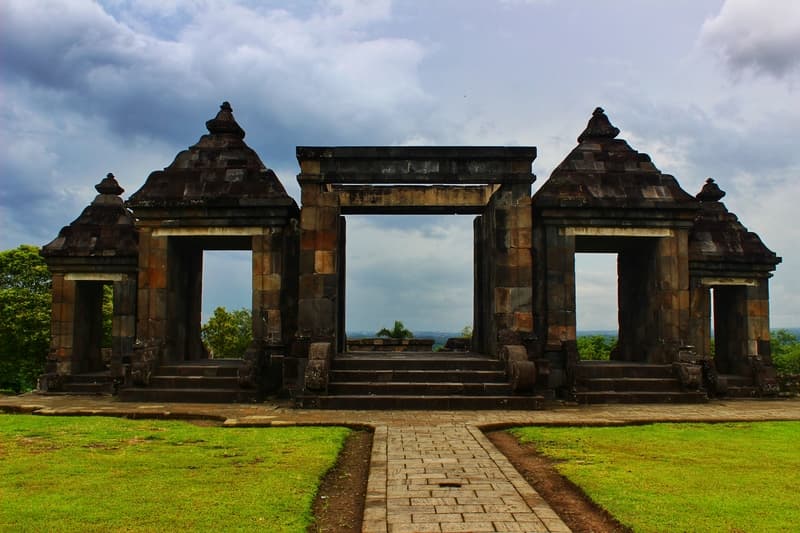
Ratu Boko Temple
Places to eat or drink near Water Castle of Royal Jogjakarta
MIE LETHEK GARUDA Noodle Factory

Sate Klathak Mak Adi

Mie Ayam Ibu Tumini Sari Rasa Jati Ayu
