
Things to Do in Idaho Falls: Falls, Museums & Trails
By
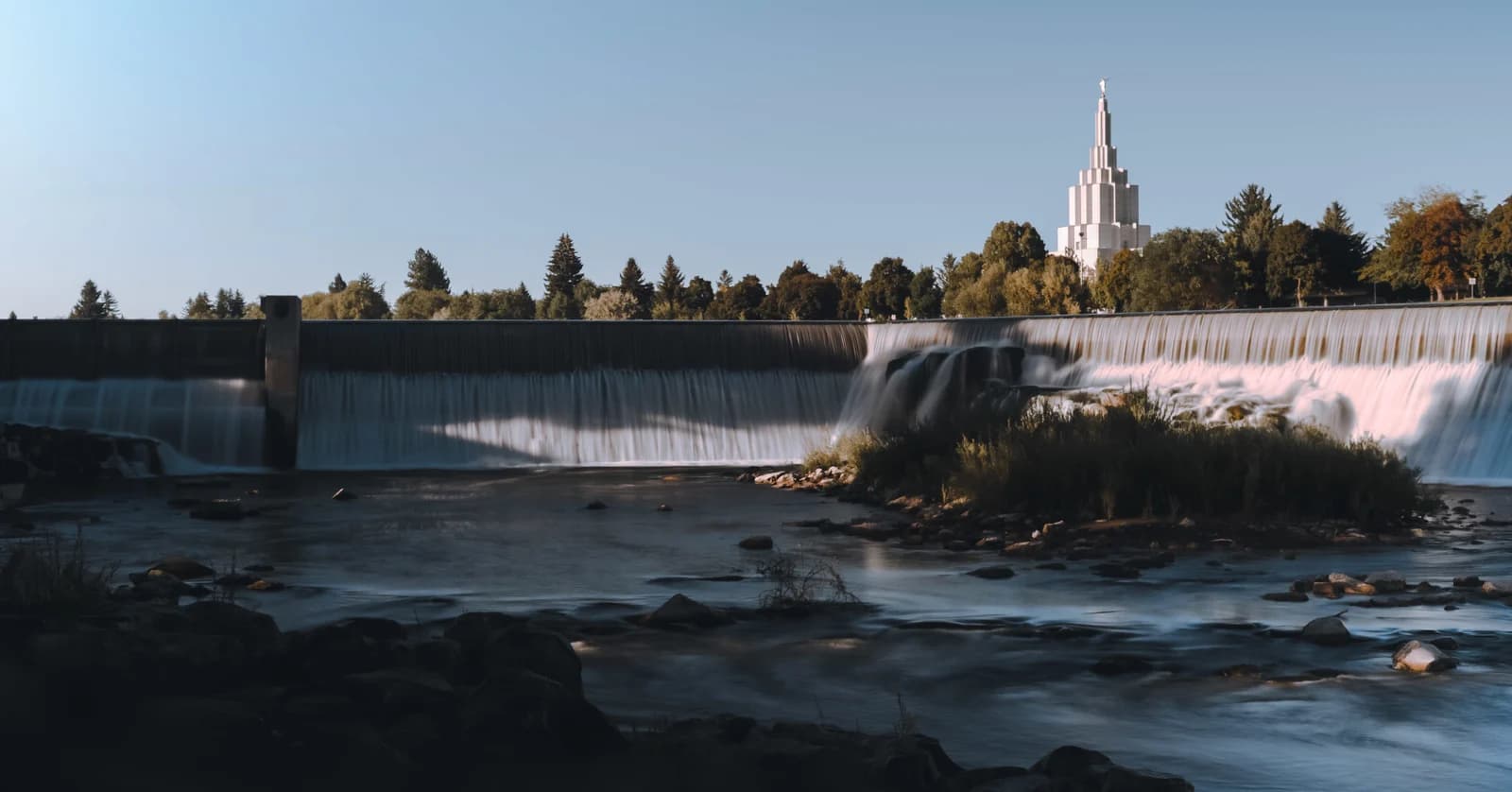
Idaho Falls is the kind of place most people drive through on the way to Yellowstone and Grand Teton — and then wish they had given a night to. It sits on a wide bend of the Snake River in eastern Idaho, with a waterfall running through the middle of downtown and a paved path along both banks. You can see the best of it in a day, and it makes a far more pleasant base than the tourist towns closer to the parks.
Here are the places worth your time, roughly in the order you would reach them walking out from the river.
See the Idaho Falls themselves

The falls that give the city its name are the obvious starting point, and they are not what most visitors expect. Rather than a single dramatic drop, the Snake River spills across a broad weir in a wide, low curtain — several hundred feet across, right in the centre of town. The sound carries further than the height suggests.
The best views are from the west bank, where the path sits closest to the water. Early morning gives you the falls without crowds; late afternoon light hits the water from downstream and is better for photographs. In spring, when snowmelt is running, the volume is genuinely impressive.
Walk the River Walk and Greenbelt Trail

The Idaho Falls River Walk and Greenbelt Trail is the thread that ties the city together. It is a paved loop running along both sides of the Snake, crossing at bridges so you can make it as short or long as you like. The full circuit takes about an hour at an easy pace.
This is the single best thing to do in Idaho Falls if you only have a couple of hours. You get the falls, the temple grounds, the river, and a good sense of the place without needing a car. It is flat, well maintained, and busy with locals rather than tourists — always a decent sign.
Museum of Idaho
The Museum of Idaho on North Eastern Avenue is the city's main cultural draw and punches well above the weight of a town this size. Alongside its permanent galleries on regional history and the Snake River Plain, it brings in large travelling exhibitions that would not look out of place in a much bigger city.
It is a genuinely good rainy-day option, and worth checking what is on before you visit — the temporary exhibitions change several times a year and are usually the reason to go.
The Art Museum of Eastern Idaho
A short walk from the river on South Capital Avenue, The Art Museum of Eastern Idaho is small, well curated, and easy to fold into a morning downtown. The focus is regional artists and rotating shows rather than a big permanent collection, so it rewards a repeat visit more than a long one.
Pair it with the Museum of Idaho if you have a full day indoors, or drop in for half an hour between the river and lunch.
Giant Eagle Waterfall Nest
The Giant Eagle Waterfall Nest on South Utah Avenue is one of those local landmarks that does not appear in guidebooks and is all the better for it. It is a quick stop rather than an afternoon, but it is close to the river and easy to add on to a Greenbelt walk.
Worth knowing if you are travelling with children, who tend to find it far more interesting than the museums.
Collectors Corner Museum
Out on John Adams Parkway, Collectors Corner Museum is the eccentric one — a dense, personal collection rather than a formal institution. If you like small museums built by people with a specific obsession, this is very much that, and it is the sort of place you remember long after the polished exhibits have blurred together.
Sportsman's Public Park and Marina
Sportsman's Public Park and Marina on West Broadway is where the town goes to get on the water. It is a practical, unglamorous spot — boat access, picnic space, river frontage — and a good place to end an afternoon if the weather is behaving.
Veterans War Memorial

The Veterans War Memorial on Legion Drive is a quiet, well-kept site and takes ten minutes. It is close enough to the Greenbelt to include without a detour, and it gives the walk a bit of shape beyond the scenery.
When to visit
Late spring through early autumn is the easy answer. May and June give you the falls at their fullest from snowmelt, and by July the Greenbelt is at its best. Winter is cold and the river path can be icy, though the falls partly freezing is a sight in itself.
If you are heading to Yellowstone, Idaho Falls works well as a first or last night. It is roughly a two-hour drive to the west entrance, and you will find better value and fewer crowds here than in the gateway towns — a reason plenty of people end up staying longer than they planned.
How long do you need in Idaho Falls?
Half a day covers the falls, the Greenbelt and one museum. A full day lets you do both museums properly and still get out to the park and marina without rushing. Two nights is generous unless you are using the city as a base for day trips into the mountains, which is a perfectly good reason to stay.
For a wider view of what is nearby, browse our full collection of places or open the map to see how these stops sit relative to one another.