
Lima on the map
28 places from this guide. Tap a pin to open the listing.
Overview
This Lima Peru travel guide starts with the fact most visitors already know: Lima is where your plane lands, and Lima is also where most travelers try to leave as quickly as possible. That is a mistake. The capital sits on cliffs above the Pacific, spreads across a cluster of neighborhoods with very different personalities, and has become one of the strongest food cities in the world. Spend even two days here before heading to Cusco or the jungle and you will understand why chefs, not ruins, are the reason many people now build an extra night into their Lima stopover.
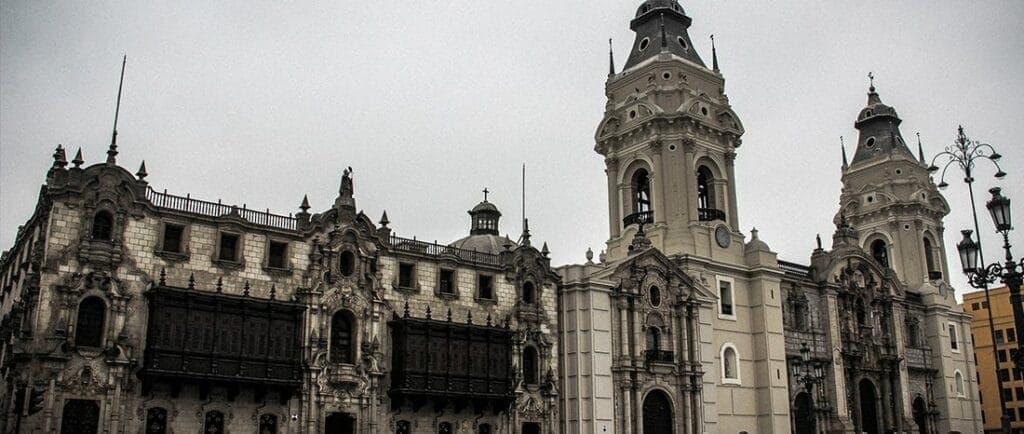
The city layers a colonial core, built around the Plaza de Armas (Plaza Mayor), against seaside districts like Miraflores and Barranco that feel almost Mediterranean at sunset. In between you get pre-Inca adobe pyramids sitting next to apartment blocks, a craft beer scene, and a restaurant culture that has put Lima on international best-of lists for over a decade.
When to Visit
Lima's seasons run opposite to what the rest of Peru experiences. Roughly December through April is summer: warm, sunny, and the time locals head to the beach suburbs south of the city. This is high season for the coast, though it overlaps with rainy season in the Andes, so factor that in if you are combining Lima with Cusco or Machu Picchu.
From around June to September, Lima sits under a persistent gray blanket locals call the garúa, a low coastal mist that can hang around for days without ever producing real rain. Temperatures stay mild, rarely dropping much below the mid-teens Celsius, but the sun disappears almost entirely. It is a fine time to visit for food and museums, less fine for beach plans. Lima rarely gets heavy rainfall at any point in the year, so plan around cloud cover rather than downpours, and check the forecast if a specific outdoor activity matters to you.
Where to stay
Miraflores is the default base for a reason. It has the highest concentration of hotels across every budget, restaurants open late, and the clifftop Miraflores Boardwalk for an evening walk or a paraglide over the ocean. Parque Kennedy sits at the district's center and is a reliable orientation point, usually full of street performers and resident cats after dark.
Barranco, just south of Miraflores, is quieter and leans bohemian: murals, art galleries, and a nightlife scene concentrated around the old Puente de los Suspiros. If architecture and a slower pace matter more to you than proximity to malls, base yourself here instead.
Pueblo Libre is the residential, budget-friendlier option. It sits near several green spaces and puts you close to the Museo Larco without the Miraflores price tag. San Isidro, Lima's financial district, is worth knowing about even if you don't stay there, since it holds Parque El Olivar, a centuries-old olive grove turned public park that's a genuinely pleasant detour from the business towers around it.
How to reach the destination
Jorge Chávez International Airport (LIM) sits in Callao, technically its own city but fully inside metropolitan Lima. It handles the vast majority of flights into Peru from abroad and is also the main hub for domestic connections to Cusco, Arequipa, Iquitos, and beyond. If your trip includes a northern detour to somewhere like Chachapoyas, this is almost certainly where that domestic leg starts.
By bus, Lima connects to neighboring countries and to every major Peruvian tourist destination. Two newer terminals, Gran Terminal Terrestre in Plaza Norte and Terminal Terrestre Sur in Atocongo, handle a lot of long-haul traffic, though plenty of established companies still run their own terminals clustered along Paseo de la República in La Victoria. Overnight buses to Arequipa, Cusco, or Trujillo are common and often more comfortable than you'd expect, with reclining seats on the better companies.
Getting around the destination
You do not need a rental car in Lima, and most visitors are better off without one. Traffic is heavy and the road layout can be confusing even for residents. Taxis are the easiest option for most trips, especially between neighborhoods that aren't directly on a bus line. Agree on a fare before you get in, since meters are rare.
For a cheaper, faster way through the city, the Metropolitano is worth learning. It's a bus rapid transit system with dedicated lanes, express routes, and wheelchair access, running on a rechargeable card. Micro buses and combis, the small vans and minibuses that fill in the gaps, are the cheapest way to get around but take some local knowledge to use well, since routes aren't always clearly marked.
Within a single district, walking is the best option. Miraflores and Barranco are both compact and walkable, and renting a bicycle for an hour or two along the clifftop paths near the Miraflores Boardwalk is one of the better low-effort ways to see the coastline.
Top destination travel tips
- Try Inca Kola before you leave the country. It's a bright yellow, bubblegum-and-cream-soda flavored soft drink and one of the few sodas anywhere that has outsold Coca-Cola in its home market.
- Ask before photographing people, particularly in Andean or indigenous communities. Cameras are met with real suspicion in some areas and it's a basic courtesy regardless.
- Get churros from a street cart rather than a restaurant dessert menu. Churros San Francisco, right by the Monastery Of San Francisco, is the standard recommendation and worth the short wait.
- Watch your belongings in crowded areas during the day. Lima is generally safe to walk around in daylight, but pickpocketing happens in markets, on buses, and around major plazas.
- Be more cautious after dark, especially outside Miraflores and Barranco's well-lit main streets. Take a taxi rather than walking long distances at night.
- Don't skip the Changing of the Guard if your schedule allows it. It happens periodically at the Government Palace on the Plaza de Armas and draws a decent crowd, so arrive early for a clear view.
- Carry small bills. Taxis, combis, and street vendors rarely have change for large notes.
Typical costs in the destination
Lima is affordable by most international standards, with Peru's currency, the sol, stretching further than many travelers expect. Hotels range from very basic budget rooms up through genuinely comfortable mid-range options, with the best value concentrated around Miraflores despite its reputation as the tourist hub. At the top end, Lima also has a handful of upscale and fine dining hotel properties, particularly near the coast.
Food is where the savings really show. A casual meal at a local spot can run as low as around USD 4, and drinks are similarly cheap, which makes it easy to eat and drink well without spending much. Fine dining, especially at the city's best-known tasting-menu restaurants, sits at the opposite end of the scale and should be treated as a splurge, not a daily habit.
- Taxi between adjacent neighborhoods: roughly S/.6 (about USD 2)
- Longer in-city taxi ride: roughly S/.9 to S/.21 (USD 3 to 7)
- Airport to Miraflores taxi: roughly S/.36 (about USD 12)
- Micro bus or combi fare: roughly S/.0.50 to S/.1.20
- Metropolitano card and ride: around S/.5 for the card, S/.2.50 per ride, with free transfers on the main line
Confirm current fares before you travel since these shift over time, but the relative gap between taxis, combis, and the Metropolitano should hold.
Must try food and drinks
This is arguably the real headline of any Lima Peru travel guide. The city's food scene spans street-level anticuchos through to restaurants that regularly place on global best-of lists, and you can move between both in the same afternoon.
- Ceviche – raw fish cured in lime juice with chili and onion, best eaten for lunch, which is when it's freshest.
- Anticuchos – grilled beef heart skewers, usually served with potato and corn. Anticuchería Doña Pochita is a reliable, no-frills spot to try them the way locals do.
- Causa – a cold, layered potato dish filled with chicken, tuna, or avocado, often eaten as a starter.
- Pisco sour – Peru's national cocktail, made with pisco brandy, lime, egg white, and bitters.
- Nikkei cuisine – the Japanese-Peruvian fusion style that Lima essentially put on the world map. Maido Lima is the name most associated with it internationally, while Shizen Restaurante Nikkei and FAN – neo nikkei restaurant offer their own takes at different price points.
- Chifa – Peru's Chinese-Peruvian cooking tradition, with dishes like arroz chaufa and lomo saltado showing up everywhere. Chef Wong is worth seeking out for this.
- Tasting menus at Central Restaurante and Astrid y Gastón, two of the restaurants most responsible for Lima's reputation as a serious food capital. Both require reservations well ahead of time.
- Churros – fried choux pastry filled with manjarblanco or vanilla cream, rolled in cinnamon sugar.
- Craft beer – Barranco has become the city's beer neighborhood, with places pouring local labels and the countrywide staple Cusqueña on tap.
Beyond restaurants, Lima's museums give useful context to the food and the culture both. The Museo Larco houses one of the best pre-Columbian ceramics collections anywhere, and MALI – Museo de Arte de Lima covers a broader sweep of Peruvian art history in the city center.
FAQ
How many days do you need in Lima?
Two to three days is enough to see the highlights. That gives you time to explore the colonial center, walk the Miraflores Boardwalk, spend an evening in Barranco, and book one or two serious meals, since food is a main reason to visit. Add a day if you want a day trip to something like Pachacamac or Huaca Pucllana.
When is the best time to visit Lima?
The sunniest, warmest months are roughly December to April. Winter, around June to September, is typically mild but gray, with low cloud and mist settling over the coast for days at a time. Lima rarely gets much rain, so overcast skies rather than downpours are the thing to plan around. Check forecasts before booking anything beach-dependent.
Do you need a car in Lima?
No, you do not need a car. Taxis are cheap, the Metropolitano bus has dedicated lanes, and districts like Miraflores and Barranco are easy to explore on foot or by bike. Traffic can be heavy and the city is large, so allow extra time between districts, and agree on a taxi fare before you set off.
Do people speak English in Lima?
English is spoken in many tourist hotels, restaurants, and tour offices, but Spanish is what you'll hear across most of the city. Staff in Miraflores are the most likely to help in English. Away from tourist areas, taxis, and local eateries, expect little English, so a few basic Spanish phrases and a translation app go a long way.
Can you take a day trip from Lima?
Yes. Pachacamac, the pre-Inca religious complex south of the city, and the Caral Archaeological Zone, recognized as the oldest known city in the Americas, both work as day trips. Lomas de Lachay, covered by the Lachay Hills reserve, sits about two hours north and offers a strange seasonal green landscape in the middle of the desert. For something more involved, Marcahuasi is more realistically a weekend trip, usually done with an overnight stay near San Pedro de Casta.
Is the tap water safe to drink in Lima?
No, stick to bottled or filtered water. This also applies to ice in cheaper places and to brushing your teeth if you have a sensitive stomach. Most hotels and restaurants serve bottled or boiled water, and staff will usually confirm which is which if you ask.
Is Lima a good base before heading further into Peru?
Yes, since nearly every domestic flight and most long-distance buses originate here. If your trip extends beyond the city, places like Chachapoyas in the northern highlands are reachable by a short domestic flight followed by road travel, making Lima a practical first and last stop on a longer Peru itinerary rather than just a layover.
Top Places to Visit in Lima
View all See & DoBudget · $
 See & Do
Museo Larco
 See & Do
 See & Do
Parque Kennedy – Parque Central de Miraflores
 See & Do
 See & Do
Chachapoyas
 See & Do
 See & Do
Top Places to Eat in Lima
View all Eat & DrinkUltra Luxury · $$$$$
Maido Lima – The World’s Best Restaurant 2026 — Traveler’s Guide
 Eat & Drink
Central Restaurante
 Eat & DrinkModerate · $$
Shizen Restaurante Nikkei
 Eat & DrinkExpensive · $$$
FAN – neo nikkei restaurant
 Eat & DrinkBudget · $
Churros San Francisco S.A.C.
 Eat & Drink
 Eat & DrinkModerate · $$
 Eat & DrinkUltra Luxury · $$$$$