
Acatenango Volcano
Open now
Acatenango Volcano
Volcan Acatenango Chimaltenango Sacatepequez, Antigua 03001 Guatemala Posted by Brandon B.Admin
Climbing Acatenango Volcano: Guatemala's Most Rewarding Summit
Acatenango Volcano stands at roughly 3,976 meters above sea level, making it the third highest peak in Central America. For most visitors, it's not just a hike. It's the closest you can get to an active volcano without standing on one, because Acatenango shares a ridge with Volcán de Fuego, which erupts visibly every 20 to 40 minutes on a good day. Watching Fuego throw lava columns into a dark sky from your tent is the kind of thing people talk about for years.
The trailhead sits about an hour's drive from Antigua, which makes this one of the most accessible high-altitude climbs in Latin America. That said, accessible doesn't mean easy. The ascent is steep, the altitude bites, and the cold at basecamp surprises most first-timers. Go prepared and it becomes one of the best experiences Guatemala offers.
Why Acatenango Volcano Matters
Fuego has been in near-continuous eruption since 1999. Acatenango is the observation deck. There's no other place in the world where you can legally camp this close to a continuously active stratovolcano and watch it erupt through the night. That geological fact alone draws hikers, photographers, and volcanologists from across the world.
The views extend well beyond Fuego on clear days. From the summit you can see the Pacific coast, several other Guatemalan volcanoes, and the colonial rooftops of Antigua roughly 20 kilometers away. On the clearest mornings, before cloud cover builds, the panorama is genuinely staggering.
Quick Facts
- Elevation: approximately 3,976 meters (13,045 feet)
- Location: on the border of Chimaltenango and Sacatepéquez departments, about 1 hour from Antigua
- Standard hike: two days, one night (overnight at basecamp)
- Difficulty: strenuous, suitable for fit hikers with no technical climbing required
- Summit push from basecamp: typically 2 to 3 hours one way
- Permits required: yes, through INGUAT or via licensed tour operators
- Guided tours are strongly recommended and required for permit access
- Fuego eruptions visible from basecamp most nights
Getting There
Almost every hiker starts from Antigua, where dozens of tour operators run guided overnight packages. The most common departure point is La Soledad village, reached by shuttle or private transfer from Antigua in roughly 45 to 60 minutes. You can arrange transport through your guesthouse, directly with a tour operator on 5a Avenida Norte in Antigua, or through several well-known outfitters that specialize specifically in the Acatenango climb.
Independent hiking without a guide has become increasingly restricted in recent years, partly for safety and partly because the permit system now runs through licensed operators. If you show up at the trailhead alone, you're unlikely to get through. Book your tour at least a day or two ahead during high season, and further in advance around Christmas and Semana Santa when spots fill fast.
The Layout and Experience
The trail begins in farmland and agricultural fields, passes through a cloud forest zone thick with moss-draped pines, and eventually breaks into a lunar landscape of volcanic ash and loose scree near the top. The ascent gains over 1,800 meters of elevation from the trailhead. It takes most hikers between four and six hours to reach basecamp, depending on pace and how the altitude is treating them.
Basecamp sits just below the saddle between Acatenango and Fuego at around 3,700 meters. This is where you sleep. Most tour operators provide tents, sleeping bags rated to cold temperatures, and a basic dinner and breakfast. The infrastructure is simple but functional. There's no running water and toilet facilities are basic pit latrines.
The summit push to Acatenango's true peak usually starts before dawn, around 3am or 4am, so you arrive for sunrise. It's a punishing two to three hours of loose ash and steep switchbacks in the dark and cold. Trekking poles help significantly on the descent, which is faster but hard on the knees.
Main Highlights
Fuego Eruptions at Night
This is the reason most people come. From basecamp, Fuego erupts audibly and visibly, sending glowing lava and ash plumes into the sky. On a clear night with active eruptions, the scene is unlike anything else in the region. The eruption frequency and intensity vary, but most nights offer at least several visible events.
Summit Sunrise
If you make it to the top of Acatenango before the clouds roll in, usually by 6am or 7am, the sunrise view across Guatemala is extraordinary. Volcán de Agua, Volcán de Santa María, and the Pacific lowlands all stretch out below you.
Cloud Forest Zone
The middle section of the hike passes through dense cloud forest that feels entirely removed from the volcanic landscape above and the farmland below. Howler monkeys are sometimes heard here, and the vegetation is lush and dramatic even on overcast days.
Best Time to Visit
The dry season, roughly November through April, gives you the best chance of clear views from the summit and basecamp. January and February tend to offer particularly crisp visibility. During the rainy season from May through October, afternoon cloud cover is almost guaranteed, and the trail gets muddy and slippery. That said, even rainy season climbers often get clear skies at night when the clouds drop below basecamp level.
Avoid Semana Santa and the Christmas to New Year stretch unless you book well in advance. Basecamp gets genuinely crowded during those periods, which diminishes the experience somewhat.
Photography Tips
Bring a camera capable of long exposures if you want to capture Fuego erupting at night. A wide-angle lens works well for the summit panorama. The golden hour before the clouds build in the morning is your best window for landscape shots from the top.
Keep your gear in a dry bag during the ascent because mist and rain in the cloud forest zone will soak a regular daypack. Batteries drain fast in cold temperatures, so carry spares and keep them close to your body overnight. At basecamp, the combination of Fuego's glow against a dark sky rewards anyone patient enough to stay up past midnight.
Facilities and Preparation
Most guided tours include tent, sleeping bag, dinner, and breakfast. Some operators offer porters for an additional cost, which is worth considering if you're not used to high-altitude hiking with a full pack. Trekking poles are often available to rent from operators in Antigua if you don't have your own.
Wear layers. Basecamp temperatures regularly drop below freezing, and the summit push happens in pre-dawn cold and often wind. Bring more warm clothing than you think you need. Sturdy waterproof boots are important because the trail combines slippery mud in the forest and loose ash near the top.
- Altitude sickness is a real risk above 3,000 meters. Acclimatize in Antigua (at 1,530 meters) for at least one full day before attempting the climb
- Bring at least two liters of water per person; some operators provide refills at basecamp but don't count on it
- Sunscreen and sunglasses are essential above the cloud line even on cold days
- Snacks beyond what the tour provides help significantly on the summit push
- Cash in quetzales for tips for guides and porters
Combining with Nearby Attractions
Most people use Antigua as their base, and rightly so. The city is about 45 minutes from the trailhead and offers everything you need for a rest day after the climb: good food, colonial architecture, and a lively traveler scene around the Parque Central. If your legs allow it, Volcán Pacaya is a popular half-day hike from Antigua that gives a very different volcanic experience at lower altitude and lower difficulty.
Some operators offer a combined Acatenango and Fuego multi-day package, though hiking on Fuego itself is significantly more dangerous and subject to closure depending on eruption activity.
Practical Tips
- Book through a licensed operator. Unlicensed guides operate in a legal gray area and permit access can be inconsistent.
- Read recent reviews before booking. Quality of gear, food, and guide experience varies considerably between operators.
- If you're prone to altitude sickness, spend at least two nights in Antigua before attempting the climb.
- The descent is harder on the knees than the ascent. Trekking poles and gaiters for the ash section make a real difference.
- Leave valuables in Antigua. There's no secure storage at basecamp.
- Check Fuego's recent activity before your trip. CONRED, Guatemala's disaster management agency, occasionally restricts access during periods of heightened eruption.
FAQ
Do I need prior climbing experience?
No technical climbing is required. The hike is steep and long but follows a trail the entire way. Good physical fitness and some experience hiking at altitude helps considerably.
Can I do Acatenango as a day hike?
Technically possible but strongly discouraged. The round trip to the summit and back in a single day is brutal, and you miss the whole point: watching Fuego erupt at night from basecamp.
Is it safe given Fuego's activity?
Acatenango basecamp sits on a separate volcano from Fuego and is generally considered safe during normal eruption cycles. During major eruption events, access is restricted by authorities. Always check current conditions before departing Antigua.
What if the weather is bad?
Cloud cover is common but doesn't necessarily ruin the experience. Many hikers report hearing and partially seeing Fuego erupt even through clouds. A completely overcast summit is disappointing but the overnight basecamp experience often compensates.
Opening hours
Reviews
Sign in and mark this place visited to leave a review.
No reviews yet.
Free Trip Planner
Plan your Antigua trip with our free planner
Build a day-by-day itinerary with AI suggestions, hand-picked places, and friends. Free forever — no credit card.
Related reading


Things to see near Acatenango Volcano

Pacaya Volcano

Volcan de Agua

Caoba Farms Restaurant

Museo Casa del Tejido Antiguo
Places to eat or drink near Acatenango Volcano

Mesón Panza Verde

Por Qué No? Cafe

Mellow coffee

Hot Chiplin Bar and Restaurant
More places in Antigua

MUNAG – Museo Nacional de Arte de Guatemala

Centro Cultural La Azotea
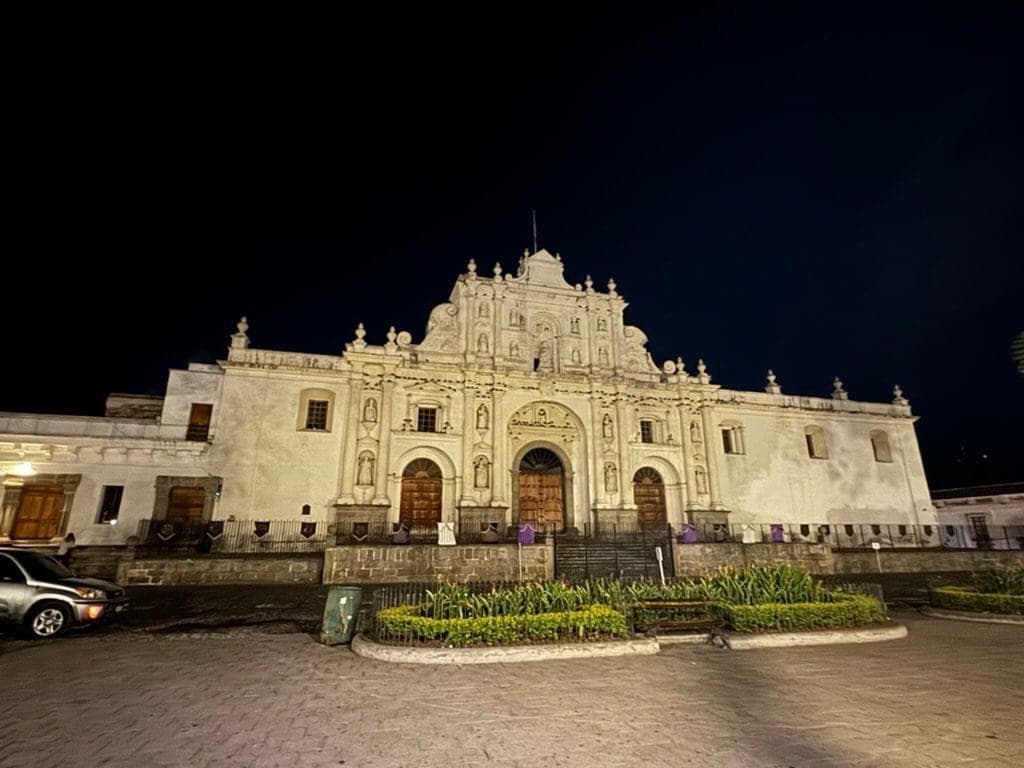
Cathedral de Santiago Antigua
