
Pacaya Volcano
Antigua 05001 Guatemala Posted by Brandon B.Admin
Hiking Pacaya Volcano: What to Expect Before You Go
Pacaya Volcano is one of the most accessible active volcanoes in Central America, and for most visitors passing through Antigua, it sits at the top of the to-do list for good reason. On a clear day you can watch lava fields cool and crack underfoot, smell sulfur drifting from the main cone, and look out over the Guatemalan highlands from an elevation that genuinely earns the view. It is roughly 23 kilometers south of Antigua, which puts it well within reach for a half-day trip.
What surprises most people is how varied the experience can be. Arrive after recent volcanic activity and the trail edges are streaked with fresh lava. Come during a quieter period and the walk becomes more about the cloud forest, the birds, and the strange lunar landscape of cooled basalt. Either way, Pacaya tends to deliver something memorable.
Quick Facts
- Elevation: approximately 2,552 meters above sea level
- Located within Parque Nacional Volcán Pacaya y Laguna de Calderas
- About 23 km from Antigua; roughly 45 minutes to an hour by vehicle
- One of Guatemala's most consistently active volcanoes
- Entry requires a national park fee paid at the trailhead
- Guides are officially required and available at the park entrance
- The main village and trailhead is San Francisco de Sales
Getting There
From Antigua, the most common option is a shuttle organized through your hostel, hotel, or one of the many tour operators along 5a Calle or La Alameda. These shuttles typically include transport and a guided ascent as a package. If you prefer to arrange things yourself, public buses run from the terminal in Antigua toward Escuintla, with a transfer point near San Vicente Pacaya, but the shuttle route is significantly easier to navigate if this is your first time in the area.
Tuk-tuks from the village of San Vicente Pacaya can also get you to the San Francisco de Sales trailhead for a small fare. Budget travelers often find this the most flexible approach if they have already made it to the village independently.
The Layout and Experience
The standard route begins at the ranger station in San Francisco de Sales, where you pay the park entrance fee and join up with a guide. From there the trail climbs through a pine and cloud forest section that takes roughly 45 minutes to an hour depending on your pace. The forest gives way to open volcanic terrain, and the gradient increases noticeably in the final push toward the crater area.
At the top, the landscape feels genuinely alien. Cooled lava fields stretch in every direction, and if activity levels permit, guides will point out areas where the ground is still warm or where molten rock is visible at close range. On active days, you can push a marshmallow or a piece of bread into a crack in the lava and watch it toast from below. This has become something of a Pacaya ritual.
The descent takes less time than the climb, and most tour groups are back at the vehicles within three to four hours of leaving the trailhead. If you want more time at the top, going independently or hiring a private guide gives you better flexibility.
Main Highlights
The lava fields
The cooled lava flows from past eruptions form the most dramatic terrain on the upper mountain. Walking across them feels unlike anything else in the region. The black basalt crunches and shifts underfoot, and the scale of the flows is easier to appreciate once you are standing in the middle of one.
Active venting and heat
Depending on current activity, there are spots where you can feel significant heat rising through cracks in the surface. Guides know which areas are safe to approach and which to avoid. Do not wander off the marked path, especially in areas where the crust looks thin or discolored.
The view from the upper cone
On a clear morning the views extend across the Guatemalan highlands, and you can often see the cones of Agua and Acatenango volcanoes from the upper sections of the trail. Agua, which sits immediately south of Antigua, is particularly striking from this angle.
History and Background
Pacaya has been erupting in some form for thousands of years. Its modern eruptive period restarted in 1961 after a long dormant stretch, and since then it has been more or less continuously active. A significant eruption in 2010 sent ash and lava flows toward surrounding communities, damaged infrastructure in the area, and temporarily closed the trail. The volcano was reopened to visitors after conditions stabilized, and it has drawn hikers steadily ever since.
The park surrounding it was established in part to protect the cloud forest on the lower slopes, which supports a range of bird species and highland flora that would otherwise be under pressure from agricultural expansion.
Best Time to Visit
The dry season, roughly November through April, offers the clearest conditions and the best chance of unobstructed views from the summit. During the rainy season, from May onward, afternoon cloud cover often rolls in quickly and can reduce visibility significantly. If you are visiting during the wet months, an early start makes a real difference. Aim to be at the trailhead by 7am or 8am most days.
Midweek visits tend to be quieter than weekends, when tour groups from both Antigua and Guatemala City converge on the trail. Sunrise hikes exist but require arranging transport and a guide the night before.
Photography Tips
The upper lava fields photograph best in the late afternoon when the light goes golden and the textures in the basalt become more defined. If there is any visible glow from active lava, low-light or dusk shots can be striking, though reaching the summit before dark requires planning and a guide comfortable with the timing.
Wide-angle lenses do well here given the scale of the terrain. The contrast between the black lava and the sky tends to be high, so be prepared to expose for the foreground or bracket your shots. Dust and ash can be an issue on windy days, so keep your lens cap on when you are not shooting.
Facilities and Preparation
There are basic facilities at the trailhead including bathrooms and a few vendors selling snacks and water. Beyond that point, you are on your own. Bring more water than you think you need, at least two liters per person. The altitude and exertion combine quickly, and the sun on the upper sections is strong.
Sturdy shoes with ankle support are important. The lava fields are uneven and sharp in places, and regular sneakers are not ideal. A light jacket or layer is worth packing even if it feels warm at the base, since the temperature at the upper cone can be noticeably cooler and windier. Long pants offer some protection against the rough terrain.
- Wear closed-toe shoes with grip, ideally hiking boots
- Bring at least two liters of water per person
- Pack a windproof layer for the upper section
- Sunscreen and a hat are essential on clear days
- Trekking poles can be rented from vendors near the entrance
- Horses are also available for hire at the trailhead if the ascent feels daunting
- Do not bring valuables you cannot afford to lose to dust or heat
Combining With Nearby Attractions
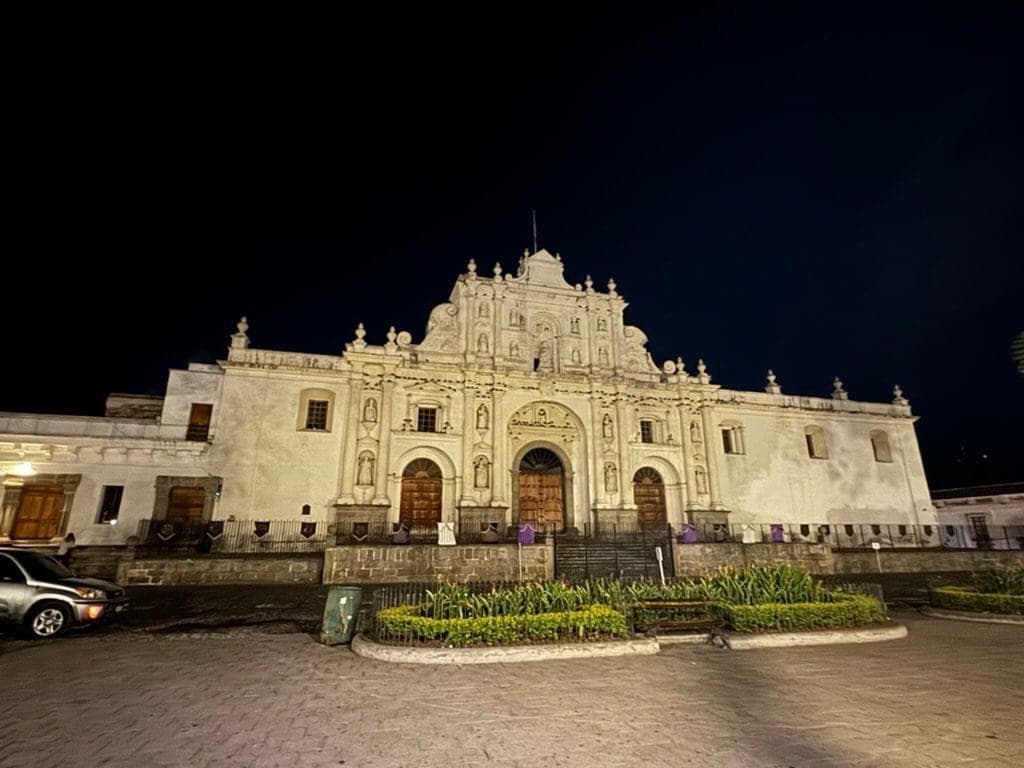
Most people pair the Pacaya hike with a day based in Antigua. The colonial city itself is worth at least two days on its own, with the ruins of the Cathedral of Santiago, the Cerro de la Cruz viewpoint, and the markets around the central plaza all within easy walking distance of one another. After a morning on the volcano, the hot springs near San Vicente Pacaya offer a natural way to wind down before heading back.
Some operators offer combined day trips that include Pacaya in the morning and a coffee plantation tour in the afternoon, which works well given the proximity of several working fincas in the highlands between the volcano and Antigua.
Practical Tips
- Confirm current volcanic activity levels before you go. INSIVUMEH, the Guatemalan volcano monitoring agency, posts regular updates.
- Guides at the entrance are officially required. Do not skip this even if the trail looks obvious.
- Go early. The trail gets crowded by mid-morning on weekends and the views are sharper before afternoon cloud builds.
- If you are booking through an Antigua tour operator, read recent reviews. Quality of guides varies noticeably between companies.
- Cash in Guatemalan quetzales is needed for the park fee and any purchases at the trailhead.
- The trail is rated moderate. Most reasonably fit adults can complete it, but it is not trivial, especially the upper section.
FAQ
Is Pacaya Volcano safe to visit?
Generally yes, though volcanic activity fluctuates. The park authorities close the trail during periods of elevated risk. Checking conditions before you go and staying with your guide during the hike are the main precautions.
Do I need to be very fit to hike it?
A moderate level of fitness is enough for most visitors. The climb takes roughly an hour to 90 minutes at a steady pace. If the ascent feels too steep, horses are available for hire near the trailhead.
Can I go without a tour?
You can arrange transport independently and hire a guide directly at the park entrance rather than booking a full tour package. This tends to be cheaper and gives you more control over your schedule.
What if it rains?
Light rain is manageable with a waterproof layer, but heavy rainfall can make the trail slippery and reduce visibility significantly. Morning departures in the rainy season reduce the chance of getting caught in an afternoon storm.
Opening hours
Reviews
Sign in and mark this place visited to leave a review.
No reviews yet.
Free Trip Planner
Plan your Antigua trip with our free planner
Build a day-by-day itinerary with AI suggestions, hand-picked places, and friends. Free forever — no credit card.
Related reading


Things to see near Pacaya Volcano

Volcan de Agua

Acatenango Volcano

Caoba Farms Restaurant

Museo Casa del Tejido Antiguo
Places to eat or drink near Pacaya Volcano

Mesón Panza Verde

Por Qué No? Cafe

Mellow coffee

Hot Chiplin Bar and Restaurant
More places in Antigua

MUNAG – Museo Nacional de Arte de Guatemala

Centro Cultural La Azotea
Cathedral de Santiago Antigua
