Biogradska Gora National Park
Montenegro Posted by Brandon B.Admin
One of Europe's Last Primeval Forests, Right in Montenegro
Biogradska Gora National Park sits in the Bjelasica mountain range in central Montenegro, and it protects something genuinely rare: one of the largest remaining old-growth forests in Europe. The park covers roughly 5,650 hectares, and at its center lies Biogradsko Lake, a glacial lake ringed by beech and fir trees that have been standing for centuries. If you've been to the manicured national parks of Western Europe, this place will feel different. Wilder. Quieter. Less managed.
The park draws hikers, nature photographers, and anyone looking to disappear into a forest that doesn't feel like a stage set. It's not a destination built around visitor infrastructure. It's a destination built around the trees.
Why Biogradska Gora Matters
The virgin forest at the core of the park has never been logged. That's not a marketing claim; it's a documented ecological fact. Some of the trees here are over 500 years old, and the forest floor has the layered complexity of an ecosystem that's been left alone for a very long time. Dead wood stays where it falls, creating habitat. Canopy gaps let light hit the ground in columns. The whole system functions the way European forests used to function before human intervention changed almost everything.
The park was established in 1952, making it one of Montenegro's oldest protected areas. It sits alongside Durmitor, Lovćen, and Lake Skadar as one of the country's four national parks, but in terms of sheer ecological weight, many biologists consider Biogradska Gora the most significant.
Quick Facts
- Location: Bjelasica mountain range, Kolašin municipality, central Montenegro
- Total area: approximately 5,650 hectares
- Elevation range: roughly 832 to 2,139 meters above sea level
- Main feature: Biogradsko Lake, a glacial lake at around 1,094 meters elevation
- Entry: paid entry for the park, with a general admission fee at the gate
- Open: accessible year-round, though services are seasonal
- Nearest town: Kolašin, about 20 kilometers away
Getting There
The most common approach is by car from Kolašin, which sits on the main Podgorica to Mojkovac road and is also a stop on the Belgrade to Bar railway line. From Kolašin, the drive to the park entrance takes roughly 25 to 30 minutes along a road that climbs into the mountains and becomes unpaved for the final stretch. A standard car handles the road fine in summer, but if you're arriving in spring or after autumn rain, check conditions first.
There's no regular public bus to the park entrance itself. If you don't have a car, a taxi from Kolašin is the practical solution, or you can arrange a guided excursion from town. Several guesthouses in Kolašin organize day trips to the park, which can include transport and a local guide.
The Layout and Experience
The park is organized around Biogradsko Lake, and that's where most visitors spend the majority of their time. A circular trail runs around the lake, and completing the full loop takes most people between 60 and 90 minutes depending on how often they stop. The path is flat, shaded almost the entire way, and wide enough that you never feel like you're scrambling. It's genuinely suitable for most fitness levels.
Beyond the lake trail, the park has several marked hiking routes that push deeper into the forest and up into the higher mountain terrain. The route toward Crno Jezero (Black Lake, separate from the one in Durmitor) and the trails toward the peaks of the Bjelasica range are for people who want a full day out rather than a gentle stroll.
There are rowing boats available for hire on Biogradsko Lake during the main visitor season, which runs roughly from late spring through early autumn. Getting out on the water gives you a view of the forest canopy that you can't get from the shore, and on calm mornings the lake surface reflects the treeline with unusual clarity.
Main Highlights
The Virgin Forest
The old-growth zone is the ecological core of the park, and walking into it for the first time tends to stop people in their tracks. The trees are massive, the understory is dense, and the overall effect is of a forest that has its own internal logic entirely separate from anything human. Fallen giants are left to rot and return to soil. There's a stillness here that's different from a managed woodland.
Biogradsko Lake
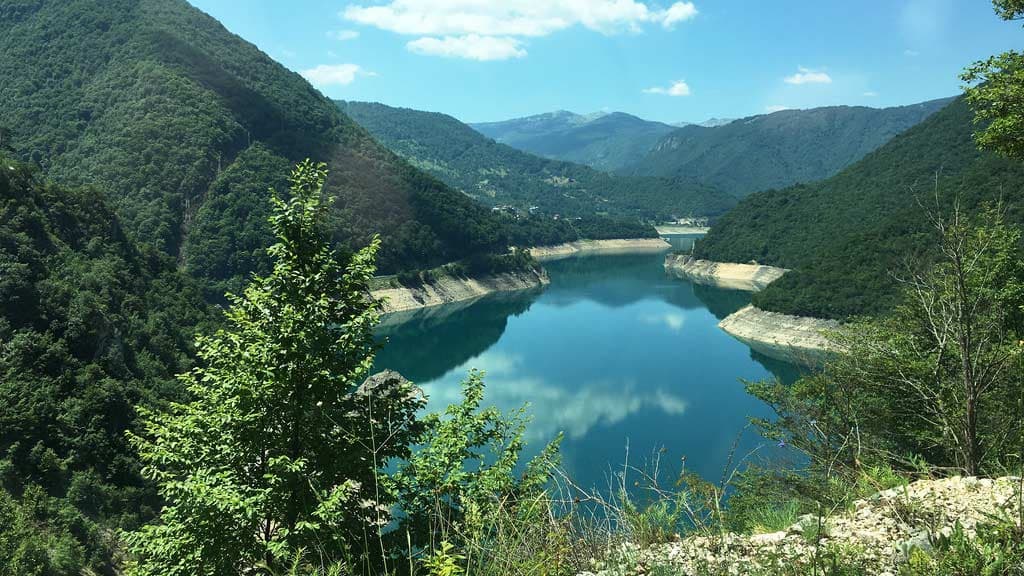
The lake itself is the visual centerpiece. Fed by mountain streams and surrounded by forest on all sides, it sits at a high enough elevation that temperatures stay cool even in July and August. The water is clear and very cold. Swimming is possible but not the point. Most people come to walk the shore, hire a boat, or simply sit at the wooden jetty and watch the light change.
Wildlife
The park supports brown bear, wolf, deer, and a range of bird species including several raptors. You're unlikely to encounter large predators on a standard day visit, but the bird life along the lake edge and in the forest interior is genuinely varied. Early morning visits tend to reward patience here more than midday arrivals.
Best Time to Visit
Late spring through early autumn is when the park is fully operational and most accessible. June and September are particularly good: the crowds are thinner than peak July and August, the weather is stable, and the forest has either its fresh early-summer color or the beginning of autumn gold coming through the canopy.
October can be spectacular if you catch the foliage at its peak. The beech forest turns a deep amber and the contrast with the lake is worth planning around. However, facilities close down as the season ends, so check what's available before you commit to a late-season visit.
Winter is technically accessible but the road conditions can be unpredictable, and the park's visitor infrastructure is largely closed. Kolašin itself becomes a ski destination in winter, so if you're in the region for the slopes, a clear-day detour to the park is possible but requires local knowledge about road conditions.
Photography Tips
The lake is at its most photogenic in early morning before the tourist boats go out and before the wind picks up. The reflections on calm days are extraordinary, and the light filtering through the forest edge on the eastern shore in the first hour after sunrise gives you something you won't replicate at midday.
Inside the old-growth forest, the challenge is contrast. The canopy blocks a lot of light, which means the forest floor is relatively dark while gaps in the trees are very bright. A wide aperture and some patience with exposure will serve you better than trying to shoot quickly. The moss-covered root systems and fallen trunks make strong close-up subjects if the landscape feels too overwhelming.
Facilities and Preparation
There is a visitor center near the park entrance, a restaurant operating during the main season, and basic toilet facilities near the lake. The infrastructure is modest by Western European standards, which is partly what makes the park feel the way it does. Don't expect a gift shop with laminated maps and a coffee chain.
Bring water, particularly if you're planning to hike beyond the lake trail. The longer mountain routes don't have reliable refreshment points. Sturdy footwear matters more than people expect; the lake trail is easy, but anything beyond it involves uneven terrain and potentially wet ground. Insect repellent is worth packing from June onward.
Combining with Nearby Attractions
Kolašin is the natural base for the area and is a pleasant mountain town in its own right. The town has a growing number of guesthouses and restaurants that cater to outdoor travelers, and the surrounding Bjelasica range offers additional hiking routes beyond the national park boundaries.
If you're moving through Montenegro more broadly, Biogradska Gora pairs well with Durmitor National Park to the northwest. The two parks are quite different in character: Durmitor is higher, more dramatic, and built around the canyon of the Tara River, while Biogradska Gora is quieter and more intimate. Doing both on a loop through northern Montenegro gives you a strong sense of how varied the country's landscape actually is.
Practical Tips
- Arrive early, especially in July and August. The lake trail gets genuinely busy by mid-morning on peak days.
- The park entrance fee is collected at the gate. Cash is the safest option to have on hand.
- Cell reception is limited inside the park. Download offline maps before you leave Kolašin.
- If you're hiking beyond the lake, let someone know your route and expected return time.
- The rowing boats on the lake are available on a first-come basis during season. If it matters to you, get there early.
- Temperatures can drop significantly in the afternoon, especially at higher elevations. A layer in your pack is worth it even in summer.
- Dogs are allowed in some areas but check current rules at the entrance, as regulations can vary by zone.
FAQ
How long do you need at Biogradska Gora?
A half day is enough to walk the lake trail, take a boat out, and spend time in the forest. A full day gives you time to tackle one of the longer hiking routes into the Bjelasica range.
Is it suitable for children?
The lake trail is flat and well-maintained, making it genuinely accessible for families with younger children. The longer mountain routes are a different proposition and suit older, more experienced hikers.
Can you stay overnight in the park?
There is accommodation available within or very close to the park during the main season, including basic cabin-style lodging. Availability is limited, so booking ahead in summer is strongly recommended.
Is the park open in winter?
The park itself is not closed, but the visitor facilities shut down outside the main season and the access road can be difficult or impassable in heavy snow. Kolašin, with its ski facilities, remains fully open through winter.
Reviews
Sign in and mark this place visited to leave a review.
No reviews yet.
Free Trip Planner
Plan your Montenegro trip with our free planner
Build a day-by-day itinerary with AI suggestions, hand-picked places, and friends. Free forever — no credit card.