Durmitor’s Deepest Gorges
Žabljak, Montenegro Posted by Brandon B.Admin
Where the Earth Splits Open: Durmitor's Deepest Gorges
Montenegro is a small country with an outsized sense of drama, and nowhere does that drama hit harder than in the gorges carved through the Durmitor massif. The canyon country around Žabljak is some of the most extreme terrain in Europe, where rivers have spent millions of years cutting through limestone to depths that make you genuinely question your perception of scale. Durmitor's deepest gorges are not a single attraction but a collection of vertiginous rifts, each with its own character, its own access points, and its own particular way of making you feel very small.
The town of Žabljak sits at roughly 1,450 meters above sea level, which makes it one of the highest towns in the Balkans. It serves as the gateway for most gorge exploration in the area, and nearly everything worth seeing is within an hour or two of driving from its modest center.
Why Durmitor's Gorges Matter
The Tara River Canyon is the headline act. Running along the northeastern edge of Durmitor National Park, it reaches depths of around 1,300 meters, which makes it the deepest canyon in Europe and one of the deepest in the world. For context, the canyon walls tower higher above the river than the Eiffel Tower stacked three times over. The Tara was designated a UNESCO World Heritage Site as part of Durmitor National Park back in 1980, and it has been a protected biosphere reserve since 1977.
But the Tara is not the only gorge worth your attention. The Komarnica Canyon, less visited and considerably more demanding to access, carves through the southern part of the park in relative obscurity. And the Sušica Gorge, shorter but hauntingly narrow, rewards the hikers who make the effort to follow it on foot.
Quick Facts
- Durmitor National Park was established in 1952 and covers roughly 390 square kilometers.
- The Tara Canyon is approximately 82 kilometers long.
- Žabljak is the main base town, located at about 1,450 meters elevation.
- The park entrance requires a fee, collected at staffed checkpoints on main access roads.
- Rafting season on the Tara typically runs from April through October, depending on water levels.
- The Đurđevića Tara Bridge, built in 1940, spans the canyon at a height of around 172 meters.
Getting There
Žabljak is about 160 kilometers from Podgorica by road, a drive that takes roughly three hours depending on the route you choose. The mountain roads are genuinely narrow in sections, and if you are driving a larger vehicle you will want to pay attention. There is no train service to Žabljak. Buses run from Podgorica and from Nikšić, though the schedule is limited, so check current timetables before committing to public transport.
If you are coming from Sarajevo or the Bosnian side, the drive through the Piva Canyon and past Šćepan Polje is spectacular in its own right. Allow extra time. You will stop.
The Layout and Experience
Think of the gorge area as several distinct experiences rather than one continuous trail. The Tara Canyon is best accessed from a few key points: the Đurđevića Tara Bridge in the north, the rafting launch zones near Brstanovica and Šćepan Polje, and the overlooks accessible by short drives off the main road. There is no single rim trail that runs the canyon's full length, so most visitors combine a viewpoint stop, a bridge walk, and either a rafting trip or a riverside hike.
The Đurđevića Tara Bridge is the most visited single spot. Walking across it takes about ten minutes, and the view straight down into the turquoise river is one of those moments that earns its reputation. There is also a zip line operating from the bridge if you want a more visceral relationship with the drop.
For the Komarnica Canyon, expect rougher roads and fewer facilities. It is the kind of place where you should have a full tank, a paper map as backup, and a realistic sense of your own hiking ability. The reward is near-total solitude and canyon walls that feel genuinely untouched.
Main Highlights
Tara River Canyon
Rafting the Tara is the classic experience. Most operators run two-day trips that include camping overnight on the riverbank, which gives you the canyon in the early morning light when the mist sits low on the water. Single-day trips are available but cover less of the canyon. The water is cold even in summer, and the rapids range from gentle floats to legitimate whitewater depending on the section and the season.
Đurđevića Tara Bridge
Built during World War II and opened in 1940, this arch bridge was for a time the largest reinforced concrete arch bridge in Europe. It was partially blown up during the war and later rebuilt. Standing at the center of it and looking north or south along the canyon is one of the defining images of Montenegro. Arrive early in the morning to avoid the tour buses that tend to arrive mid-morning from the coast.
Sušica Gorge
This one requires actual walking. The trail through the Sušica Gorge starts near the village of Crno Jezero and follows the river through a narrow limestone corridor. It is not technically demanding, but the path gets slippery after rain and the gorge narrows to the point where the walls feel close enough to touch. Allow at least a half day if you want to go deep into it and return comfortably.
Best Time to Visit
Late spring and early summer, roughly May through June, give you the best combination of full rivers, green canyon walls, and manageable crowds. July and August bring the peak of Montenegrin summer tourism, and while the gorges themselves never feel overcrowded the way a beach resort does, the roads around Žabljak and the bridge viewpoint get busy.
September is arguably the best month. The light is lower and warmer, the tourist numbers drop noticeably, and the deciduous trees on the canyon slopes start shifting color. Rafting is still possible through most of October if water levels cooperate.
Winter closes many of the mountain access roads and most rafting operators shut down entirely. The bridge and the canyon overlooks remain accessible in good conditions, and the snow-covered rim with the turquoise river far below is genuinely extraordinary if you are equipped for it.
Photography Tips
The Tara Canyon is deeply shadowed for much of the day because the walls are so high. If you are shooting from the river level, the best light tends to be in the two hours after sunrise and the hour before sunset, when direct light catches the upper canyon walls while the river is still in softer shadow. From the bridge, midday light actually works reasonably well since you are shooting down rather than across.
For the wide canyon views from the rim, a longer lens lets you compress the depth and make the river look appropriately tiny far below. A polarizing filter helps cut the glare off the turquoise water on bright days.
Combining with Nearby Attractions
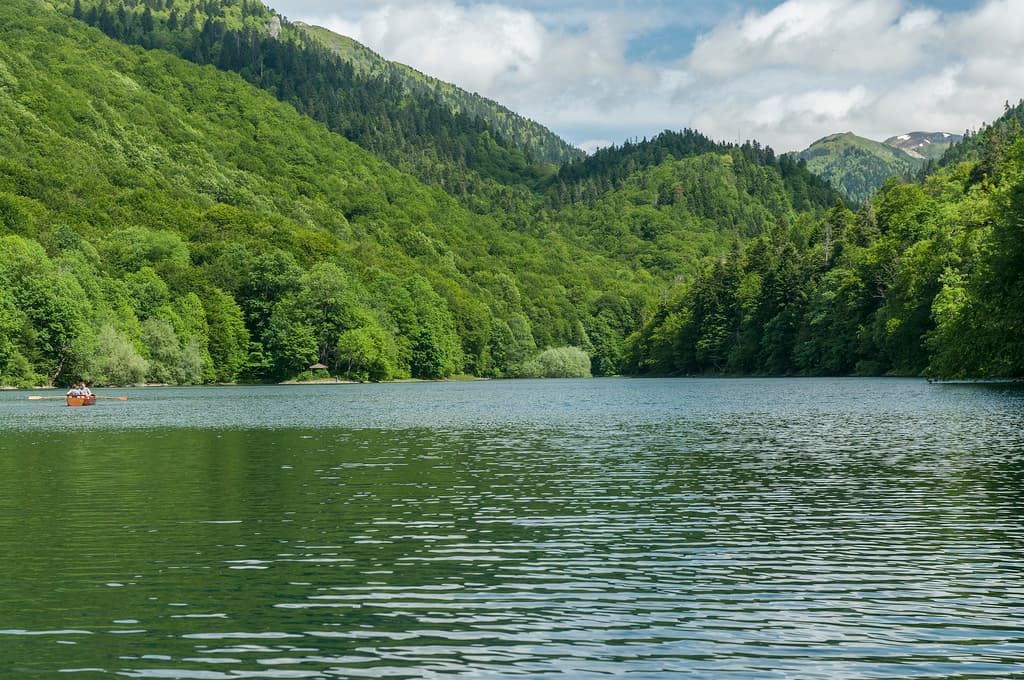
Durmitor National Park contains 18 glacial lakes, and Black Lake (Crno Jezero) is only about three kilometers from Žabljak's center. It is an easy add-on to any gorge day and takes less than an hour to walk around. The Bobotov Kuk peak, at 2,523 meters the highest point in Durmitor, is a full-day hike from the park and worth it if you have the fitness and the right weather window.
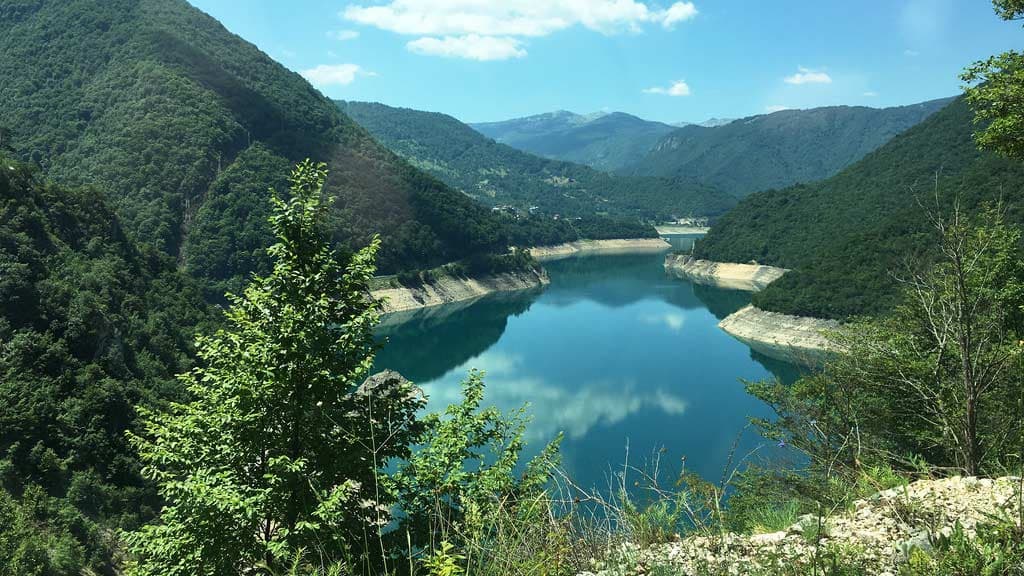
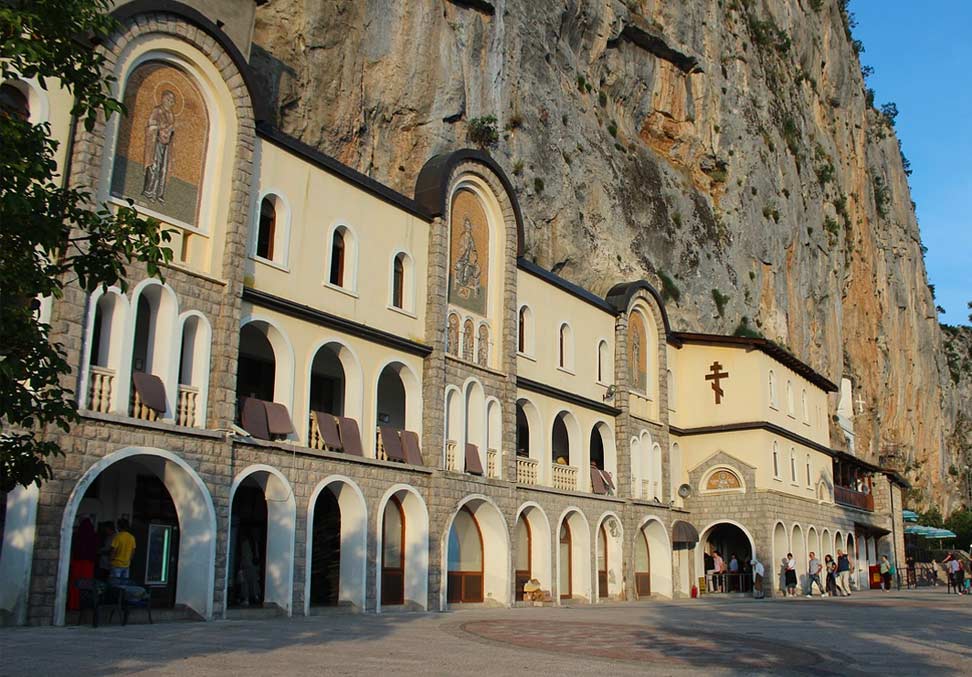
The Piva Canyon and Piva Monastery to the southwest make a strong combination if you are spending several days in the region. The monastery was relocated stone by stone in the 1970s to save it from the rising waters of the Piva Lake reservoir, which is a story worth knowing before you visit.
Practical Tips
- Pay the national park entrance fee when you arrive. It covers your stay and is required for access to most facilities and trails.
- Book rafting trips at least a few days ahead in July and August. Reputable operators in Žabljak fill up quickly during peak season.
- Bring layers regardless of the season. Temperatures at canyon rim level and river level can differ significantly, and afternoon storms roll in fast in summer.
- The roads to Komarnica Canyon are not suitable for standard rental cars. A high-clearance vehicle makes a real difference.
- Mobile signal is unreliable in the deeper gorge sections. Download offline maps before you leave Žabljak.
- Wear shoes with grip on any gorge trail. The limestone becomes extremely slippery when wet.
- If you are doing a rafting trip, bring a dry bag. Even on calmer sections, water comes into the raft.
FAQ
Do I need a guide to visit the gorges?
For the main viewpoints and the Đurđevića Tara Bridge, no guide is necessary. For multi-day rafting trips, all reputable operators provide guides as part of the package. For remote trails like the Komarnica Canyon, hiring a local guide is strongly advisable.
Is the Tara Canyon suitable for non-swimmers or people afraid of heights?
The bridge viewpoints and rim overlooks involve no water and no climbing, so they are accessible to almost everyone. Rafting requires comfort on the water and is not recommended for non-swimmers without discussing it with your operator first.
How long should I budget for the gorge area?
A minimum of two full days lets you do the bridge, a rim viewpoint, and a half-day hike. Three to four days gives you time for a rafting trip and the surrounding lakes and peaks without feeling rushed.
Can I swim in the Tara River?
Yes, in calmer sections during summer, and the water is famously clear. It is also very cold year-round, fed by snowmelt from the Durmitor massif. Most rafting operators build in swim stops on the calmer stretches.
Reviews
Sign in and mark this place visited to leave a review.
No reviews yet.
Free Trip Planner
Plan your Montenegro trip with our free planner
Build a day-by-day itinerary with AI suggestions, hand-picked places, and friends. Free forever — no credit card.