Church of Saint Mary of the Assumption
Closed now
Church of Saint Mary of the Assumption
P.za Flavio Gioia, 84017 Positano SA, ItalyWalk down the main street of Positano and the church reveals itself suddenly, its dome catching the light like a beacon above the pastel-colored houses stacked down the cliff. The Church of Saint Mary of the Assumption sits at the heart of this vertical village on the Amalfi Coast, and its pale majolica-tiled cupola has been the visual anchor of Positano for centuries. You'll find it tucked into Piazza Flavio Gioia, the closest thing the town has to a central square, surrounded by the narrow lanes and steep staircases that define the place.
Why this place matters
The Church of Saint Mary of the Assumption is the spiritual center of Positano and one of the defining architectural landmarks of the Amalfi Coast. Its distinctive dome, covered in yellow and green majolica tiles, is visible from almost anywhere in town and from boats on the water. The church has stood here since at least the 13th century, though the current structure reflects centuries of rebuilding and renovation. For visitors, it represents the deep connection between this community and the sea, with the interior reflecting both religious devotion and the artistic traditions of southern Italy.
Quick facts
- Location: Piazza Flavio Gioia, the main public square of Positano
- Built: Current structure dates to the 17th century, though a church has occupied this site since the medieval period
- Notable feature: Majolica-tiled dome in yellow and green, a signature element of the Amalfi Coast's architectural style
- Entry: Free to enter during standard opening hours
- Distance from coast: A few minutes' walk from the main beach and harbor area
Getting there
If you're arriving in Positano by car, head to one of the paid parking areas at the top of town. From there, it's a steep walk downhill through the village's signature pedestrian lanes. The church sits in the main square, so you can't miss it once you're in the center of town. By SITA bus from Salerno or Amalfi, ask the driver to let you off at the main stop in Positano, then follow the crowds down toward the water. The square is accessible from multiple staircases and alleyways that connect the upper and lower parts of town.
The layout and experience
The church sits at a slight elevation above the beach, facing the sea. The exterior is modest compared to grander churches elsewhere in Italy, but the dome commands attention. The entrance is simple and opens directly into the interior from the piazza.
Inside, the space is surprisingly intimate for a parish church. The ceiling rises to meet the dome, creating a sense of height that contrasts with the narrow streets outside. Light filters through small windows and illuminates the interior in a way that changes throughout the day. The walls hold religious artwork accumulated over centuries, though the specific pieces and their arrangement can shift as the church undergoes periodic restoration.
The marble floor and simple columns give the space a classical dignity. You'll notice the acoustic quality immediately if someone is praying or a service is underway. The church remains actively used for worship, which shapes the atmosphere you'll experience as a visitor.
History and background
A church dedicated to Mary has occupied this site since medieval times, though the exact founding date is difficult to pin down. The structure visible today took shape during the 17th century, when many coastal communities rebuilt their religious centers after centuries of raids and instability. The majolica dome was added later and has become the defining visual element of Positano itself.
The church reflects the artistic traditions of the Kingdom of Naples, particularly the use of glazed ceramic tiles in architectural decoration. This style appears throughout the Amalfi Coast, but the Church of Saint Mary's dome remains one of the most recognizable examples. The interior has been modified and restored multiple times over the past 300 years, incorporating different artistic periods and devotional practices.
The church's connection to the sea is literal and historical. Positano developed as a fishing and maritime trading village, and the church served as a landmark for sailors and as a place of prayer for families whose livelihoods depended on the water. The positioning of the building reflects this relationship, with the sea visible from the square and the church acting as a visual anchor for the entire community.
Best time to visit
Early morning tends to be quieter, especially before 9 AM, when you can sit in the church with minimal foot traffic. By mid-morning, tour groups begin arriving, and the piazza fills with visitors. Late afternoon, after 5 PM, sees another quieter period as day-trippers head back to their hotels. The light in the late afternoon creates particularly striking angles on the dome.
If you want to experience a service, attend on a Sunday morning, though this means sharing the space with the local congregation. Check ahead if a particular service time matters to you.
Weather-wise, the church is worth visiting in any season. Summer brings crowds but also the brightest light on the dome. Winter and shoulder seasons offer fewer tourists and a chance to see how locals actually use the space.
Photography tips
The dome is best photographed from the piazza itself, ideally in late afternoon when the sun catches the majolica tiles. The angle from the water looking back at the church is also iconic, though you'll need to book a boat tour or water taxi to access it. The interior photographs well if you have permission and respect any restrictions on flash photography.
The narrow lanes around the church frame it in interesting ways, so explore the alleyways leading up and down to find different perspectives. The dome appears in shots from all over town, so if you're photographing the broader landscape of Positano, the church will likely feature.
Facilities and preparation
The piazza has a few cafes and restaurants around its edges, so you can grab coffee or a snack before or after your visit. Restroom facilities are limited in the immediate area, though nearby cafes may allow customers to use their facilities. The church itself has no gift shop or visitor center.
Wear comfortable walking shoes, as reaching the church involves navigating Positano's steep and irregular staircases. If you have mobility concerns, ask locals for the least strenuous route, or consider visiting as part of a guided tour that can accommodate different needs.
Modest dress is appropriate, though enforcement is minimal. Covering shoulders and knees is respectful, particularly if a service is taking place.
Combining with nearby attractions
The church sits within a few minutes' walk of Spiaggia Grande, Positano's main beach. You can easily combine a church visit with time on the sand or a meal at one of the beachfront restaurants. The nearby shops and galleries along the main pedestrian lane offer browsing time if you want to extend your stay in the area.
If you're interested in art and design, the boutique galleries scattered throughout Positano's lanes often feature work by local and regional artists. The narrow streets themselves are worth exploring for the architecture and views they reveal.
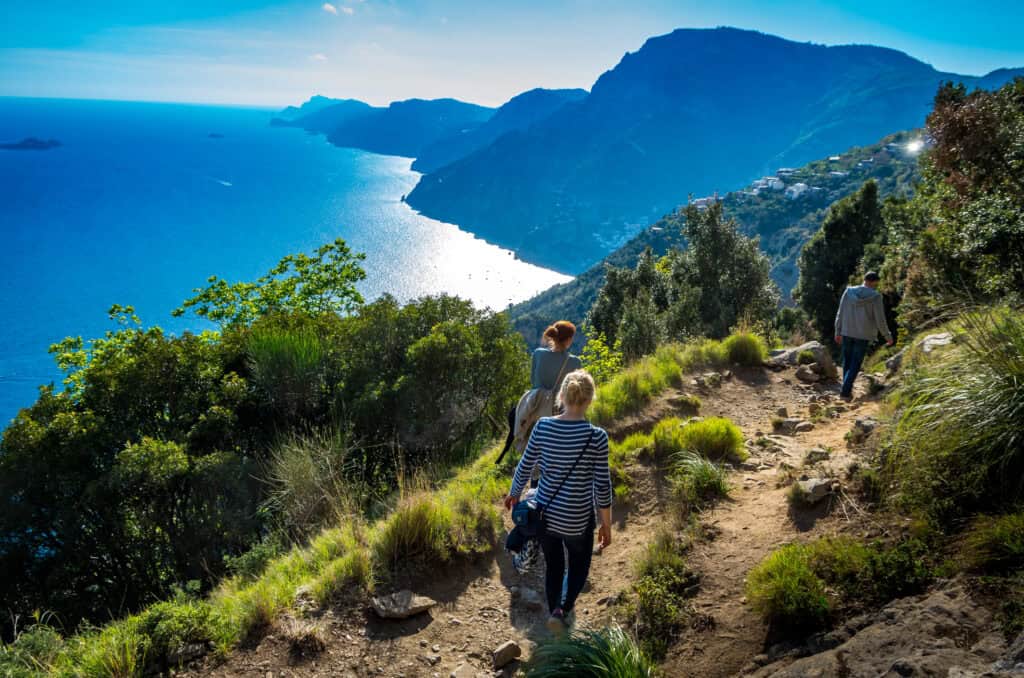
Hiking trails leading up and out of Positano offer opportunities to see the church and town from above. The Path of the Gods (Sentiero degli Dei) connects Positano to Praiano and offers vistas where the church appears in the context of the entire coastal landscape.
Sample visit plan
Arrive in Positano by late morning. Park or take the bus to the main area, then spend 30 minutes exploring the upper pedestrian lanes to get oriented. Visit the Church of Saint Mary of the Assumption and spend 20 to 30 minutes inside and examining the exterior from the piazza. Grab lunch at a piazza-side restaurant or cafe. In the afternoon, either relax on Spiaggia Grande or take a short hike for views of the town and church from above. If you're driving, head out before evening traffic builds up on the coastal road.
Practical tips
- The piazza can be crowded during midday hours in summer. Visit early or late in the day for a quieter experience.
- The church is free to enter but functions as an active parish church, so be respectful of services or private prayers taking place.
- Bring water, especially in summer. The steep terrain and narrow lanes can be physically demanding.
- If you're visiting on a specific religious holiday or feast day, the church and piazza may be busier than usual or hosting special events.
- Cash is useful in Positano, though many restaurants and shops now accept cards.
- The coastal road to and from Positano is narrow and winding. If you're driving, allow extra time and consider taking the bus if you're uncomfortable with tight curves.
FAQ
How long should I spend at the Church of Saint Mary of the Assumption? Plan for 20 to 30 minutes inside the church, plus time to sit in the piazza and photograph the exterior. If you're combining it with other activities in Positano, you might spend an hour or more in the immediate area.
Is the church accessible if I have limited mobility? Access to the church requires navigating steep and irregular staircases typical of Positano. If stairs are difficult, ask locals or your hotel for the most direct route, or consider whether a guided tour can provide alternative access.
Can I attend a service? Yes, the church is an active parish church. Sunday mornings typically feature services. Visiting during a service is welcome if you're respectful, though you may want to check ahead for specific times.
Is photography allowed inside the church? Photography is generally permitted in the interior, though it's respectful to avoid flash if a service is taking place. Always be mindful of people praying.
When is the best time to see the dome lit up? Late afternoon, particularly in summer, provides the best light on the majolica tiles. The dome is also beautifully lit after dark during evening hours.
Opening hours
Reviews
Sign in and mark this place visited to leave a review.
No reviews yet.
Free Trip Planner
Plan your Positano trip with our free planner
Build a day-by-day itinerary with AI suggestions, hand-picked places, and friends. Free forever — no credit card.