
Egon Schiele Art Centrum
Closed now
Egon Schiele Art Centrum
Široká 71, 381 01 Český Krumlov-Český Krumlov 1, CzechiaOverview
The moment you walk through the entrance of the Egon Schiele Art Centrum, you're confronted with the artist's intensity. His portraits stare back with unsettling directness, the brushwork aggressive and raw, the bodies twisted into impossible angles. This is not a museum designed to soothe or inspire in the conventional sense. It's a space built around one of the 20th century's most provocative artists, housed in a Renaissance building on Široká Street in the heart of Český Krumlov's old town, where Schiele himself lived briefly and worked feverishly.
The Centrum occupies a restored townhouse that feels intimate in scale but demands your full attention. Walking through its rooms, you move chronologically through Schiele's output: from his earliest drawings and sketches to his mature works, from his time in Český Krumlov to his brief life in Vienna and beyond. The collection isn't comprehensive in the way a major museum might be, but that's part of its power. It focuses on what matters most: the work itself, presented with minimal curatorial flourish.
Why this place matters
Egon Schiele died in 1918 at 28, having produced an astonishing volume of work in his short career. He's often overshadowed by his contemporaries Klimt and Kokoschka, yet his influence on modern art runs deeper than many realize. His obsession with the human body, his willingness to distort form for emotional truth, and his explicit engagement with sexuality and death shaped Expressionism and continues to unsettle viewers today.
Schiele spent time in Český Krumlov between 1910 and 1911, a period of relative creative stability and also scandal. The town itself became part of his artistic vocabulary. By locating this Centrum here rather than in Vienna or Prague, the institution stakes a claim: this place mattered to Schiele, and his presence in it matters to understanding him.
Quick facts
- Address: Široká 71, Český Krumlov
- Located in the old town, a short walk from the castle and bridge
- Founded in 1993
- Housed in a Renaissance building dating to the 16th century
- General admission available; timed entry may apply during peak season
- Guided tours available in Czech and English
- No photography allowed inside the exhibition spaces
- Average visit duration: 1 to 2 hours
Getting there
If you're already in Český Krumlov's old town, the Centrum is impossible to miss. Široká Street runs through the historic core, and the building announces itself clearly. From the main town square (Náměstí Svornosti), head downhill toward the river, and Široká intersects naturally with your path. The walk takes less than five minutes from the square.
If you're arriving by bus or car, park in one of the designated lots at the town's edge. Český Krumlov's old town is closed to through traffic, so you'll walk the final stretch. The cobblestone streets are steep and uneven in places, particularly as you descend toward the river, so wear shoes with good grip and footing.
The layout and experience
The Centrum spreads across three floors of the Renaissance townhouse. The ground floor typically hosts temporary exhibitions and often features works by Schiele's contemporaries or artists he influenced. The upper floors house the permanent collection, organized roughly chronologically and by theme.
Each room is relatively modest in size, which intensifies the experience. You're not wandering through cathedral-scale halls. Instead, you move from intimate space to intimate space, and the work dominates the room. The paintings and drawings are hung at eye level, close enough to see the actual texture of the paper, the hesitation marks in pencil, the way watercolor has bled across a surface.
The second floor contains some of Schiele's most arresting self-portraits and figurative works. The third floor often includes works on paper, including sketches and studies. The progression feels deliberate, moving from the public and finished toward the private and exploratory.
Lighting is natural where possible, and the Centrum respects the works without overdoing theatrical effects. This restraint makes the art speak more clearly than it might in a more aggressively curated space.
Main highlights
Schiele's self-portraits are the collection's anchors. He returned to his own image obsessively, sometimes multiple times in a single day. You'll see versions of himself at different ages, in different emotional states, with different levels of distortion. Some are almost naturalistic; others push the body into contortions that seem to express internal anguish. The progression across the walls tells you something essential about how he saw himself and what he was trying to communicate.
The drawings and watercolors on the upper floors deserve as much attention as the paintings. Schiele was a draughtsman of extraordinary skill, and his line work is hypnotic. A single figure might be rendered with just a few strokes, yet the economy of line conveys more psychological information than a fully rendered portrait might.
The Centrum also displays works connected to his time in Český Krumlov itself. Landscapes of the town, studies of the river and the bridge, portraits of locals. These pieces show Schiele in a different register than his Vienna work: less frantic, more rooted in observation. They're quieter, but no less intense.
Temporary exhibitions rotate regularly, bringing in related works or exploring Schiele's influence on later artists. Check what's on during your visit if you have time for a second pass through the building.
History and background
Egon Schiele was born in 1890 in Tulln, Austria, and moved to Vienna as a teenager to study art. By his early twenties, he was already exhibiting and attracting attention for his radical approach to figuration. Unlike many of his peers, he didn't soften his vision for commercial appeal or critical favor. His work was controversial from the start, and the explicit sexual content of some drawings led to legal trouble in 1912.
He came to Český Krumlov in 1910, likely drawn by the town's beauty and relative isolation. He lived here for several months, producing hundreds of works. The relationship between Schiele and the town was complicated. He was fascinated by the landscape and the people, but the townspeople were wary of his intensity and his unconventional lifestyle. Still, this period was remarkably productive.
Schiele returned to Vienna and continued working at a feverish pace until his death from influenza in 1918. He was married just days before his death. In the years immediately following, his work was largely forgotten or condemned. It wasn't until much later that his significance was fully recognized. The Centrum opened in 1993, more than 70 years after his death, as part of a broader reassessment of his legacy.
Tickets and entry
Entry to the Centrum is by general admission ticket, with discounts available for students, children, and seniors. The price tier is mid-range, comparable to other regional art museums in Central Europe. Timed entry tickets are sometimes required during peak season (summer months and around major holidays), so booking ahead online is advisable if you're visiting in July or August.
Guided tours are available in English and Czech, typically lasting 45 minutes to an hour. These tours offer context that can deepen your engagement with the work, particularly if you're unfamiliar with Schiele's life and artistic development. Tours can be booked at the entrance or, during busy periods, arranged in advance.
Photography is not permitted inside the exhibition spaces, a policy that reflects the Centrum's commitment to preserving the integrity of the works and the viewing experience. You can photograph the exterior of the building and the entrance area.
Best time to visit
Český Krumlov itself is busiest in July and August, when the narrow streets fill with tour groups. If you prefer a quieter experience with the Schiele work, visit in shoulder season: May, June, September, or early October. The weather is mild, the light is good, and the crowds are manageable.
Winter months (November through March) are quiet but gray. The old town takes on a moody atmosphere that actually complements Schiele's aesthetic, though the short days mean you'll have less daylight to explore afterward.
Avoid visiting on rainy days if you're planning to spend time wandering the town afterward, as the cobblestones become slippery and the narrow streets can feel claustrophobic in bad weather.
Photography tips
As noted, no photography is allowed inside the Centrum itself. However, the building's exterior is worth capturing, particularly from the street looking up at the façade and the windows. The surrounding architecture of Široká Street provides good context shots that show how the Centrum sits within the broader old town.
If you're documenting your visit to Český Krumlov, the views from the castle grounds and from the bridge over the Vltava River are the most iconic. The Centrum itself is part of the fabric rather than a standalone landmark, so it photographs best as part of the streetscape rather than in isolation.
Facilities and preparation
The Centrum is housed in a historic building, which means tight staircases, uneven floors, and limited elevator access. If you have mobility issues, contact the Centrum in advance to discuss what's accessible. The building does not have an elevator to all floors.
There is a small shop at the entrance selling exhibition catalogs, postcards, and books about Schiele. The selection is curated but modest. Restroom facilities are available for visitors.
The Centrum has no café, so plan to eat before or after your visit. Český Krumlov has numerous restaurants, cafés, and pubs within a short walk. The old town is compact, and you'll find food options easily.
Dress in layers. The building can feel cool even in summer, and the stone walls don't retain heat well. In winter, bring a warm jacket; the interiors are heated but not aggressively so.
Combining with nearby attractions
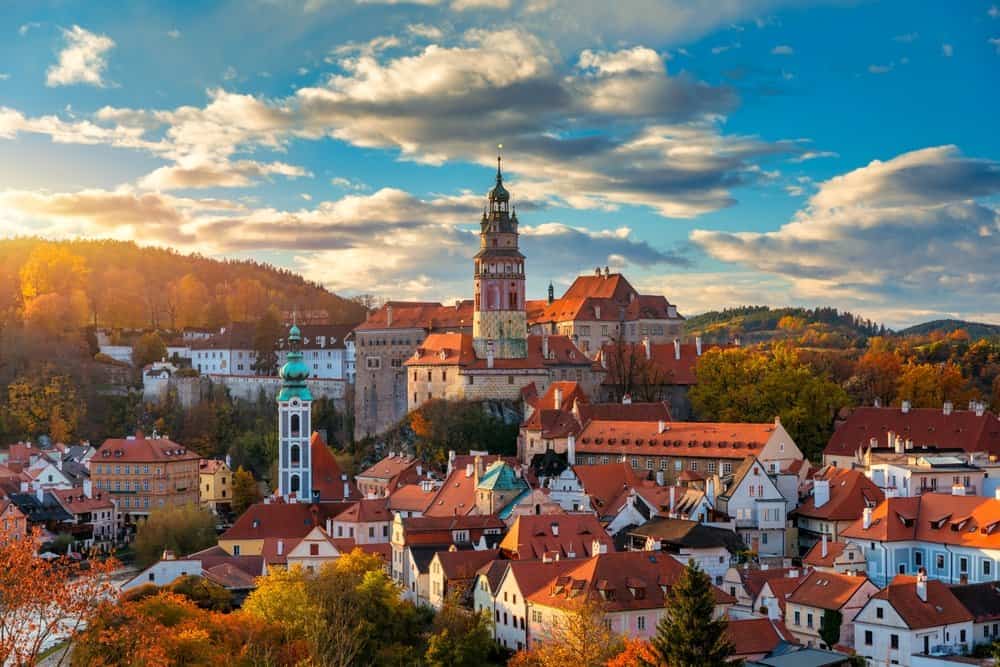
Český Krumlov Castle is the dominant landmark, perched on a hill overlooking the old town. A visit to the Centrum pairs naturally with a tour of the castle and its grounds, though that's a full day activity on its own. The castle offers views over the town and the river that contextualize what you've seen in the Centrum.
The old town itself is worth two to three hours of walking and exploring. The bridge (Krčený Most) is the most photographed spot, and the narrow lanes around it are lined with small galleries, shops, and cafés. Spend time wandering without a map; the town is small enough that you won't get truly lost, and the aimless exploration often yields the best discoveries.
The Vltava River is beautiful in this stretch, and if you have time, a walk along the riverbank or a boat ride offers a different perspective on the town's setting. Several operators offer short boat tours from the town center.
Sample visit plan
If you have a full day in Český Krumlov, structure it like this: Start with the Egon Schiele Art Centrum in the morning, when your mind is freshest and the crowds are lighter. Allow 1.5 to 2 hours. Take a lunch break at a local restaurant or café. In the afternoon, explore the old town on foot, including the castle grounds and the bridge area. If energy remains, visit one of the small galleries or museums in the old town. End the day with a walk along the river at golden hour.
If you have only a few hours, prioritize the Centrum and a walk across the bridge and through the main square. Skip the castle interior if time is tight; the exterior views from various vantage points convey its scale and character sufficiently.
Practical tips
- Book timed entry tickets online if visiting in summer; walk-up tickets may not be available during peak hours
- Wear comfortable walking shoes; Český Krumlov's streets are steep and cobblestoned
- Consider a guided tour if you're unfamiliar with Schiele; context enriches the experience significantly
- Bring cash; not all small shops and cafés in town accept cards
- Visit the Centrum in the morning if possible; afternoon light through the windows can create glare on some works
- Allow time to simply sit with individual pieces rather than moving quickly through rooms
- The old town is closed to cars; park at the designated lots at the town's edge and walk in
FAQ
How long does a typical visit to the Egon Schiele Art Centrum take? Most visitors spend 1 to 2 hours inside, depending on whether you take a guided tour and how closely you examine each work. Budget extra time if you want to linger with particular pieces.
Is the Centrum suitable for children? This depends on the child's age and exposure to Expressionist art. The work is emotionally intense and sometimes sexually explicit. Older teenagers with interest in modern art will likely engage with it; younger children may find it unsettling.
Can I see a significant portion of Schiele's work here? The Centrum holds one of the better collections of his work outside Vienna, but it's not exhaustive. It represents his practice well and includes key works, but a comprehensive view of his output would require visits to multiple institutions.
What if I'm not familiar with Schiele's work before visiting? The Centrum is designed to be accessible to newcomers. The permanent collection is organized chronologically, which helps you follow his development. A guided tour is especially valuable if you're coming in without background knowledge.
Are there restaurants or cafés inside the Centrum? No. There is a small shop with catalogs and books, but no food service. Plan to eat in one of the many restaurants and cafés within the old town, just a short walk away.
Opening hours
Reviews
Sign in and mark this place visited to leave a review.
No reviews yet.
Free Trip Planner
Plan your Český Krumlov 1 trip with our free planner
Build a day-by-day itinerary with AI suggestions, hand-picked places, and friends. Free forever — no credit card.
Things to see near Egon Schiele Art Centrum



Places to eat or drink near Egon Schiele Art Centrum
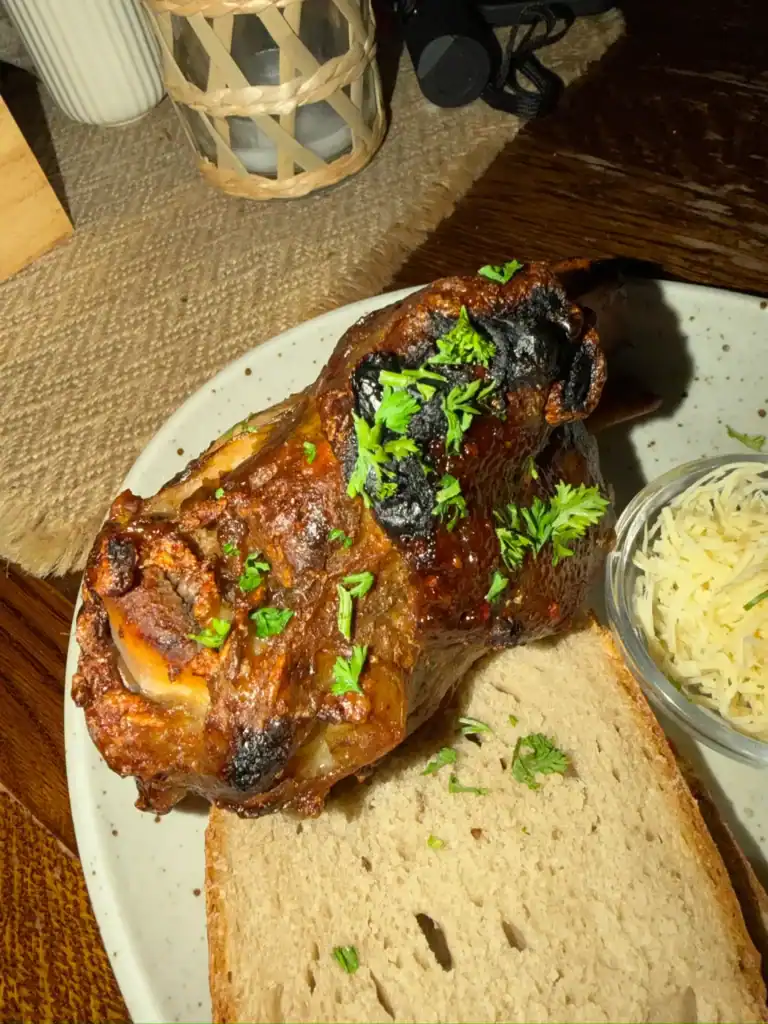
Penzion a restaurace Maštal

Masná 130 House﹠Café

Drunken Coffee


