
Mexico City Travel Guide
Mexico City sits at over 2,200 meters above sea level in a mountain-ringed valley, and it holds around 9 million people within the city limits and more than 21 million across the greater metro area. This Mexico City travel guide is built for travelers who want more than the highlight reel of Frida Kahlo's Casa Azul and tacos al pastor, though you'll want both of those too. The city sprawls across sixteen boroughs, called alcaldías, and moves at a pace that rewards people who slow down enough to actually taste the food, sit in the plazas, and let the metro system do the heavy lifting.
What makes CDMX (as most locals call it) different from other Latin American capitals is the layering. Aztec ruins sit under colonial churches which sit near Art Deco apartment blocks and glassy financial towers. You can eat a five-course tasting menu at a restaurant ranked among the world's best one night and stand at a street cart eating tacos de canasta for less than the price of a bottle of water the next morning.
When to Visit
Mexico City has a temperate highland climate, so it never gets brutally hot or bitterly cold, but the seasons still matter. The dry season runs roughly from November through April, with clear skies and daytime temperatures usually landing between 20 and 26 degrees Celsius. Nights in December and January can dip close to freezing, especially if you're out late in open-air spots, so pack a jacket even if the days feel mild.
The rainy season stretches from May to October, and it tends to follow a predictable pattern: sunny mornings followed by short, heavy afternoon downpours, often around 4 or 5pm. It rarely rains all day, so this isn't a season to avoid outright, just one to plan around with an umbrella and flexible afternoon plans.
Día de los Muertos, held around November 1st and 2nd, transforms the city with marigold altars, the Reforma parade, and packed cemeteries in neighborhoods like Mixquic. Independence Day on September 16th brings fireworks and a massive gathering at the Zócalo the night before. If you want thinner crowds and lower hotel rates, aim for late January through March or June, avoiding the Christmas and Easter holiday weeks when many locals travel and some businesses close.
Where to stay
Roma Norte and Condesa are the two neighborhoods most first-time visitors gravitate toward, and for good reason. Both are leafy, walkable, full of Art Deco buildings from the 1930s and 40s, and packed with cafes, bars, and independent restaurants. Condesa has a slightly quieter, more residential feel around its oval park, Parque México, while Roma Norte leans a bit more into gallery spaces and natural wine bars along streets like Álvaro Obregón.
Polanco is the upscale option, home to some of the city's most acclaimed restaurants, luxury shopping along Avenida Presidente Masaryk, and the Soumaya and Jumex museums. It's polished and a bit more corporate feeling than Roma or Condesa, but convenient if you want proximity to Chapultepec Park, which at over 686 hectares is one of the largest urban parks in the Western Hemisphere.
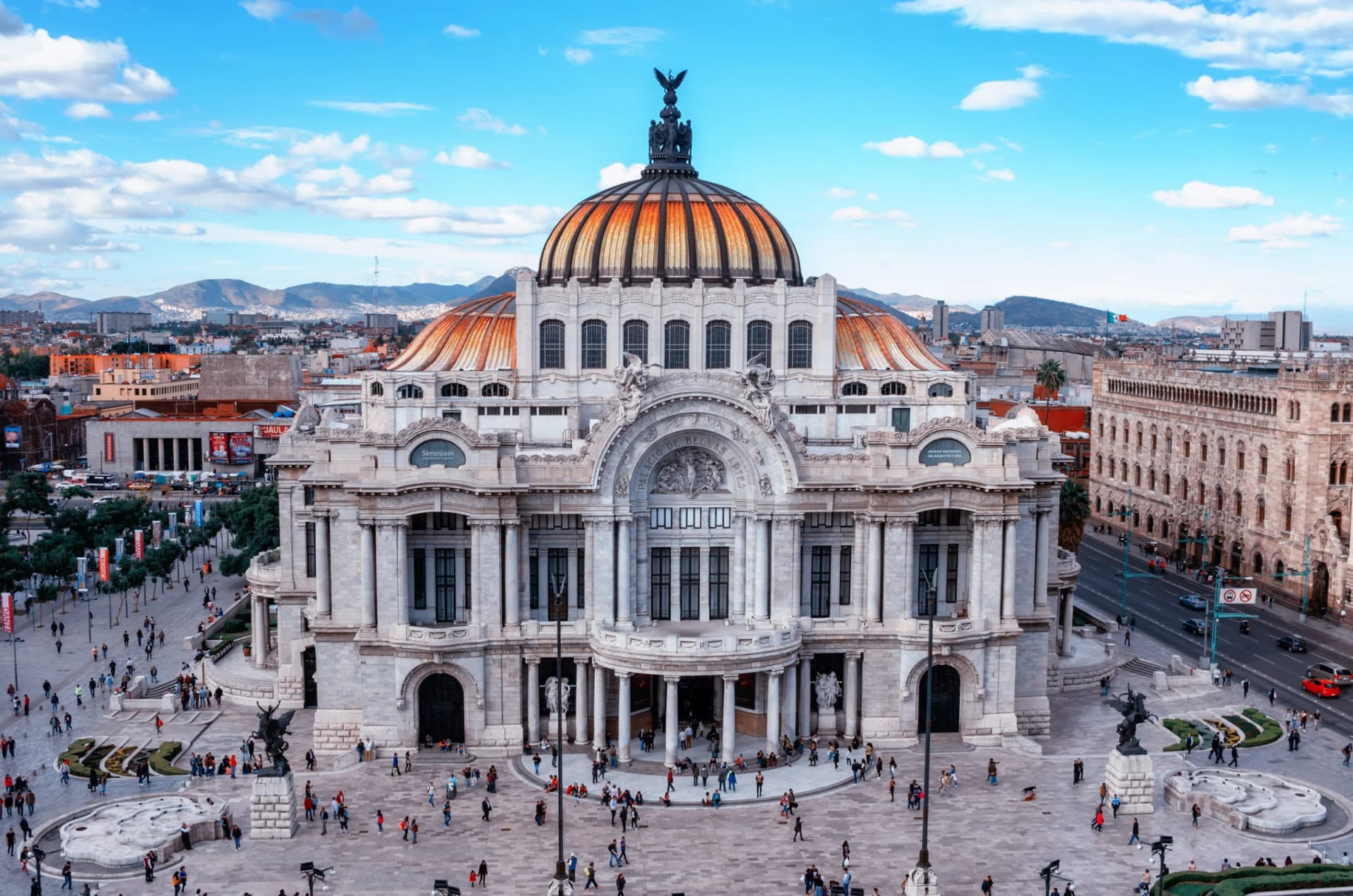
The Centro Histórico puts you within walking distance of the Zócalo, the Templo Mayor ruins, and the Palacio de Bellas Artes. It's louder and more chaotic after dark, and hotel quality varies more than in Roma or Condesa, but it's unbeatable for history-focused stays and tends to be more budget-friendly.
Roma Norte / Condesa: best for food, nightlife, walkability, and boutique hotels
Polanco: best for luxury stays, fine dining, and museum access
Centro Histórico: best for historic sightseeing and budget travelers
Coyoacán: quieter, cobblestoned, good base for Frida Kahlo Museum visits, but farther from the main nightlife zones
How to reach the destination
Most international travelers arrive through Mexico City International Airport (AICM), also called Benito Juárez, which sits about 30 to 45 minutes from the city center depending on traffic and time of day. A newer option is Felipe Ángeles International Airport (AIFA), roughly an hour north of downtown, which has taken on more domestic and some international routes since opening in 2022, though it involves a longer transfer into the city.
From AICM, official airport taxis, the Metrobús, or ride-hailing apps are all viable ways into town. If you're using a ride-hailing app, it's generally easier and cheaper to walk to the departures level or a designated pickup zone rather than hailing from arrivals, where rates can be inflated.
Long-distance buses are a solid option if you're arriving overland from other parts of Mexico. The city has four major bus terminals, one for each cardinal direction (Norte, Sur, Oriente, Poniente), served by comfortable first-class lines. Many travelers coming from the US drive across the border and continue south by car, though driving into the city itself is rarely worth the hassle given the traffic and parking situation.
Getting around the destination
The Metro is the backbone of getting around, with 12 lines covering most of the urban core and fares priced low enough that a ride costs a fraction of what you'd pay for a similar trip in most world capitals. It gets seriously crowded during rush hour, roughly 7 to 9am and 6 to 8pm, and the first two cars on each train are reserved for women and children only.
The Metrobús, a dedicated-lane bus network, complements the Metro well and covers routes like Avenida Insurgentes, one of the longest avenues in the city. For most short trips within Roma, Condesa, or Polanco, walking is genuinely the best option, since these neighborhoods are flat and shaded by jacaranda trees that bloom purple every spring.
Ride-hailing apps like Uber and Didi are widely used, reliable, and generally considered safer than hailing a taxi off the street, especially at night. If you do want to explore beyond the city, like Teotihuacán or Puebla, intercity buses or organized day trips are more practical than renting a car, since traffic and parking within the city can eat up hours of your day.
Top destination travel tips
Altitude sneaks up on people. Take it easy your first day, hydrate more than usual, and go light on alcohol until you've acclimated.
Tipping around 10 to 15 percent at sit-down restaurants is standard, and it's common to tip a few pesos to grocery baggers and parking attendants.
Tap water isn't safe to drink straight from the tap. Stick to bottled or filtered water, including for brushing your teeth if you're being cautious.
A local SIM or eSIM from Telcel is easy to set up at the airport and gives you reliable coverage across the city, useful for ride-hailing apps and maps.
Learn a few basic Spanish phrases. English is common in tourist-facing businesses in Roma, Condesa, and Polanco, but far less so elsewhere.
Street food is generally safe if you follow the crowd. Look for stalls with long lines of locals and food that's cooked fresh in front of you.
Sunday is when many streets close to cars for cycling, and it's also when the Lucha Libre crowds and flea markets like Bazar Sábado in San Ángel come alive.
Typical costs in the destination
The local currency is the Mexican peso (MXN). Mexico City is considerably cheaper than most major North American or European capitals, though prices in Polanco and upscale Roma Norte restaurants can rival what you'd pay in a mid-tier US city.
Budget street food meal (tacos, a torta, a fresh juice): a handful of dollars' worth of pesos, genuinely cheap
Mid-range sit-down restaurant meal: moderate, comparable to a casual dinner out in a smaller US city
Upscale or fine dining tasting menu: expect pricing in line with major international dining destinations
Metro fare: extremely low, among the cheapest urban transit systems anywhere
Ride-hailing across town: budget to mid-range depending on distance and time of day
Boutique hotel in Roma or Condesa: mid-range to upscale nightly rates
Museum entry: mostly budget-friendly, with many national museums offering free entry on Sundays for residents and sometimes for all visitors
Must try food and drinks
Tacos al pastor: marinated pork shaved off a vertical spit, usually served with a slice of pineapple, cilantro, and onion on a small corn tortilla.
Tacos de canasta: steamed, basket-carried tacos sold from bicycles and street carts, softer and oilier than grilled versions.
Pozole: a hominy soup, often red or green depending on the chile base, topped with shredded lettuce, radish, and lime.
Chilaquiles: fried tortilla chips simmered in red or green salsa, usually eaten at breakfast with a fried egg or shredded chicken on top.
Tlacoyos: thick oval masa cakes stuffed with beans or fava, then topped with salsa, cheese, and nopales.
Mezcal and pulque: mezcal for its smoky agave depth, pulque for a fermented, slightly viscous pre-Hispanic drink still served in traditional pulquerías.
Esquites and elote: corn served in a cup or on the cob, dressed with mayo, cheese, chile powder, and lime.
Churros con chocolate: crisp fried dough dusted in sugar, dipped into thick Mexican hot chocolate, a good option after a night out in Centro.
Any Mexico City travel guide worth reading should push you toward the markets, not just the restaurants. Mercado de Coyoacán and Mercado San Juan are both good starting points if you want to taste widely without committing to a full sit-down meal, and wandering between stalls is often where the best version of a dish shows up unannounced.
Top Places to Visit in Mexico City
View all See & Do
Murales de la Secretaría de Educación Pública
 See & Do
Catedral Metropolitana de la Ciudad de Mexico
 See & Do
National Film Archives of México
 See & Do
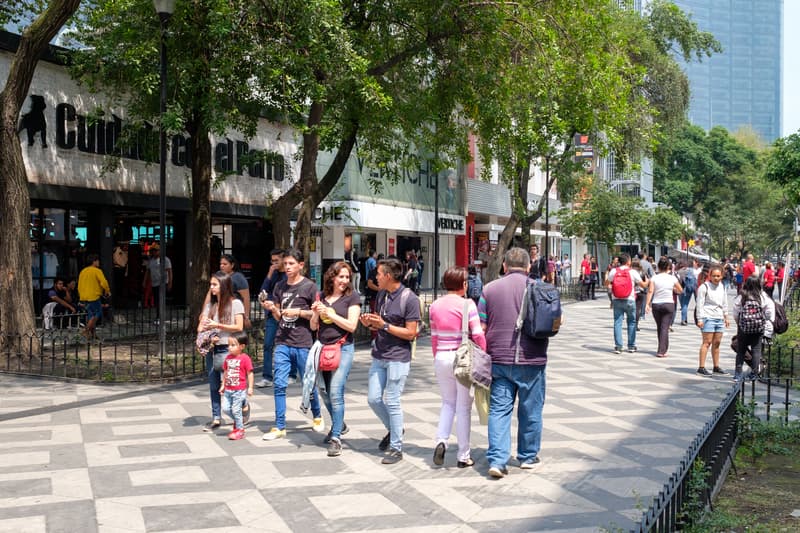
Zona Rosa, Mexico City
 See & Do
National Palace – Mexico City
 See & Do
Frida Kahlo Museum
 See & Do
Zocalo – Mexico City
 See & Do
Museo Nacional de Antropologia
Top Places to Eat in Mexico City
View all Eat & DrinkBudget · $
Churrería El Moro
 Eat & Drink
 Eat & Drink
 Eat & Drink
Mercado de Jamaica
 Eat & Drink
La Docena Oyster Bar & Grill
 Eat & DrinkBudget · $
Jenni’s Quesadillas
 Eat & DrinkBudget · $
Taquería Los Cocuyos
 Eat & DrinkModerate · $$
Amaya
Bookable experiences
Top experiences in Mexico City

Teotihuacán: Private Tour from Mexico City

Explore the Barrio Bravo of Tepito with local guides

PRIVATE Mexico City Cooking Class with Culinary Historian Lucia

Private tour with Archaeologist at National Anthropology Museum

Mexico City: Xochimilco at sunrise + Breakfast and transportation

Coyoacan Food Tour
Bookings made via these links may earn Bazar Travels a small commission, at no extra cost to you. Tours are provided by Viator, a Tripadvisor company.