Monastery of St. Simeon
Aswan Egypt Posted by bazartravelsAdmin
Monastery of St. Simeon Overview
The Monastery of St. Simeon sits on the west bank of the Nile in Aswan, roughly 2.5 kilometers south of the main city center. This sprawling complex of mud-brick and stone structures rises dramatically from the desert floor, its thick fortress-like walls visible long before you reach the entrance. Built in the 10th century and expanded over subsequent centuries, the monastery once housed hundreds of monks and remains one of Egypt's most intact medieval Christian sites. The scale and preservation of the Monastery of St. Simeon make it essential viewing if you're spending time in Aswan.
What strikes most visitors first is the sheer isolation. The monastery sits in a landscape of sand and rock with minimal development nearby. You approach on foot through the desert, climbing gradually upward, which gives you a sense of how deliberately the monks chose this remote location. The physical effort of the walk is part of the experience.
Why This Place Matters
The monastery represents a crucial period in Egyptian Christian history when the Coptic faith flourished despite Islamic rule. It was founded during the reign of the Fatimid caliph Al-Aziz Billah and dedicated to St. Simeon (also called Simeon the Tanner), a revered figure in Coptic tradition. The complex survived for centuries before declining gradually, particularly after a 15th-century flood damaged its lower sections. Today it functions as an open-air museum, offering insight into monastic life, medieval architecture, and the persistence of Christianity in Egypt.
The site also demonstrates the architectural ingenuity required to build substantial structures in the Nubian desert. The thick mud-brick walls regulate temperature, the underground reservoirs collected and stored water, and the defensive layout protected monks from raids. Walking through the ruins shows you how carefully the space was organized around spiritual practice.
Quick Facts
- Founded in the 10th century CE during the Fatimid period
- Located approximately 2.5 kilometers south of Aswan city center on the west bank
- Covers roughly 6,500 square meters within the outer walls
- Built primarily of mud brick and stone
- General admission with optional timed entry or guided tour availability
- Most accessible by motorboat or organized tour from central Aswan
- Allow 1.5 to 2 hours for a thorough visit
Getting There
The monastery sits on Aswan's west bank, which requires crossing the Nile. Most visitors arrive either by organized tour or private motorboat arranged through their hotel. If you hire a boat independently, negotiate the round-trip fare before departing. The boat ride takes roughly 10 to 15 minutes depending on current and water level.
Once you land at the small dock, you'll face a walk of 10 to 15 minutes uphill through the desert to reach the monastery entrance. The path is sandy and unshaded. Wear sturdy shoes with good grip, as the sand can be loose and the slope steady. There is no public transportation option for this final stretch.
If you're staying near the Nile Corniche in central Aswan, most hotels and guesthouses can arrange a boat and guide. Alternatively, you can walk to the corniche and negotiate directly with boat operators. The cost varies but typically covers round-trip transport. Going independently gives you more control over timing but requires confidence negotiating with boatmen.
The Layout and Experience
The monastery is enclosed by massive outer walls that once provided defense and defined the sacred boundary. You enter through a gate on the southern side, and from there the layout unfolds somewhat organically rather than in a formal grid. The site is largely open to the sky now, with only fragments of roofing remaining in certain structures.
The main features cluster in different zones. The central courtyard area contains the keep, a multi-story defensive tower where monks could retreat in times of danger. The church stands nearby, identifiable by its cruciform layout and remaining columns. Underground chambers and cisterns lie beneath the courtyard level, built to capture and store water from rare rainfall and the Nile's annual inundation.
Cells where individual monks lived are scattered throughout the complex. These small, plain rooms had minimal furnishings and were designed for solitude and prayer. Many remain intact enough to read their original purpose. The refectory, where monks gathered to eat communal meals, occupies another discrete section. A bakery and mill facility handled food production, and storage rooms held supplies.
The physical arrangement reflects the monks' daily rhythm. Everything required for self-sufficient living exists within the walls: places to pray, sleep, work, eat, and store resources. There's no grandeur or decoration. The architecture is purely functional, designed to endure the desert and support contemplative life.
Main Highlights
The keep is the most imposing structure and the best-preserved element of the monastery. Its thick walls and narrow openings show how defensibility was engineered into the design. Climbing the internal stairs (where they remain) gives you height and perspective over the entire complex.
The church, despite its ruined state, retains enough architectural detail to convey its original design. Stone columns stand, and the apse is identifiable. This is where monks gathered for prayer multiple times daily. The space feels contemplative even now.
The water cisterns reveal sophisticated engineering. These underground chambers, carved or constructed below ground level, were essential to survival in the desert. The system shows how precious water was managed and stored.
The monks' cells offer a tangible sense of daily life. Standing in one of these small rooms, you grasp the austerity the monks accepted. Many walls bear faint marks, scratches, or deterioration that speaks to centuries of habitation.
History and Background
The monastery was founded in the 10th century CE, during the reign of the Fatimid caliph Al-Aziz Billah. This was a period of relative tolerance toward Christian communities in Egypt, despite Islamic rule. The Coptic Church had deep roots in Egypt stretching back to the apostolic era, and monastic traditions were central to Coptic spirituality. St. Simeon, the monastery's patron, was a revered figure whose legend emphasizes humility and devotion.
By the 12th and 13th centuries, the monastery had grown substantially and housed several hundred monks. It became a significant pilgrimage destination for Coptic Christians and an important center of learning and manuscript production. The Fatimid and later Mamluk rulers generally permitted monastic communities to function, though they were subject to various taxes and restrictions.
A major flood in the 15th century damaged the lower sections of the complex, affecting water management systems and living quarters. Gradually, the monastery's population declined. By the Ottoman period, the site was occupied by fewer monks. Eventual abandonment came sometime in the 18th or 19th century, though the exact date is uncertain.
The site remained largely untouched and undocumented until the modern era. In the 20th century, it became recognized as an important historical monument and was eventually opened to visitors. Archaeological and restoration work has been ongoing, though the site is presented more as ruins than as a fully reconstructed complex.
Tickets and Entry
The monastery operates as an open-air archaeological site with general admission. You purchase a ticket at the entrance gate. The ticket grants access to the entire complex for the duration of your visit. There are no separate fees for different areas within the site.
If you arrive with an organized tour, the guide typically handles the ticket purchase. If you're arriving independently, bring Egyptian pounds, as the ticket window may not accept other currencies. The admission price is modest but does fluctuate, so confirm the current rate when booking your boat.
Some visitors hire a local guide at the entrance to explain specific structures and history. This is optional but worthwhile if you want deeper context. Guides expect a tip in addition to any agreed fee.
Best Time to Visit
October through April offers the most comfortable weather for exploring the site. Daytime temperatures are warm but not extreme, and the desert sun is intense but manageable with preparation. The site is fully exposed with no shade, so visiting earlier in the day helps you avoid the strongest afternoon heat.
May through September brings intense heat, with midday temperatures often exceeding 40 degrees Celsius. If you visit during these months, arrive very early in the morning or later in the afternoon, and bring plenty of water.
Rainfall is virtually nonexistent in Aswan year-round, so weather disruptions are not a concern. The Nile's water level does fluctuate seasonally, which can occasionally affect boat access, but this is rare enough not to dictate your timing.
Photography Tips
The monastery's dramatic setting against the desert and the Nile valley creates strong visual opportunities. The golden hour at sunrise or late afternoon produces warm light that emphasizes the mud-brick texture and casts long shadows through the ruins, adding depth and drama to images.
The view from the top of the keep looking outward across the complex and toward the Nile is one of the most comprehensive shots available. The keep's interior stairs and openings also frame interesting compositions.
Close-ups of architectural details like column capitals, carved stone, mud-brick patterns, and deteriorated doorways tell the story of age and human craftsmanship. These details often photograph better in diffuse light than in harsh midday sun.
Wide shots from the approach, showing the monastery rising from the desert landscape, capture the isolation and scale. Photograph from several points along the walking path as you ascend to the entrance.
Facilities and Preparation
There are no facilities on-site. No shops, no restrooms, no water, no seating. You should bring everything you need.
Essentials include plenty of drinking water, sun protection (hat, sunscreen, sunglasses), sturdy walking shoes, and a light layer to cover your shoulders and legs if you prefer protection from the sun. The walk up to the monastery is gradual but steady, and the terrain is sandy and uneven in places.
If you have mobility limitations, discuss this with your boat operator or tour guide before arrival. The initial walk from the dock is uphill, and moving through the ruins involves uneven ground, occasional steps, and narrow passages. There are no wheelchair-accessible routes through the complex.
Bring a camera or phone with sufficient battery. The site is expansive, and you'll want to photograph multiple structures and views. There is no power source to recharge devices on-site.
How It Compares to Similar Places
Egypt has several other significant monastic sites, most notably the monasteries of the Wadi Natrun north of Cairo. The Wadi Natrun complexes are still active pilgrimage destinations and monastic communities, whereas the Monastery of St. Simeon is presented as historical ruins. St. Simeon offers a more solitary, archaeological experience.
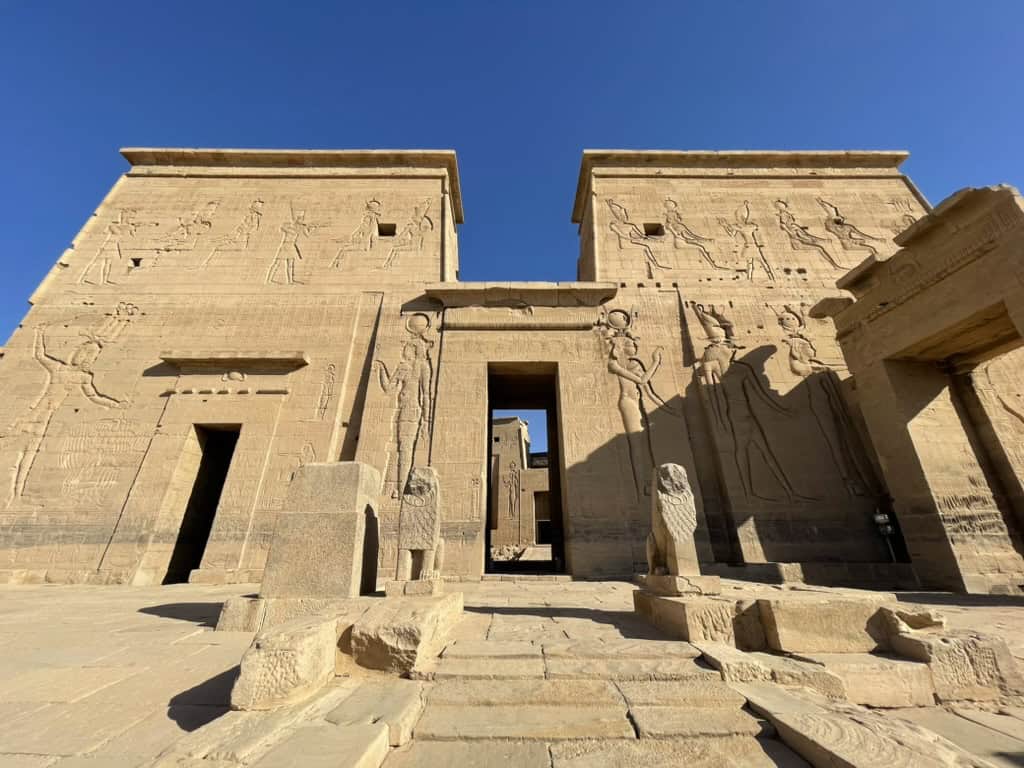
The Temple of Philae, also in Aswan, is similarly dramatic in its setting and requires boat access. However, Philae is a pharaonic temple with elaborate hieroglyphic decoration, while St. Simeon is a Christian monastic complex with minimal ornamentation. They represent entirely different historical periods and faiths, so visiting both provides a fuller picture of Aswan's layered heritage.
Compared to the grand temples of Luxor or the Giza Plateau, the Monastery of St. Simeon is smaller and less famous. Its appeal lies in its authenticity, isolation, and the tangible sense of daily monastic life rather than monumental scale or architectural spectacle.
Combining with Nearby Attractions
Most visitors to the Monastery of St. Simeon arrive as part of a broader Aswan itinerary. The west bank holds several other sites worth visiting on the same day or nearby days. The Temple of Philae is the most famous and is easily combined with a monastery visit if you have a full day and boat access arranged.
The Fatimid Cemetery, also on the west bank, contains tombs dating to the medieval period. It's less visited than the monastery but offers insight into Aswan's Islamic heritage. Some tour operators include it as an add-on to monastery visits.
Back in central Aswan, the Nubian Museum explores the region's pre-Islamic and Islamic history, including material on Christian Nubia and monastic traditions. Visiting the museum before or after the monastery deepens your understanding of the site's historical context.
The Botanical Garden on Kitchener's Island is another common pairing, particularly if you're spending multiple days in Aswan. It's a more leisurely, shaded experience that contrasts with the exposed desert walk to the monastery.
Sample Visit Plan
A typical visit works like this: Arrange your boat the evening before or early in the morning. Depart from the corniche by 8 or 9 AM to avoid the strongest midday heat. The boat ride takes roughly 15 minutes. Upon landing, take the 10 to 15-minute walk uphill to the entrance, pausing as needed.
Budget 1.5 to 2 hours inside the complex. If you're moving slowly, taking photographs, or using a guide, aim for the longer end. Explore the keep, church, courtyard areas, and monks' cells. Climb to high points for overview perspectives. Spend time in individual rooms to absorb the sense of place.
Depart the monastery by early afternoon to catch a boat back before late afternoon. The return journey is the same duration as the arrival. You'll be back in central Aswan by mid-afternoon, leaving time for lunch, rest, or visits to other sites like the Nubian Museum or Temple of Philae if desired.
Practical Tips
- Bring more water than you think you'll need. The site is exposed, the walk is uphill, and there are no refill points.
- Wear closed-toe shoes with grip. The sandy path is uneven and can be slippery in places.
- Apply sunscreen generously before you arrive. There is no shade anywhere on the site.
- Negotiate boat prices before boarding. Confirm whether the fare is round-trip and includes waiting time.
- If visiting with an organized tour, confirm departure time and meeting point the day before to avoid confusion.
- Hire a local guide at the entrance if you want detailed explanations of specific structures and history. Agree on the fee beforehand.
- Visit in the morning if possible. Afternoon temperatures and crowds are higher, and light becomes harsher.
- Respect the religious significance of the site. While it's open to tourists, it remains sacred to Coptic Christians.
- Don't attempt to visit alone if you're unfamiliar with Aswan. Organized tours are convenient, safer, and usually well-priced.
FAQ
How long does a visit to the Monastery of St. Simeon typically take? Most visits last 1.5 to 2 hours once you're inside the complex. Add time for the boat ride and the walk from the dock, bringing the total outing to roughly 3 to 4 hours from central Aswan.
Is the monastery still used for religious purposes? The site is not an active monastic community. It functions as a historical monument and archaeological site open to visitors. However, Coptic Christians do visit for prayer and pilgrimage, so treat the space with appropriate respect.
Can I visit the monastery without a tour? Yes, you can arrange a private boat and visit independently. However, hiring a guide at the entrance is recommended if you want context and interpretation. Going completely solo is possible but less informative unless you research the site beforehand.
What should I do if I don't feel well during the walk? The walk from the dock to the monastery entrance is gradual but steady uphill. If you feel dizzy, short of breath, or unwell, stop and rest in whatever shade you can find, or signal your guide to return to the boat. Dehydration is the most common issue. Drink water regularly, not just when thirsty.
Is the Monastery of St. Simeon accessible for visitors with mobility challenges? The initial walk uphill from the dock is challenging for people with limited mobility or endurance. The terrain inside the complex is uneven and involves steps and narrow passages. Discuss your specific needs with your tour operator or boat captain before arriving.
Reviews
Sign in and mark this place visited to leave a review.
No reviews yet.
Free Trip Planner
Plan your Aswan trip with our free planner
Build a day-by-day itinerary with AI suggestions, hand-picked places, and friends. Free forever — no credit card.