State Hall of the Austrian National Library
Open now
State Hall of the Austrian National Library
Josefsplatz 1, Vienna 1010 Austria Posted by Brandon B.Admin
Overview
The State Hall of the Austrian National Library is one of Europe's most magnificent baroque libraries, located on Josefsplatz in Vienna's first district. Built between 1723 and 1735, this UNESCO-recognized room holds nearly 200,000 volumes and sits at the heart of the Austrian National Library complex. Walking into the State Hall feels like stepping into a painted ceiling and carved wood, where the architecture itself becomes the main attraction alongside the carefully curated collections.
If you've ever seen photographs of an impossibly ornate library with a frescoed dome and towering shelves, there's a good chance it was this one. The State Hall draws architecture enthusiasts, history buffs, and curious travelers who want to experience one of the world's most visually overwhelming reading rooms.
Why this place matters
The State Hall represents the height of Austrian baroque design and the intellectual ambitions of the Habsburg Empire. It was commissioned by Emperor Charles VI as part of his larger vision for the court library, and the space reflects that imperial confidence. The frescoes were painted by Daniel Gran, one of the leading baroque artists of his time, and they cover the entire ceiling with allegorical scenes celebrating knowledge and imperial power.
More than just a historical artifact, the State Hall remains a functioning library. Scholars still work here. Real people consult rare manuscripts and historical documents in the same room where they have been consulted for nearly three centuries. That combination of working library and architectural masterpiece makes it unusual among European cultural institutions.
Quick facts
- Built 1723 to 1735 during the reign of Emperor Charles VI
- Houses approximately 200,000 volumes across multiple tiers of shelves
- Designed to showcase baroque architecture and imperial authority
- Frescoes by Daniel Gran cover the entire ceiling
- Located in the first district on Josefsplatz, adjacent to the Hofburg Palace
- Part of the larger Austrian National Library complex
- Requires timed entry tickets; photography is restricted in some areas
Getting there
The State Hall sits on Josefsplatz, a small plaza in Vienna's historic center. If you're using public transport, the U3 subway line stops at Herrengasse station, which is about a 5-minute walk away. The Stephansdom (St. Stephen's Cathedral) is also nearby, making this an easy addition to a walking route through the old city.
Street-level signs for the Austrian National Library are modest. Look for the entrance marked with the library's name on Josefsplatz itself. The plaza is surrounded by baroque buildings and opens onto the larger Hofburg Palace complex, so the neighborhood has a formal, institutional feel.
The layout and experience
Visitors enter through the main library entrance and follow a designated route to reach the State Hall. You don't simply walk in and sit down. The experience is structured and ceremonial by design. Once you pass into the actual reading room, the visual impact hits immediately. The ceiling stretches above you covered entirely in frescoes. The shelves rise in tiers, creating galleries around the perimeter. The floor is polished wood. It's deliberately overwhelming.
The room measures roughly 80 meters long and 20 meters wide, with a barrel vault ceiling. The architectural proportions are meant to convey grandeur and order. You'll see reading tables positioned throughout the space, though visitors on general admission don't typically sit at these desks. Instead, you're expected to move through the room, observe, and take in the design. Most visits last between 30 minutes and an hour, depending on how long you linger and how many details you want to examine.
The lighting is natural where possible, which means the frescoes look different depending on the time of day. Morning light tends to illuminate the ceiling frescoes more evenly. Afternoon light creates longer shadows and changes how you perceive the spatial depth.
Main highlights
The ceiling fresco is the undeniable focal point. It depicts an elaborate allegorical scene celebrating imperial wisdom and power. Daniel Gran's composition is dense with figures, architectural illusions, and symbolic imagery. The fresco itself is a masterwork of baroque illusionism, using perspective tricks to make the vault appear higher and more expansive than it actually is.
The wooden shelving deserves close attention as well. The craftsmanship is exceptional. The bookcases are arranged in a precise geometric pattern that emphasizes order and rational organization, a core ideal of Enlightenment-era library design. The wood is dark and polished, creating a visual weight that grounds the soaring frescoes above.
The globes and antique furnishings scattered throughout the room add period flavor. These aren't casual decorations. They reinforce the sense that this was a space meant to represent the sum of human knowledge during the 18th century.
History and background
Emperor Charles VI initiated the project in the 1720s as part of his broader effort to transform Vienna into a capital worthy of the Habsburg dynasty. The library was meant to be a symbol of imperial learning and enlightened rule. Construction took more than a decade, and the final result exceeded contemporary expectations. The State Hall became one of the most celebrated rooms in Vienna almost immediately after its completion in 1735.
The collection itself predates the building. The court had accumulated manuscripts and books for centuries. The State Hall simply provided a setting grand enough to house them. Over the following two centuries, the collection grew through acquisitions, donations, and legal deposit requirements that gave the library first claim on printed works produced in Austria.
The Austrian National Library as it exists today is much larger than the State Hall alone. The complex expanded significantly in the 20th century and continues to grow. But the State Hall remains the institution's symbolic center and most visited space.
Tickets and entry
General admission tickets allow you to view the State Hall. Timed entry is required, meaning you'll receive a specific time slot for your visit. This system manages the flow of visitors through the room and prevents overcrowding in the historic space. Tickets are available at the entrance or online in advance.
Guided tours are also offered and provide deeper context about the architecture, the collection, and the history. A guided tour lasts longer than a self-guided visit and includes access to other parts of the library complex that aren't typically open to casual visitors.
Photography is permitted in the State Hall, but flash photography is prohibited. This rule protects the frescoes and wooden elements from light damage. Some areas of the library complex have additional restrictions, so it's worth checking current photography policies when you book your ticket.
Best time to visit
The State Hall tends to be quietest on weekday mornings, particularly Tuesday through Thursday. Weekends and late afternoons draw larger crowds, which can affect how much you're able to linger and observe details. Summer months see higher visitor traffic overall.
From a lighting perspective, morning visits tend to provide clearer illumination of the ceiling frescoes. The light is more consistent and the shadows are less dramatic. If you prefer softer, more atmospheric light, late afternoon visits offer that quality, though the room becomes shadowed in places.
The State Hall is open year-round, but seasonal closures for maintenance do occur occasionally. It's wise to check the Austrian National Library website before planning your visit to confirm opening hours and any temporary closures.
Photography tips
The most striking photographs come from standing in the center of the room and shooting upward toward the dome. This angle emphasizes the ceiling fresco and the soaring architectural proportions. Wide-angle lenses work well for capturing the full scope of the space.
For detail shots, focus on the wooden shelving, the carved ornaments, and the intricate elements of the fresco. These closeups reveal the craftsmanship that casual observation misses. The globes and antique furnishings also make good subjects.
Avoid shooting directly into windows or bright doorways, as this will underexpose the interior and wash out the colors of the frescoes. Early morning or cloudy days provide more even lighting for interior photography.
Facilities and preparation
The State Hall is a historic building without modern amenities. There are no restrooms inside the reading room itself. You'll find facilities elsewhere in the library complex. The space is climate-controlled and comfortable, but it's not particularly warm or cold.
Wear comfortable shoes with good grip, as the polished wood floors can be slippery. The room is not wheelchair accessible due to the historical design and the tiers of shelving, though staff can provide information about other parts of the library that may be more accessible.
The visit requires standing and walking. There are no benches or seating areas for general admission visitors, so plan accordingly if you have mobility considerations.
Combining with nearby attractions
The Hofburg Palace is immediately adjacent to the State Hall. You can easily combine a visit to the library with a walk through the palace grounds or a tour of the imperial apartments. The two sites are within a 10-minute walk of each other and represent different facets of Habsburg power and culture.
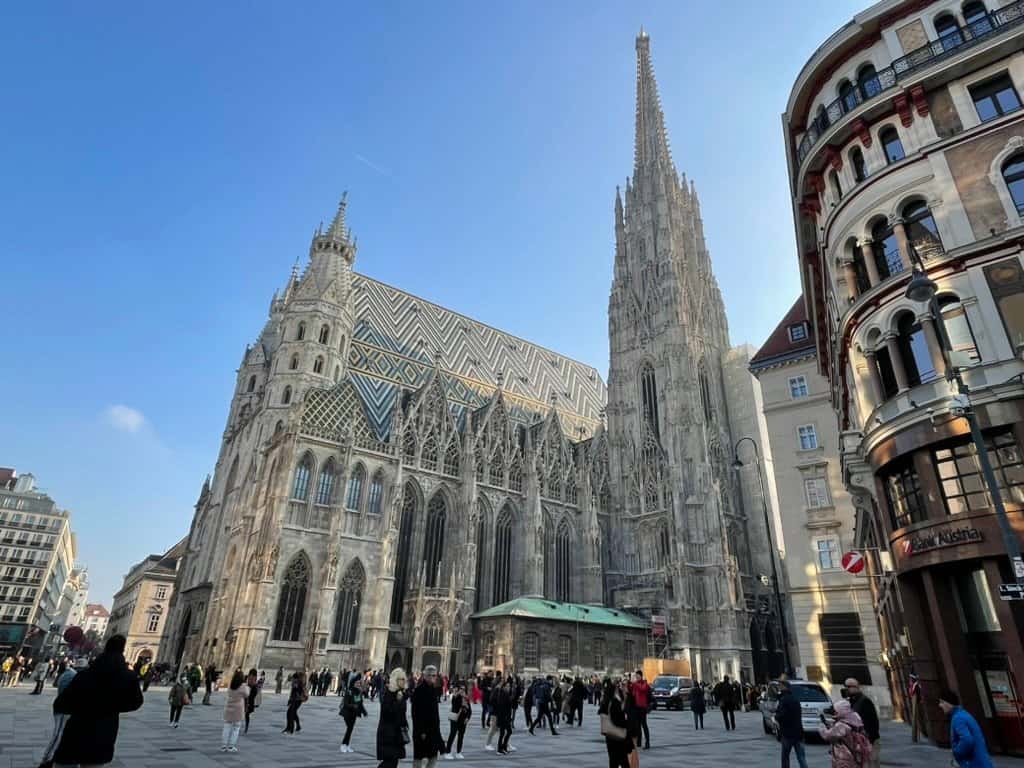
St. Stephen's Cathedral (Stephansdom) is about 10 minutes walk away and is Vienna's most iconic church. Combining a visit to the State Hall with a walk through the cathedral and the surrounding old town creates a comprehensive morning or afternoon exploring Vienna's historic center.
The nearby Minoritenkirche and other baroque churches in the first district are also worth a quick visit if you're interested in 18th-century Viennese architecture.
Sample visit plan
Arrive at the Austrian National Library entrance 15 minutes before your timed slot. Pick up your ticket or confirm your online booking. Spend 5 to 10 minutes in the entrance area getting oriented. Enter the State Hall and take a moment to absorb the overall impression. Walk slowly around the perimeter, observing the shelves and architectural details. Look up frequently at the ceiling fresco. Spend 10 to 15 minutes examining specific details and taking photographs. Exit the State Hall and explore other parts of the library complex if you have additional time. Total visit time is typically 45 minutes to an hour.
Practical tips
- Book timed entry tickets online in advance during peak season to secure your preferred time slot
- Visit on a weekday morning for fewer crowds and better light on the ceiling frescoes
- Bring a camera or phone with a wide-angle capability to capture the full room
- Wear comfortable walking shoes with good grip on polished floors
- Allow at least 45 minutes for your visit, longer if you want to examine details closely
- Check the Austrian National Library website for current hours and any temporary closures
- Consider a guided tour if you want deeper historical context and access to restricted areas
FAQ
Can you actually read books in the State Hall? Scholars with library credentials can use the reading tables, but casual visitors are not permitted to sit and read. The State Hall functions as a working library, but tourists are expected to observe rather than use the facilities.
How long does a typical visit take? Most visitors spend 45 minutes to an hour in the State Hall. You can move through more quickly if you're just taking in the overall impression, or linger longer if you want to study the architectural details and frescoes carefully.
Is the State Hall worth visiting if I'm not interested in architecture? The visual spectacle alone makes it worth seeing. Even if baroque architecture isn't your primary interest, the sheer ornamental density and the sense of historical grandeur come through. It's one of the most visually impressive rooms in Vienna regardless of your background.
Can you photograph the ceiling frescoes? Yes, photography without flash is permitted. Flash photography is prohibited to protect the artwork from light damage. Most visitors are able to get good photos of the ceiling and the overall room.
How does the State Hall compare to other libraries in Europe? The State Hall is one of the finest baroque libraries still in use. The Library of Wiblingen in Germany and the Strahov Library in Prague are comparable in style and grandeur, but the State Hall is more central to a major city and easier to visit.
Opening hours
Reviews
Sign in and mark this place visited to leave a review.
No reviews yet.
Free Trip Planner
Plan your Austria trip with our free planner
Build a day-by-day itinerary with AI suggestions, hand-picked places, and friends. Free forever — no credit card.