
The National Folk Museum of Korea
Closed now
The National Folk Museum of Korea
37 Samcheong-ro, Jongno District, Seoul, South KoreaOverview
The National Folk Museum of Korea sits on the grounds of Gyeongbokgung Palace in central Seoul, occupying a series of restored and purpose-built structures that hold centuries of Korean domestic life, ritual, and craft. Walk through the main gate and you're immediately surrounded by wooden houses transplanted from different regions, their thatched roofs and earthen walls weathered by actual use before they were moved here. The museum doesn't hide its collection behind glass and velvet ropes. Instead, you move through rooms where kitchen implements hang where they'd be found, where wedding ceremonies are staged with full costume, where the texture of daily survival in Korea before industrialization becomes physically present. This is not a quiet, austere place. On weekends especially, school groups move through in clusters, and families stop to pose in front of the old houses. But the noise and motion somehow fit the museum's core mission: to show how Korean people actually lived, not to preserve folk culture as a precious, untouchable relic.
Why this place matters
Korea's rapid modernization happened in a single generation. Within fifty years, the country shifted from agrarian villages to a global manufacturing and technology power. The National Folk Museum exists partly as a record of what that transition erased. You see how yangban (aristocratic) families organized their homes, how merchants conducted business, how farming communities structured their year around seasonal festivals. The museum's approach goes beyond display. It stages demonstrations, runs workshops where you can try making traditional crafts, and maintains a research center focused on intangible cultural heritage. For visitors, the result is a place where Korean folk traditions feel like knowledge rather than nostalgia.
Quick facts
- Located on the grounds of Gyeongbokgung Palace in Jongno District, near Anguk Station (Line 3)
- Founded in 1945, relocated to current site in 1975
- Main exhibition halls include Folk Life Hall, Korean Life Hall, and Special Exhibition Hall
- Over 30,000 artifacts in the collection, spanning pottery, textiles, furniture, and ritual objects
- Outdoor exhibits feature five traditional Korean houses from different regions and time periods
- Closed on Mondays (or the following Tuesday if Monday is a public holiday)
- General admission ticket required; separate tickets available for special exhibitions
Getting there
The easiest entrance is from Anguk Station (Seoul Metro Line 3), Exit 1. From the station, walk uphill toward Gyeongbokgung Palace, following signs in English. The walk takes about 8 to 10 minutes. The museum also has a separate entrance from the palace grounds if you enter Gyeongbokgung first. Parking is available in the palace lot, though it fills quickly on weekends. Buses 7, 9, and 37 stop near the palace complex if you're coming from other parts of Seoul.
The layout and experience
The museum is divided into indoor galleries and outdoor pavilions. Most visitors start in the Folk Life Hall, which occupies a large modern building constructed to blend with the palace grounds. Inside, the galleries flow chronologically and thematically through Korean history from the Three Kingdoms period onward, though the strongest sections focus on the Joseon Dynasty (1392 to 1910), when most of the surviving artifacts originate.
The Korean Life Hall, located in a separate building, concentrates on daily domestic life. You'll see how furniture was arranged in different room types, what kitchen tools looked like, and how textiles and ceramics were made and used. Many displays are organized by life stage: childhood, marriage, adulthood, death. This structure makes the museum feel less like a chronological march and more like a walk through lived experience.
Moving outside, the museum maintains five reconstructed traditional houses scattered across the grounds. These are not replicas built from drawings. They are actual houses, disassembled and rebuilt on the museum grounds, or faithful reconstructions using period techniques. You can enter most of them and move through the rooms, which include heated ondol (floor) systems, storage areas, and kitchen spaces. The houses represent yangban residences, merchant homes, and commoner dwellings from different provinces.
Plan on spending 2 to 3 hours for a thorough visit, or 45 minutes to an hour if you're moving quickly through the main halls and skipping the outdoor houses.
Main highlights
The textile collection is unusually comprehensive. Korean weaving, embroidery, and dyeing techniques produced some of the most technically accomplished fabrics in East Asia. The museum displays wedding robes, wrapping cloths, and everyday garments that show both the artistry and the practical constraints of hand production. If you ask a staff member, they can sometimes point you toward pieces that illustrate specific dyeing or weaving methods.
The ceramics section spans centuries of Korean pottery, from Silla earthenware to Joseon celadon and white porcelain. The pieces here tend to be functional objects first: bowls, storage jars, water vessels. This grounds the collection in daily life rather than presenting ceramics as pure art objects, which is closer to how Korean potters actually thought about their work.
Seasonal ritual displays shift throughout the year. During winter, the museum stages a full Lunar New Year exhibition with traditional games, foods, and costumes. The wedding ceremony exhibition, usually displayed year-round in the Korean Life Hall, shows the full regalia and sequence of a Joseon-era yangban wedding, including the groom's formal costume and the bride's elaborate headdress.
The outdoor houses draw the most foot traffic, particularly the yangban residence with its separate male and female quarters and the merchant's home with its attached shop space. The simplicity of these structures, the low ceilings, the minimal furniture, the way light enters through small windows, convey something that photographs alone can't capture about how Korean people inhabited these spaces.
History and background
The National Folk Museum was established in 1945, immediately after Korea's liberation from Japanese colonial rule, as part of a broader national effort to document and preserve Korean culture. The museum's early decades focused on collecting objects that might otherwise be lost as the country industrialized. In 1975, it relocated to its current home on the grounds of Gyeongbokgung Palace, placing folk heritage literally adjacent to royal history. This proximity is intentional. The museum's mission includes showing how the vast majority of Koreans lived, providing a counterweight to palace-centered narratives of the past.
The collection grew substantially through the 1980s and 1990s as the government invested in cultural preservation. Many of the outdoor houses were relocated to the museum grounds during this period. More recently, the museum has shifted toward presenting folk culture as living practice rather than historical artifact, which is why demonstrations and workshops have become central to its programming.
Tickets and entry
General admission to the National Folk Museum requires a ticket, available at the entrance or online. Children under six enter free. Discounted rates apply for children, teenagers, seniors, and groups. Separate paid tickets are required for special exhibitions, which typically occupy the Special Exhibition Hall and rotate seasonally. The museum occasionally offers combination tickets that include entry to Gyeongbokgung Palace if you want to visit both on the same day. Allow extra time for ticket lines on weekends and school holidays.
Best time to visit
Weekday mornings, especially Tuesday through Thursday, offer the most peaceful experience. You'll move through the halls without navigating school groups. Weekends and public holidays draw crowds, particularly in the outdoor house areas where families congregate for photos.
Seasonally, spring and autumn provide the best conditions for spending time outdoors on the museum grounds. Winter visits work well if you're interested in the Lunar New Year exhibitions (typically January through February). Summer afternoons can feel warm and crowded, though the indoor galleries remain cool.
Photography tips
Photography is permitted throughout the museum, though tripods are restricted. The outdoor houses provide the most photogenic spots, especially in late afternoon when the light angles through the wooden frames and thatched roofs. Early morning light on the buildings is clean and even. Interior spaces in the traditional houses are dim, so plan for slower shutter speeds or higher ISO if you're shooting without flash. Flash is generally not prohibited, but it can be jarring in the quiet interior spaces where other visitors are contemplating objects.
The main galleries have better lighting for photography than you'd expect in a traditional museum. Many displays use directional lighting that's actually flattering to the objects and relatively easy to photograph without overwhelming glare.
Facilities and preparation
The museum has a restaurant on the grounds serving Korean food at mid-range prices. There's a gift shop selling books, crafts, and reproductions of museum pieces. Bathrooms are plentiful and well-maintained. The main galleries are wheelchair accessible, though the outdoor traditional houses have uneven floors and narrow doorways that present challenges for mobility devices. A map in English is provided at the entrance. Staff speak limited English, so having a translation app on your phone is useful if you want detailed information beyond the English labels.
Wear comfortable walking shoes. The outdoor section involves uneven terrain and walking between buildings. Bring water, especially in summer. The museum grounds are large enough that you'll be walking for the full duration of your visit.
Combining with nearby attractions
Gyeongbokgung Palace is immediately adjacent and represents a natural pairing. Many visitors spend 1 to 2 hours at the folk museum, then cross into the palace grounds for another 2 to 3 hours. The contrast between royal architecture and folk domestic spaces makes each more meaningful.
The National Palace Museum, also on the palace grounds, focuses on royal artifacts and is worth an hour if you're already in the area. Bukchon Hanok Village, a preserved neighborhood of traditional Korean houses, sits about 10 minutes' walk downhill from the museum. It's less formal than the museum's reconstructed houses but offers a sense of how these dwellings functioned in an actual urban context.
Sample visit plan
Arrive early on a weekday if possible. Start at the Folk Life Hall, moving through the chronological galleries to get a sense of Korean history and material culture. Spend 45 minutes to an hour here. Move to the Korean Life Hall next, focusing on domestic life and lifecycle rituals. Allow 30 to 45 minutes. If you have energy and time, walk the outdoor houses, spending 10 to 15 minutes in each. If you're limited on time, prioritize the yangban residence and the merchant's house. Grab lunch at the on-site restaurant if your timeline allows.
Practical tips
- Arrive by mid-morning to avoid heaviest crowds. Most school groups arrive between 10 am and 1 pm.
- Download a translation app before visiting. English labels are present but sometimes minimal.
- The outdoor houses are best visited in dry weather. Rain makes the uneven terrain slippery.
- Wear layers. The indoor galleries maintain cool temperatures year-round.
- If you're interested in a specific aspect of folk culture (textiles, ceramics, ritual), let a staff member know. They can sometimes point you toward the strongest sections.
- Check the museum website before visiting to see if special exhibitions align with your interests.
- Consider visiting on a weekday afternoon after 2 pm if you want a quieter experience. Most tourists have moved on by then.
FAQ
How long does it take to see everything? A thorough visit with all outdoor houses takes 3 to 4 hours. You can see the main indoor galleries and highlights in 1.5 to 2 hours.
Is the museum suitable for children? Yes. The outdoor houses are particularly engaging for children, and the hands-on nature of many displays holds attention better than traditional museum cases. Younger children may lose interest after 1.5 to 2 hours.
Do I need to understand Korean history to appreciate the museum? No. The museum is designed for general audiences and doesn't require specialized knowledge. The displays focus on material culture and daily life rather than historical events or political context.
Can I visit the National Folk Museum and Gyeongbokgung Palace in the same trip? Yes. They're adjacent, and most visitors spend 3 to 4 hours combined at both sites. You can visit them in either order, though starting at the palace and moving to the museum is slightly more natural geographically.
Is there a guide or audio tour available? The museum does not offer a standard audio tour, though it sometimes provides guided programs in Korean. English-language tours are not regularly scheduled. The printed map and English labels are the primary orientation aids.
Opening hours
Reviews
Sign in and mark this place visited to leave a review.
No reviews yet.
Free Trip Planner
Plan your Seoul trip with our free planner
Build a day-by-day itinerary with AI suggestions, hand-picked places, and friends. Free forever — no credit card.
Things to see near The National Folk Museum of Korea

Korean Folk Village

Hwaseong Haenggung

Suwon Hwaseong Fortress

Starfield Suwon
Places to eat or drink near The National Folk Museum of Korea
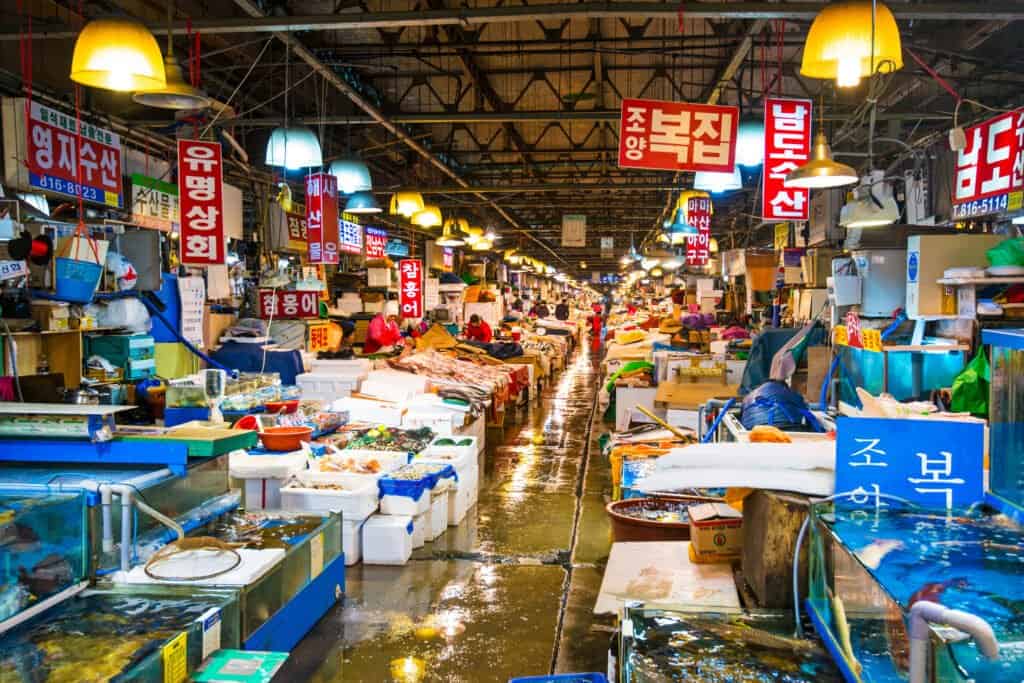
Noryangjin Fisheries Wholesale Market

Gebangsikdang
Gaon

Mingles
More places in Seoul

Samcheongdong Sujebi

Nodeul Island

War Memorial of Korea
