
The Plaza Central Park
Closed now
The Plaza Central Park
Central Park Pizzeria, Antigua Guatemala, Sacatepéquez, Guatemala Posted by Brandon B.Admin
The Plaza Central Park of Antigua Guatemala
If you spend any time in Antigua Guatemala, you will pass through Plaza Central Park. It is the geographic and social center of the city, a colonial square that has been drawing locals, vendors, travelers, and politicians for centuries. Surrounded by the Palacio de los Capitanes Generales to the south, the Cathedral of Santiago to the east, and the Palacio del Ayuntamiento to the north, the plaza sits at the intersection of everything Antigua does well.
Most days you will find it full of life. Shoeshine workers line the paths, women in traditional traje walk through with baskets, pigeons scatter at the sound of children running, and tourists eat ice cream on benches while trying to decide where to eat lunch. It is not a manicured, keep-off-the-grass kind of square. It is genuinely used.
Why Plaza Central Park Matters
Antigua was the capital of the Captaincy General of Guatemala for much of the colonial period, and this plaza was its stage. Royal proclamations were read here. Markets were held here. Public punishments happened here. The Fuente de las Sirenas, the ornate stone fountain at the center of the square, dates to 1738 and is one of the most photographed objects in all of Central America.
The city itself was largely rebuilt after the 1773 earthquakes that forced the colonial capital to relocate to present-day Guatemala City. What survived, and what was later restored, is what you see today. UNESCO designated Antigua a World Heritage Site in 1979, and the plaza is the anchor of that designation.
Quick Facts
- Location: 5a Calle Poniente and 4a Avenida Norte, Antigua Guatemala
- Entry: Free, open to the public at all hours
- The central fountain, the Fuente de las Sirenas, was built in 1738
- The square is roughly a five-minute walk from almost any point in Antigua's historic center
- Surrounded by four major colonial-era structures on each side
- UNESCO World Heritage designation: 1979
Getting There
Antigua is about 45 minutes west of Guatemala City by shuttle or private transfer, depending on traffic. If you are coming from the capital's airport, shared shuttles depart regularly and drop passengers near the bus terminal on the eastern edge of town, a ten-minute walk from the plaza.
Once you are in Antigua, you will not need a vehicle. The city is famously walkable, and the cobblestone grid makes it easy to navigate. The plaza is at the center of that grid, so if you get lost, just walk toward the church towers.
The Layout and Experience
The plaza is a large open square divided by paved walkways into quadrants, each with benches, trees providing afternoon shade, and views of the surrounding buildings. The Fuente de las Sirenas sits at the center. The stone mermaids that give the fountain its name are carved in a style that mixes European baroque with local craft, and they look different depending on how the light falls.
The eastern edge is dominated by the Cathedral of Santiago, or rather what remains of it after the 1773 earthquakes. The facade still stands and is still impressive. The southern arcade, part of the Palacio de los Capitanes Generales, houses tourist offices and some commercial activity at street level. The northern arcade, the Palacio del Ayuntamiento, contains the city's municipal offices and a small museum of colonial artifacts.
What makes the plaza worth more than a quick look is the way it functions as a social space rather than a monument. Weekday mornings tend to be calmer, good for sitting with a coffee bought from a nearby cafe and watching the city start its day. Weekend afternoons bring musicians, street food carts, and families out in numbers. During Semana Santa, the week before Easter, the entire surrounding area transforms into one of the most elaborate religious processions in Latin America, and the plaza is ground zero for that spectacle.
History and Background
The Spanish laid out Antigua, then called Santiago de los Caballeros de Guatemala, in the mid-16th century following the standard colonial grid plan. The central plaza was always the intended heart of civic life, flanked by the church, the government palace, and later the town hall. For roughly two centuries it served as the administrative center of a territory that stretched from southern Mexico to Costa Rica.
The 1773 earthquakes, known as the Earthquakes of Santa Marta, caused catastrophic damage. The decision to abandon the city and move the capital was controversial. Many residents refused to leave. Those who stayed rebuilt what they could, and the colonial fabric that Antigua retains today is largely the result of that stubborn continuity combined with later conservation efforts in the 20th century.
The plaza has been renovated several times over the centuries, but the core layout and the central fountain have remained largely intact. Walking through it today, you are standing in roughly the same spot where colonial governors once reviewed troops and where market vendors sold goods under the same arcade you can still walk beneath.
Best Time to Visit
The plaza is worth visiting at different times of day because it changes character significantly. Early morning, before 8am, it tends to be quiet, the light is soft, and the volcanic peaks of Agua and Acatenango are often visible above the rooflines to the south. Midday brings the most foot traffic. Late afternoon, as the sun drops behind the western mountains, the light hits the cathedral facade in a way that is genuinely difficult to photograph badly.
Semana Santa is the single most dramatic time to be in Antigua, and the plaza is central to the processions that move through the city for days. Expect crowds, expect sawdust carpets of extraordinary detail laid in the streets, and book accommodation months in advance if you are planning around it. December's Christmas celebrations also bring the square to life with markets and posadas.
The rainy season runs roughly from May through October. Afternoon showers are common but tend to be short. The plaza can feel atmospheric in the rain, but the cobblestones get slick, so watch your footing.
Photography Tips
The fountain is the obvious subject, but the more interesting shots tend to come from the edges. Position yourself under the northern arcade and shoot south toward the fountain with the cathedral behind it, especially in early morning or late afternoon. The contrast between the dark arcade columns and the lit square works well.
For portraits or street photography, ask before you shoot. Many of the women in traditional dress are happy to be photographed but appreciate being asked. Some may request a small tip, which is reasonable.
Drone photography in and around Antigua's historic center is regulated. Check current rules before flying, as enforcement near the UNESCO zone has become stricter in recent years.
Combining with Nearby Attractions
Almost everything worth seeing in Antigua is within walking distance of the plaza. The Convento de la Merced, with its famous yellow facade and large baroque fountain, is about a five-minute walk north. The ruins of the Convento de Santa Clara are a short walk to the east. Cerro de la Cruz, the hilltop viewpoint overlooking the city and Volcán Agua, is a 20-minute uphill walk from the plaza and is best visited in the morning before cloud cover builds.
For coffee, Antigua sits in one of the best coffee-growing regions in the world. The slopes of the surrounding volcanoes produce beans that appear on menus across the city. Several specialty cafes within a block or two of the plaza serve single-origin Guatemalan coffee if you want to understand what the region actually tastes like.
Practical Tips
- Pickpocketing happens, particularly in crowded weekend conditions. Keep bags in front of you and avoid displaying expensive cameras on straps that hang loose.
- The shoeshine workers on the plaza are a fixture. If you want a shine, agree on a price first. If you don't, a polite no is fine.
- Public restrooms near the plaza tend to charge a small fee. Carry small quetzal coins.
- Tuk-tuks are available around the plaza for getting to slightly farther destinations. Agree on a fare before you get in.
- If you want to visit the interior of the Cathedral ruins or the Palacio del Ayuntamiento museum, check opening hours locally as they can vary by season and day.
- Altitude in Antigua sits at roughly 1,500 meters above sea level. If you have come directly from sea level, take it easy on the first day.
FAQ
Is there a fee to enter Plaza Central Park?
No. The plaza itself is a public space and free to enter at any time. Some of the surrounding buildings, such as the Palacio del Ayuntamiento museum, may charge a small admission fee.
Is it safe to visit at night?
The plaza and the immediately surrounding streets in Antigua's center are generally considered safe in the evening, especially on weekends when they remain busy. Standard city caution applies. Avoid walking to quieter areas alone late at night.
Can I walk to the plaza from my hotel?
If you are staying anywhere in Antigua's historic center, almost certainly yes. The city's colonial grid is compact, and the plaza is at the middle of it. Most hotels in the center are within a ten-minute walk.
What is the best way to see Semana Santa at the plaza?
Arrive early to secure a viewing spot along the procession routes, which often pass along the streets immediately surrounding the square. The alfombras, the elaborate sawdust and flower carpets laid in the streets, are best seen in the early morning before the processions walk through them.
Opening hours
Reviews
Sign in and mark this place visited to leave a review.
No reviews yet.
Free Trip Planner
Plan your Antigua trip with our free planner
Build a day-by-day itinerary with AI suggestions, hand-picked places, and friends. Free forever — no credit card.
Related reading


Things to see near The Plaza Central Park


Places to eat or drink near The Plaza Central Park

Mesón Panza Verde

Por Qué No? Cafe

Mellow coffee

Hot Chiplin Bar and Restaurant
More places in Antigua

MUNAG – Museo Nacional de Arte de Guatemala

Centro Cultural La Azotea
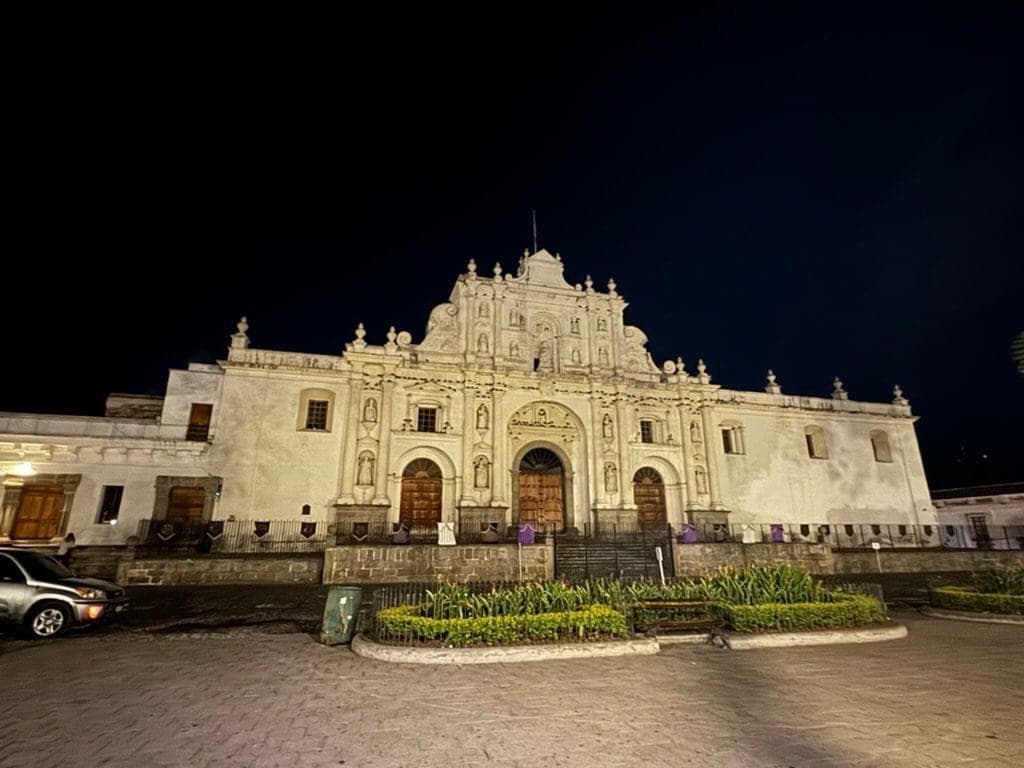
Cathedral de Santiago Antigua
