
Beyond the Ordinary Everest Trip: Three Ways to Experience Nepal's Himalayan Giants
By
Introduction: Three Ways to Experience the Everest Region
Planning an Everest trip is harder than it looks. Not because there's too little to see, but because the region means different things to different people. Some travelers want to walk slowly through Sherpa villages with a pack on their back. Others just want to look down on the world's highest peaks from a window seat. And a smaller group, usually the ones who've already done a few treks, start eyeing a summit of their own.
This guide covers three ways to do it: an Everest Base Camp Trek with Helicopter Return, a dedicated helicopter sightseeing tour, and Island Peak climbing. They couldn't be more different. Effort, time, altitude exposure and preparation all change from one to the next. Read through them, compare them honestly against your fitness and your calendar, and the right pick usually becomes obvious.
1. Everest Base Camp Trek with Helicopter Return: Walk In, Fly Out
What Makes This Trek Different?
The idea is simple. You walk up into the Khumbu the old-fashioned way, then skip the long walk down and fly back instead. You still get the Sherpa villages, the prayer flags, the swaying suspension bridges and the slow build toward Everest Base Camp. What you lose is the multi-day descent over ground you've already covered. For people who love trekking but can't spare the extra days at the end, an Everest Base Camp Trek with Helicopter Return is a pretty sensible compromise. You earn the views on foot, then save your time and your knees on the way out.
Route, Duration, and Main Stops
Most itineraries start with a flight from Kathmandu to Lukla. From there you trek to Phakding, climb to Namche Bazaar, move on through Tengboche and Dingboche, and finally reach Gorak Shep, the last settlement before Everest Base Camp. Many trekkers also head up Kala Patthar for a wide mountain panorama. How long it all takes depends on your acclimatization days and the operator's plan, so ask for the day-by-day. The helicopter leg is the flexible part. Pickup point, timing and even whether it flies on a given day come down to weather, landing conditions and logistics.
Fitness, Acclimatization, and Practical Preparation
Don't let the helicopter fool you. The walking up is still the hard part, with long days, steady climbs and cold mornings at altitude. Flying out doesn't cancel the need to acclimatize on the way in, so build in rest days and don't rush the ascent. Pack properly: broken-in trekking boots, layers, a warm sleeping bag if your lodges don't supply one, sun protection and any personal medication. Before you book, check a few things with the operator. Where does the helicopter pick you up? What are the baggage and weight limits? What happens if weather grounds the flight? And is Kala Patthar actually part of the itinerary?
Who Should Consider This Experience?
This suits people who want the real trekking experience but have a tighter schedule. The trade-off is money against time: the helicopter adds cost, and what you're paying for is days back. Keep your dates flexible, too. Mountain flights get delayed or cancelled, and a couple of spare days can save a lot of stress. If you can't commit to a multi-day walk at all, though, there's a shorter way to see the same landscape.
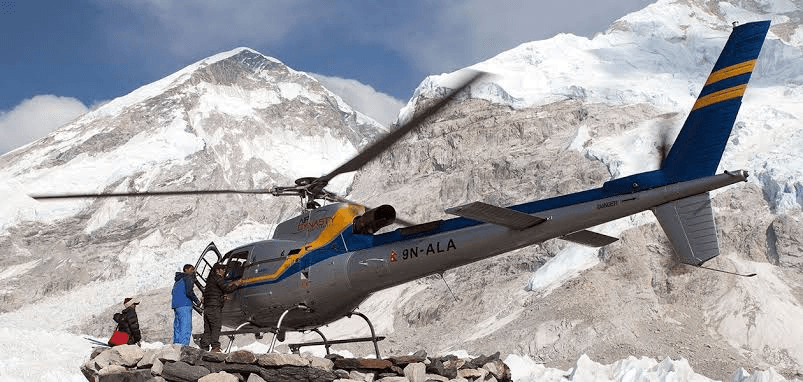
2. Everest Base Camp Helicopter Tour: See the Himalayas from Above

What to Expect from an Everest Helicopter Tour
An Everest Base Camp Helicopter Tour is for people who want the region without the multi-day trek. You fly over Himalayan peaks, glaciers, deep river valleys and mountain settlements, with the whole Khumbu landscape spread out below you. It's a completely different experience from walking it. On foot you feel the distances and the thin air; from above you get scale and the big picture in a few hours. Routes, stops and landing options all depend on weather, aircraft operations, altitude and the specific tour, so don't expect two itineraries to match.
Flight Route, Mountain Views, and Possible Stops
Flights typically leave from Kathmandu and head east toward the Everest region. Landmarks along the way can include Lukla, the Khumbu Valley, the area around Everest Base Camp and Kala Patthar, depending on the tour. Some operators build a stop for breakfast at a mountain viewpoint. Here's the catch, though: never assume a landing at Everest Base Camp or Kala Patthar unless it's explicitly confirmed. It's an easy misunderstanding to make, and a disappointing one. Ask directly, and get the answer before you pay.
Cost, Weather, Safety, and Booking Details
Price depends on a few things: shared or private charter, number of passengers, flight duration and whether landings are planned. Figures change, so get a current quote rather than trusting an old one. Also confirm baggage allowances, passenger weight limits, airport transfers, and the cancellation and refund terms. Weather, visibility, wind and altitude limits can all change the plan on the day. And since you'll be at high elevation, even briefly, talk to your doctor first if you have any health concerns.
Is a Helicopter Tour Better Than Trekking?
Not better, just different. A helicopter tour is about aerial views and saving time. Trekking gives you villages, conversations, long walking days and a slow adjustment to the mountain environment. If you have a short holiday, limited trekking experience, or simply prefer to see mountains from the air, the helicopter makes good sense. And if neither option feels like enough of a challenge, there's a third one that asks a lot more of you: Island Peak.
3. Island Peak Climbing: Take Your Himalayan Adventure Further

Where Is Island Peak, and What Makes It Special?
Island Peak, also known as Imja Tse, sits in Nepal's Everest region, within the wider Khumbu trekking area. It appeals to trekkers who want to go beyond walking trails and try something more serious. The trip mixes familiar mountain paths, high-altitude scenery and technical climbing terrain near the top. That last part matters. Trekking to Everest Base Camp is a walk. Island Peak Climbing is a summit expedition, and it demands real mountaineering preparation.
Route, Acclimatization, and Expedition Planning
The usual approach follows the Everest region trails toward Chhukung and then on to Island Peak Base Camp, though itineraries vary. Acclimatization isn't optional here. Rest days and a gradual ascent give your body time to adjust before summit day. You'll also want an experienced climbing guide, suitable equipment and a plan for conditions that can change fast. Total trip length depends on the route, the acclimatization schedule, the weather and your own experience, so compare itineraries carefully instead of going by the headline number of days.
Fitness, Technical Skills, and Essential Equipment
Expect long days at altitude, so cardiovascular fitness, endurance and balance all count. Depending on the route and conditions, climbing can involve crampons, an ice axe, a harness, a helmet and fixed-rope techniques. Trekking experience alone isn't enough. Learn and practise these skills under qualified guidance before summit day, not on it. Sort out suitable insurance, emergency arrangements and equipment checks ahead of time. And be ready to turn back. If conditions aren't safe, the mountain will still be there next season.
Who Is Island Peak Climbing Suitable For?
Island Peak suits fit trekkers who are ready to learn mountaineering skills and accept the demands of a high-altitude summit attempt. Previous trekking helps, but it doesn't automatically prepare you for technical climbing. Choose your itinerary around your experience, fitness and acclimatization needs, and lean on professional guidance. Once you've looked at all three options, the real question is how they stack up side by side.
How to Choose Between the Three Everest Experiences
Compare Time, Effort, and Experience
Factor | Trek with Helicopter Return | Helicopter Tour | Island Peak Climbing |
|---|---|---|---|
Main experience | Multi-day trekking and aerial return | Aerial mountain sightseeing | High-altitude mountaineering |
Physical effort | Sustained walking at altitude | Limited physical exertion | High endurance and climbing demands |
Time commitment | Several days, depending on itinerary | Usually a single day | A multi-day expedition |
Technical climbing skills | Not normally required for trekking | Not required | Required, with appropriate training |
Main planning concern | Acclimatization and return logistics | Weather and flight operations | Skills, acclimatization, and summit conditions |
Start with your calendar. If you only have a day to spare, the helicopter tour is the realistic option. If you can set aside several days, trekking opens up. Island Peak needs the longest window, plus time to train beforehand. Then be honest about fitness. If days of steady uphill walking sound miserable, don't force it. Budget matters too, since helicopter flights add cost. Last, ask yourself what you actually want from the trip: culture, views or a summit.
Final Planning Advice Before Your Everest Adventure
Before you commit, check the season, the itinerary details, permit requirements, your insurance coverage and exactly what the operator is arranging. Mountain weather and altitude can disrupt even well-planned trips, so leave room for delays and put safety ahead of any particular viewpoint or summit. In the end, the distinction is simple. Trekking gives you cultural, ground-level experience. A helicopter tour gives you a short aerial perspective. Island Peak climbing introduces the real demands of mountaineering. Pick the one that fits who you are right now.