
The best places to hike in Nepal, according to the time you actually have
By
From week-long walks in the Annapurna foothills to demanding Himalayan circuits, Nepal's best trek may depend less on the mountain than your calendar.
Long before sunrise in Kathmandu, Everest-bound trekkers are already travelling east towards Manthali Airport. During Nepal's busiest trekking months, flights to Lukla often depart from here, requiring a four- to five-hour drive before the journey into the mountains even begins.
It's a detail rarely mentioned in descriptions of Nepal's famous trails. Yet it illustrates why choosing the best places to hike in Nepal involves more than comparing elevations, scenery or walking distances.
A trek advertised as 12 days does not necessarily mean 12 days away from home. International flights, road transfers, acclimatisation and unpredictable mountain weather can substantially extend the journey.
The most rewarding route is often the one that fits your available time without forcing you to rush.
The days that disappear before the walking begins
Most international visitors spend at least one night in Kathmandu before departing for the mountains. Equipment checks, trekking briefings and onward transportation can consume another part of the schedule.
Reaching remote trailheads may involve long drives along winding Himalayan roads. Lukla flights, meanwhile, depend on suitable visibility and weather conditions.
At higher elevations, acclimatisation days are essential rather than optional. Even experienced hikers cannot safely accelerate their body's adjustment to thinner air simply because their return flight is approaching.
These practicalities help explain why a ten-day holiday rarely accommodates ten full days of high-altitude trekking.
One week: Poon Hill and the Annapurna foothills
For travellers with limited time, the mountains around Pokhara offer some of Nepal's most accessible short treks.
The Ghorepani Poon Hill trek reaches a viewpoint at 3,210 metres, overlooking Dhaulagiri and the Annapurna range. Its stone stairways wind through Magar and Gurung settlements, terraced hillsides and forests that burst into red and pink rhododendron blossoms during spring.
Before dawn, hikers climb from Ghorepani to watch sunlight gradually illuminate the Himalayan peaks.
The walking route usually takes three to five days, leaving some flexibility for travel through Pokhara.
Its moderate maximum elevation also makes Poon Hill more accessible than Nepal's high-altitude expeditions, although altitude symptoms remain possible.
For a short holiday, this combination of mountain scenery, village life and manageable logistics is difficult to match.
Eight to eleven days: Mardi Himal and Langtang Valley
With additional time, trekkers can venture beyond the foothills into more dramatic mountain landscapes.
Mardi Himal follows a forested ridge towards Machhapuchhre, the distinctive fishtail-shaped mountain overlooking Pokhara. The trail emerges above the treeline into alpine terrain, with increasingly expansive views of the Annapurna massif.
The upper route approaches 4,500 metres, where colder temperatures and altitude demand greater care. A complete journey, including transport arrangements, generally requires eight to ten days.
Langtang Valley, north of Kathmandu, offers a different experience shaped by Tamang culture and mountain communities.
The trail follows the Langtang River towards Kyanjin Gompa, approximately 3,870 metres above sea level, passing yak pastures and settlements beneath towering Himalayan peaks.
The valley also bears the legacy of Nepal's devastating 2015 earthquake, when an avalanche destroyed much of Langtang village. Rebuilt lodges and local businesses now welcome visitors, making the trek a journey through both extraordinary scenery and community recovery.
Most itineraries require seven to ten days from Kathmandu, depending on walking pace and road conditions.
Twelve to sixteen days: Everest, Annapurna and Manaslu
Two weeks opens the possibility of Nepal's best-known Himalayan journeys.
Everest Base Camp, at 5,364 metres, remains the country's most recognisable trekking destination. The route passes through Sherpa communities, Buddhist monasteries and the mountain trading centre of Namche Bazaar before approaching the Khumbu Glacier.
Acclimatisation stops around Namche and Dingboche are crucial. A complete itinerary typically requires 14 to 16 days, with additional flexibility advisable for Lukla flight disruptions.
Annapurna Base Camp, at approximately 4,130 metres, offers a shorter approach into a spectacular natural amphitheatre surrounded by Himalayan giants.
Its trails cross terraced farmland, woodland and narrow mountain valleys before reaching the Annapurna Sanctuary. Although shorter itineraries are possible, adequate acclimatisation and caution around avalanche-prone sections remain important.
The Annapurna Circuit presents a more varied geographical journey, moving from green valleys towards the arid landscapes of Manang before crossing Thorong La at 5,416 metres.
Road expansion has shortened many modern itineraries, allowing travellers to begin farther along the traditional route. However, the high pass still requires gradual acclimatisation and favourable conditions.
For greater remoteness, the Manaslu Circuit follows the Budhi Gandaki valley towards Larkya La, crossing approximately 5,100 metres.
Its Tibetan-influenced villages and comparatively quiet trails appeal to experienced walkers. Restricted-area permits are required, although a March 2026 rule change now allows individual foreign trekkers to obtain permits through registered agencies while accompanied by licensed guides.
Access conditions deserve particular attention. Flooding on October 11, 2026, damaged bridges and trekking trails in the Manaslu region, disrupting travel and requiring fresh assessments before departures.
Three weeks or more: Gokyo, Upper Mustang and Kanchenjunga
Longer holidays allow hikers to explore routes where remoteness becomes part of the appeal.
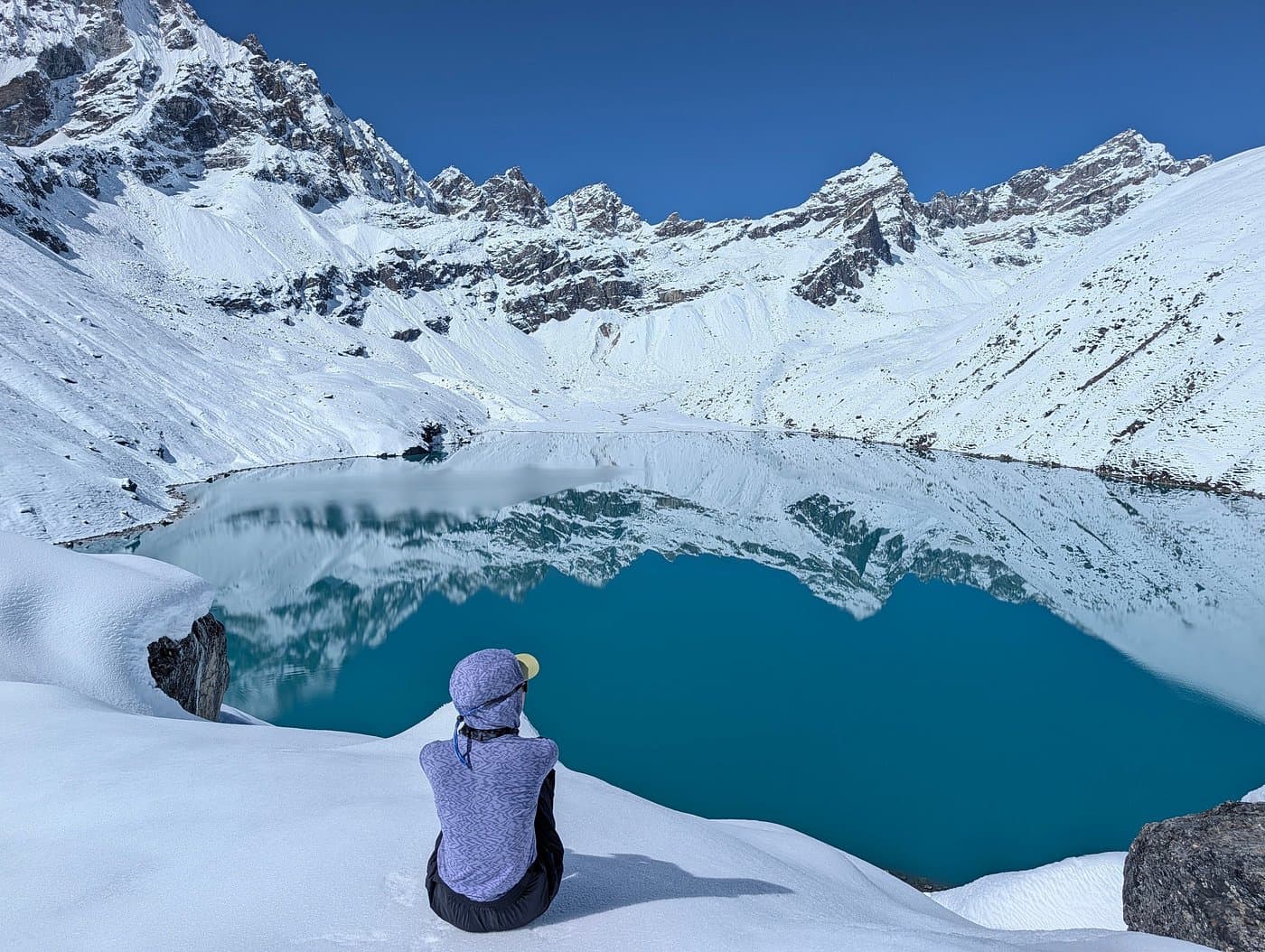
Combining Gokyo Lakes, Cho La Pass and Everest Base Camp takes approximately 17 to 20 days. The journey crosses glacier country, passing turquoise lakes and high-altitude viewpoints away from the busiest stretches of the Everest trail.
Upper Mustang offers a completely different landscape.
Beyond the Annapurna massif, its rain-shadow valleys reveal eroded cliffs, ancient monasteries and the historic walled settlement of Lo Manthang.
The region's relatively dry climate makes it an appealing monsoon-season destination, although approaches can still be affected by rainfall.
Foreign visitors require restricted-area permits, currently charged at US$50 per person per day, alongside other applicable conservation fees.
Farther east, Kanchenjunga offers one of Nepal's most remote trekking experiences. Journeys towards the northern and southern base camps generally require three weeks or longer, with demanding approaches and limited infrastructure compared with Everest or Annapurna.
The right month can change everything
Spring, from March to May, and autumn, particularly October and November, remain Nepal's principal trekking seasons.
Spring brings flowering forests and generally favourable temperatures, while autumn often offers excellent mountain visibility after the monsoon.
Neither season guarantees stable conditions.
Late September can remain wet, and unseasonal snowfall may affect high passes even during popular trekking months. Winter brings quieter trails but freezing nights and increased difficulties crossing Thorong La, Larkya La and Cho La.
Lower routes such as Poon Hill are often more manageable during colder months, while Upper Mustang provides an alternative during the summer monsoon.
Whatever the destination, checking current trail conditions matters more than relying entirely on historical weather patterns.
The most valuable day may be the one left unplanned
A successful Himalayan itinerary accounts for everything beyond the walking: arrival, transport, acclimatisation, permits and potential delays.
At Kathmandu-based Nepal Hiking Team, organising journeys across the country's trekking regions involves these practical considerations alongside selecting suitable routes and walking schedules.
For a traveller with fourteen days available, reserving several for transfers and unexpected interruptions may mean choosing a ten-day trek rather than attempting a longer expedition.
That decision rarely diminishes the experience.
Nepal's most memorable moments often happen between destinations: a conversation beside a teahouse stove, the sound of yak bells approaching through morning mist, or the first sunlight touching a distant summit.
The mountains are unlikely to notice how many days you have. Choosing a route that gives you time to appreciate them makes all the difference.