
Beyond the Famous Trails: Discovering Nepal Through the Everest Base Camp Trek, Manaslu Circuit, and Kanchenjunga
By
Nepal Is More Than Its Mountain Summits
Ask anyone to picture Trekking in Nepal, and the same image tends to show up: a stone trail, a line of prayer flags, and Everest somewhere in the distance. It’s a good image, but a small slice of the country.
Nepal’s mountains are lived in. People farm them, trade across them, and pray in them, and they have done so for generations. That’s why every valley seems to have its own accent, its own food, and its own way of building a house. You notice it quickly once you walk in more than one region.
This article looks at three of those regions: the Everest Base Camp Trek in the Khumbu, the Manaslu Circuit in the central Himalaya, and the remote trails around Kanchenjunga in the east. Same mountain range, very different stories. Rather than ranking them, it’s more useful to ask what each one shows you about the people and the land.
The Himalaya as a Living Landscape
Nepal doesn’t jump from flat to frozen. It climbs in steps. Warm, terraced foothills come first, then forested valleys with rivers cutting through them, and finally the high settlements where barley and potatoes are about all that will grow.
Those steps decide how people live. Down low, families farm rice and millet on carved hillsides. Higher up, the work shifts to livestock, short growing seasons, and trade. Houses change too. Timber and mud give way to thick stone walls built to hold heat.
East to west matters as well. The wetter eastern hills feel green and dense, while the central and western Himalaya get drier and more Tibetan in character as you go north. So a trek isn’t just a walk toward a view. It’s a walk through several ways of life stacked on top of each other.
Everest Region: Where Mountain Adventure Meets Sherpa Heritage
The Everest Base Camp Trek and Its Mountain Communities
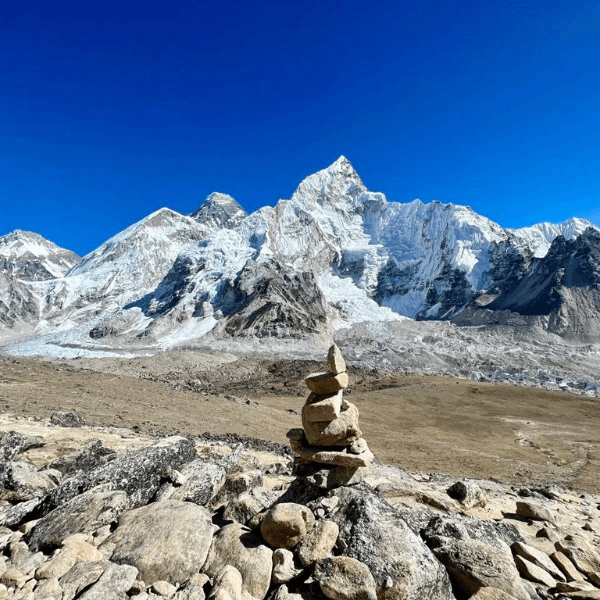
For most people, the Everest Base Camp Trek is the starting point for the whole Himalayan idea, and it earns that reputation. The trail follows the Dudh Koshi Valley upward through the Khumbu, passing suspension bridges, pine forest,s, and one stunning skyline after another: Ama Dablam, Lhotse, Nuptse, and eventually Everest itself.
But the mountains are only half of it. The Khumbu is Sherpa country, and Sherpa families have shaped the story of Himalayan climbing for as long as there has been one. Many guides and lodge owners you meet here come from families rooted in these valleys.
Namche Bazaar and the Meeting of Two Worlds
Namche is the busiest hub on the route, a horseshoe of stone and tin-roofed buildings built into a steep slope. Trekkers stock up here, and so do locals. Traders, yak herders, and villagers from higher up come down for supplies, and the weekly Saturday market still draws people from across the region. It’s loud, practical, and oddly social.
Further up, Tengboche Monastery sits on a ridge facing the big peaks, and the atmosphere changes completely. Prayer wheels, mani walls carved with mantras, and chortens mark the trail the whole way. Locals pass them on the left, so you’ll want to do the same.
What stays with you from the Everest region isn’t just the view of the summit. It’s the way a deeply Buddhist culture and a global mountaineering scene have settled in beside each other.
Beyond the Everest Trail: Understanding Himalayan Village Life
Step off the main path, or just look closely at the smaller villages along it, and a quieter picture appears. Houses are low and stone-built, often with a courtyard for animals. Potatoes, buckwheat, and barley go into the ground when the season allows. Yaks and their crossbreeds do the heavy work and give milk, butter, and wool.
Much of this depends on knowledge you can’t read in a guidebook. Which pasture is safe in which month? How a village shares work when snow closes the trail.
Tourism has changed these places, no question. It brought lodges, steady income, and new opportunities for young people. Yet festivals, family customs, and religious practices haven’t disappeared, and in many villages they simply carry on beside the lodge business. If Everest is the famous front door of the Himalaya, the next region feels more like the back of the house, where things are quieter and a bit more unpolished.
Manaslu Circuit: A Journey Through Remote Valleys and Tibetan-Influenced Culture

The Cultural Landscape of the Manaslu Circuit Trek
The Manaslu Circuit Trek loops around Manaslu, the eighth-highest mountain in the world. It begins in warm, green country and follows the Budhi Gandaki river upward through narrow gorges, bamboo and rhododendron forest, and terraced hillsides that slowly give way to something far starker. By the end the route crosses the high Larkya La pass before dropping toward the other side.
The shift in culture is just as noticeable as the shift in scenery. Lower villages feel closer to the Nepali hills. Higher up, around Samagaun and Samdo, the architecture, clothing and religious life lean strongly toward Tibetan Buddhism. You’ll see flat-roofed stone houses, long mani walls, small gompas and prayer flags that look weathered from years of wind.
It also feels different in a practical sense. Compared with the Everest corridor, Manaslu is quieter, the lodges are simpler, and the villages are further apart. Travellers after that slower experience often find it through organised treks, such as those run by Outshine Adventure.
Between Nepal and Tibet: The Cultural Connections of the High Himalaya
The Himalaya has never been a wall. For centuries it was a crossroads. Salt, wool, grain, and livestock moved over high passes between Tibet and the Nepali valleys, and ideas moved with them. That’s why Buddhism, language, and even food in the northern communities share so much with their neighbors across the border.
You can see it in the monasteries, the carved manii stones, the dialects spoken in upper valleys, and the heavy use of barley and butter in the kitchen.
That’s worth remembering. These communities aren’t copies of Tibet, and they aren’t identical to each other. A Sherpa village in the Khumbu, a Tsum community near Manaslu, and a Buddhist settlement in the far east each keep their own identity, even where the shared roots are obvious.
Kanchenjunga: Discovering the Eastern Himalaya and Its Cultural Diversity

Kanchenjunga Trekking Beyond the Mountain Views
Far in the northeast corner of Nepal, on the border with Sikkim, rises Kanchenjunga, the third-highest mountain on earth. It’s a massive rather than a single peak, and it has a very different character from Everest. Greener. Wetter. Wilder.
Kanchenjunga Trekking takes you through rhododendron forest, steep river valleys, cardamom-growing slopes, and finally high, windswept meadows below glaciers. Trails here are long, villages are small, and you may go a good while without seeing another trekker. That remoteness is the whole appeal for many people.
The People of the Eastern Hills
The wider eastern hills are home to Limbu and Rai communities, both part of the Kirat heritage, with their own languages, oral traditions, and festivals. Higher up, Buddhist communities live closer to the mountain. For many local people, Kanchenjunga isn’t just scenery. It’s a sacred presence, something to be treated with respect.
Farming here is varied: millet, maize, cardamom, livestock, and terraced fields, depending on altitude. Hospitality is warm and quite unhurried. A cup of tea often turns into a conversation, and the conversation turns into directions, family stories and a plate of whatever’s cooking.
This is where cultural encounters become the main event. It’s a slow, real introduction to a part of Nepal many visitors never reach.
Food, Monasteries, and Festivals: Everyday Expressions of Himalayan Culture
Food is often the easiest door into a culture. Dal bhat, rice with lentils and vegetables, is the backbone of nearly every meal across Nepal, and refills are normal. In colder, higher villages you’ll also run into thukpa, a hearty noodle soup, and momo, steamed or fried dumplings that taste better the further you walk to reach them. Barley, butter tea, and potatoes show up more in Tibetan-influenced areas.
Monasteries play a bigger role than visitors first realize. In the Everest and Manaslu regions they’re not just places of worship. They’re where villages gather, where children learn, and where the calendar is marked by prayer ceremonies and festivals. Mani Rimdu in the Khumbu, with its masked dances, is a well-known example.
In the eastern hills, the rhythm is different. Harvest celebrations and family rituals tie people to the land and to each other.
One Himalayan Country, Many Regional Identities
Put Everest, Manaslu, and Kanchenjunga side by side, and the contrasts are obvious. One is busy and global, one is remote and Tibetan in feel, one green, quiet and eastern. Add the Annapurna region, with its Gurung and Thakali communities, and the picture gets even richer. Nepal also shares cultural threads with Tibet to the north and Bhutan further east, which only adds layers.
Each area has its own architecture, its own festivals and its own sense of who it is. That’s the point worth holding on to. No single trekking destination can stand in for Nepal’s mountain heritage; judging it by one trek is like judging a library by one book.
Discovering Nepal Through Its Mountains and People
Nepal’s Himalayan identity goes beyond its famous peaks. Everest reflects the rich Sherpa culture, Manaslu showcases Tibetan traditions, and Kanchenjunga reveals the remote, greener, and culturally rich eastern Himalayas.
At Outshine Adventure Nepal, we organize authentic Himalayan trekking adventures for international travelers, especially Spanish-speaking travelers interested in Viajes a Nepal and exploring remote destinations such as the Trekking al Campo Base del Kanchenjunga.
Our journeys are about more than mountains. They offer opportunities to explore traditional villages, meet local communities, experience their culture, and create unforgettable memories.
Discover the eastern Himalayas with us: Trekking al Campo Base del Kanchenjunga.