
Iglesia de San Francisco El Grande
Closed now
Iglesia de San Francisco El Grande
Calle Oriente,1a Avenida Sur 7a, Antigua 03001 Guatemala Posted by Brandon B.Admin
Iglesia de San Francisco El Grande: Antigua's Most Revered Church
Standing at the southern end of Antigua's historic center, Iglesia de San Francisco El Grande is one of the oldest and most significant religious sites in all of Central America. The church anchors the corner of 7a Avenida Sur, and if you've walked any distance through Antigua, you've almost certainly passed it. What draws people here isn't just the colonial architecture or the broad, weathered facade. It's the shrine of Hermano Pedro de Bethancourt, a 17th-century Franciscan lay brother who is Guatemala's first canonized saint.
That combination of architectural weight and living devotion makes this church different from many of Antigua's other colonial landmarks. People come here to pray, not just to photograph.
Why Iglesia de San Francisco El Grande Matters
The original church on this site dates to 1579, making it one of the earliest Franciscan foundations in the Americas. Over the centuries, earthquakes reduced and rebuilt it repeatedly, most devastatingly in 1773 when the Santa Marta earthquakes leveled much of Antigua. What you see today is largely a reconstruction, but the scale still impresses. The nave is long and high, the retablos are gilded, and the side chapels carry the accumulation of centuries of offerings.
Hermano Pedro arrived in Antigua in the mid-1600s and founded a hospital for the poor before dying in 1667. He was beatified in 1980 and canonized by Pope John Paul II in 2002, the only Guatemalan saint. His tomb in a chapel to the right of the main nave draws pilgrims from across Guatemala and Central America year-round. On his feast day, April 25th, the church fills well beyond its capacity and the streets around it become a procession route.
Quick Facts
- Address: 1a Avenida Sur at Calle Oriente, Antigua, Guatemala
- Original foundation: 1579
- Denomination: Roman Catholic, Franciscan order
- Hermano Pedro canonized: 2002
- Museum on site: Yes, a small attached museum covers the church's history and Hermano Pedro's life
- Entry to the church: Free for worship; the museum charges a modest admission fee
- Photography: Permitted in most areas, restricted near the shrine during active prayer
Getting There
From Parque Central, the main plaza at the heart of Antigua, the church is about a 10-minute walk south along 5a Avenida Sur. Turn left on Calle Oriente and the facade faces you directly. Tuk-tuks, the three-wheeled taxis that circulate constantly in Antigua, can get you there from anywhere in the city center in under five minutes.
The neighborhood around the church is one of the more active in Antigua's southern end, with markets, comedores, and small shops nearby. It's a lived-in part of town rather than the polished tourist corridor closer to the Arco de Santa Catalina.
The Layout and Experience
The entrance opens onto a broad atrium. The main church is directly ahead, and the museum entrance branches off to one side. Many visitors do both, though the church itself tends to take priority.
Inside, the nave runs deep, with carved wooden pews and a high barrel ceiling that amplifies sound in a way that feels ancient. The main altar is elaborate, and the side chapels hold colonial-era paintings and statuary that have survived multiple earthquakes, sometimes visibly repaired. The chapel of Hermano Pedro sits to the right of the nave. The atmosphere there is different from the rest of the church. People kneel, leave flowers and candles, and write petitions. It's not a museum space. If you visit during a mass or while pilgrims are present, keep that in mind.
The attached museum is modest in size but worth the time if you have it. It holds relics, documents, and objects connected to Hermano Pedro's life, along with information about the church's construction history and the earthquakes that repeatedly reshaped it.
Best Time to Visit
Most mornings are relatively quiet before 10am, which is when the light through the facade is also at its best for photography. Weekday afternoons tend to draw more local visitors and pilgrims than tourist groups. Weekends, especially Sundays, bring families and can feel crowded around the shrine.
Semana Santa, the Holy Week leading up to Easter, transforms the area. Processions pass directly in front of the church, and the alfombras (the elaborate sawdust and flower carpets laid in the streets) often extend along the surrounding blocks. If you're in Antigua during that week, the church is central to the whole experience. That said, it's also when Antigua is at its most crowded, with accommodation booking out months in advance.
April 25th, the feast of Hermano Pedro, draws the largest gatherings of the year. Plan accordingly if you want quiet contemplation, or lean into it if you want to witness one of the most deeply felt religious observances in Guatemala.
Photography Tips
The exterior facade photographs well in morning light, roughly between 8am and 10am, when the sun hits it from the east. The warm volcanic stone takes on a richer color in that window. Step back to the far side of the street or into the atrium entrance to get the full width of the facade in frame.
Inside, light levels are low and uneven, so a steady hand or a camera that handles low light well makes a real difference. The gilded altarpiece at the main nave responds well to whatever natural light filters in from the upper windows. Near the shrine of Hermano Pedro, read the room before raising your camera. It's appropriate to ask or simply observe for a moment first.
Combining with Nearby Attractions
The church sits near several other landmarks worth folding into the same half-day. Parque Central and the Cathedral of Santiago are about 10 minutes north on foot. The ruins of La Recolección, a dramatically collapsed baroque church, are a short walk to the northwest and offer a striking contrast to the intact grandeur of San Francisco. Mercado de Artesanías, Antigua's craft market, is also nearby and convenient if you want to pick up something after your visit.
Many visitors pair San Francisco with a walk along 5a Avenida Sur, which passes several smaller chapels, local bakeries, and coffee shops before arriving back at Parque Central. The whole loop takes roughly two hours if you stop at the museum.
Practical Tips
- Dress modestly. Shoulders and knees should be covered to enter the church. Lightweight layers work well given Antigua's climate.
- The museum closes earlier than the church itself. If the museum is a priority, arrive before midday to be safe.
- The atrium can be used as a quiet rest stop even if you're not entering the church. There are benches and shade.
- Spanish is the primary language here. A few words go a long way with local staff and volunteers near the shrine.
- Tuk-tuks wait on the main street outside. Agree on the fare before you get in.
- If you're visiting during Semana Santa, expect street closures near the church during processions. Build extra time into any plans.
FAQ
Is Iglesia de San Francisco El Grande free to enter?
The main church is free to enter for worship and general visits. The attached museum charges a small admission fee. Both are accessible on the same visit.
Can non-Catholics visit?
Yes. The church welcomes all visitors. The main expectation is respectful behavior, particularly near the shrine of Hermano Pedro where active prayer often takes place.
How long should I plan to spend here?
The church alone can be seen in 20 to 30 minutes. Add another 30 to 45 minutes if you plan to visit the museum. An hour total is a reasonable estimate for most visitors.
Is the church accessible for visitors with limited mobility?
The main nave is at ground level and generally accessible. Some parts of the complex, including areas of the museum, may have steps or uneven surfaces typical of colonial-era construction.
What's the significance of the shrine compared to the church itself?
For many Guatemalans, the shrine of Hermano Pedro is the primary reason to visit. The canonization in 2002 elevated the site's importance significantly, and the pilgrimage traffic to the shrine often exceeds ordinary tourist visits on any given day.
Opening hours
Reviews
Sign in and mark this place visited to leave a review.
No reviews yet.
Free Trip Planner
Plan your Antigua trip with our free planner
Build a day-by-day itinerary with AI suggestions, hand-picked places, and friends. Free forever — no credit card.
Related reading

Things to see near Iglesia de San Francisco El Grande


Places to eat or drink near Iglesia de San Francisco El Grande

Mesón Panza Verde

Por Qué No? Cafe

Mellow coffee

Hot Chiplin Bar and Restaurant
More places in Antigua

MUNAG – Museo Nacional de Arte de Guatemala

Centro Cultural La Azotea
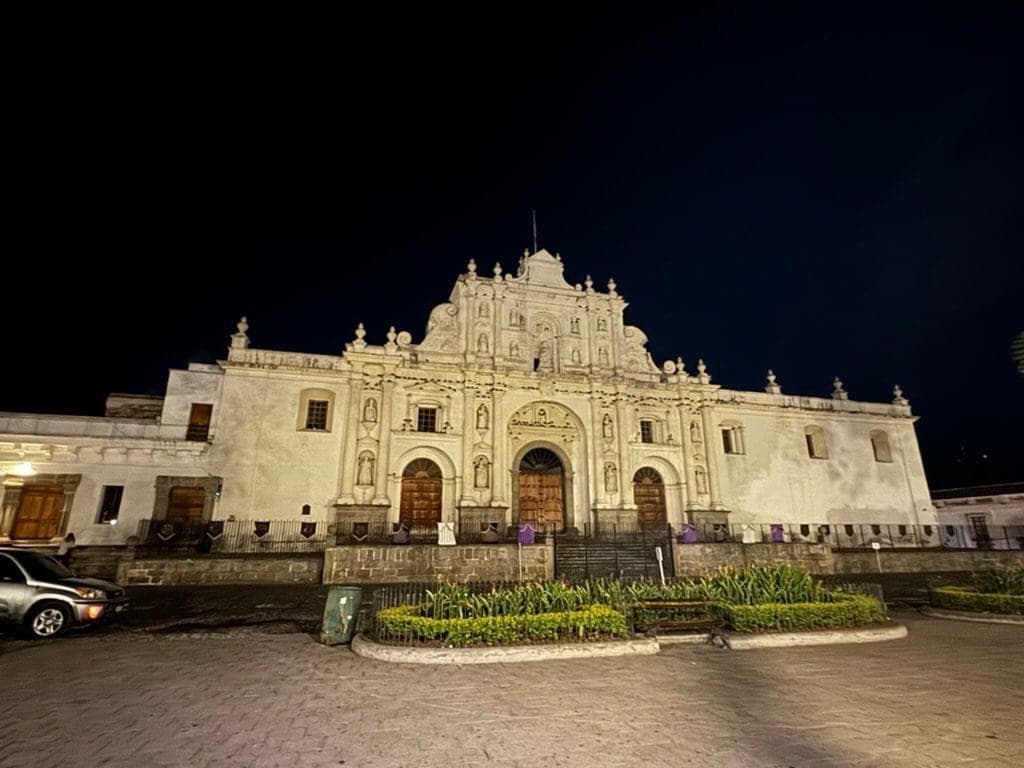
Cathedral de Santiago Antigua
