
 Posted by bazartravelsTraveler
Jaciment del Born
Jaciment del Born sits beneath the Mercat del Born, a 19th-century market hall in Barcelona's Ciutat Vella neighborhood. What looks like a routine cultural venue from street level conceals something far more layered: an archaeological site that tells the story of Barcelona after the Spanish Succession War of 1701 to 1714. The excavation, begun in 1999, exposed the remains of an entire neighborhood destroyed in 1714 when Spanish forces demolished homes to build a fortress. Walking through Jaciment del Born means descending into literal and metaphorical ruins of the city's past.
Why this place matters
The 1714 destruction of Barcelona's waterfront neighborhood wasn't accidental urban renewal. After the city backed the wrong side in the War of Spanish Succession, the new Bourbon king ordered the demolition of homes to make way for the Citadel fortress (which still stands, now a park). The families who lived here lost everything. For nearly three centuries, this history remained buried under rubble and later under the market floor.
The archaeological finds preserve ordinary domestic life in ways that written records cannot. You'll encounter pottery, tools, coins, and the remains of kitchens and workshops. Children's toys appear alongside merchant scales. These objects make the loss concrete rather than abstract. The site offers Barcelona a chance to reckon with a violent episode in its past, one that shaped the city's layout and politics for generations.
Quick facts
- Location: Plaça Comercial 12, Ciutat Vella, 08003 Barcelona
- Housed within: Mercat del Born, a cast-iron market hall completed in 1876
- Excavation period: Began 1999, ongoing scholarly work
- Site size: Approximately 2,000 square meters of exposed archaeological remains
- Average visit duration: 45 minutes to 1.5 hours
- Accessibility: Ground-floor entrance, some stairs within the site
- Nearest metro: Jaume I (Line 4), about 150 meters away
Getting there
Jaciment del Born is in the Gothic Quarter, a five-minute walk from Barcelona's waterfront. If you arrive by metro, take Line 4 to Jaume I station. Exit toward Carrer de Montcada and head downhill toward the water. The Mercat del Born building is impossible to miss: a vast iron-and-glass structure occupying an entire block between Plaça Comercial and Carrer de l'Argenteria.
By bus, multiple lines stop near Plaça Comercial. Walking from the city center takes 10 to 15 minutes from Plaça Reial or the Cathedral. The neighborhood itself is best navigated on foot, since streets were designed centuries before cars.
The layout and experience
You enter through the Mercat del Born's main floor, a soaring space with iron columns and high windows. The market hall itself occasionally hosts temporary exhibitions and cultural events. The archaeological site lies below, accessed via stairs or a gentle ramp on the eastern side of the building.
The excavation is presented as a walkway that loops through the site. Glass barriers and informational panels separate visitors from the actual artifacts in situ. Rather than removing everything and displaying it in a sterile museum, this approach preserves the neighborhood in context. You see where buildings stood, how close together homes were packed, where a well provided water, where a bakery oven still sits in the ground.
The lighting is deliberately muted. Spotlights illuminate specific areas while others recede into shadow. This creates an atmosphere somewhere between a museum and an archaeological dig site, which is precisely what it is. Information panels appear in Catalan, Spanish, and English. They often pose questions rather than provide answers, inviting you to interpret what you're seeing.
Main highlights
The most striking feature is the sheer density of the pre-1714 neighborhood. The footprints of homes are marked in the stone floor. What appears to be a modest street width actually contained three to four stories of housing, with families living directly above workshops and shops. This vertical compression of urban life is difficult to grasp until you see it mapped out in front of you.
Several features emerge clearly from the excavation. A brick oven used for baking remains in one corner, its shape and position suggesting a small bakery or communal oven. Wells indicate where residents drew water. The foundations of a small chapel are marked, indicating religious life in the neighborhood. Pottery shards, some decorated with patterns, sit in labeled sections of the dig. A scale model near the site entrance shows what the neighborhood likely looked like before demolition.
Personal objects are scattered throughout: coins, buttons, fragments of combs, pieces of glass. These domestic details create an intimate connection to people whose names and stories are mostly lost. A child's marble sits near a kitchen hearth. A merchant's weights lie on what was once a shop counter. The effect accumulates as you walk, building a sense of presence from absence.
History and background
Barcelona's allegiance to the Archduke Charles during the War of Spanish Succession proved catastrophic. When the conflict ended in 1714 with Bourbon victory, King Philip V sought to punish the city for backing his rival. The punishment was systematic and brutal: demolition of the entire waterfront neighborhood to construct the Citadel, a fortress designed to control the population and enforce royal authority.
Roughly 1,200 buildings were destroyed, displacing thousands of residents. The rubble was piled up and built over. For nearly three centuries, the history of this demolition faded from collective memory, buried as literally as the neighborhood itself. The area became the site of the Mercat del Born market, completed in 1876, which itself became a beloved civic institution.
In 1999, plans to renovate the market hall led to preliminary archaeological surveys. What researchers discovered beneath the floorboards transformed the project entirely. Rather than simply renovating the market, the decision was made to excavate and preserve the pre-1714 neighborhood as a museum within the market building. The excavation revealed not just buildings but the complete material culture of the neighborhood: ceramics, tools, bones, coins, textiles in some cases, and the layout of streets and homes.
Tickets and entry
Jaciment del Born operates with timed entry slots. Tickets are typically available for purchase online or at the entrance. General admission is available in several tiers, often including discounts for students, seniors, and children. Family packages are sometimes offered during peak seasons. The site occasionally offers free entry during cultural events or specific times of year, particularly around Catalan heritage celebrations.
Guided tours in various languages can be arranged, though availability depends on staffing. These guided experiences tend to be more expensive than general admission but provide context and interpretation that self-guided visits cannot. Many visitors find the informational panels sufficient, especially if you read slowly and allow time for reflection.
Best time to visit
Summer months (June through August) draw large crowds, particularly midday. Morning visits between 10 am and noon tend to be quieter, and the light at this hour illuminates the site well. September and October offer pleasant weather with fewer visitors. Winter visits are possible but can feel cold in the underground space.
Avoid visiting immediately after tour groups, as the narrow walkways become congested. Off-peak hours are Tuesday through Thursday mornings. Weekends and public holidays attract families and school groups.
Photography tips
The muted lighting and glass barriers create challenges for photography. A camera or phone capable of handling low light will perform better than one relying on flash. Avoid using flash entirely: it's typically prohibited and damages the artifacts. Wide-angle shots from the walkway entrance capture the scale of the site, while close-ups of individual pottery fragments reveal texture and detail.
The scale model near the entrance photographs well and provides context for the bare stone remains below. Early morning light from the high windows creates dramatic shadows that enhance photographs of the site's layout.
Facilities and preparation
The site is mostly underground, so temperatures remain moderate year-round but can feel cool, particularly in winter. Bring a light jacket. Comfortable walking shoes are essential, as the stone floor can be uneven and the walkway loops back on itself multiple times.
The Mercat del Born building contains a small cafe on the ground floor, useful for refreshment before or after your visit. Restroom facilities are available. The site itself is not particularly strenuous, though it requires standing and walking for the duration of your visit. Visitors with mobility issues should note that while a ramp exists, the walkway is narrow in places and involves some turns.
Combining with nearby attractions
Jaciment del Born pairs naturally with other Gothic Quarter sites within walking distance. The Cathedral (Catedral de la Santa Creu i Santa Eulàlia) stands 200 meters uphill to the west. Santa Maria del Mar, a 14th-century church that survived the 1714 demolitions, is 150 meters to the south. Plaça Reial, with its arcades and street performers, lies just beyond.
The Picasso Museum occupies a series of Gothic palaces on Carrer de Montcada, just north of the Mercat del Born. Mercat de Santa Caterina, another 19th-century market hall (now a mixed-use space with a restaurant), is a 10-minute walk northeast. The Citadel itself, the fortress that replaced the demolished neighborhood, is now a public park about 800 meters away, accessible by walking through the Gothic Quarter.
Sample visit plan
Arrive at the Mercat del Born by 10 am to avoid crowds. Spend 15 minutes on the ground floor, observing the market hall's architecture and any temporary exhibitions. Descend to the archaeological site and allow 45 minutes to 1 hour for a self-guided walk. Read the informational panels selectively rather than trying to absorb everything. Focus on one or two areas that genuinely interest you. If you booked a guided tour, allow an additional 30 minutes.
Exit and walk to Santa Maria del Mar (10 minutes), entering the church to see how it has survived since medieval times. Continue to the Picasso Museum if you have time and interest. Alternatively, walk toward the waterfront to see the Maremagnum shopping center and the Columbus monument, both products of Barcelona's modern transformation of its port district.
Practical tips
- Book timed entry online in advance, especially in summer, to guarantee admission
- Plan at least 45 minutes for the site itself; rushing diminishes the experience
- The underground space has limited natural light; allow your eyes to adjust when descending
- Bring a small notebook if you want to jot down questions or observations
- Visit early in your Barcelona trip if you want to understand the city's history before exploring other neighborhoods
- The site is less crowded on weekday mornings than on weekends
- Informational panels are detailed; read them carefully for deeper understanding
FAQ
How long does a typical visit last? Most people spend 45 minutes to 1.5 hours at the site. This includes time reading informational panels and walking the full loop of the excavation. A guided tour adds 30 to 45 minutes.
Is the site wheelchair accessible? A ramp provides access to the main excavation area, though the walkway is narrow in places and does not accommodate all mobility devices. Contact the site in advance if you have specific accessibility needs.
Can I take photographs? Personal photography without flash is permitted. Professional or commercial photography requires advance permission from the site management.
What is there to see if I don't speak Catalan or Spanish? English-language informational panels are present throughout the site. The layout and physical remains are self-explanatory to some degree. A guided tour in English will provide context that self-guided visitors might miss.
Is there a gift shop or cafe? A small cafe operates on the ground floor of the Mercat del Born. A small gift shop may be present depending on current operations. Call ahead to confirm specific amenities.
Reviews
Sign in and mark this place visited to leave a review.
No reviews yet.
Free Trip Planner
Plan your Barcelona trip with our free planner
Build a day-by-day itinerary with AI suggestions, hand-picked places, and friends. Free forever — no credit card.
Related reading

Things to see near Jaciment del Born

Colonia Guell Gaudi Crypt
Montjuïc Castle
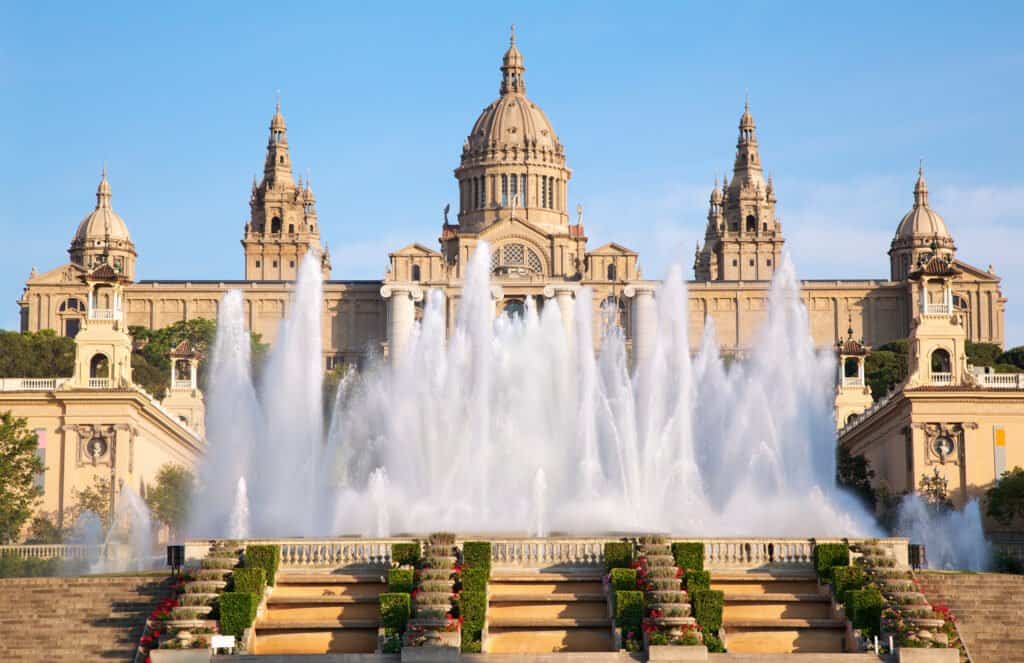
Magic Fountain of Montjuïc
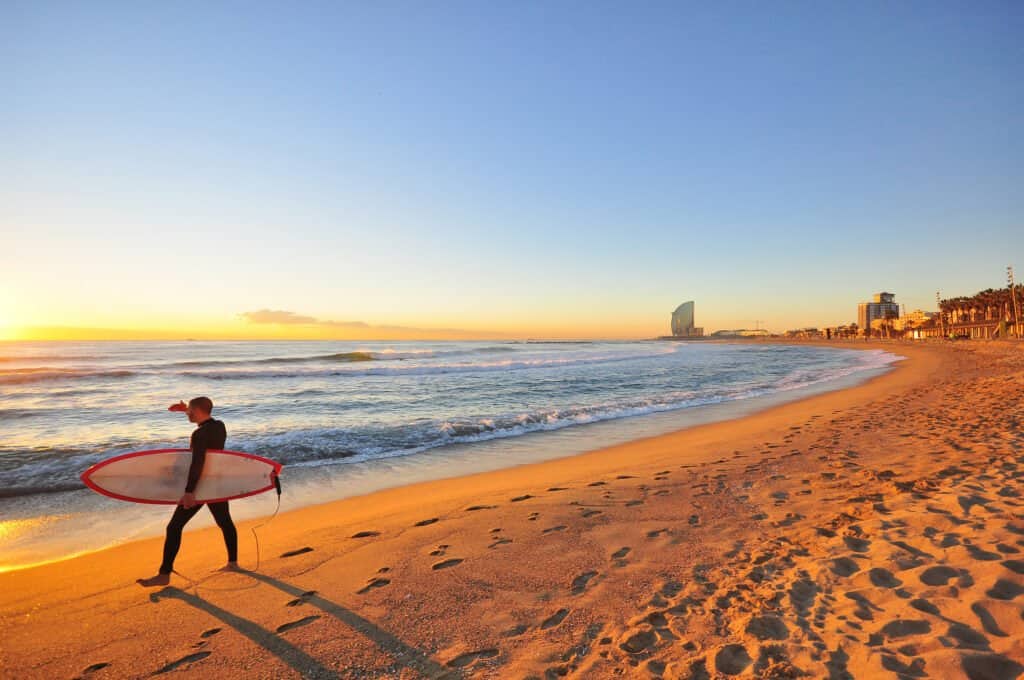
Barceloneta Beach
Places to eat or drink near Jaciment del Born


More places in Barcelona

Sagardi BCN Centre

Orient Express Cocktail Bar

Xurreria Trebol
