Lake Crescent sits along the south edge of Highway 101 as it curves through Olympic National Park, about 20 minutes west of Port Angeles. Glaciers carved this basin during the last ice age, leaving behind a lake that drops below 600 feet in places and holds water so clear and blue-green that you can watch the bottom fall away from a rowboat or a dock. It's one of the few spots in the park where you don't need to hike to see something extraordinary. You just pull off the road.
That accessibility is part of what makes Lake Crescent worth stopping for rather than just driving past. Most of Olympic National Park asks something of you, a trailhead, a shuttle, a long gravel road. Lake Crescent asks almost nothing, and still delivers one of the more striking bodies of water in the Pacific Northwest.
Why Lake Crescent's color is unusual
The color isn't a trick of light or depth alone. Lake Crescent has unusually low nitrogen levels, which starves the algae that normally tint lakes green or murky. Without much algae to cloud things up, sunlight penetrates deep into the water and bounces back as a hard, saturated blue-green, almost turquoise on a clear day. Locals will tell you the lake looks different depending on where you stand and what the sky is doing, but the clarity itself rarely changes. Divers and researchers have used it to study how little organic material actually lives in the lake, which is part of why fishing here feels different too. More on that below.
Quick facts
- Location: Clallam County, Washington, within Olympic National Park
- Depth: over 600 feet in places, among the deepest lakes in Washington State
- Access: directly alongside U.S. Highway 101 on the lake's south shore
- Historic lodging: Lake Crescent Lodge, built in 1915
- Notable trail: Spruce Railroad Trail, a paved, flat route on an old rail grade along the north shore
- Notable hike: Mount Storm King, a steep climb with a rope-assisted final scramble
- Native fish: Beardslee and Crescenti trout, found nowhere else in the world
Getting there
Highway 101 runs directly along the lake's south side, which means you can see Lake Crescent without leaving your car. Coming from Port Angeles, it's a straightforward drive west, with several pullouts offering lake views before you reach the lodge area. The Storm King Ranger Station, Marymere Falls trailhead, and Lake Crescent Lodge all sit close together on this south shore, making it easy to park once and walk to several things.
The north shore, where the Spruce Railroad Trail runs, is reached by a different road that loops around the lake's east end. It's a quieter approach, often used by cyclists and anyone heading to the Devil's Punchbowl for a swim.
The layout and experience
Lake Crescent splits naturally into two personalities. The south shore, along the highway, is where most visitors spend their time: the lodge, the boat rentals, Marymere Falls, and the start of the Mount Storm King climb. It has the feel of a classic national park stop, with a historic building, a dock, and short interpretive trails.
The north shore feels more remote even though it isn't far. The Spruce Railroad Trail follows the old railway grade that once hauled Sitka spruce out during World War I, when the wood was prized for aircraft frames. The grade is flat and paved for much of its length, a rarity in a park built on steep terrain, which makes it popular with families and cyclists who want lake views without the climbing.
Main highlights
Lake Crescent Lodge anchors the south shore and has done so since 1915. It's a low wooden building with a wide porch facing the water, and it still rents rowboats and kayaks from its dock in the warmer months, much as it would have a century ago. Staying here puts you steps from the lake, though the rooms are simple rather than luxurious, in keeping with the era it was built.
The Spruce Railroad Trail runs along the north shore and passes the Devil's Punchbowl, a narrow, deep inlet crossed by a footbridge. The water here is startlingly clear even by Lake Crescent standards, and by August it's warm enough that people jump from the bridge and the surrounding rocks into the pool below. It's an unofficial tradition rather than a sanctioned activity, so use your own judgment about depth and conditions before following suit.
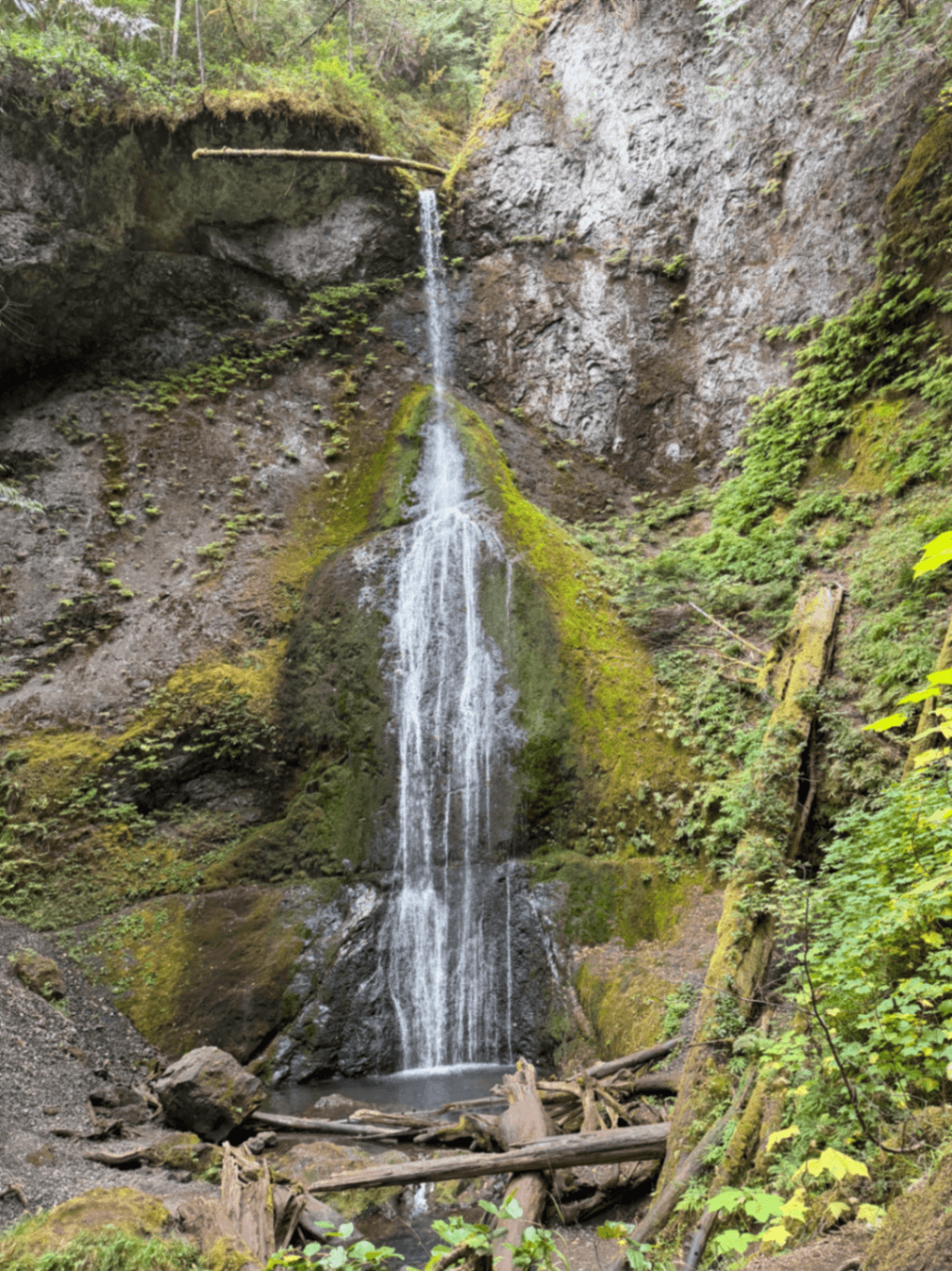
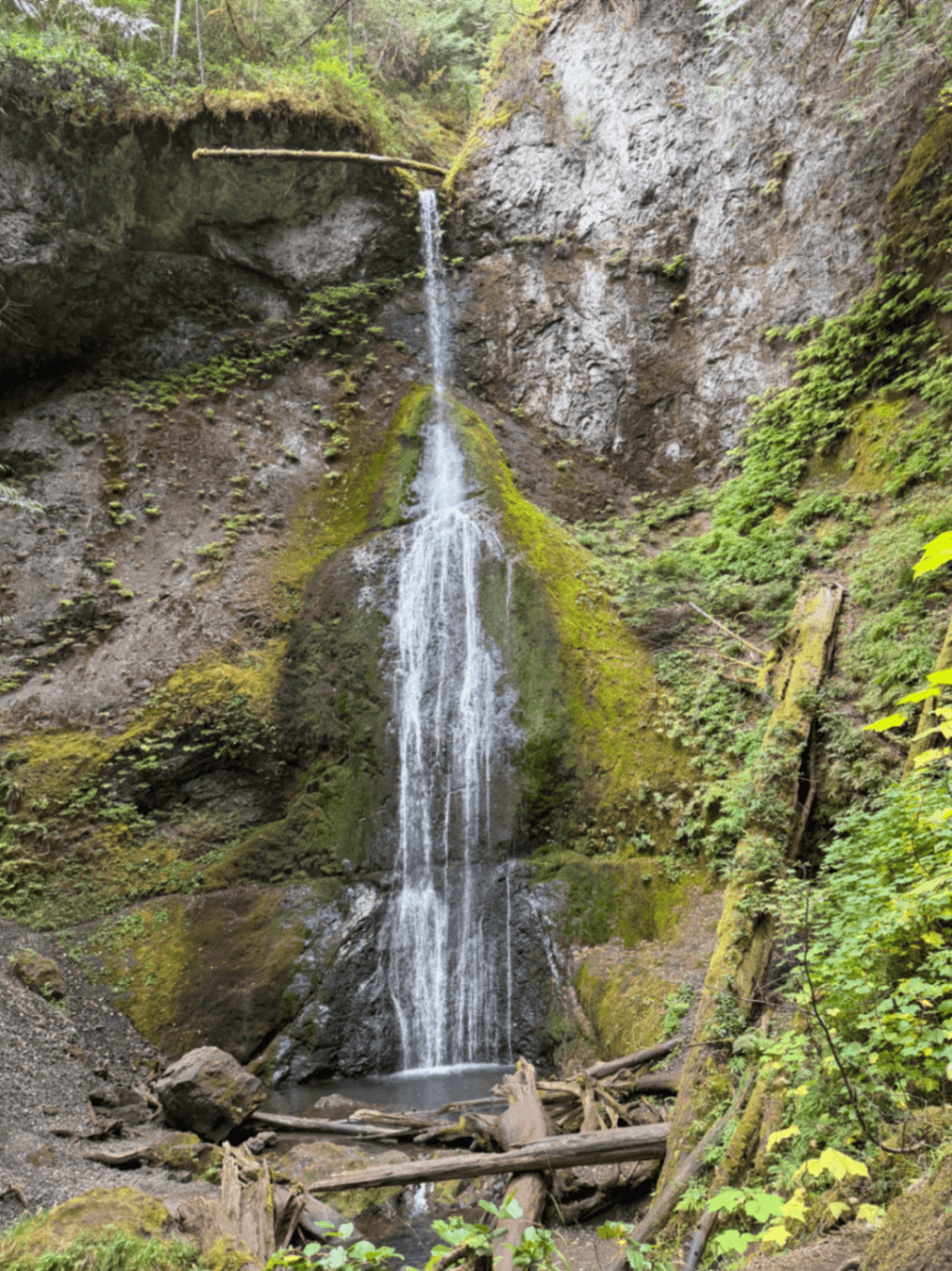
Marymere Falls is the easiest payoff hike in the area. From the Storm King Ranger Station on the south shore, a mostly flat trail just under a mile long winds through old-growth forest to a 90-foot waterfall that drops over a mossy rock face. It's shaded, cool even in summer, and manageable for most fitness levels, which makes it one of the more family-friendly destinations in this part of the park.
Above Marymere Falls, the Mount Storm King trail takes the same gentle start and then changes character entirely. The climb is steep and sustained, and the last stretch is a rope-assisted scramble up loose rock to a viewpoint that looks straight down the length of the lake. This is not a casual add-on to the falls hike. It demands dry conditions, sturdy footwear, and a tolerance for exposure, and rangers generally discourage attempting it when the trail is wet.
The lake itself holds two trout species, Beardslee and Crescenti, that evolved in isolation after the lake was cut off from nearby waters and exist nowhere else. Fishing regulations here reflect that rarity, and anyone casting a line should check current rules before doing so.
History and background
Lake Crescent formed when a massive landslide, likely from what is now Mount Storm King, split an older, larger lake in two, separating Lake Crescent from neighboring Lake Sutherland. That geologic event also explains the lake's unusual depth relative to its size.
The lodge's history ties directly into how Olympic National Park came to exist. President Franklin D. Roosevelt stayed at Lake Crescent Lodge in 1937 during a visit to the Olympic Peninsula, a trip widely credited with building momentum for the park's establishment the following year, in 1938. The building he stayed in is still standing, and the lodge has leaned into that history without turning itself into a museum piece. It operates as it always has, as a working lakeside lodge.
The Spruce Railroad Trail's name comes from the Spruce Production Division, a World War I-era effort to extract Sitka spruce from the Olympic Peninsula's forests for use in aircraft manufacturing. The rail line was built fast and used only briefly, and its grade now serves hikers and cyclists instead of lumber trains.
Best time to visit
Summer is when Lake Crescent is most alive, with kayaks on the water, swimmers at the Devil's Punchbowl, and long daylight for tackling Mount Storm King. July and August bring the warmest water temperatures, though "warm" is relative for a glacially fed lake. Spring and fall thin the crowds considerably and still offer the lake's color on a clear day, though the Mount Storm King scramble becomes riskier once rain sets in. Winter visits are quieter still, and the lake's blue-green water against snow on the surrounding ridges is its own kind of striking, but check road conditions on 101 and expect the lodge's seasonal operations to be limited.
Facilities and preparation
The south shore has the most infrastructure: parking near the lodge and the Storm King Ranger Station, restrooms, and a dock for boat rentals. The Spruce Railroad Trail on the north shore has more limited facilities, so plan to bring water and anything else you need before heading over. Cell service around the lake is inconsistent, which is worth knowing if you're relying on a phone for trail maps or emergency contact, especially on the Mount Storm King route.
Combining with nearby attractions
Lake Crescent sits conveniently between Port Angeles and Sol Duc Hot Springs, making it easy to fold into a longer day on Highway 101. Many visitors pair a stop here with a soak at Sol Duc, about 30 minutes further west, or combine it with the drive up to Hurricane Ridge if they're based out of Port Angeles. If you're coming from the Victoria, B.C. ferry terminal in Port Angeles, Lake Crescent is often the first major stop heading into the park.
Sample visit plan
- Morning: drive along 101, stop at a south shore pullout for photos, then walk the Marymere Falls trail from the Storm King Ranger Station
- Midday: rent a rowboat or kayak at Lake Crescent Lodge and get out on the water for an hour
- Afternoon: drive around to the north shore and walk or bike part of the Spruce Railroad Trail to the Devil's Punchbowl
- For a fuller day: skip the boat rental and instead tackle the Mount Storm King trail if conditions are dry, saving several hours for the climb and descent
Practical tips
- Attempt Mount Storm King only in dry conditions, the final scramble relies on a fixed rope over loose rock
- Pack water for the Spruce Railroad Trail, facilities are sparse on the north shore
- Bring a dry bag or towel if you plan to swim at the Devil's Punchbowl, the water stays cold even in August
- Check current fishing regulations before casting for Beardslee or Crescenti trout, given their rarity
- Arrive early in summer if you want a quiet moment at Marymere Falls, the trail gets busy by midday
FAQ
Is Lake Crescent good for swimming?
Yes, though the water stays cold even in summer. The Devil's Punchbowl along the Spruce Railroad Trail is the most popular swimming spot, with people jumping from the footbridge in August when the water is at its warmest.
How deep is Lake Crescent?
The lake runs over 600 feet deep in places, making it one of the deepest lakes in Washington State. That depth, combined with low algae growth, is part of why the water looks so clear.
Can you hike around Lake Crescent?
There's no single trail that circles the whole lake, but the Spruce Railroad Trail covers much of the north shore on a flat, paved grade, while the south shore offers the Marymere Falls trail and the much tougher Mount Storm King climb.
Is Lake Crescent Lodge still open to the public?
The lodge, built in 1915, continues to operate seasonally and rents rowboats and kayaks from its dock. It's also open to non-guests for dining and for walking the grounds.
How far is Lake Crescent from Port Angeles?
It's about 20 minutes west of Port Angeles along Highway 101, making it one of the most accessible stops in Olympic National Park.
Reviews
Sign in and mark this place visited to leave a review.
No reviews yet.
Free Trip Planner
Plan your Olympic National Park trip with our free planner
Build a day-by-day itinerary with AI suggestions, hand-picked places, and friends. Free forever — no credit card.