

United States on the map
80 places from this guide. Tap a pin to open the listing.
The United States is the third largest country on earth by land area, stretching from the Atlantic fishing villages of Maine to the volcanic coastline of Hawaii, with Alaska's tundra and the Mojave Desert thrown in for good measure. That scale is the first thing any United States travel guide has to reckon with. Most visitors don't attempt to see all of it in one trip, and you shouldn't try either. Instead, pick a region, a handful of cities, or a road trip route, and go deep rather than wide.
Geographically the country is about as varied as a single nation can get. You can surf in California in the morning and, a few hours' flight away, be hiking through Rocky Mountain snowpack. The National Park system ties a lot of this together, with more than 60 parks covering everything from Yosemite's granite domes to the bayous of Louisiana.
Cities are where most itineraries actually live, though. New York City remains the obvious anchor for East Coast trips, and a few days there barely scratches the surface, whether you're walking through Central Park, catching a Broadway show, or working through the pizza-by-the-slice debate that every New Yorker has an opinion on. Washington D.C. rewards a slower, more deliberate pace. The National Mall alone could eat two full days, between the Lincoln Memorial, the Vietnam Veterans Memorial, the Smithsonian's National Air and Space Museum, and the newer National Museum of African American History and Culture. The Martin Luther King, Jr. Memorial sits along the Tidal Basin and is worth the walk even if you're short on time, and a glimpse of The White House from Pennsylvania Avenue is standard for most first visits.
Boston and Philadelphia cover the country's founding years in a way few other cities can. In Boston, the Freedom Trail links sixteen historic sites with a literal red line painted into the sidewalk, and it's an easy way to see Revolutionary-era Boston without a map. Copley Square and a stop at Fenway Park round out a weekend there nicely. Philadelphia is just as walkable, with the Benjamin Franklin Parkway connecting the Philadelphia Museum of Art to the Museum of the American Revolution, and a plaza now better known as JFK Plaza (Love Park) serving as a good orientation point downtown. Philly's dining scene punches above its weight too, with places like Zahav showing why the city gets taken seriously by food writers now.
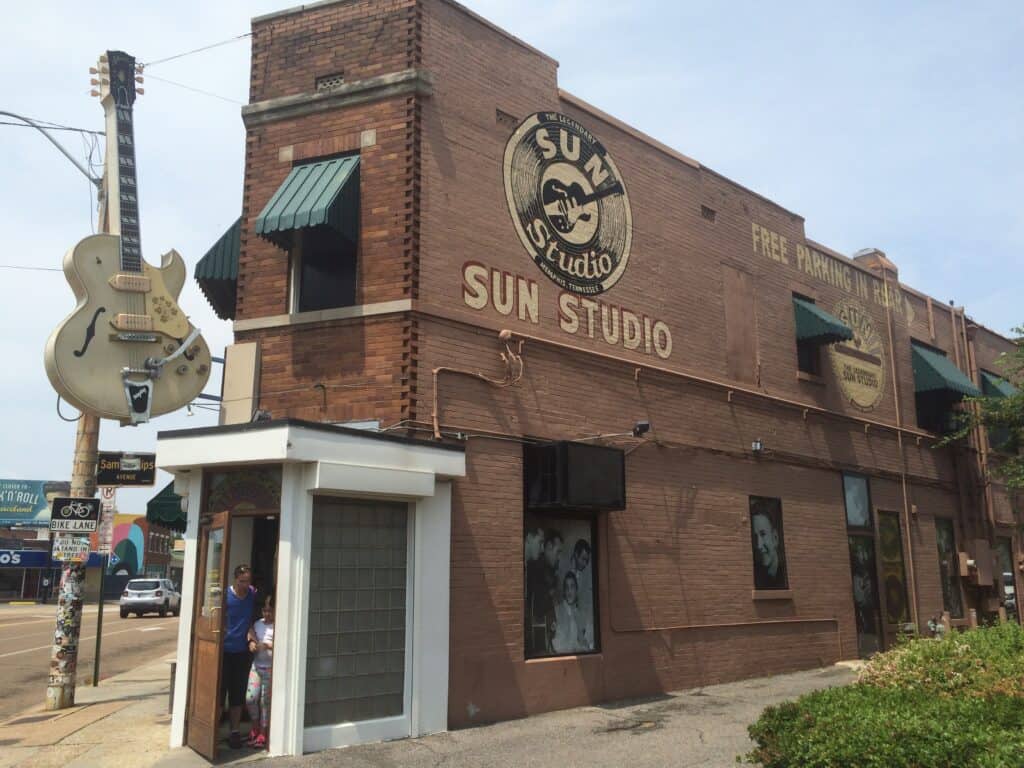
Memphis deserves its own paragraph. Beale Street and the live music that spills out of it get most of the attention, but the city's real depth is in its museums: the Memphis Rock 'n' Soul Museum, the Stax Museum of American Soul Music, the Blues Hall of Fame Museum, and the Slave Haven Underground Railroad Museum, which tells a harder and necessary part of the city's history. Sun Studio is where Elvis Presley, Johnny Cash, and Howlin' Wolf all recorded, and it still operates as a working studio between tours. Graceland and the broader Elvis Presley's Memphis complex are the pilgrimage site for a lot of visitors, and Shelby Farms Park gives you somewhere green to decompress afterward.
Out west, San Francisco's Golden Gate Bridge Vista Point gives you the postcard shot without the crowds that gather closer to the bridge itself, and it's a good first stop if you're road-tripping down the coast toward Los Angeles. Denver works similarly as a jumping-off point for the Rockies, and the Denver Museum of Nature & Science is a solid rainy-day stop before you head into the mountains.
When to Visit
You can travel the United States in any month without major issues, but the "best" time really depends on where you're going. Spring (April to May) and fall (September to October) tend to be the sweet spot for most of the country, with mild temperatures and smaller crowds than summer.
Winter brings real risk to mountain and northern regions. Snowstorms in the Rockies, the Midwest, or the Northeast can close roads and ground flights with little warning, so check forecasts closely if you're traveling to Denver, Chicago, or Boston between December and February. Summer, meanwhile, is hurricane season along the Gulf Coast and the Southeast, roughly June through November, with activity usually peaking in late summer. New Orleans, Miami, and the Carolina coast are the places to watch most closely during that window.
Festival timing matters too. Mardi Gras in New Orleans (February or March, depending on the Easter calendar) and Nashville's year-round live music scene are both worth building a trip around if the dates line up.
How to reach the destination
International travelers typically fly into one of the major gateway airports: JFK or Newark for New York, LAX for Los Angeles, O'Hare for Chicago, or Dulles for Washington D.C. Smaller international airports serve Miami, San Francisco, and Boston well too, and connecting through one of these is usually simpler than routing through a smaller regional hub.
Most visitors from visa-waiver countries can enter under the ESTA program for short tourist stays, but requirements change and vary by nationality, so confirm the current rules with official U.S. sources before you book anything. Land borders with Canada and Mexico are also common entry points if you're combining the U.S. with a wider North American trip.
Getting around the destination
With a few exceptions, a car is the most practical way to see the country. Most American cities and suburbs were built around driving, and public transit outside the biggest metros tends to be limited. That said, New York, Boston, Washington D.C., Philadelphia, and Chicago all have functional metro systems and are genuinely walkable, which is part of why the Freedom Trail in Boston or a stroll down the Benjamin Franklin Parkway in Philadelphia work so well without a rental car.
For longer distances between major cities, flying is usually fastest and buses (Greyhound, Megabus) or Amtrak trains cover routes more cheaply if you're not in a hurry. The Northeast Corridor, linking Boston, New York, Philadelphia, and D.C., is Amtrak's best-served line and a realistic alternative to flying for that stretch.
If a road trip is part of your plan, rental cars are widely available at every major airport, and a few routes have become classics for good reason. Route 66, running roughly two weeks from Chicago to Santa Monica, is the original American road trip, full of roadside diners and faded neon signs. The West Coast loop, from San Francisco down through Yosemite, Death Valley, Las Vegas, Antelope Canyon, Monument Valley, the Grand Canyon, and into Los Angeles, takes fifteen days or more and covers some of the most dramatic scenery in the country. Shorter options include a Colorado loop through Denver, Boulder, and the Rocky Mountain mining towns (about five days), a two-day run down Big Sur on the Pacific Coast Highway, and the Blues Highway along Route 61 from Memphis to New Orleans, tracing the Mississippi Delta through old plantation towns. New England and Cape Cod, and the Maine coast from Portland to Camden, are better suited to slower, three-day-plus itineraries built around small towns and lighthouses rather than mileage.
Top destination travel tips
- Tipping is expected, not optional, in restaurants and bars, typically in the 15 to 20 percent range, and often added automatically for larger groups.
- Sales tax is added at the register, not included in the listed price, so your total at checkout will always be higher than the sticker price.
- Distances are deceptively large. A drive that looks short on a map, like Los Angeles to Las Vegas, can still take four or more hours.
- Electrical outlets use the Type A/B plug and 120V, so travelers from Europe, the UK, or most of Asia will need an adapter.
- Prepaid SIM cards from carriers like T-Mobile or AT&T are easy to find at airports and useful if you're driving through areas with patchy coverage.
- Uber and Lyft operate in most cities and are generally the easiest way to get around without a rental car.
- Jaywalking laws and enforcement vary wildly by city. Use crosswalks in places like Los Angeles where it's actually ticketed.
Typical costs in the destination
Prices vary enormously by city, but as a rough guide, in U.S. dollars (USD): budget travelers can expect to spend on hostels or budget motels and fast-casual food, mid-range travelers will land on three-star hotels and sit-down restaurants, and upscale trips mean boutique hotels, tasting menus, and private tours. Major cities like New York and San Francisco run noticeably more expensive across every category than secondary cities like Memphis or Savannah. A casual meal with a drink is generally affordable almost everywhere outside the biggest coastal cities, while a night out in a city like New York or Miami can get expensive fast once drinks and cover charges are involved. Car rentals, gas, and tolls add up quickly on road trips, so factor that into any multi-week itinerary.
Must try food and drinks
- New York-style pizza – thin, foldable slices, best eaten standing up at a counter.
- Gumbo and crawfish – New Orleans staples, rooted in Cajun and Creole cooking traditions.
- Memphis barbecue – dry-rubbed ribs and pulled pork, often eaten within walking distance of Beale Street.
- Texas barbecue – brisket-forward, smoked low and slow, with Austin among the state's best-known spots for it.
- New England clam chowder – a thick, creamy soup that's practically mandatory on a Boston food stop.
- Cuban sandwiches and café cubano – staples of Miami's Little Havana neighborhood.
- Deli sandwiches – pastrami on rye done right at places like Langer's Delicatessen-Restaurant in Los Angeles.
- Craft beer and food-cart fare – Portland, Oregon's specialty, best paired with a trip out to the surrounding waterfalls.
FAQ
How many days do you need for a trip to the United States?
It depends entirely on scope. A single city, like New York or San Francisco, is worth four to six days on its own, while a road trip route such as the West Coast loop or Route 66 needs two weeks or more. Most first-time visitors pick one coast or region rather than trying to cover the whole country in one trip.
Is the United States expensive to visit?
Costs vary widely by city and travel style, with major coastal hubs like New York and San Francisco running considerably higher than cities like Memphis, Nashville, or Savannah. Road trips add fuel and rental costs but can save money on accommodation if you're comfortable with budget motels along the way.
Do you need a car to get around the United States?
Mostly yes. Outside of New York, Boston, Washington D.C., Philadelphia, and Chicago, which have workable metro systems and walkable cores, most American cities and all national parks are built around driving. If your trip includes any rural stretches or parks, plan on renting a car.
Is the United States safe for travelers?
Most tourist areas are safe for typical visitors, though safety perceptions and realities vary a lot by neighborhood and city, so it pays to check specific areas before walking around at night. Natural hazards, like hurricanes on the Gulf Coast and winter storms inland, are a bigger practical concern for most travelers than crime.
What is the best time of year to visit the United States?
Spring and fall generally offer the mildest weather and smaller crowds across most of the country. Summer is best avoided in hurricane-prone Gulf Coast cities, and winter travel to mountain or northern regions needs flexibility in case of weather-related delays.
Is English the only language you'll need?
English covers you in nearly every situation, though Spanish is widely spoken in cities like Los Angeles and Miami, and you'll see bilingual signage in parts of the Southwest and South Florida. You won't need another language to travel comfortably.
What's the best way to plan a multi-city trip across the country?
Group cities by region rather than hopping coast to coast repeatedly, since domestic flights and long drives eat into trip time fast. A United States travel guide built around one region, say the Northeast corridor from Boston to D.C., or a Southern loop through Memphis and New Orleans, tends to work better than a scattershot national itinerary.
Top Places to Visit in United States
View all See & Do
Fort Worth Stockyards National Historic District
 See & DoExpensive · $$$
 See & DoModerate · $$
 See & Do
 See & Do
Seven States (Lookout Mountain)
 See & DoModerate · $$
Vintage Flying Museum
 See & Do
Breaking Bad Car Wash
 See & Do
Top Places to Eat in United States
View all Eat & DrinkModerate · $$
 Eat & DrinkBudget · $
 Eat & DrinkModerate · $$
The Green Well Restaurant
 Eat & DrinkModerate · $$
Panther City BBQ
 Eat & DrinkBudget · $
Devil's Backbone Tavern
 Eat & Drink
Hooch Craft Cocktail Bar
 Eat & DrinkModerate · $$
 Eat & DrinkBudget · $